
Reviewed · STREET FOOD TOURS
Chiang Mai: Walking Food Tour
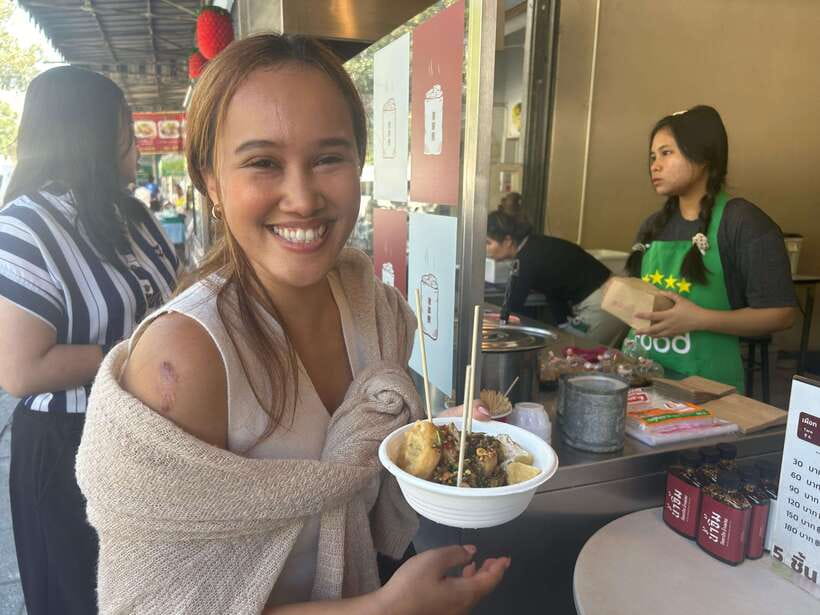
Chiang Mai’s best food lesson may begin with sticky rice grilled in a banana leaf and end with khao soi beside a temple. This three-hour walk moves through the Old Town on foot, linking familiar Thai favorites with northern dishes you might not order on your own.
I like the range of food, from smoky sai ua sausage and spicy larb to cool butterfly pea ice cream. I also like the local focus: guides such as Varisa and Warat explain food, customs, and Chiang Mai life rather than simply pointing at plates. The main drawback is the fixed menu, so contact the operator before booking if you have dietary needs.
Key points to know before booking
- Five food venues in three hours: You taste across several stops instead of sitting at one restaurant for the entire tour.
- Northern Thai specialties: Khao soi, sai ua, and larb give you a useful introduction to the food of northern Thailand.
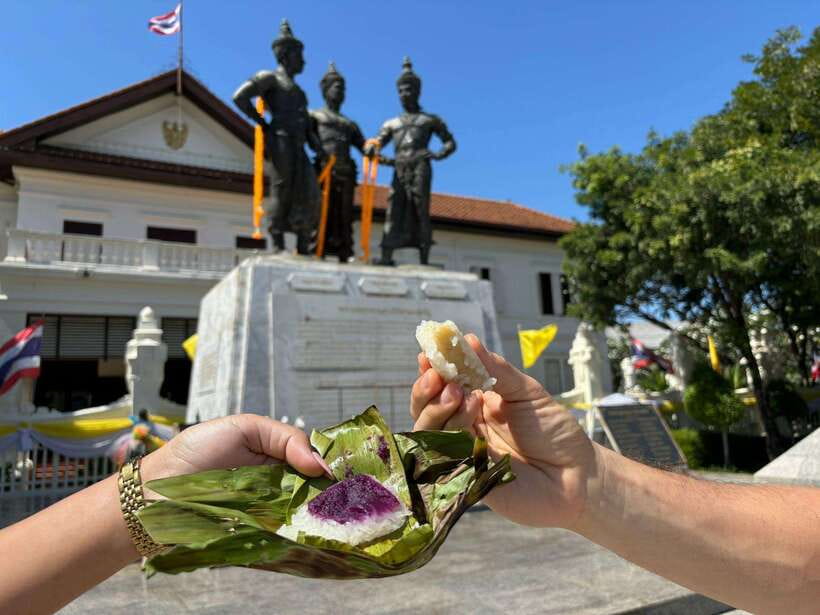
- Two temple visits: The walk begins near Three Kings Monument and finishes at Wat Lok Moli.
- A generous tasting menu: Food includes satay, sticky rice, morning glory, coconut pancakes, dessert, tea, water, and a secret dish.
- A guide-led Old Town walk: Varisa and Warat are among the guides, with English explanations about local food and daily life.
- Good flexibility: You can cancel up to 24 hours ahead, and reserve now while paying later.
Starting at Three Kings Monument
Meet your guide in front of the Three Kings Monument, where an orange umbrella marks the meeting point. This is a useful central location in Chiang Mai’s Old Town, and it gives the tour a clear starting line rather than asking you to find a restaurant tucked down an unknown lane.
The tour is designed as a morning experience, though the exact starting time depends on availability. That timing matters. Several of the foods are breakfast or daytime dishes, and a morning walk leaves you with the rest of the day to explore Chiang Mai at your own pace.
Before the food begins, you step into a temple. The provided details do not name this first temple, so you should think of it as a short cultural opening rather than a full temple sightseeing program. The visit adds a little context before the plates arrive, and it keeps the tour from feeling like a string of restaurant stops.
The walk finishes at Wat Lok Moli, one of Chiang Mai’s appealing temple sites. Having a temple at the end gives the route a natural close, especially after three hours of tasting. You will want respectful clothing and behavior at the temples, although the tour information does not list a specific dress code.
More Street Food Tours in Chiang Mai
- Small-Group Chiang Mai Evening Street Food Tour
★ 4.5 · 826 reviews - Chiang Mai: Evening Local Street Food Market Tour
★ 4.8 · 604 reviews - Northern Flavours Chiang Mai Food Tour with 15+ Tastings
★ 5.0 · 513 reviews
Banana-leaf sticky rice for breakfast
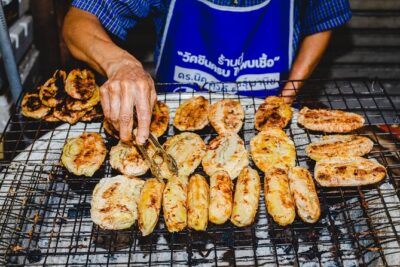
The first food is banana-leaf sticky rice, grilled in the morning. It is a modest start, but a useful one. Sticky rice is central to northern Thai eating, and grilling it in a leaf brings a warm, fragrant note that you will not get from plain steamed rice.
This opening bite also sets the tone for the tour. You are not being handed only famous restaurant dishes. You are being shown how a simple local food can be part of an ordinary morning.
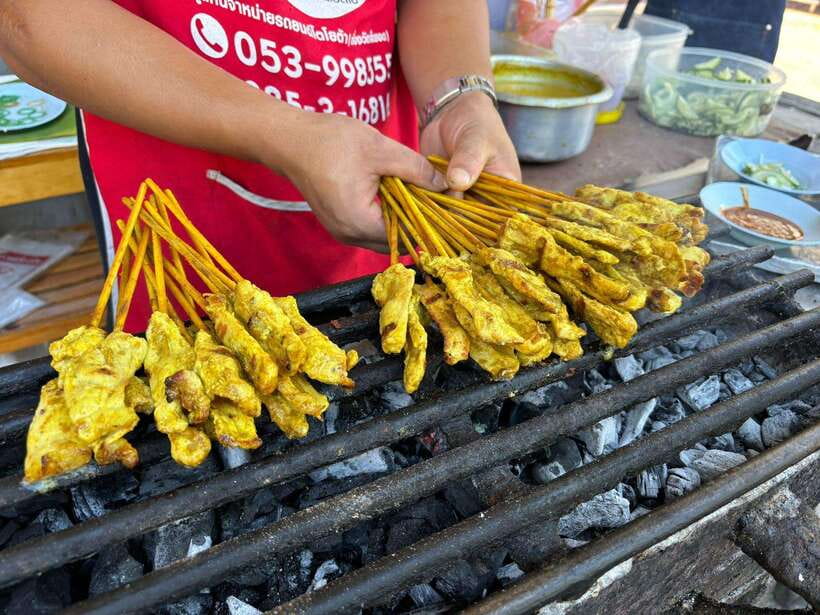
The tour then moves to chicken satay with peanut sauce. Satay is familiar across Southeast Asia, but the point here is to taste Chiang Mai’s version and compare it with the style often associated with Bangkok. The creamy peanut sauce is an important part of the dish, not an afterthought.
The satay stop should appeal to cautious eaters because the flavors are easy to understand. At the same time, it gives the guide a chance to explain regional differences without turning the walk into a lecture. If you already know Thai food well, this comparison may be more interesting than the dish itself.
Northern Thai flavor: larb and sai ua
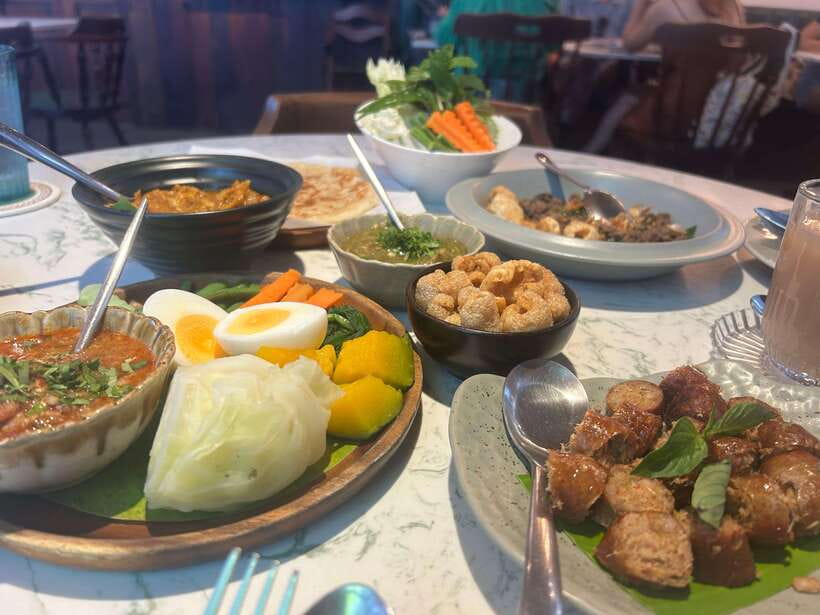
Next comes larb kua, also described as larb moo, a spicy minced-meat salad with roasted rice powder. The name can vary, but the key features are the minced meat, herbs and spices, and the toasted rice powder that adds a dry, nutty texture.
This is not the sweet, mild salad some visitors may expect from a generic Thai menu. The northern version can be earthy and strongly seasoned. Take a small bite first, especially if you are sensitive to spice, and let the guide explain the dish before reaching for more.
Sai ua is the other major northern specialty on the route. This sausage is seasoned with herbs and spices, giving it a fuller taste than an ordinary grilled sausage. It is one of the most useful dishes on the tour because it shows how northern Thai food gets its character from seasoning, not simply from chili heat.
I like this part of the menu because it moves you away from the most familiar Thai standards. Larb and sai ua are the foods that make the tour feel specific to Chiang Mai rather than interchangeable with a food walk in Bangkok, Phuket, or another Thai city.
Khao soi, morning glory, and Thai tea
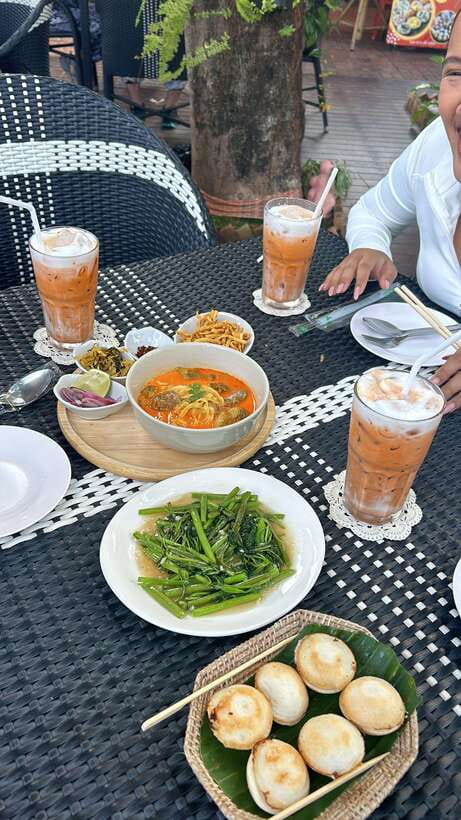
The main meal is khao soi, Chiang Mai’s signature curry noodle dish. Expect soft noodles in a creamy coconut curry broth, usually paired with crisp noodle pieces or other toppings, though the precise presentation is not specified here.
Khao soi is the dish many people hope to try in Chiang Mai, and this tour places it in the middle of a wider meal rather than making it the only reason to go out. The coconut base helps balance the seasoning, while the noodles make it filling.
The khao soi is paired with stir-fried pak boong, or morning glory. This vegetable dish brings a softer, greener counterpoint to the curry. It also helps pace the meal. After several intense flavors, a simple stir-fry gives your palate a break.
A chilled Thai tea comes with this part of the meal, along with a chilled lemongrass infusion and water during the tour. The drinks are practical inclusions, not mere extras. A three-hour food walk can feel long if you are eating spicy dishes without anything cool to drink.
Thai iced tea is sweet and creamy, so it may not suit you if you prefer unsweetened drinks. Still, its cooling effect works well with khao soi and the northern sausage. The lemongrass drink offers a lighter alternative.
More Walking Tours in Chiang Mai
- Chiang Mai: 3 Hour Old City and Temples Guided Walking Tour
★ 4.6 · 1,568 reviews - Chiang Mai: Historic Temples and City Guided Walking Tour
★ 4.7 · 650 reviews - Chiang Mai: Temple And City Walking Tour Part I
★ 4.7 · 244 reviews - Chiang Mai: Local Food and Markets Guided Walking Tour
★ 4.3 · 175 reviews
Coconut pancakes and a two-part dessert
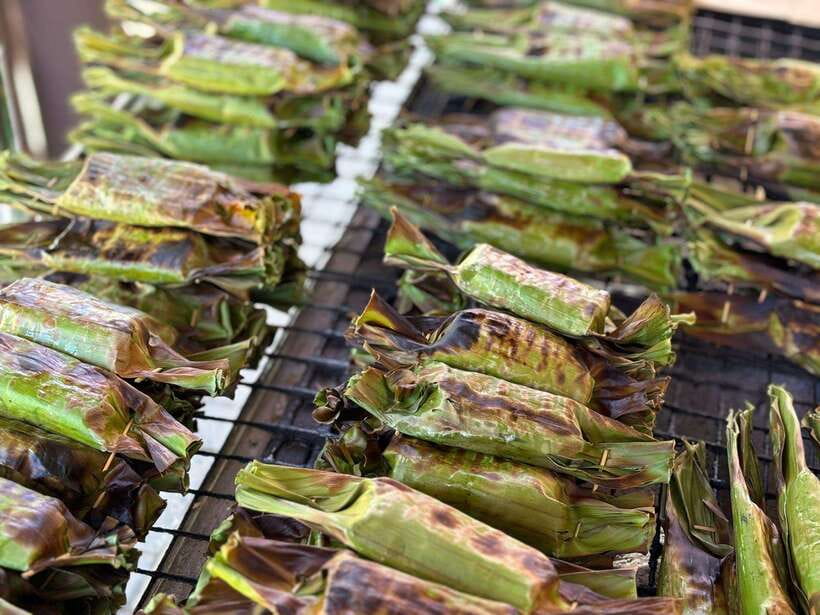
The menu includes khanom krok, small coconut-rice pancakes that can be both sweet and savory. Their appeal is in the contrast: a lightly crisp outside with a soft coconut center. They are snack-sized, which is helpful after the sausage, larb, and noodles.
Dessert continues with vegan butterfly pea flower ice cream paired with rice balls in coconut cream. The blue-purple color of butterfly pea gives the ice cream a visual twist, while the rice balls and coconut cream add a softer, more traditional finish.
The rice-ball dessert is called bua loi. It is delicate rather than heavy, with small rice balls floating in creamy coconut milk. By this stage, you will have eaten a lot, so the modest portions of dessert matter. They let you finish sweetly without turning the final stop into another full meal.
The menu also includes a secret dish. You will not know the full lineup in advance, which adds some fun, but it also makes the experience harder to assess if you have strict food limits. The secret item was not considered especially secret by at least one recent participant, so treat it as a bonus rather than the main reason to book.
What the walking route adds
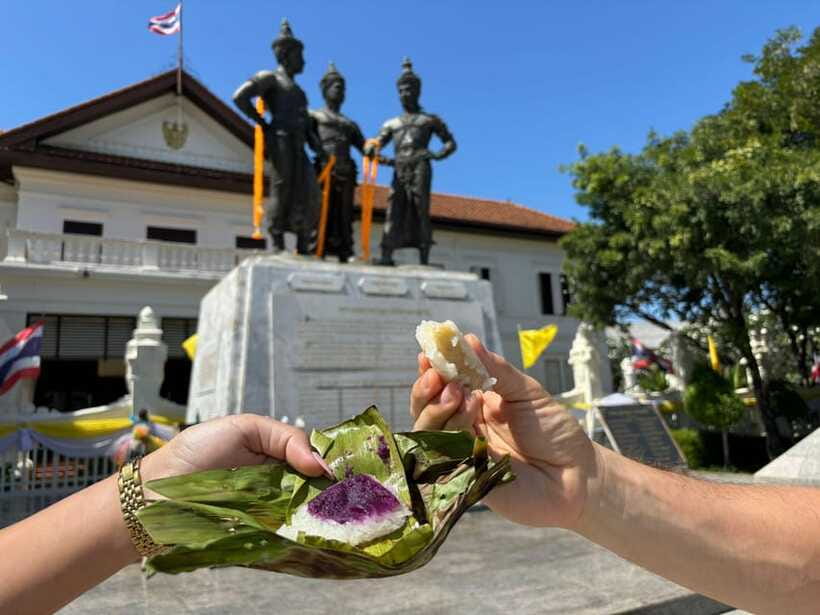
This is not a cooking class and not a restaurant tasting in one fixed venue. You walk through Chiang Mai’s Old Town between food stops, with temple visits framing the meal.
That movement helps you connect dishes with place. You get a sense of the Old Town while eating, rather than spending three hours indoors. The tradeoff is that the route is less controlled than a seated meal. You may be walking between bites, and the experience depends partly on the pace of the group and the guide.
The group size is not specified. One guide adjusted well to a group of only two people, so a small booking can still work well. If you prefer a private experience, ask the provider before booking rather than assuming the tour is private.
English is the tour language. Guides such as Varisa and Warat have been praised for explaining local food, traditions, Chiang Mai life, and the area’s past. That kind of commentary is the real difference between this and simply ordering the same dishes from a menu.
Guides and the personal touch
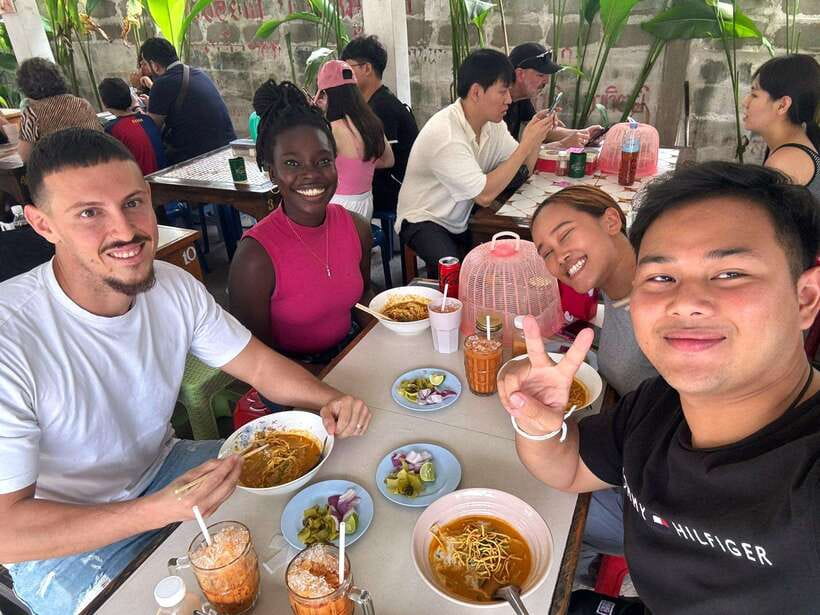
A food tour succeeds or fails on the guide. Here, the guide is expected to do more than lead you from stop to stop. You get explanations about what you are eating, how northern dishes differ, and how food fits into daily life in Chiang Mai.
Varisa is one guide associated with the experience, and Warat is another. Their approach may differ, but the tour is built around a friendly local host who can adjust the pace and explain unfamiliar dishes in English.
That matters if you are nervous about ordering food on your own. Larb, sai ua, and bua loi may not be obvious choices from a menu. With a guide beside you, you can ask what is spicy, what is sweet, and what ingredients matter before taking a full portion.
The strongest part of the guide service is the added context. You are not just told that khao soi is famous. You learn why it belongs on a Chiang Mai food route, and you get local history and traditions alongside the tasting.
Is $53 good value?
At $53 per person, this is not the cheapest way to eat in Chiang Mai. Local markets and casual food stalls can feed you for far less. If your only goal is to spend as little as possible, you should explore independently.
The price makes more sense when you count the number of tastings and the guide service. The menu includes sticky rice, satay, larb, sai ua, pak boong, khao soi, khanom krok, two desserts, a secret dish, Thai tea, lemongrass infusion, and water. You also receive a three-hour walking route and temple visits.
The value is strongest for a first visit to Chiang Mai or for anyone who wants help choosing regional food. You are paying to avoid guesswork, find several stops, understand the dishes, and eat enough to count the tour as a substantial meal.
It is less useful if you already know northern Thai food well and are comfortable finding local restaurants yourself. In that case, the guide’s cultural explanations and the route may still appeal, but the food savings are not the point.
Who should book this food walk?
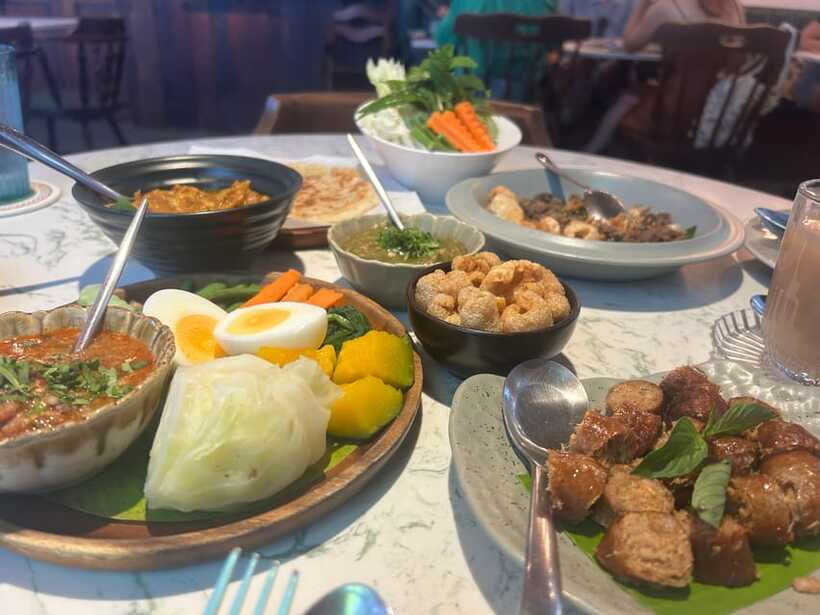
I would recommend it to first-time visitors who want a clear introduction to Chiang Mai cuisine. It also suits curious eaters who want more than pad Thai and green curry, but do not want to order a long list of unfamiliar dishes alone.
The tour works well for people who like walking between tastings and prefer several small portions to one large restaurant meal. It is also a good fit if you want local history, temple stops, and food in one compact morning.
Families and mixed groups may appreciate the range. Satay and Thai tea are familiar entry points, while sai ua, larb, khao soi, and bua loi offer something new. Still, the menu may not suit everyone, so contact the provider before booking with any dietary requirement.
People looking for a quiet, formal dining experience should choose a restaurant instead. This is a moving, guide-led food walk with a set selection and several flavors competing for your attention.
Practical details that matter
Hotel pickup and drop-off are not included. You need to reach the Three Kings Monument on your own and look for the orange umbrella. Since the route is on foot, arrive ready to walk for three hours rather than treating it as a seated tasting.
The activity is listed as wheelchair accessible. The tour language is English, and a live guide leads the experience.
You can cancel up to 24 hours before the start time for a full refund. The reserve-now, pay-later option also helps if your Chiang Mai plans are still changing. Starting times vary, so check availability for your date.
The most important preparation is dietary. Contact the provider before booking if you need substitutions or have a specific restriction. The secret dish and fixed food sequence mean you should not assume changes can be made on the day.
Should you book it?
Book this tour if you want a friendly introduction to northern Thai food, especially khao soi, sai ua, and larb, with a walk through the Old Town and temple stops built in. The menu is broad, the drinks are covered, and the guide adds the context you would miss by ordering alone.
Skip it if you already have a strong Chiang Mai food plan, want to choose every dish yourself, or need a highly flexible menu. For most first-time visitors, though, $53 is a fair price for three hours of food, local explanation, and an easy way to get your bearings in the Old Town.
FAQ
How long does the Chiang Mai Walking Food Tour last?
The tour lasts three hours.
Where does the tour meet?
Meet in front of the Three Kings Monument in Chiang Mai’s Old Town. Look for an orange umbrella.
What language is the tour conducted in?
The live guide speaks English.
What food is included?
Included tastings are banana-leaf sticky rice, chicken satay with peanut sauce, larb kua, sai ua, stir-fried pak boong, khao soi, khanom krok, butterfly pea ice cream with rice balls in coconut cream, and a secret dish.
Are drinks included?
Yes. The tour includes chilled lemongrass infusion, Thai iced tea, and water.
Does the tour include hotel pickup?
No. Hotel pickup and drop-off are not included.
Is the tour wheelchair accessible?
Yes, the activity is listed as wheelchair accessible.
Can I cancel the booking?
Yes. You can cancel up to 24 hours in advance for a full refund.
Can I reserve now and pay later?
Yes. The reserve-now, pay-later option lets you hold a place without paying at the time of booking.
More Food Tours in Chiang Mai
- The 10 Tastings of Chiang Mai With Locals: Private Street Food Tour
★ 5.0 · 216 reviews - Taste of Chiang Mai: Michelin Guide & Street Food Tour
★ 4.9 · 159 reviews - Chiang Mai: Food Tour by Songtheaw Truck with 15+ Tastings
★ 4.9 · 157 reviews - Lanna Kingdom Chiang Mai Food Tour with 15+ Tastings
★ 5.0 · 84 reviews
Just added around Chiang Mai
- Chiang Mai Best City Tour with Doi Suthep & Iconic Temples★ 4.5 · 24 reviews
- Chiang Mai Michelin Food Walking Tour with Professional Tour Guide★ 4.5 · 13 reviews
- Private Chiang Mai Temple Tour with Doi Suthep and Wat Umong★ 5.0 · 52 reviews
- Secret Waterfall and Bamboo Rafting from Chiang Mai★ 5.0 · 30 reviews
- Bua Tong Waterfall Adventure& Huge Cave included Thai Buffet Tour★ 4.5 · 28 reviews
- Chiang Mai Sak Yant Tattoo By Ajarn Tu★ 5.0 · 25 reviews
- Chiang Mai Airport Transfer by Private Van – Arrival or Departure★ 4.5 · 11 reviews
- Chiang Mai Scavenger Hunt and Sights Self-Guided Tour★ 5.0 · 8 reviews
Street Food Tours, compared.
Southern Flavors Phuket Food Tour with 15+ Tastings
Read our review →Bangkok Backstreets Food Tour with 15+ Tastings
Read our review →
Bangkok Authentic Tasting Thai-Chinatown Walking Food Tour
Read our review →
Small-Group Chiang Mai Evening Street Food Tour
Read our review →
Bangkok Tuk-Tuk Tour by Night with Chinatown Street Food Meal
Read our review →Browse the lists this tour appears in