
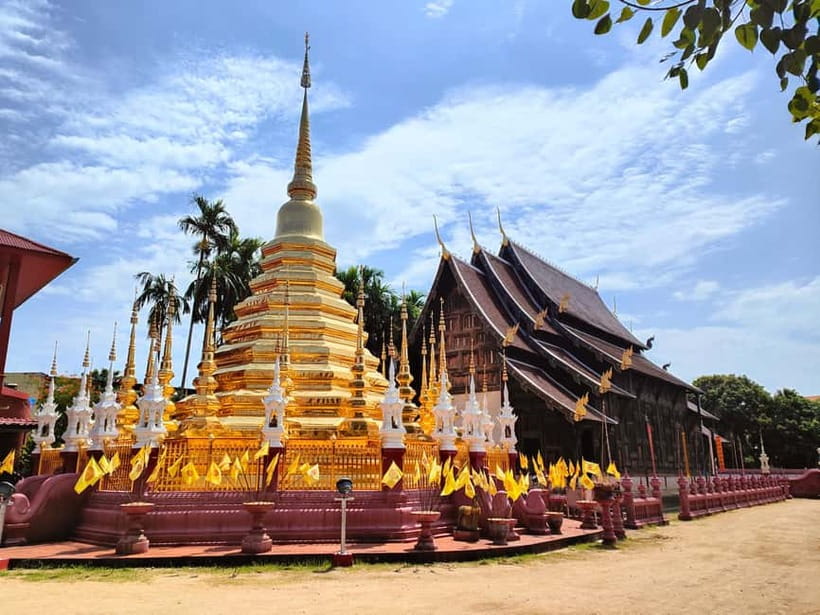
Reviewed · TEMPLE TOURS
Chiang Mai: Temple And City Walking Tour Part I
The best part of this Chiang Mai temple walking tour is not simply seeing three famous buildings. It is having a guide explain what the Buddha images, murals, stupas, rituals, and temple spaces mean. Guides such as Son, Katoon, Eddie, and Big have been praised for sharing personal insight into Buddhism, with some having formerly lived as monks.
I like the early 8:20 am start, which helps you avoid the worst heat, and I like the relaxed walking route through the old city. At $15, the tour offers strong value, though you should add 90 THB for the two listed entrance fees and be ready for several hours of standing.
Key points at a glance
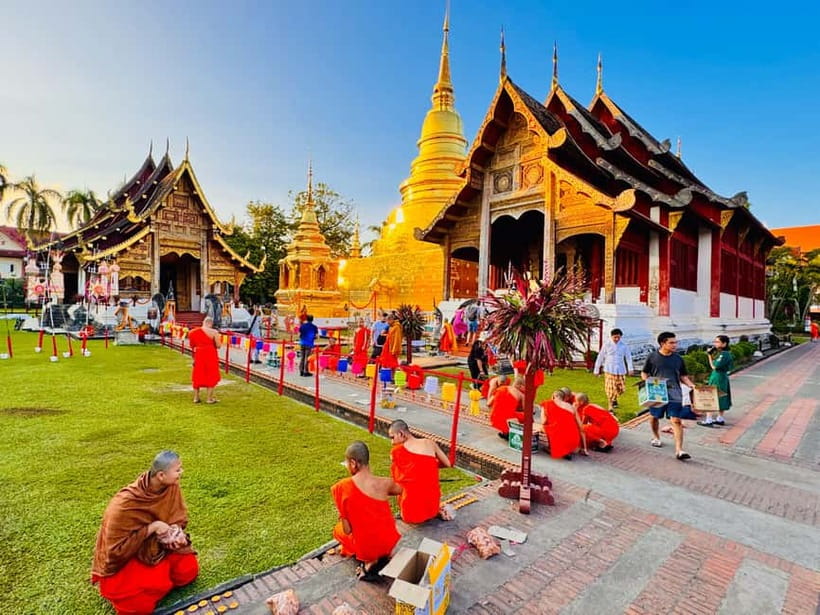
- Former monks may lead the tour: Guides including Son and Katoon have shared personal experience of monk life, meditation, and Buddhist practice.
- Three central temples in four hours: See Wat Chedi Luang, Wat Phan Tao, and Wat Phra Singh on foot.
- A useful early start: The 8:20 am departure makes walking more pleasant before the heat builds.
- More than sightseeing: Expect explanations of Buddha poses, prayer customs, temple symbols, and Chiang Mai’s past.
- Bring modest clothing: Shorts, short skirts, sleeveless shirts, and similar clothing are not allowed.
- Budget for entrance fees: Wat Chedi Luang costs 50 THB and Wat Phra Singh costs 40 THB, while Wat Phan Tao has no listed fee.
Why this $15 walk is more than a temple checklist
Chiang Mai has enough temples to fill several days, but a first visit can become a blur of gold roofs, incense, statues, and tiled courtyards. This tour gives you a useful thread to follow. Instead of only taking photographs, you learn how a Buddhist temple works and why its details matter.
The guide explains Buddhism in plain terms, then connects it to Chiang Mai’s political and cultural past. That makes the buildings easier to read. A stupa is no longer just a large structure, and a Buddha image is not simply a decorative statue. You begin to notice posture, hand position, placement, and the role of each building within the temple grounds.
The quality of the morning depends partly on your assigned guide. Names reported for this experience include Son, Katoon, Eddie, Big, Earth, Weerayut Toon, and others. Several guides have been praised for answering difficult questions, taking photographs, and sharing personal stories from their time as monks. Guide assignments can vary, so do not book expecting one particular person unless the booking page confirms it.
The tour has a 4.7 out of 5 rating from 244 reviews, which fits the main strength of the experience: it delivers far more explanation than you normally get from walking around temples alone. The main caution is pace. Four hours includes plenty of standing, and Chiang Mai’s heat can make the morning feel longer, especially in the hotter months.
More City Tours in Chiang Mai
- Chiang Mai: 3 Hour Old City and Temples Guided Walking Tour
★ 4.6 · 1,568 reviews - Chiang Mai: Historic Temples and City Guided Walking Tour
★ 4.7 · 650 reviews - Chiang Mai: Historic Old City Bike Tour – Morning or Night
★ 4.7 · 263 reviews
Starting early in Chiang Mai’s old city
The tour begins at 8:20 am and lasts four hours. Hotel pickup and drop-off are not included, so you need to make your own way to the meeting point. The supplied information does not state the exact meeting location, so confirm that detail before booking and allow time to reach it.
An early start matters here. Temple courtyards offer little relief from direct sun, and several stops involve removing and putting on shoes before entering buildings. Starting in the morning gives you a better chance of enjoying the details without the full force of midday heat.
The walk is described as easy, but easy does not mean effortless. You will stand during explanations, walk between nearby sites, and follow temple etiquette throughout the morning. One useful habit is to wear shoes that are easy to remove. A former participant specifically appreciated a patient guide who waited while boots were taken off and put back on.
Bring water, sun protection, and clothing that covers your shoulders and knees. Shorts, short skirts, sleeveless shirts, smoking, alcohol, drones, and climbing are not allowed. These rules are not minor technicalities. You are entering active religious sites, not open-air monuments.
Wat Chedi Luang and Chiang Mai’s damaged great stupa
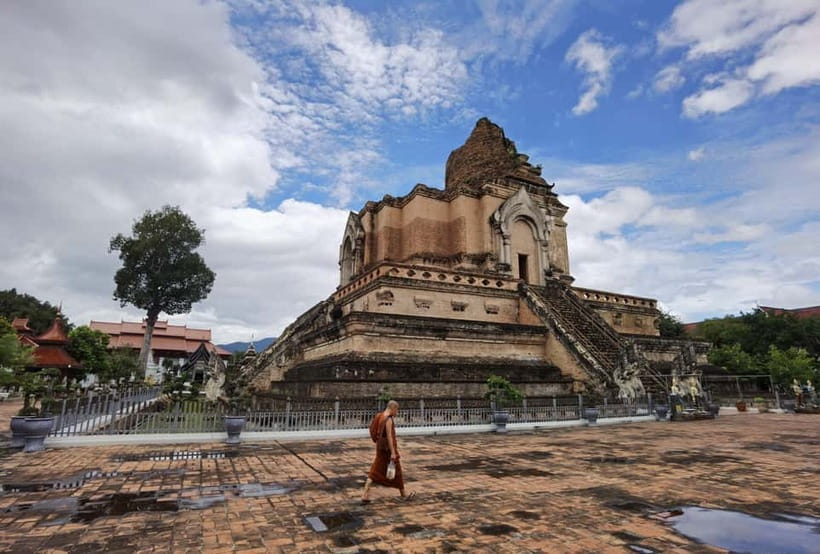
The first major stop is Wat Chedi Luang, home to one of Chiang Mai’s most impressive temple ruins. Its great chedi was built in the 14th century and was badly damaged by an earthquake in 1545. Even in ruined form, the scale of the structure gives you a strong sense of the temple’s former importance.
This is the stop where a guide adds the most immediate value. Without context, the weathered brick and stone can look unfinished or simply old. With an explanation of the chedi’s role and its place in Chiang Mai’s past, the ruin becomes easier to understand. Look closely at the surviving architectural details and the elephant figures associated with the base. Guides have used such details to explain how Buddhist ideas and local artistic traditions appear together in northern Thai temples.
Wat Chedi Luang is one of the two sites with a listed entrance fee. Set aside 50 THB per person. That cost is not included in the tour price, and you should account for it before deciding how much cash to carry.
Expect a stop with plenty of standing and photography. The chedi is large enough to make a strong visual impression, but the guide’s explanation is the real reason to linger. You may learn about the difference between a stupa and other temple buildings, the meaning of shrine elements, and how Buddhism shaped the old city.
Wat Phan Tao and the quieter Lanna details
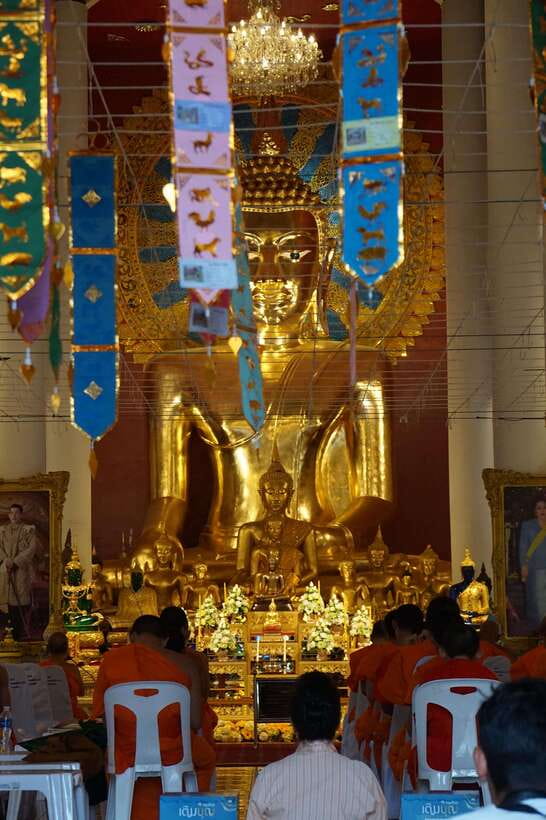
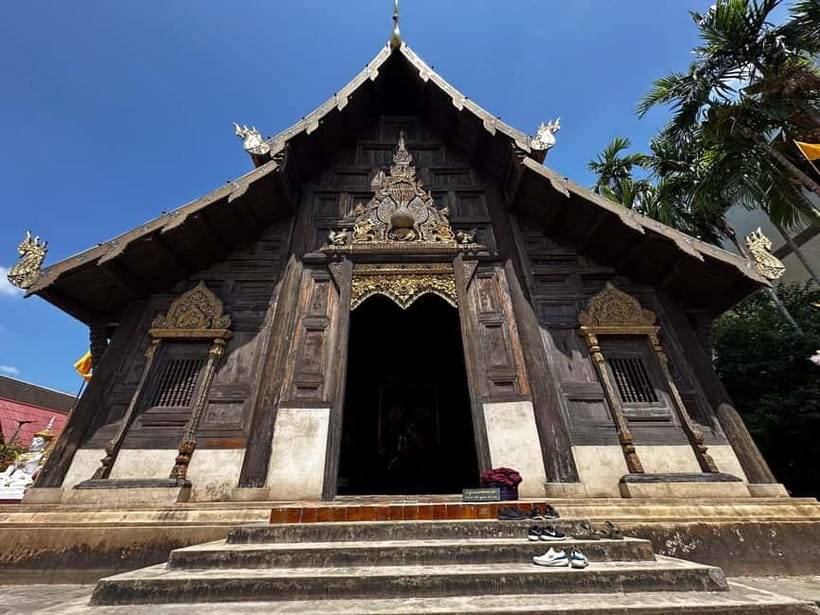
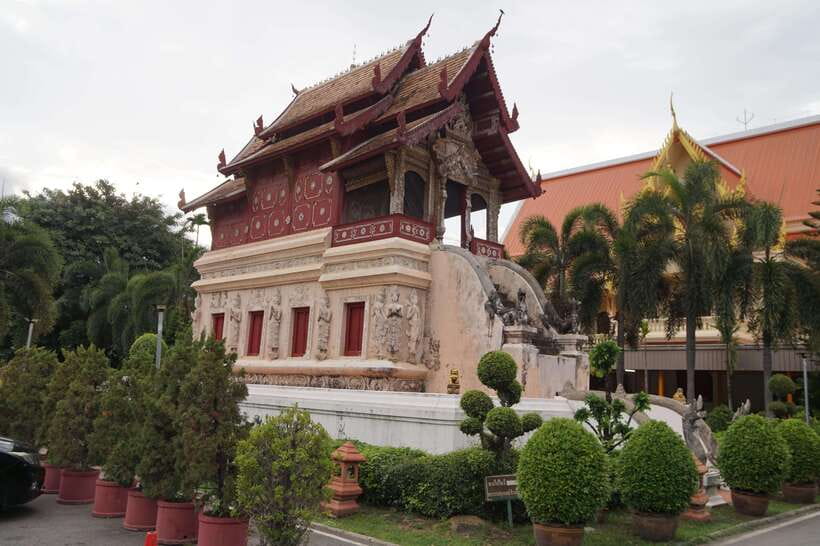
From Wat Chedi Luang, the route continues to nearby Wat Phan Tao. This is a smaller temple, but do not treat it as a filler stop. Its Lanna-style ordination hall and murals provide a different experience from the massive ruined chedi.
The building is known for its woodwork and painted scenes connected with the life of the Buddha. Here, you can focus on craftsmanship, story, and atmosphere rather than scale. A good guide helps you know what to look for in the murals and explains why the ordination hall has a particular role within the temple.
Wat Phan Tao is especially useful for understanding how varied Chiang Mai’s religious architecture can be. One site gives you a monumental stupa, while the next brings you closer to the details of a smaller working temple. The short walk between them also keeps the morning moving without requiring transport.
No entrance fee is listed for Wat Phan Tao, but temple rules still apply. Dress modestly, keep your voice low, and follow the guide’s instructions about shoes and entering buildings. The tour is cultural, but it takes place in religious spaces that continue to matter to local people.
More Temple Tours in Chiang Mai
- Chiang Mai: White, Red/Black & Blue Temples Tour with Lunch
★ 4.2 · 2,017 reviews - Chiang Mai: Doi Suthep and Wat Umong Enchanting Evening Tour
★ 4.6 · 1,811 reviews - Chiang Mai: Doi Suthep, Wat Umong, and Pha Lat Sunrise Tour
★ 4.7 · 1,425 reviews - Chiang Mai: Wat Pha Lat & Wat Phra That Doi Suthep Tour
★ 4.8 · 1,207 reviews
Wat Phra Singh, the Lion Buddha monastery
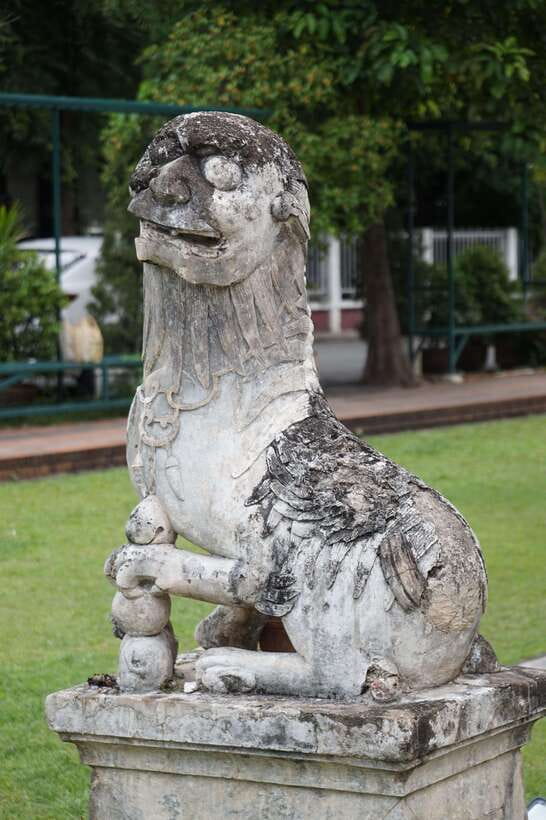
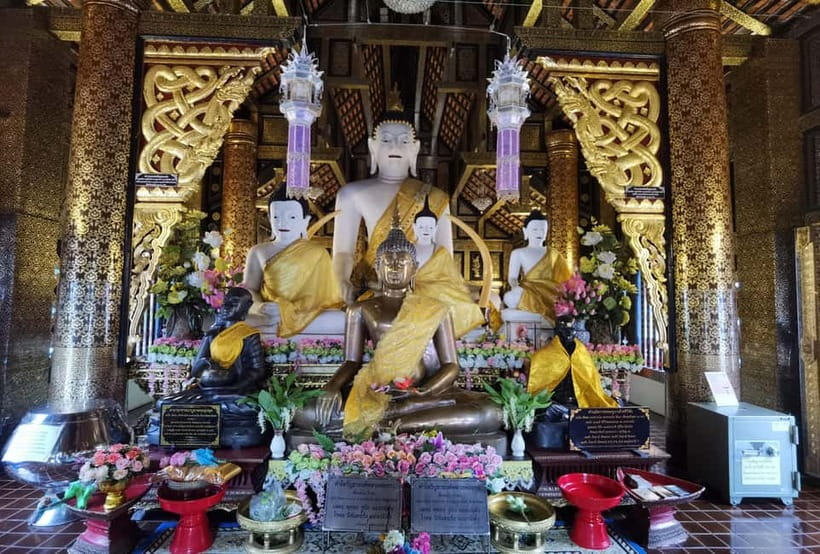
The final named stop is Wat Phra Singh, one of Chiang Mai’s most important temples. It is known as the Monastery of the Lion Buddha and houses the revered Phra Singh Buddha image. The temple grounds and architecture give the tour a fitting final chapter.
This is where the morning’s Buddhist explanations can come together. You will have already discussed images, rituals, temple design, and the role of the stupa. At Wat Phra Singh, you can use that background to look more carefully at the Buddha image and the surrounding buildings instead of simply moving from one photo point to the next.
Wat Phra Singh has a listed entrance fee of 40 THB per person. Together with Wat Chedi Luang, the stated fees total 90 THB. That is a small extra cost, but it should be clear at booking time because the $15 price does not cover it.
Allow time for standing during the guide’s talk. The tour is not a quick photo stop. Several people have valued the chance to ask questions at each temple, but one practical criticism is worth noting: a quiet guide can be difficult to hear in a large courtyard. Stay close to the guide, especially if the group is bigger or the temple is busy.
Buddhism explained through lived experience
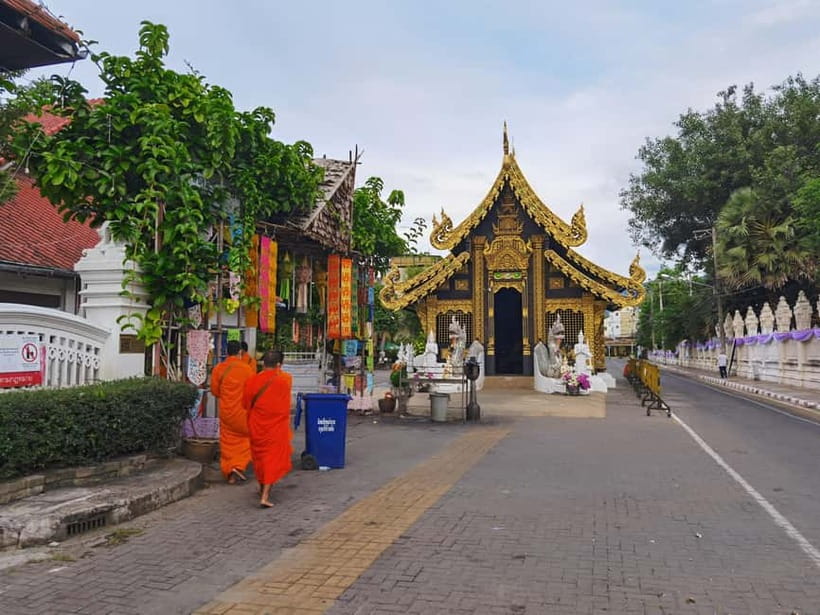
The most praised part of this tour is the Buddhist instruction. Several guides connected with the experience have been former monks, and that gives the conversation a personal angle that a standard sightseeing script may not provide.
You might learn how to pray, how meditation is practiced, why Buddha images appear in different positions, and what certain temple objects represent. Some groups have even taken part in a short meditation, received a monk’s blessing, or learned about rituals involving temple objects. These additions are not guaranteed, so treat them as possible extras rather than fixed parts of the advertised route.
The guide can also explain what it is like to become a monk and how monastic life fits into Thai society. That sort of discussion helps you understand Buddhism as a living practice rather than a set of old stories attached to monuments.
The quality of spoken English appears generally strong, but volume can vary. One person found a guide too quiet, while others praised clear and patient explanations. If you have hearing difficulty, position yourself near the guide and ask for a repeat when needed. This is a small group experience at times, but group size is not fixed in the supplied details.
Heat, walking, and the rhythm of the morning
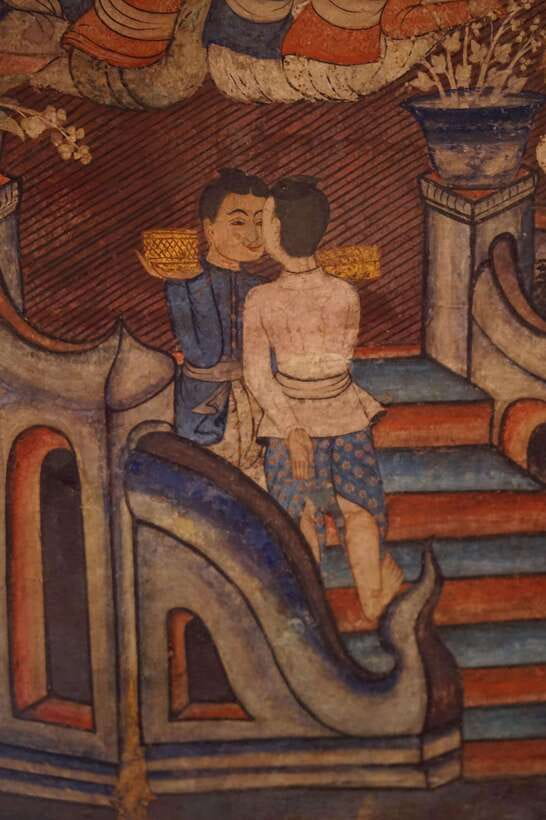
The walk is manageable for most people who can spend several hours on their feet, but the tropical climate changes the calculation. One person specifically suggested more pauses during intense heat. Another appreciated the early start because it kept the walk comfortable.
You should expect a lot of standing, even if the distance between temples is modest. The tour may include pauses for toilets, coffee, or questions, depending on the guide and group. Still, it is not designed as a slow seated tour.
February conditions may be more comfortable than the hottest part of the year, while April can be difficult for anyone unused to heat. That is not a promise about weather on your date, just a practical reason to bring water and dress for the climate.
The experience is not suitable for pregnant women, babies under one year, or people over 95. The restrictions also rule out climbing, drones, nudity, smoking indoors, drugs, and alcohol. These rules make the tour a poor fit if you want a casual, anything-goes outing, but they are sensible for temple visits.
What the price really includes
At $15 per person, this is a low-cost way to see three major temples with a live guide. The fee includes the guide and walking tour, but not hotel transport or the 90 THB in listed admission charges.
The value depends on how much explanation you want. If you are happy to wander, photograph the roofs, and read signs on your own, you may prefer a free morning in the old city. If you want to understand Buddhist customs, temple architecture, and Chiang Mai’s past, the price is easy to justify.
The strongest value comes from the guide’s time. You are not paying for transport, a meal, or an elaborate attraction. You are paying for interpretation. Former monks such as Son and Katoon have been especially praised for answering questions about meditation and monastic life, while Eddie and Big have been appreciated for their energy, local explanations, and photographs.
Some guides take photographs during the tour. That can be helpful when you are traveling alone or want a picture with the temple behind you, but it should be seen as a courtesy rather than a promised service.
The free cancellation policy allows you to cancel up to 24 hours before the tour for a full refund. You can also reserve now and pay later, which is useful if your Chiang Mai schedule is still changing.
Who should book this temple walk?
I would choose this tour if you are visiting Chiang Mai for the first time and want a framework for understanding the old city. It is also a good fit if you are curious about Buddhism and would rather ask a local guide questions than rely only on a guidebook.
It suits adults and older children who can walk and stand for several hours. It is less suitable if you want a private, highly polished tour with a fixed guide, air-conditioned transport, or long breaks.
The tour also works well at the start of a Chiang Mai stay. Once you know what a stupa, ordination hall, Buddha image, and temple courtyard represent, later visits become more rewarding. You can look around on your own with better questions in mind.
One thing to clarify before paying is the exact meeting point and the guide assigned to your date. The experience has been led by several people, and styles differ. Some are lively and funny, while others are quieter and more reflective.
Should you book it?
Book this tour if you want meaning behind the monuments, a morning walk instead of a vehicle-based circuit, and a chance to ask direct questions about Buddhism. At $15, it is a particularly good deal for curious first-time visitors who will make use of the guide.
Skip it if you dislike standing, cannot manage the heat, or prefer to explore temples at your own pace without a set four-hour schedule. Also remember the extra entrance fees and the need for modest clothing.
For most visitors, I would put this near the top of a first Chiang Mai morning. The temples are famous, but the real payoff is learning how to see them.
FAQ
How long does the Chiang Mai temple walking tour last?
The tour lasts four hours.
What time does the tour begin?
The stated start time is 8:20 am. Availability should be checked for the exact date.
Which temples are included?
The route includes Wat Chedi Luang, Wat Phan Tao, and Wat Phra Singh.
Is hotel pickup included?
No. Hotel pickup and drop-off are not included.
What languages are available?
The live guide is available in Thai and English.
Are temple entrance fees included?
No. Wat Chedi Luang has a listed fee of 50 THB, and Wat Phra Singh has a listed fee of 40 THB. No entrance fee is listed for Wat Phan Tao.
How much does the tour cost?
The listed price is $15 per person. The two stated temple admission fees are extra.
Is the tour suitable for people who want to learn about Buddhism?
Yes. The guide explains Buddhism, meditation, prayer, Buddha images, temple customs, and monk life. Some guides have formerly been monks.
What should I wear?
Wear clothing that covers your shoulders and knees. Shorts, short skirts, and sleeveless shirts are not allowed.
Can I cancel the booking?
Yes. You can cancel up to 24 hours in advance for a full refund. You can also reserve now and pay later.
More Walking Tours in Chiang Mai
- Chiang Mai: Local Food and Markets Guided Walking Tour
★ 4.3 · 175 reviews - Chiang Mai Untouched Elephant: Nature Walk & Waterfall Trek
★ 4.7 · 77 reviews - Chiang Mai: Historical and Culture Exploration Walking Tour
★ 4.6 · 40 reviews - Chiang Mai Old City & Temples Guided Walking Tour – 3 Hrs
★ 4.5 · 34 reviews
Just added around Chiang Mai
- Chiang Mai Best City Tour with Doi Suthep & Iconic Temples★ 4.5 · 24 reviews
- Chiang Mai Michelin Food Walking Tour with Professional Tour Guide★ 4.5 · 13 reviews
- Private Chiang Mai Temple Tour with Doi Suthep and Wat Umong★ 5.0 · 52 reviews
- Secret Waterfall and Bamboo Rafting from Chiang Mai★ 5.0 · 30 reviews
- Bua Tong Waterfall Adventure& Huge Cave included Thai Buffet Tour★ 4.5 · 28 reviews
- Chiang Mai Sak Yant Tattoo By Ajarn Tu★ 5.0 · 25 reviews
- Chiang Mai Airport Transfer by Private Van – Arrival or Departure★ 4.5 · 11 reviews
- Chiang Mai Scavenger Hunt and Sights Self-Guided Tour★ 5.0 · 8 reviews
Temple Tours, compared.
Chiang Rai Temples, Karen Tribe and Hot Springs
Read our review →
City Highlights Temple and Market Walking Tour
Read our review →
Bangkok by Night: Temples, Markets and Food Tuk-Tuk Tour
Read our review →
Grand Palace, Wat Pho, and Wat Arun Guided Tour
Read our review →
Tiger Cave Temple, Emerald Pool and Hot Springs Tour
Read our review →
Chiang Rai White Temple and Blue Temple Day Tour
Read our review →Browse the lists this tour appears in