
Reviewed · TEMPLE TOURS
Bangkok: City Highlights Temple and Market Walking Tour
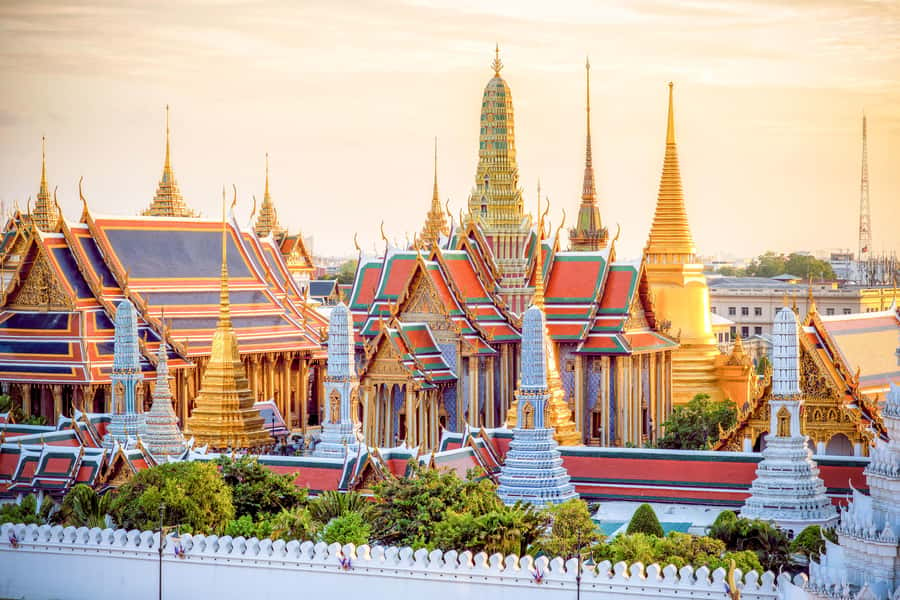
Bangkok’s grandest sights come in one compact outing: the Grand Palace, the Emerald Buddha Temple, Wat Pho, and Wat Arun. You’ll also pass the amulet market and Tha Thien Market, so the day is not just a parade of polished monuments. It gives you a quick look at royal ceremony, Buddhist practice, local commerce, and river transport.
I like the small group, limited to 10 people, and the way local transport is part of the experience rather than something hidden behind a tour bus. I also like the guides’ practical care. Mina, Kiwi, Johnny, Pete, Air, and others are praised for clear explanations, water breaks, help with boats, and directions after the tour. The main drawback is the heat, walking, and occasional uncertainty about exactly which transport is used. The tour can also feel brisk if you want long, quiet time at every temple.
Key points at a glance
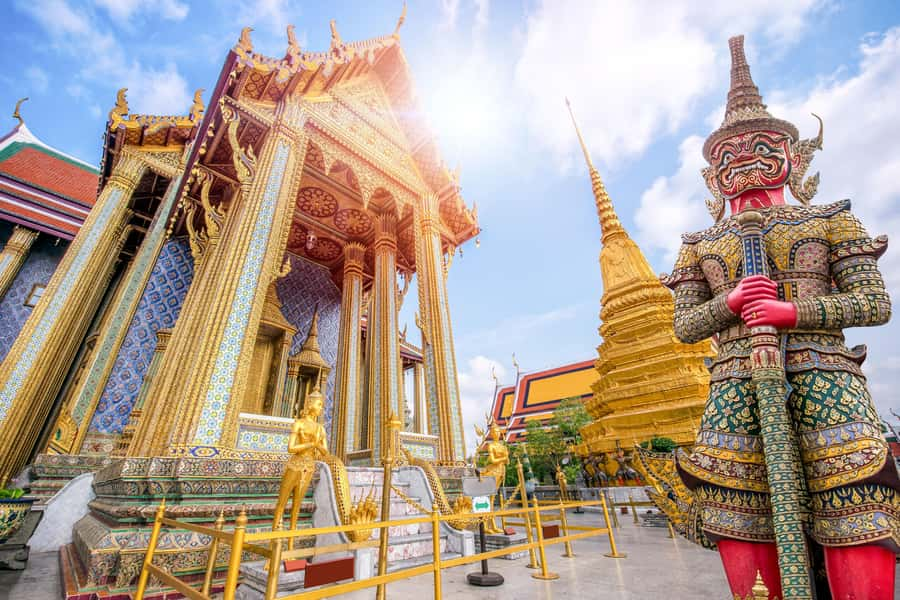
- Royal Bangkok in one morning: See the Grand Palace and Thailand’s most sacred temple, Wat Phra Kaew.
- A real local-transport outing: Public transport is part of the route, with some departures also involving a river boat or tuk-tuk.
- Wat Pho adds real depth: Learn about the Reclining Buddha, Thai massage, traditional medicine, and King Rama I.
- Wat Arun closes the temple circuit: Its tall riverside pagoda is covered in tiny pieces of colored glass and Chinese porcelain.
- Small groups matter: The maximum of 10 makes it easier to hear the guide and get help crossing Bangkok’s busy spaces.
- Dress and timing are important: Cover shoulders and knees, remove shoes inside temple buildings, and expect sun, walking, and steps.
Why this Bangkok temple tour works
At $42 per person, this is priced as a convenient introduction to Bangkok’s historic center rather than a slow, specialist temple study. Your fee includes a licensed guide, drinking water, and admission to the Grand Palace and Emerald Buddha Temple. Wat Pho and Wat Arun are included only with the relevant option, so check the exact package before paying.
That distinction matters. The Grand Palace and Wat Phra Kaew are the essential core, but Wat Pho and Wat Arun complete the picture. If you choose all four, you get a broad half-day view of Bangkok’s royal, religious, artistic, and riverfront identity without arranging separate tickets or figuring out every transfer yourself.
The experience lasts between two and four hours, depending on the option and starting time. That makes it useful early in a Bangkok stay, especially if you want a guide to explain the city before exploring on your own. It is less suited to anyone who dislikes heat, walking, or fixed group pacing.
The group size is one of the strongest features. With no more than 10 participants, a guide such as Mina, Kiwi, Johnny, or Pete can answer questions and keep an eye on the group. Several guides are praised for stopping in the shade, arranging water and toilet breaks, and helping people find the right boat or onward transport after the tour.
More City Tours in Bangkok
- Bangkok City Highlights Tour: Grand Palace & Three Iconic Temples
★ 4.5 · 542 reviews - Full Day Bangkok PRIVATE City Tour With Locals – Wat Trimit & Wat Pho tickets
★ 5.0 · 315 reviews - Bangkok: City Sightseeing Hop-On Hop-Off Bus Tour
★ 4.1 · 136 reviews
Meeting at River City Bangkok
You meet at the Big Country Experience office inside River City Bangkok by 9:00 AM, using one of the stated River City meeting points. This riverside shopping and arts complex is a useful starting place because the route quickly connects with Bangkok’s older Rattanakosin district.
Arrive with enough time to find the office. Bangkok traffic can be slow, and a late arrival is not a good way to begin a short tour. The exact starting time can vary, so check availability when booking.
From River City, you travel by public transport toward the temple district. The transport is part of the appeal. Depending on the selected route and conditions, your group may use a river boat, tuk-tuk, or other local transport. One guide helped a participant find the correct boat to ICONSIAM after the tour, while another made sure a participant reached a later Khon show. That kind of practical assistance can be worth as much as another fact about a temple.
The trip to the main sights is listed at about 30 minutes. During the journey, you pass the amulet market, one of the best-known old community markets on Rattanakosin Island. Amulets are tied to Thai religious life and personal protection, and this market gives you a glimpse of a side of Bangkok that a direct taxi ride would miss.
Entering Wat Phra Kaew and the Grand Palace
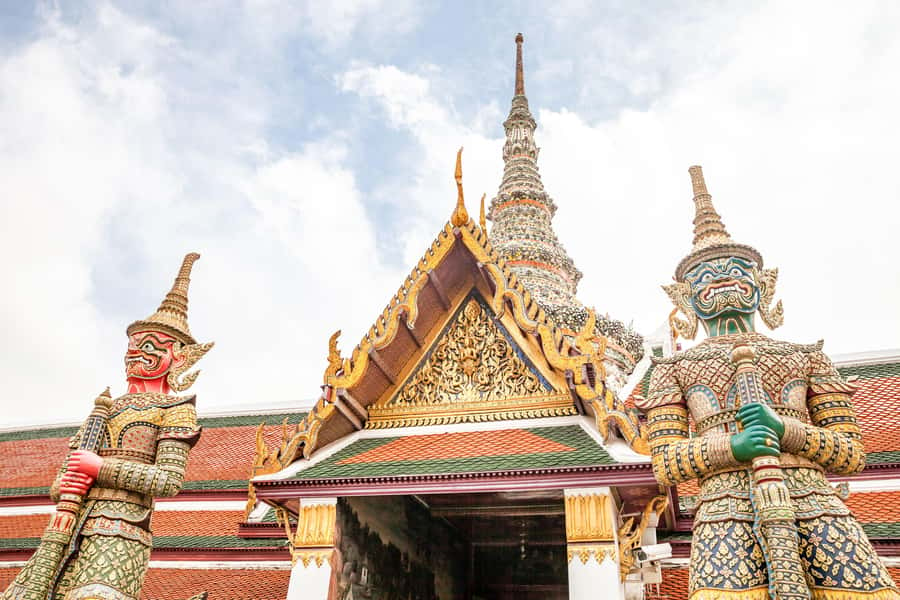
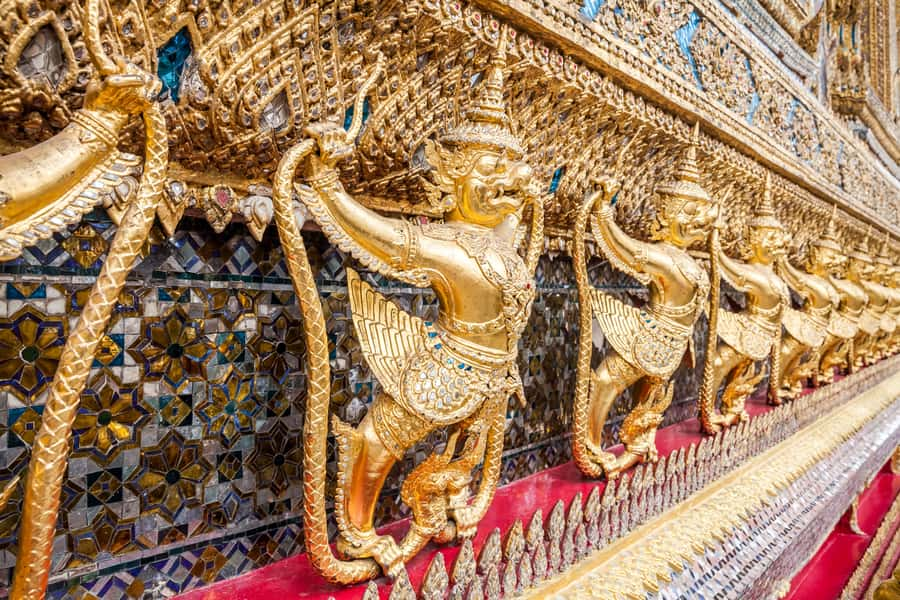
The first major stop is Wat Phra Kaew, officially Wat Phra Si Rattana Satsadaram and commonly called the Temple of the Emerald Buddha. It is regarded as Thailand’s most sacred Buddhist temple, and the setting makes that status clear almost immediately.
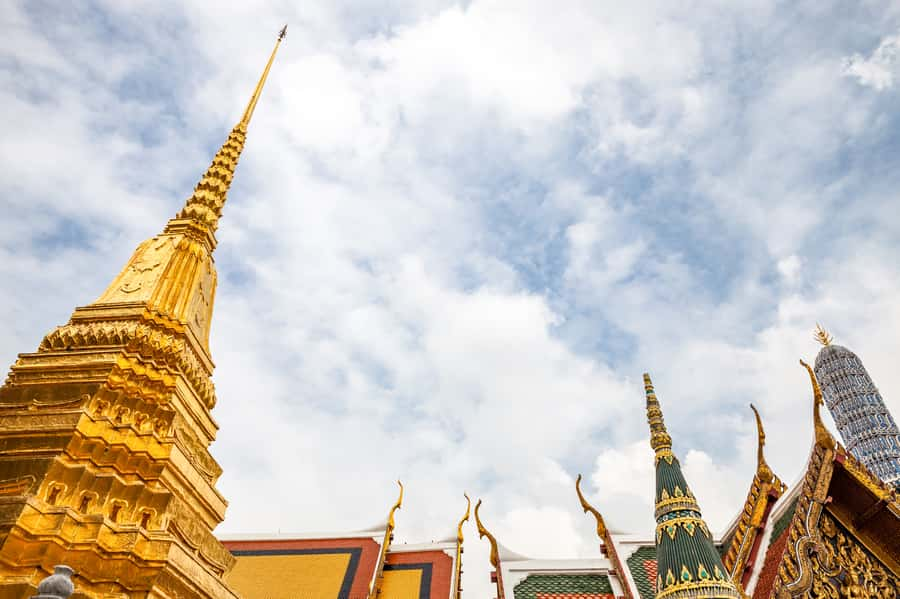
Expect brightly painted buildings, golden spires, glittering mosaics, guardian figures, and walls covered with decorative detail. You are not simply looking at one quiet shrine. The complex is a large ceremonial space where architecture, royal power, Buddhist belief, and Thai mythology meet.
The Emerald Buddha itself is small compared with the surrounding buildings, but its importance is immense. It is carved from jade, not emerald, and its clothing changes with the seasons. The guide may show you images of these outfits because photography is not allowed inside the chapel. That explanation helps you understand why the figure matters beyond its size and appearance.
You then explore the Grand Palace, the former official residence of Thailand’s kings. The palace is still used for official events, royal ceremonies, and state functions, so this is not simply an abandoned royal compound turned into a museum.
Your guide’s role is especially useful here. Peter, for example, is praised for explaining the figures in the palace murals and connecting them to Thai mythology and dynastic stories. A good guide turns the many statues, paintings, and ceremonial buildings into a story rather than a long list of names.
Plan for about an hour and a half at the Grand Palace and surrounding sights. That is enough time to see the key areas, but not enough for a leisurely study of every mural or building. The grounds can feel crowded and exposed, and the bright stone and gold reflect the sun. Bring water, use shaded pauses, and avoid scheduling this as a rushed stop between other fixed appointments.
The rules that make the palace visit smoother
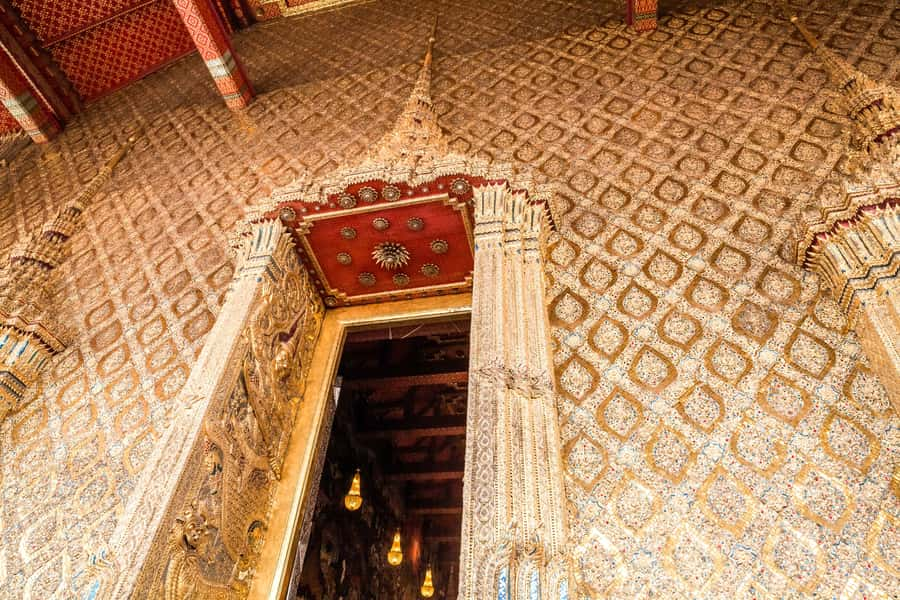
Wat Phra Kaew is a national shrine, so clothing rules are enforced. You must cover your shoulders and knees, and strapless shoes are not allowed. Sleeveless shirts are specifically prohibited.
Wear light clothing that still covers you properly. Shoes must be removed before entering temple buildings, so choose footwear that is easy to take off and put back on. Photography is allowed in the Royal Palace grounds and the Emerald Buddha compound, but not inside the buildings.
These rules are more than minor packing advice. If your clothing is unsuitable, you risk delays or being unable to enter key interiors. A scarf may help with coverage, but it is safer to arrive dressed appropriately from the start.
Restrooms are available, and the guides regularly help with breaks. That is useful because Bangkok’s morning heat can be demanding even before noon.
More Temple Tours in Bangkok
- Bangkok by Night: Temples, Markets and Food Tuk-Tuk Tour
★ 5.0 · 3,752 reviews - Bangkok: Grand Palace, Wat Pho, and Wat Arun Guided Tour
★ 4.8 · 3,632 reviews - Bangkok: Temples, Canals & Local Life Bike Tour
★ 4.9 · 3,511 reviews - Bangkok: Grand Palace and Wat Phra Kaew Guided Walking Tour
★ 4.4 · 2,417 reviews
Walking past Tha Thien Market to Wat Pho
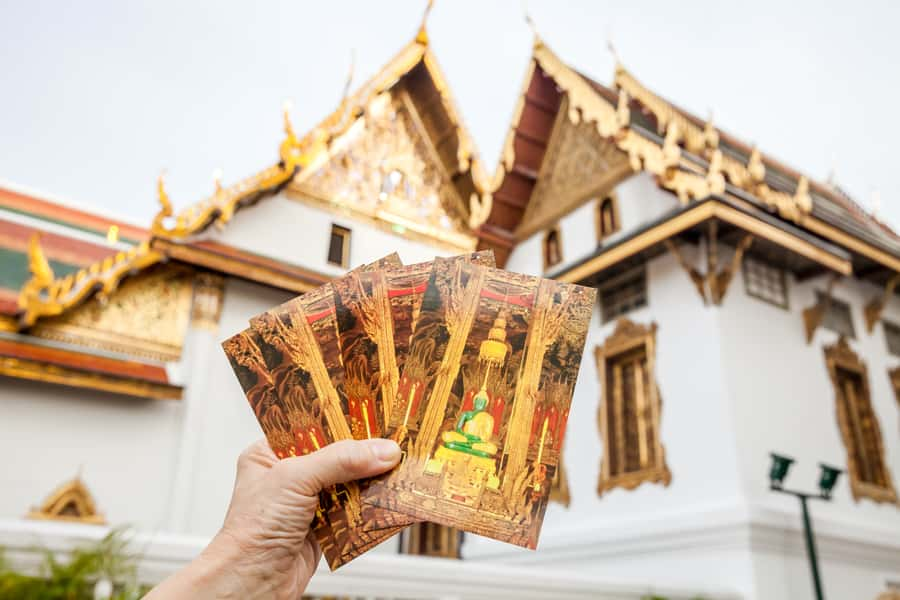
After the Grand Palace, the route continues toward Wat Pho if you select that option. On the way, you pass Tha Thien Market, a traditional food market known for dried and salted seafood and wholesale goods.
This is a short look rather than a dedicated food tour. You may notice strong smells, practical displays, and the working side of the neighborhood. It provides a useful contrast with the formal palace grounds: one area represents royal ceremony, while the market shows everyday trade beside the river.
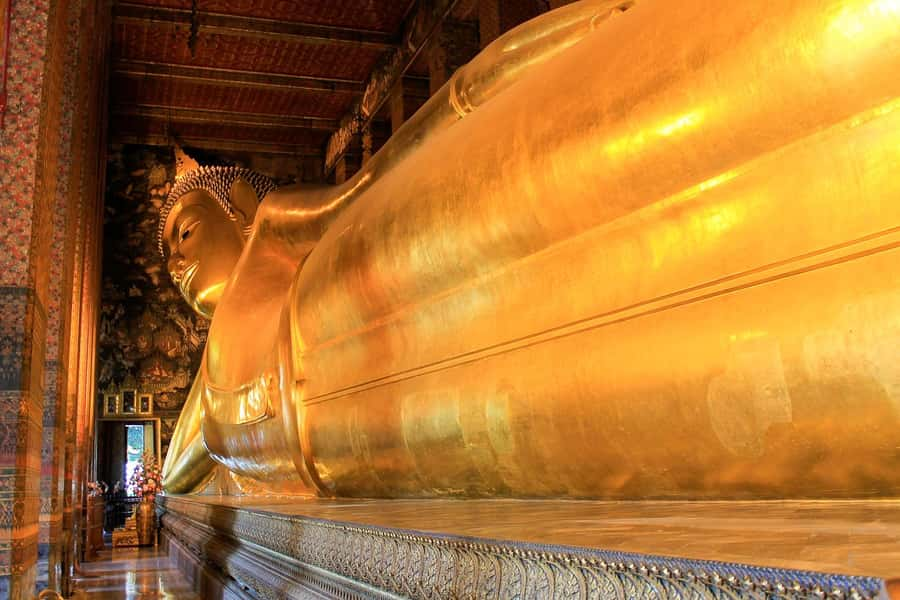
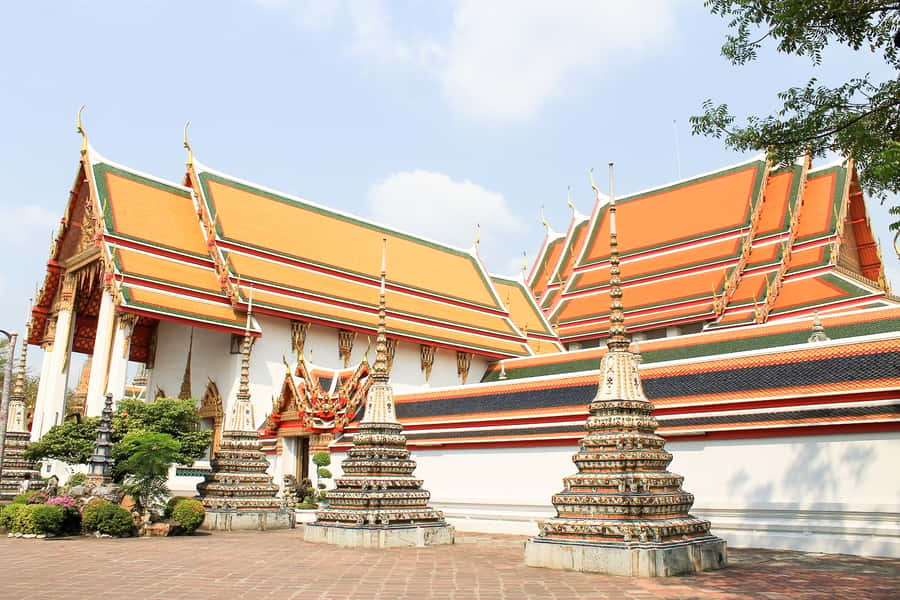
Wat Pho is one of Bangkok’s most important temple complexes and is officially classed among Thailand’s highest-grade first-class royal temples. Its best-known feature is the Reclining Buddha, a huge gilded figure that fills its building. The statue’s size can be hard to take in from one position, so move slowly along the interior if the group has room.
The guide can explain the Buddha’s posture and the temple’s wider role. Wat Pho was rebuilt by King Rama I on an earlier temple site and became his main temple, with some of his ashes enshrined there. It was also an early center for public medical education. Marble illustrations and inscriptions were placed around the complex as public teaching material.
Wat Pho is widely recognized as the birthplace of traditional Thai massage, which is still taught and practiced there. The temple’s medical knowledge was also recognized by UNESCO through its Memory of the World Programme. Those details give the site unusual depth. You are not only visiting a beautiful shrine, you are seeing a place connected to education, healing, royal patronage, and religious life.
The downside is that Wat Pho can feel busy and visually crowded. There is a great deal to see in the buildings, courtyards, inscriptions, and decorations, but a short group tour cannot cover every corner. Listen for the guide’s main points, then use any free time to look closely at the details that interest you most.
Crossing to Wat Arun by the Chao Phraya
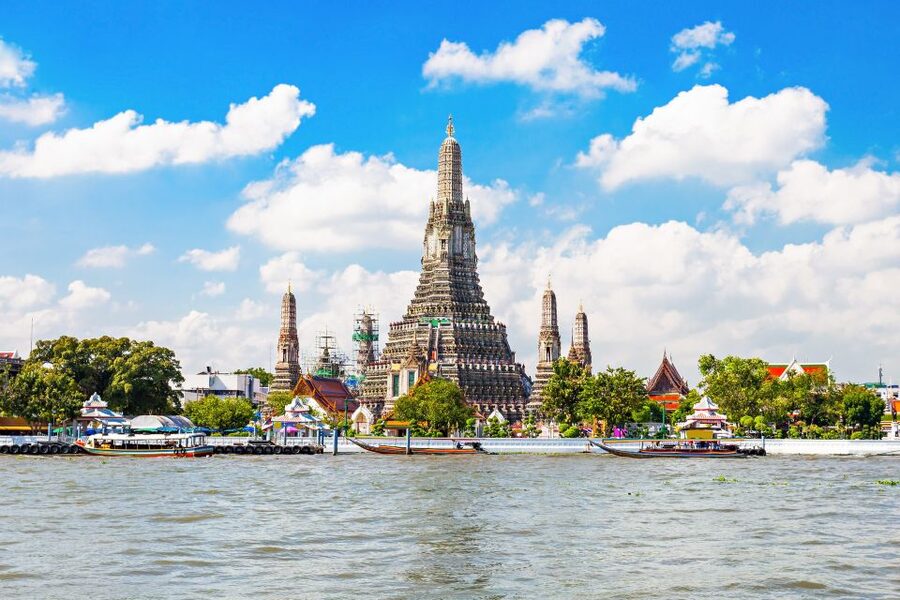
The final major temple is Wat Arun, or the Temple of Dawn. It sits beside the Chao Phraya River and is known for its tall central tower, listed here at about 70 meters. Its surface is decorated with tiny pieces of colored glass and Chinese porcelain, creating a very different look from the gold-heavy Grand Palace.
Wat Arun is particularly effective from a distance, where the full tower rises above the riverfront. Up close, the decoration rewards slow looking. The small ceramic pieces create patterns that are easy to miss if you only stop for a quick photograph.
The complex also includes a bell tower and large statues. Your guide can help you read the design rather than treating it as a simple photo stop. Its name, Temple of Dawn, is familiar to many visitors, but the riverside setting and detailed ceramic work are what make the visit memorable.
The tour ends near Tha Tien, close to the Grand Palace, according to the meeting and drop-off information. Some details also describe the activity as ending back at the meeting point, so confirm the final drop-off for your chosen option. Either way, the location is useful for continuing around the old city, finding food, or arranging a river boat onward.
How the guides shape the day
The strongest pattern in the feedback is not one single guide or scripted performance. It is the care shown by several guides. Air is described as kind and well prepared. Tan is praised for clear information. Johnny is repeatedly described as friendly, entertaining, and attentive, while Kiwi is noted for energy, temple explanations, and useful food advice.
Mina receives especially strong praise for mixing information with interaction and for helping people understand Buddhist customs. Pete is valued for historical storytelling and for keeping an eye on water and toilet breaks. These names suggest that guide assignment varies, so you should not book expecting one specific person unless the operator confirms it.
The practical support matters. Guides have helped participants with boats, taxis, later shows, and onward directions. One guide kept the group moving during thunderstorms, and another helped a participant leave early when a husband needed to return to the hotel.
You should still manage your own expectations. A small group does not mean a private tour, and the pace must suit several people. The guide can explain, organize, and adjust within reason, but you will still be walking through public places with crowds, heat, and changing transport conditions.
Is $42 good value?
For $42, the tour is good value if you want the main admissions and a clear route handled for you. The guide, drinking water, Grand Palace admission, and Emerald Buddha Temple admission are included. The Wat Pho and Wat Arun fees depend on the option you choose, so compare the package carefully.
The value is strongest for a first visit. Bangkok’s historic center has confusing streets, busy crossings, river piers, and several major temples close together but not always easy to connect. Public transport adds an authentic element, while the guide removes much of the guesswork.
It is less compelling if you already know the palace district and prefer to set your own pace. You may want longer at Wat Pho, more time at the markets, or a quiet visit without a group. Personal expenses are not included, and the tour does not present itself as a food-focused market walk.
Free cancellation up to 24 hours ahead and reserve-now, pay-later booking make it easier to fit into a changing Bangkok schedule. Still, the real decision is the amount of structure you want.
Who should book this experience?
I would choose this tour for a first-time Bangkok visit, solo visitors who want company, couples who prefer a guide, and anyone interested in understanding the meaning behind the temples rather than collecting photographs. The maximum group of 10 is a good middle ground between a private tour and a large coach outing.
It also suits people who want help using local transport. The river boat and tuk-tuk experiences described by participants are not just transfers. They give you a feel for how the old city connects across the Chao Phraya and its busy streets.
I would think twice if you have limited mobility, dislike removing shoes, or cannot manage heat and extended walking. The supplied information does not describe an accessibility arrangement, so ask the operator directly if you have specific mobility needs.
Should you book it?
Book it if you want Bangkok’s major historic sights explained in one organized morning, with the Grand Palace, Emerald Buddha Temple, and optional Wat Pho and Wat Arun included in a small group. The guides are a major reason to choose it, especially if you value history, cultural context, and practical help after the tour.
Skip it if your priority is solitude or a slow photographic visit. For everyone else, $42 is a sensible price for a well-planned introduction, provided you dress correctly, carry water, and choose the package that includes every temple you want to see.
FAQ
Where does the tour start?
You meet your guide at the Big Country Experience office at River City Bangkok. The meeting time is listed as 9:00 AM, though you should check the selected date and starting time when booking.
Where does the tour end?
The stated drop-off is at Tha Tien near the Grand Palace, with Tha Tien Market also listed as a drop-off point. Some activity details say it ends back at the meeting point, so confirm the exact ending location for your chosen option.
How long does the tour take?
The activity lasts between two and four hours. The exact duration depends on the selected option and available starting time.
Which languages are available?
Live guides are available in English and German.
What admissions are included?
Admission to the Grand Palace and Emerald Buddha Temple is included. Wat Pho and Wat Arun admission fees are included only if you select the relevant option.
What should I wear?
You must avoid bare shoulders and knees, sleeveless shirts, and strapless shoes. Wear suitable clothing from the start because the Emerald Buddha chapel is a national shrine.
Can I take photographs inside the temples?
Photography is allowed in the Royal Palace grounds and the Emerald Buddha Temple compounds, but not inside the buildings. You must remove your shoes before entering temple buildings.
Can I cancel or pay later?
You can cancel up to 24 hours in advance for a full refund. The reserve-now, pay-later option lets you hold a place without paying at the time of booking.
More Markets in Bangkok
- Bangkok: Damnoen Saduak Market and Maeklong Railway Market
★ 4.5 · 26,723 reviews - The Old Siam: Damnoen Saduak and Maeklong Railway Market
★ 4.5 · 10,992 reviews - Bangkok: Train Market & Floating Market with Boat Ride
★ 4.7 · 9,547 reviews - Bangkok: Floating Market and Train Market Experience
★ 4.8 · 3,998 reviews
More Walking Tours in Bangkok
- Bangkok: Wat Pho and Wat Arun Guided Walking Tour
★ 4.6 · 1,720 reviews - Bangkok Authentic Tasting Thai-Chinatown Walking Food Tour
★ 4.9 · 852 reviews - Bangkok: Discover a Taste of Chinatown – 2 Hr Walking Tour
★ 4.2 · 152 reviews - Bangkok: Grand Palace and Wat Arun Guided Walking Tour
★ 4.5 · 118 reviews
Just added around Bangkok
- Wonderful Pearl Dinner Cruise★ 3.5 · 27 reviews
- Yoga in the Park Thailand★ 5.0 · 12 reviews
- re:leaf spa and massage★ 4.0 · 10 reviews
- 3-Hour Bangkok Walking Tour: Wat Pho and Wat Arun★ 5.0 · 102 reviews
- White Orchid Sunset Dinner Cruise Calypso Ladyboy Cabaret Show★ 4.0 · 10 reviews
- Visit temples in and around Bangkok with a former monk of 10 years★ 5.0 · 30 reviews
- Morning Buddhist Almsgiving, Grand Palace and Flower Market Tour in Bangkok★ 3.5 · 9 reviews
- Visit Wat Pho and Wat Arun with Local Expert★ 4.0 · 14 reviews
Temple Tours, compared.
Chiang Rai Temples, Karen Tribe and Hot Springs
Read our review →
Bangkok by Night: Temples, Markets and Food Tuk-Tuk Tour
Read our review →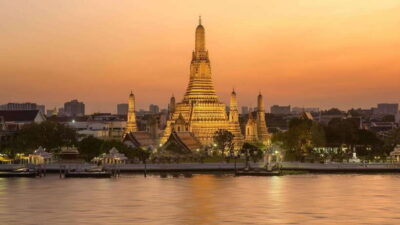
Grand Palace, Wat Pho, and Wat Arun Guided Tour
Read our review →
Tiger Cave Temple, Emerald Pool and Hot Springs Tour
Read our review →
Chiang Rai White Temple and Blue Temple Day Tour
Read our review →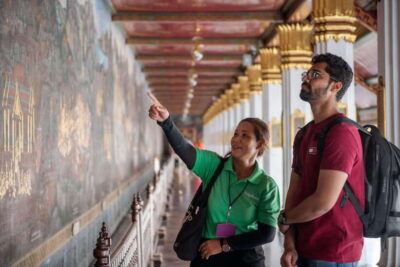
Grand Palace and Wat Phra Kaew Guided Walking Tour
Read our review →Browse the lists this tour appears in