
Reviewed · TEMPLE TOURS
Bangkok: Wat Pho and Wat Arun Guided Walking Tour
Bangkok’s best temple pair fits neatly into this three-hour walking tour. You’ll see Wat Pho’s huge reclining Buddha, then cross the Chao Phraya area to Wat Arun, whose pale central chedi is covered in tiny pieces of colored porcelain. These are not quiet, obscure shrines, but they are essential Bangkok sights, and a guide helps turn beautiful buildings into meaningful places.
I like the way the tour gives you clear cultural context rather than sending you into the courtyards alone. Guides such as Nancy, Sun, Jack, Surina, and Tee have been praised for explaining Buddhism, Thai history, and temple customs in a friendly, easygoing way. I also like the coconut water break and the chance to take photos without rushing every minute.
The main drawback is practical: the listed price does not include temple admission, so you’ll pay 300 Thai baht for Wat Pho and 200 baht for Wat Arun on top of the tour cost. Bangkok heat, hard pavement, crowds, and a strict dress code also make this a poor fit for anyone needing an easy-access outing.
Key points to know before you book
- Two major temples in three hours: You get a focused introduction to Wat Pho and Wat Arun without giving up a full day.
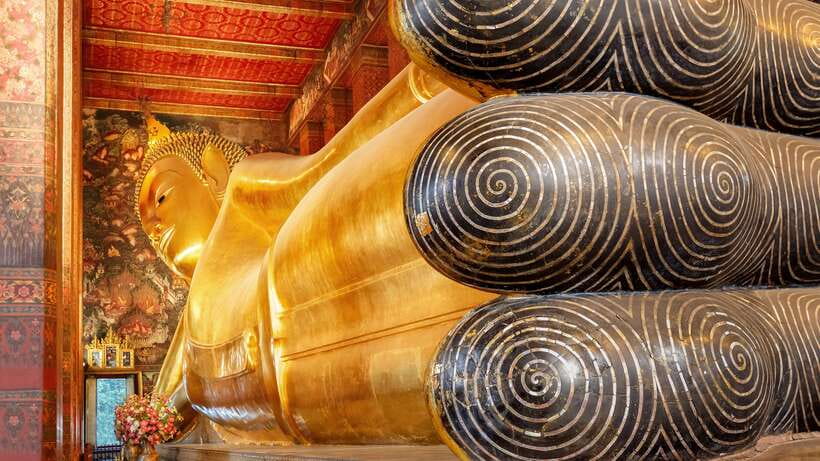
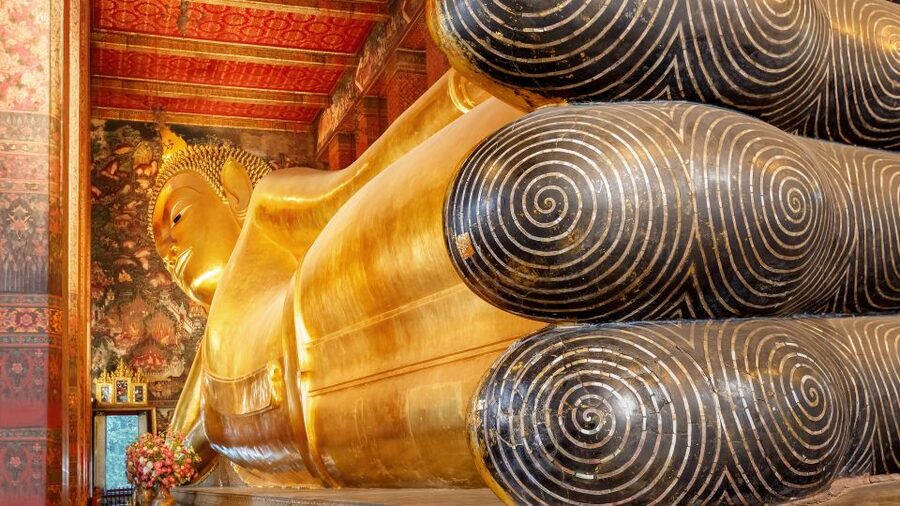
- Wat Pho’s 46-meter reclining Buddha: The statue is the headline sight, but the surrounding shrines and temple details deserve time too.
- Wat Arun’s mosaic-covered chedi: This riverside temple offers some of Bangkok’s most memorable photographs.
- Guides add the human story: Nancy, Sun, Tee, Jack, and other guides are praised for clear explanations, humor, patience, and help with photos.
- Budget for 500 baht in entry fees: The tour price is $17 per person, but temple tickets are separate.
- Dress and heat matter: Cover your shoulders, back, underarms, and knees, and bring sun protection, water, and cash.
Why these two Bangkok temples work well together
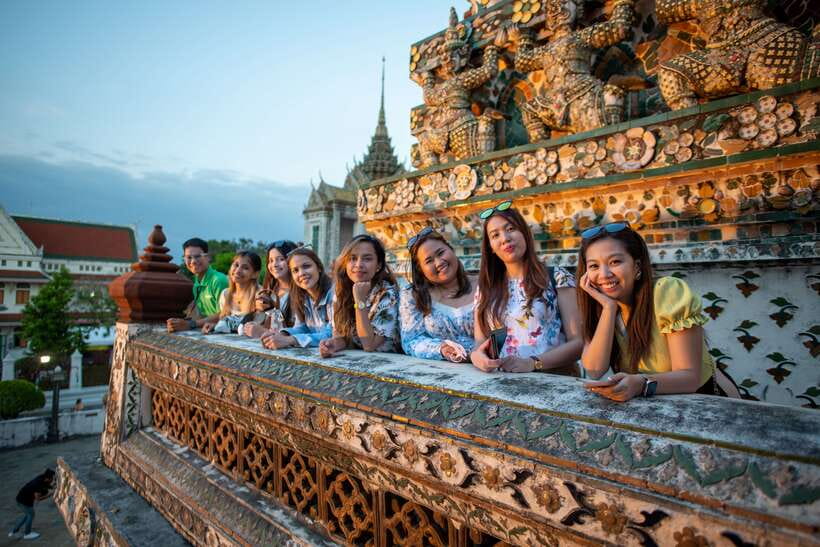
Wat Pho and Wat Arun show two different sides of Bangkok’s temple tradition. Wat Pho feels expansive and detailed, with courtyards, colorful shrines, stupas, murals, and the famous reclining Buddha. Wat Arun is more immediately dramatic, especially when you see its tall white chedi beside the Chao Phraya River.
That contrast gives the tour a sensible shape. At Wat Pho, you look closely at Buddhist images and temple design. At Wat Arun, you step back and appreciate a single bold structure covered with thousands of mosaic pieces. You get both close-up detail and a broad landmark view in one morning or afternoon.
I would choose this outing early in a Bangkok visit. It gives you useful basics about Thai Buddhism, royal history, temple etiquette, and local architecture. Later visits to other temples will make more sense because you’ll already recognize some of the symbols and layout.
More Temple Tours in Bangkok
- Bangkok: City Highlights Temple and Market Walking Tour
★ 4.5 · 3,990 reviews - Bangkok by Night: Temples, Markets and Food Tuk-Tuk Tour
★ 5.0 · 3,752 reviews - Bangkok: Grand Palace, Wat Pho, and Wat Arun Guided Tour
★ 4.8 · 3,632 reviews
Meeting at Tha Tian Pier
The meeting point is Tha Tian Pier, a central location near the two temples. You should arrive 10 minutes before the scheduled start and look for a guide holding a TripGuru sign. The team sends an email the evening before to confirm the meeting time and point, so check your inbox rather than relying only on the original booking details.
The tour offers several start times, which is helpful if you are fitting the temples around a river trip, market visit, or evening plans. Bangkok traffic can be slow, and one guide even waited patiently when a tour member arrived late because of congestion. Still, I would not plan to drive to the meeting point if you can avoid it. One practical tip from the experience is to use the MRT when possible, then allow extra time for the final connection.
The tour begins and ends at Tha Tian Pier. That makes it easy to continue sightseeing in the old city afterward, though your own onward transport is not included.
Wat Pho and the 46-meter reclining Buddha
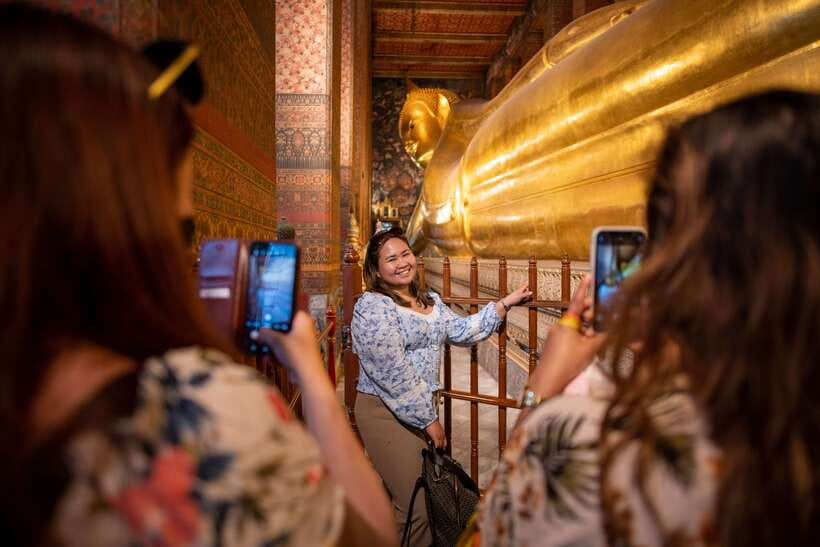
Wat Pho usually provides the tour’s most concentrated burst of detail. The reclining Buddha measures 46 meters long and is covered in gold-colored decoration. Its enormous scale can make the surrounding building feel surprisingly narrow, so follow your guide’s advice on where to stand and how to take in the statue.
Do not treat Wat Pho as a one-statue stop. The grounds include colorful mosaic shrines and many different temple structures. Your guide can point out how the buildings fit together and explain parts of Buddhist temple design that are easy to miss when you are focused on photographs.
This is also where a guide’s value becomes clear. Nancy has been praised for explaining Buddhist culture and even showing people how to pray. Other guides, including Jack and Surina, have been appreciated for answering questions about Thai history and the meaning of the temple’s different parts.
The planned visit lasts about 1.5 hours. That is enough for a useful introduction and photographs, but not enough for a slow, independent study of every courtyard. If you enjoy lingering over architectural details, you may wish to return to Wat Pho on your own another day.
Temple etiquette is important. You may need to remove your shoes in certain buildings, follow instructions about photography, and keep your voice low near worshippers. The guide will help, but respectful behavior remains your responsibility.
Wat Arun beside the Chao Phraya River
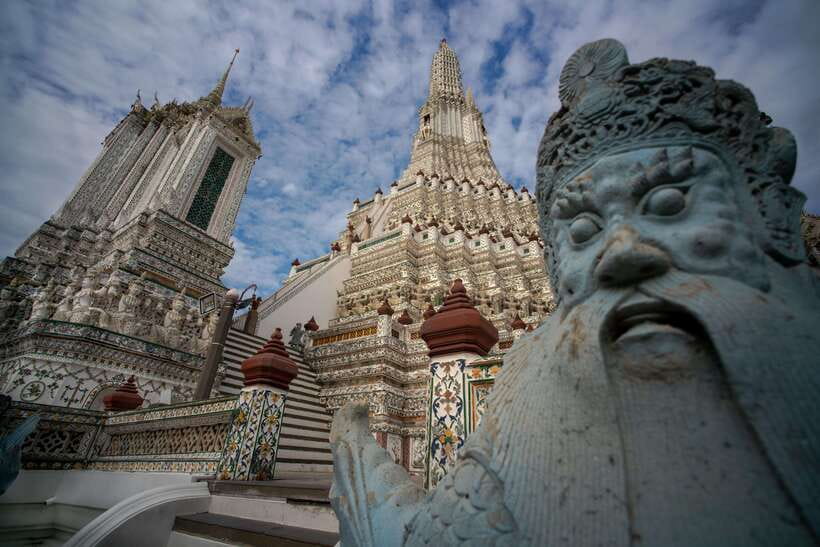
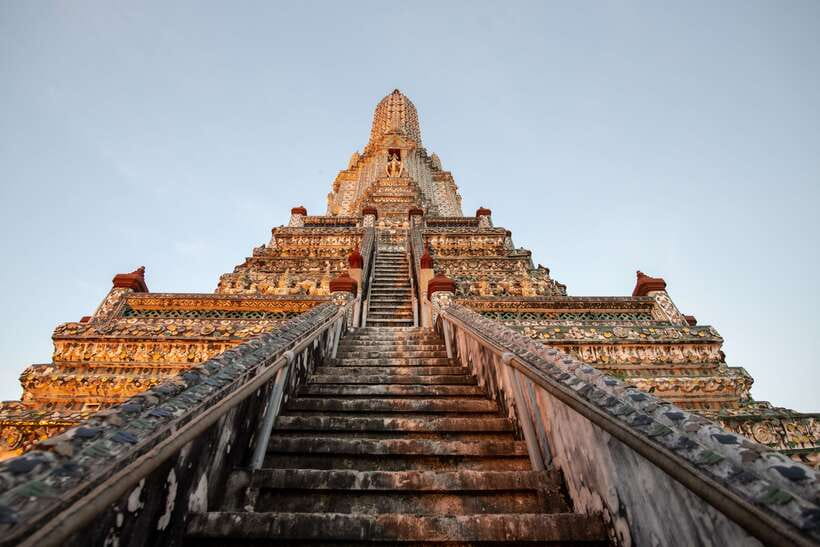
Wat Arun is the tour’s big visual moment. Its enormous white central chedi is decorated with thousands of colorful mosaic pieces that catch the light in a different way as you move around it. The temple is about 300 years old and has become one of Bangkok’s most recognizable sights.
I like Wat Arun because it rewards both the quick visitor and the detail-minded one. You can take in the whole structure from a distance, then look closely at the small ceramic patterns covering the surface. The setting beside the Chao Phraya adds to the sense of place, since the temple is closely tied to Bangkok’s riverfront identity.
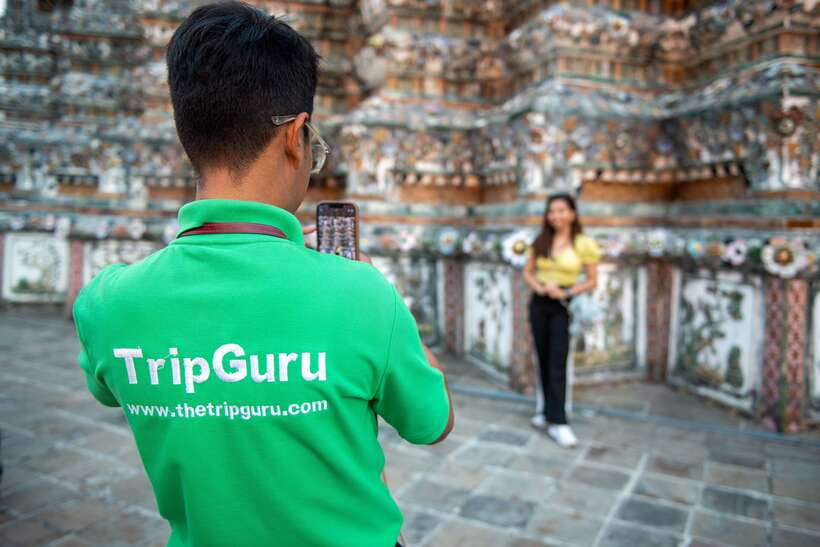
The visit is scheduled for roughly 1.5 hours. That leaves room for an explanation of the temple, time to walk around, and a pause for photos. Several guides have been praised for finding good picture spots and taking individual photographs, which is useful if you are exploring alone or want everyone in your group to appear in the record.
The precise order can vary. The stated route lists Wat Pho first and Wat Arun second, while one account describes visiting Wat Arun first so the group could spend extra time at Wat Pho afterward. Confirm the order with your guide at the start. Either way, the two stops remain the heart of the outing.
More Walking Tours in Bangkok
- Bangkok: Grand Palace and Wat Phra Kaew Guided Walking Tour
★ 4.4 · 2,417 reviews - Bangkok Authentic Tasting Thai-Chinatown Walking Food Tour
★ 4.9 · 852 reviews - Bangkok: Discover a Taste of Chinatown – 2 Hr Walking Tour
★ 4.2 · 152 reviews - Bangkok: Grand Palace and Wat Arun Guided Walking Tour
★ 4.5 · 118 reviews
A walking tour that depends on your guide
The temples are impressive without help, but the guide determines how much you take away. The strongest pattern in the feedback is not one particular scripted speech. It is the guides’ ability to adjust the pace, answer questions, help with photos, and explain religious details in plain language.
Nancy receives repeated praise for warmth, patience, and detailed explanations. Sun is noted for her energy and care, including finding shaded places and checking on people struggling with the heat. Tee, a former monk, has been praised for his understanding of Buddhism and his sense of humor. Jack, Surina, Angie, Bond, Jimmy, and others are also singled out for clear explanations and a friendly manner.
That guide quality matters because the temples can be visually overwhelming. Without context, you may remember only gold, tile, statues, and tall roofs. With a good explanation, you begin to understand why different structures matter and how Buddhism connects to daily life in Thailand.
There is one fair warning. Street noise can make it hard to hear a guide, especially during busy periods. Two people specifically wished for a small microphone and speaker. Stay close, ask the guide to repeat key points, and position yourself near the front when the group stops.
Heat, walking, and the temple dress code
This is a walking tour in Bangkok, not a vehicle-based sightseeing trip. Wear shoes that are comfortable for extended walking and bring sunscreen, sunglasses, a hat, and insect repellent. The supplied coconut water is a welcome touch, but it should not replace your own extra water. One person specifically advised carrying an additional bottle.
Bangkok’s heat can change the experience. Sun was praised for finding shade and checking on people who were sweating heavily, but no guide can remove the humidity. Drink regularly, walk at a steady pace, and use the planned stops as chances to cool down.
Clothing rules are strict at some sites. Shoulders, underarms, backs, and knees must be covered. Bring a sarong, scarf, or light sweater, or wear clothes that already meet the requirements. This is not merely a style suggestion. Improper clothing can prevent entry or force you to buy a covering at the site.
Bring cash for entry tickets and any personal purchases. Food and drinks beyond the included coconut water are not part of the tour.
Is $17 good value?
At $17 per person, the tour is reasonably priced for three hours with a live guide, walking assistance, coconut water, and carbon-emissions offset credits. The key value is the interpretation. You are paying for help understanding two major sites, not just transport between them.
Remember to add 300 baht for Wat Pho and 200 baht for Wat Arun. That extra 500 baht changes the real cost, especially for a family or larger group. Hotel pickup and drop-off are also excluded, so you must get yourself to Tha Tian Pier.
For a first visit to Bangkok, I think the price works well if you want structure and explanation. It is less compelling if you already know both temples, prefer to set your own pace, or plan to spend half a day photographing every corner. The tour gives you a strong overview, not unlimited time.
The environmental measures are another modest plus. Water is provided in glass bottles, and the operator offsets carbon emissions through credits. That does not erase every impact of tourism, but it offers a lower-impact approach than a private vehicle tour.
Who should book this temple tour?
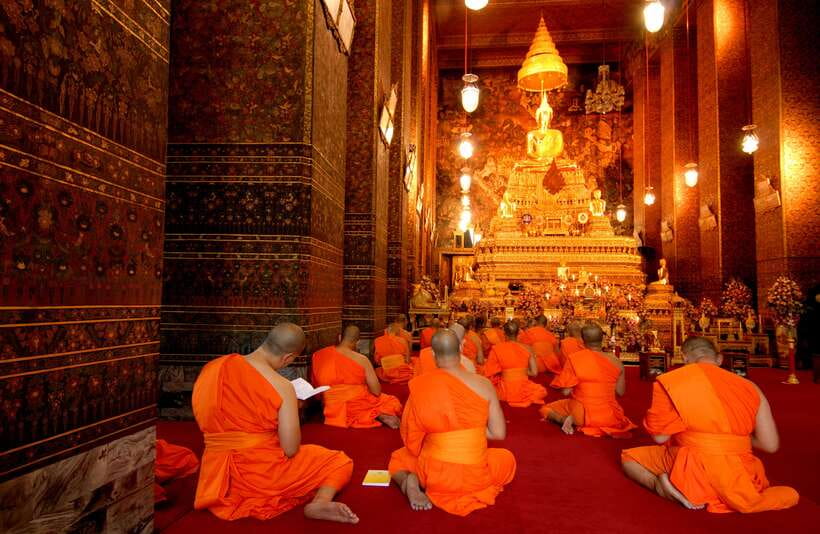
I would recommend it to first-time Bangkok visitors, solo travelers who want an easy way to meet a guide, couples seeking useful cultural background, and anyone with only a few hours in the old city. It also suits people who want help with temple etiquette and good photo locations.
It is less suitable for anyone with mobility impairments, heart problems, high blood pressure, or a pregnancy, since the activity involves walking and heat. The operator also specifically advises against it for pregnant women.
Families should consider the heat, clothing rules, and the need to keep children close in busy temple grounds. People who want a quiet spiritual visit may prefer arriving independently at a less crowded time.
Should you book it?
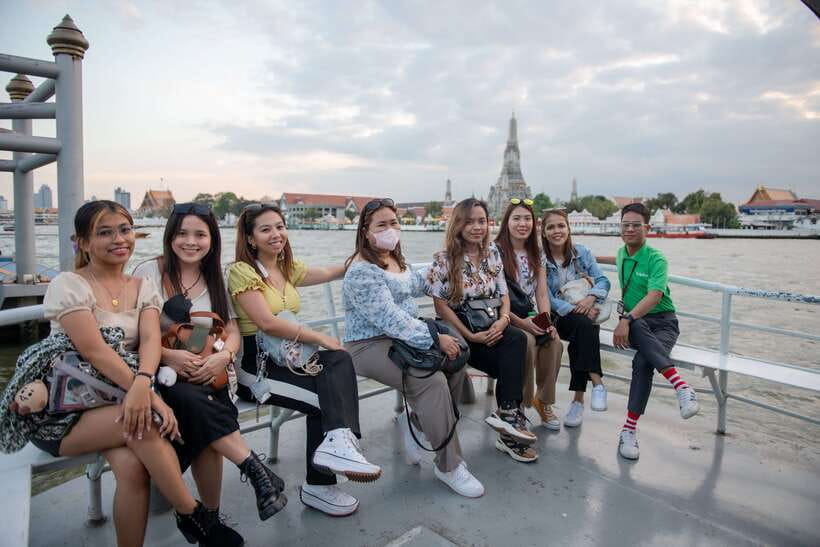
Book this tour if you want two essential Bangkok temples explained clearly in one compact outing. The strongest reasons are the guides, the well-matched sights, the manageable three-hour length, and the practical help with photos, customs, and temple layout.
Skip it if you already understand Wat Pho and Wat Arun or want complete freedom to wander. Also skip it if walking in Bangkok heat will be difficult. For most first-time visitors, though, the $17 guiding fee is fair once you understand that temple tickets cost extra. Bring covered clothing, good shoes, cash, and your own water, then let the guide handle the cultural details.
Free cancellation is available up to 24 hours before the activity, and you can reserve now and pay later. The tour runs in English and Chinese.
FAQ
Where does the tour begin and end?
It begins at Tha Tian Pier and returns there after visiting Wat Pho and Wat Arun.
How long does the tour last?
The tour lasts three hours. Each temple visit is planned for about 1.5 hours.
What is included in the price?
The price includes a live guide, the walking tour, coconut water, and carbon-emissions offset credits.
Are entrance tickets included?
No. Wat Pho entry costs 300 Thai baht, and Wat Arun entry costs 200 Thai baht.
What languages are available?
The tour is available with a Chinese-speaking or English-speaking guide.
What should I wear?
Wear clothing that covers your shoulders, underarms, back, and knees. Bring a sarong, scarf, or sweater if needed because the dress code is strict at some sites.
What should I bring?
Bring comfortable shoes, sunglasses, a hat, a camera, sunscreen, insect repellent, cash, and extra water.
Can I cancel the booking?
Yes. You can cancel up to 24 hours in advance for a full refund. You can also reserve the activity and pay later.
Just added around Bangkok
- Wonderful Pearl Dinner Cruise★ 3.5 · 27 reviews
- Yoga in the Park Thailand★ 5.0 · 12 reviews
- re:leaf spa and massage★ 4.0 · 10 reviews
- 3-Hour Bangkok Walking Tour: Wat Pho and Wat Arun★ 5.0 · 102 reviews
- White Orchid Sunset Dinner Cruise Calypso Ladyboy Cabaret Show★ 4.0 · 10 reviews
- Visit temples in and around Bangkok with a former monk of 10 years★ 5.0 · 30 reviews
- Morning Buddhist Almsgiving, Grand Palace and Flower Market Tour in Bangkok★ 3.5 · 9 reviews
- Visit Wat Pho and Wat Arun with Local Expert★ 4.0 · 14 reviews
Temple Tours, compared.
Chiang Rai Temples, Karen Tribe and Hot Springs
Read our review →
City Highlights Temple and Market Walking Tour
Read our review →
Bangkok by Night: Temples, Markets and Food Tuk-Tuk Tour
Read our review →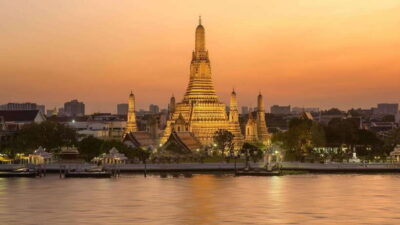
Grand Palace, Wat Pho, and Wat Arun Guided Tour
Read our review →
Tiger Cave Temple, Emerald Pool and Hot Springs Tour
Read our review →
Chiang Rai White Temple and Blue Temple Day Tour
Read our review →Browse the lists this tour appears in