
Reviewed · TEMPLE TOURS
Chiang Mai: Doi Suthep, Wat Umong, and Pha Lat Sunrise Tour
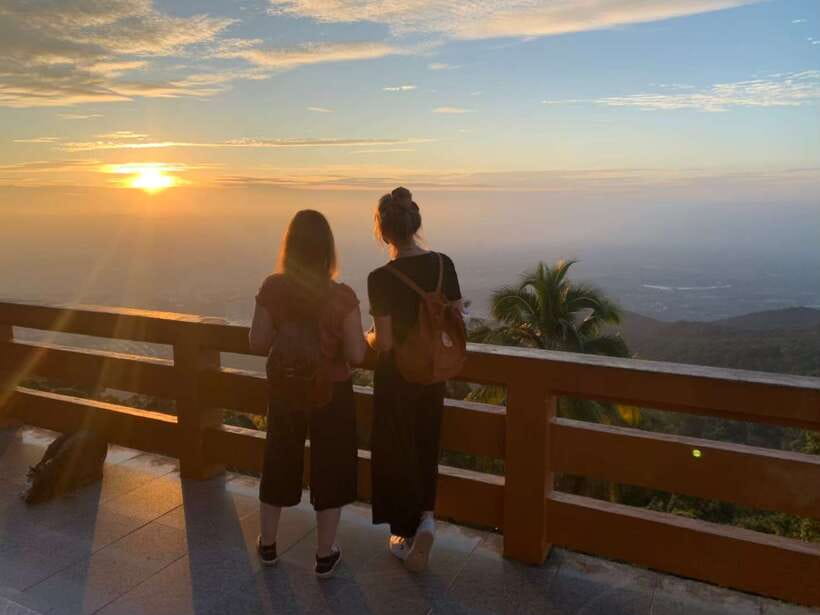
Watching dawn spread over Chiang Mai from Wat Phra That Doi Suthep is the reason to set an alarm for this tour. You climb 309 steps before sunrise, enter one of northern Thailand’s most important temples while it is still quiet, then continue to two very different forest temples.
I like the careful order of the morning and the range of places. Doi Suthep gives you the famous view, Wat Pha Lat brings a peaceful jungle setting, and Wat Umong adds old tunnels and a forest walk. I also like the guides: James, who spent five years living with monks, and guides such as Matt, Nuttaya, Leela, and Cookie have been praised for clear explanations and warm local insight.
The tradeoff is simple: this is an extremely early start, and the advertised four-hour schedule may run longer. Rain can also block the sunrise, and Wat Pha Lat may occasionally be closed, so you should book this for the temples and cultural context, not only for one perfect photo.
Key points to know before booking
- Doi Suthep before the crowds: Reach the golden temple near dawn, when the stairs and terraces can feel remarkably calm.
- Three temples, three moods: Expect a grand hilltop shrine, a jungle temple, and a forest temple with underground tunnels.
- Guides add real value: James has former-monastic experience, while other guides explain Buddhist customs, temple history, and offerings in clear English or Spanish.
- A physical but manageable morning: The 309-step staircase is the main effort, with additional walking at Wat Pha Lat and Wat Umong.
- Good value at $32: Transport, guide, entrance fees, hotel pickup and drop-off when selected, water, and carbon offset credits are included.
- Plan for extra time: Some departures have taken around five to five and a half hours, despite the stated four-hour duration.
Why the pre-dawn start is worth it
The tour begins while Chiang Mai is still dark. Depending on your booking, you either meet the guide at Tha Pae Gate, in front of McDonald’s, or arrange pickup from a hotel or registered accommodation in the central area.
You should be ready ten minutes early. Pickup is offered within about five kilometers of Tha Pae Gate and nearby parts of the Old City, including Chang Klan Road, Thapae Road, Wualai Road, the night bazaar area, Ton Lam Yai Market, and Warorot Market.
The ride to the mountain is in an air-conditioned vehicle. A small group is available, though the exact group size depends on the departure. Small groups make a difference here. You can hear the guide more easily on the temple terraces, ask questions without holding up a large crowd, and get help with photos.
The early hour has two practical benefits. First, you avoid much of the later traffic on the mountain road. Second, you reach Doi Suthep before the main wave of visitors. Several departures have reached the temple in time for quiet sunrise views, monk chants, and morning activity.
Bring a light jacket. Chiang Mai can feel chilly before dawn, especially at higher elevation, and one local participant specifically wished for a thicker sweatshirt. Once the sun rises, sunscreen, a hat, and sunglasses become useful.
More Temple Tours in Chiang Mai
- Chiang Mai: White, Red/Black & Blue Temples Tour with Lunch
★ 4.2 · 2,017 reviews - Chiang Mai: Doi Suthep and Wat Umong Enchanting Evening Tour
★ 4.6 · 1,811 reviews - Chiang Mai: 3 Hour Old City and Temples Guided Walking Tour
★ 4.6 · 1,568 reviews
Climbing the 309 steps to Doi Suthep
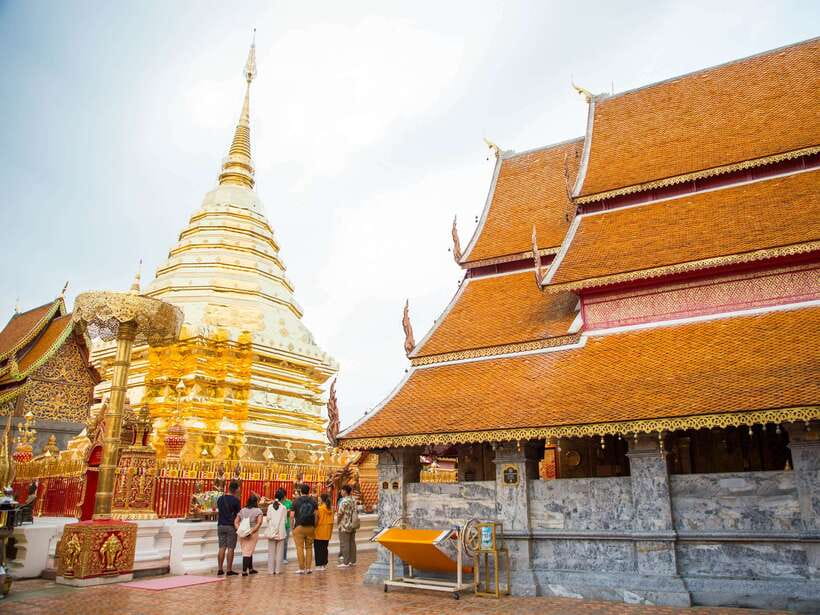
The morning’s main stop is Wat Phra That Doi Suthep, Chiang Mai’s famous hilltop temple. To reach the entrance, you climb the long staircase of 309 steps. The stairs are manageable for many people, but they are not a minor detail when you are walking in the dark or carrying a camera bag.
Take your time. The guide can explain the naga railings and the role of the staircase as you go, but the best approach is to keep a steady pace rather than race upward. Comfortable shoes matter more here than stylish sandals.
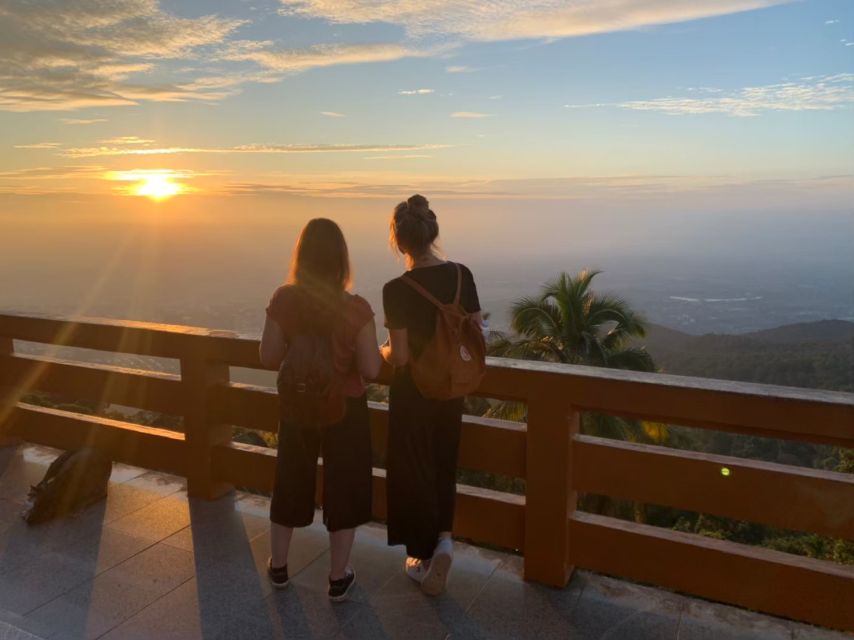
At the top, the temple’s golden chedi catches the first light. You may have time to look around before the sun appears, then watch the sky brighten over Chiang Mai. The city view is one of the strongest reasons to choose this early departure. On clear mornings, the view stretches across the city and surrounding countryside. On rainy or cloudy mornings, the sunrise may be muted or disappear entirely.
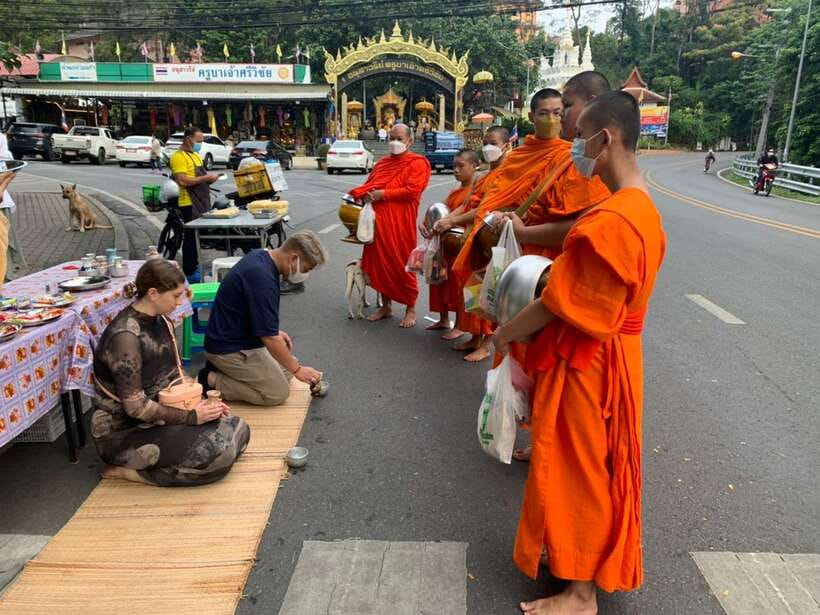
The temple itself deserves more than a quick photo stop. Your guide explains Buddhist customs, the meaning of offerings, and the role of the site in local religious life. Depending on the timing and circumstances, you may hear monks chanting or see morning offerings taking place.
Offerings are optional, not part of the tour price. Some guides stop at a 7-Eleven so you can buy food or small items to give to monks later. That can be a meaningful part of the morning, but you should follow the guide’s instructions and behave quietly around active religious ceremonies.
Dress properly from the start. Clothing that exposes shoulders, underarms, backs, or knees is not permitted in some locations. Shorts, short skirts, and sleeveless shirts are specifically listed as unsuitable. A loose shirt with sleeves and trousers or a long skirt will save you trouble.
The Kruba Srivichai Monument and the story of the mountain
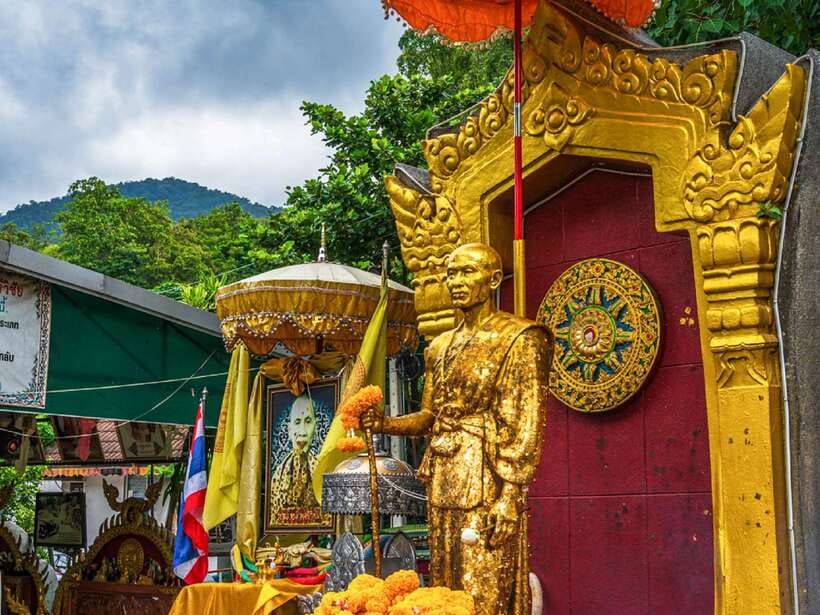
After Doi Suthep, the group stops at the Kruba Srivichai Monument. The visit is shorter, around 30 minutes, but it gives useful context for the road and temple above.
Kruba Srivichai was an important monk in northern Thailand, and the monument honors his connection with Doi Suthep. Your guide can explain how monks, local communities, and the mountain temple fit into the story of Chiang Mai.
This is also a good place to pause after the staircase. You can take a breath, listen to the guide, and learn about the lives of Thai monks without the visual overload of a major temple complex.
Wat Pha Lat, the jungle temple
Wat Pha Lat is often the most atmospheric stop of the morning. The route leads through forest to a quieter temple surrounded by trees, stonework, statues, and shrines.
The setting is the main attraction. Instead of a large golden center surrounded by crowds, you find a calm place where architecture and nature sit close together. The sound of the forest and the shaded paths make this stop feel very different from Doi Suthep.
Your guide connects Wat Pha Lat with the older route to Doi Suthep and helps explain why the temple matters. This is where a guide with real Buddhist background can add something more than dates and names. James, a former monk, has been especially well regarded for explaining Buddhist principles and monastic life in accessible terms.
Allow for uneven ground and walking. The jungle path is part of the appeal, but it is not the place for flimsy footwear. Insect repellent is a sensible addition to your day bag.
Wat Pha Lat is not guaranteed to be open on every departure. One private tour had to skip the temple because it was closed, with the guide giving notice in advance. If this stop is your main reason for booking, check current conditions before you go and accept that the order or content may change.
Same base, a completely different sort of day out:
- Half-Day Thai Cooking Class at Organic Farm in Chiang Mai
★ 5.0 · 19,087 reviews - Chiang Mai: Elephant Sanctuary, Waterfall & Bamboo Rafting
★ 4.9 · 9,160 reviews - Chiang Mai: Elephant Sanctuary & Waterfall Group Tour
★ 4.9 · 5,780 reviews - Chiang Mai: Cooking Class, Market & Thai Herbs Garden Tour
★ 4.9 · 4,824 reviews
Wat Umong and its 700-year-old tunnels
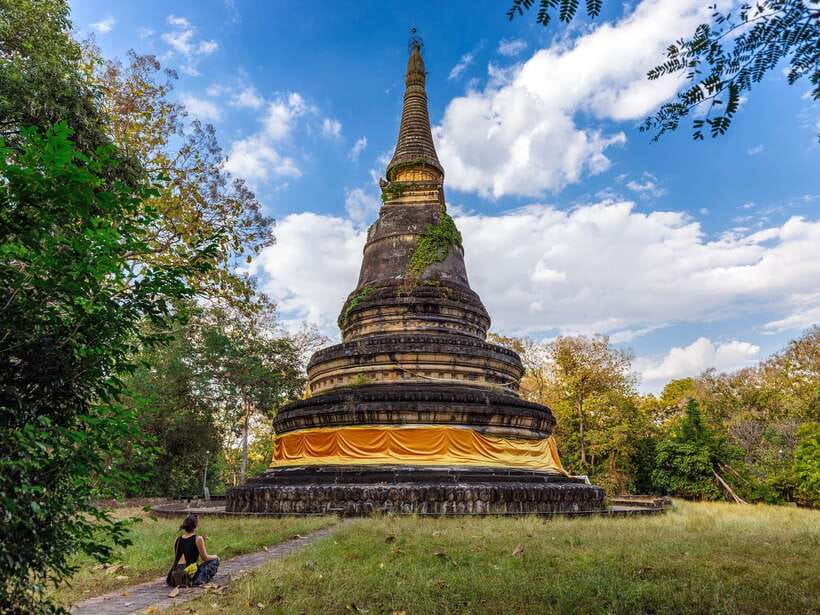
The final temple is Wat Umong, founded in 1297. Its wooded grounds provide a quieter finish after the excitement of Doi Suthep.
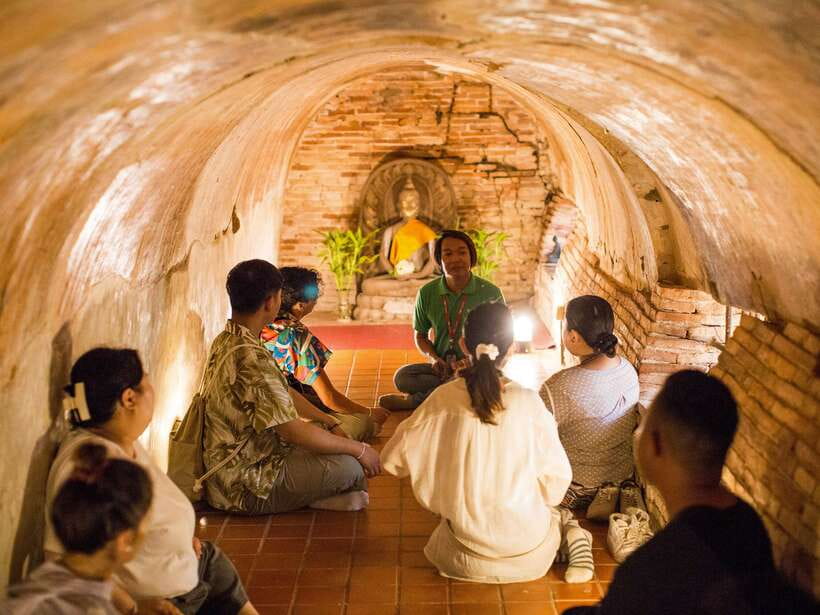
Wat Umong is known for its underground tunnels, old chedi, forest setting, and unusual atmosphere. You can walk through the tunnels, examine the architecture, and spend time among the trees. It does not look or feel like Doi Suthep, which is exactly why the three-stop plan works.
I especially like that Wat Umong comes late in the morning. The visit is slower and more reflective, with less emphasis on a single grand view. You can think back over the morning’s Buddhist lessons and see how different temple settings serve different purposes.
The drawback is energy. By this point, you have already been awake for hours, climbed 309 steps, and walked through two temple areas. A 10-year-old on one departure became too tired for the last temple and rested in the vehicle with the driver keeping watch. Families should consider this carefully, especially after a late arrival in Chiang Mai or a packed travel schedule.
What the guides add to the morning
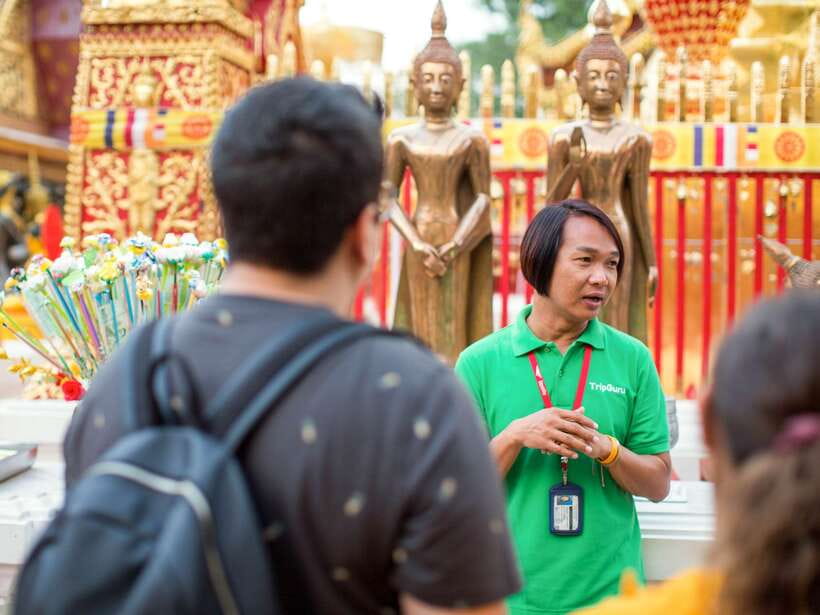
The guide is the most important variable on a cultural tour, and this one has several strong names associated with it. James, also known as James Bond, previously lived as a monk for five years. His background lets him explain Buddhist teachings, monastic routines, offerings, and temple etiquette with unusual detail.
Other guides, including Matt, Nuttaya, Leela, Cookie, Chatsuda, Tai, Tom Tem, and Peter, have been praised for clear English, humor, patience, and local insight. Spanish-language guiding is also available.
Good guides do more than recite history. They help you understand when to be quiet, how to make an offering respectfully, and why certain gestures or spaces matter. They can also help with photos and answer questions about Buddhism beyond the usual surface-level facts.
The one fair criticism is that explanations may feel repetitive by the third temple, especially if you already know the basics of Buddhism. If you prefer independent sightseeing with minimal commentary, the amount of talking may feel like a lot. If you want cultural context, it is one of the tour’s main strengths.
Transport, timing, and the $32 value
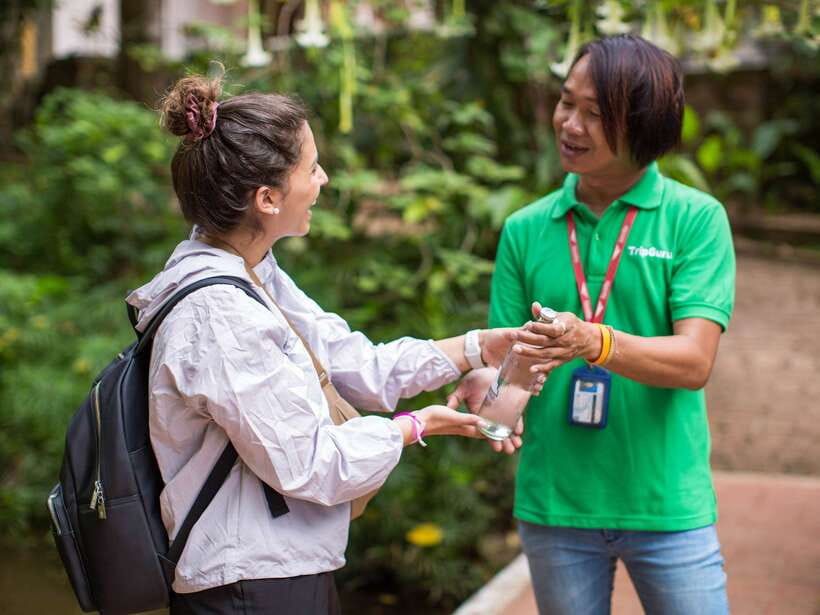
At $32 per person, this is a good-value way to cover three temples outside central Chiang Mai. The price includes the air-conditioned vehicle, guide, entrance fees, hotel pickup and drop-off when selected, a glass bottle of drinking water, and carbon emissions offset credits.
You still pay for meals and other drinks. Temple offerings are optional and cost extra. Carry some cash for those items and for any small purchase along the way.
The stated duration is four hours, but you should not plan your breakfast or next activity too tightly. The schedule includes driving, Doi Suthep, the monument, Wat Pha Lat, and Wat Umong. Some departures have returned around 9 or 11 a.m. after a 5 a.m. pickup, and one departure lasted roughly five to five and a half hours.
That difference may come from hotel pickups, traffic, group size, and time spent at the temples. The practical advice is easy: treat this as a full morning, not a guaranteed four-hour appointment.
The meeting-point option can be useful if you are staying outside the pickup zone or want to avoid hotel collection delays. Meet at Tha Pae Gate and look for the guide holding a TripGuru sign. If you choose hotel pickup, the evening email confirms the pickup time and meeting point.
The transport has received strong marks for comfort and careful driving. That matters after a pre-dawn start, when a smooth ride back to Chiang Mai is welcome.
Responsible touring and small practical choices
This is a relatively low-impact way to visit the temples. The operator provides drinking water in glass bottles and buys carbon offset credits for the tour.
That does not remove every impact, but it avoids the usual single-use plastic bottle and makes the sustainability effort clear. Your own choices still matter. Carry your waste, keep voices low in religious spaces, and do not treat monks or worshippers as photo props.
A temple visit is not a performance staged for a tour group. Ask before photographing people, especially during prayers or offerings. Your guide can help you understand what is appropriate.
Pack:
- Comfortable walking shoes
- A light layer for the early morning
- Hat and sunglasses
- Sunscreen
- Insect repellent
- Camera
- Cash
Who will enjoy this tour most
I would choose this tour if you have only a few days in Chiang Mai and want a strong first look at northern Thai Buddhism. It gives you the city view, major temple, forest setting, and historic tunnels in one morning.
It suits people who enjoy guided cultural visits and do not mind waking well before dawn. Couples, solo visitors, families with older children, and small groups can all benefit from the organized transport and clear schedule.
It is less suitable if you dislike stairs, need a slow morning, or want to explore each temple alone for hours. The 309 steps are the clearest physical challenge, but the early alarm may be the bigger one.
Weather also matters. Rain can block the sunrise, and clouds may reduce the city view. The other temples still offer worthwhile visits, but you should not book this only for perfect dawn conditions.
Should you book the Doi Suthep sunrise tour?
Yes, if you can handle the early start and want more than a quick temple photo. The best parts are the quiet arrival at Doi Suthep, the contrast between three very different temple settings, and guides who can explain Buddhism in human terms.
Book it with realistic expectations. Wear proper clothing, bring a warm layer, allow more than four hours, and keep your schedule flexible afterward. At $32, the included transport, entrance fees, guide, water, and carbon offset make it a sensible choice for a concentrated Chiang Mai morning.
FAQ
How early does the tour start?
Pickup times vary, but departures commonly begin before dawn. One departure collected participants at 5:00 a.m. The exact time is confirmed by email the evening before the activity.
Where is the meeting point?
The meeting point is Tha Pae Gate, in front of McDonald’s. Your guide will hold a TripGuru sign, and you should arrive ten minutes before pickup.
Is hotel pickup included?
Hotel pickup and drop-off are included when you choose that option. Pickup is available from major downtown areas within about five kilometers of Tha Pae Gate and nearby Old City areas. Pickup is only offered from hotels or registered accommodations.
How difficult is the tour?
The main physical challenge is climbing the 309 steps to Doi Suthep. You will also walk around Wat Pha Lat and Wat Umong, so comfortable shoes are important.
What should I wear to the temples?
Do not wear shorts, short skirts, or sleeveless shirts. Clothing that exposes the shoulders, underarms, back, or knees is not allowed at some of the locations.
Are food and drinks included?
A glass bottle of drinking water is included. Meals and other drinks are not included, and temple offerings are optional and paid separately.
Just added around Chiang Mai
- Chiang Mai Best City Tour with Doi Suthep & Iconic Temples★ 4.5 · 24 reviews
- Chiang Mai Michelin Food Walking Tour with Professional Tour Guide★ 4.5 · 13 reviews
- Private Chiang Mai Temple Tour with Doi Suthep and Wat Umong★ 5.0 · 52 reviews
- Secret Waterfall and Bamboo Rafting from Chiang Mai★ 5.0 · 30 reviews
- Bua Tong Waterfall Adventure& Huge Cave included Thai Buffet Tour★ 4.5 · 28 reviews
- Chiang Mai Scavenger Hunt and Sights Self-Guided Tour★ 5.0 · 8 reviews
- Chiang Mai Sak Yant Tattoo By Ajarn Tu★ 5.0 · 25 reviews
- Chiang Mai Airport Transfer by Private Van – Arrival or Departure★ 4.5 · 11 reviews
Temple Tours, compared.
Chiang Rai Temples, Karen Tribe and Hot Springs
Read our review →
City Highlights Temple and Market Walking Tour
Read our review →
Bangkok by Night: Temples, Markets and Food Tuk-Tuk Tour
Read our review →
Grand Palace, Wat Pho, and Wat Arun Guided Tour
Read our review →
Tiger Cave Temple, Emerald Pool and Hot Springs Tour
Read our review →
Chiang Rai White Temple and Blue Temple Day Tour
Read our review →Browse the lists this tour appears in