
Reviewed · COOKING CLASSES
Chiang Mai: Cooking Class, Market & Thai Herbs Garden Tour
The best part of this Chiang Mai cooking class happens before the first pan hits the heat. You visit a local market, learn what the herbs and spices actually are, then carry that knowledge into a family-run kitchen garden. The curry paste is made the old-fashioned way, with a mortar and pestle, not a shortcut from a jar.
I like the choice of dishes, which lets you build a meal around Pad Thai, Pad Kra Pao, soups, fried rice, or several Thai curries. I also like the small hands-on details, from picking ingredients to grinding your own paste and eating outdoors among the herbs. The only drawback is that the market visit can feel brief, and pickup is limited to hotels within 3 kilometers of Chiang Mai Old Town.
Key points to know before booking
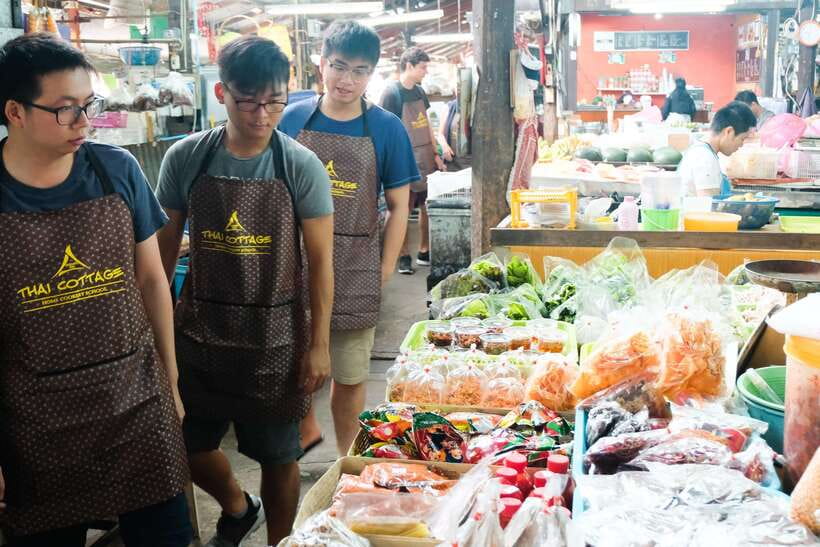
- A market visit gives the food some context: Learn how Thai herbs, spices, vegetables, and curry ingredients are used before cooking.
- You choose your own menu: Select a starter, main course, curry paste, curry dish, and mango sticky rice.
- Curry paste is made from scratch: Use a mortar and pestle to prepare red, green, Phanaeng, Massaman, or Khao Soi paste.
- The class takes place in an organic kitchen garden: You cook and eat in a relaxed outdoor setting with a local Thai instructor.
- The guides are a major part of the experience: Wave, Flook, Tu, Kat, Toey, Mew, and Balloon are among the English-speaking instructors who lead sessions.
- The $31 price covers a lot: Transport within the pickup zone, market visit, ingredients, instruction, the class, the meal, and a digital recipe book are included.
Why this Chiang Mai cooking class works so well
Thai food is easy to admire and harder to understand. A plate of green curry may taste simple at first, but its flavor comes from a careful balance of herbs, chilies, aromatics, coconut milk, salt, and sweetness. This class gives you a practical way to see how those pieces fit together.
You do not simply watch an instructor prepare dinner. You select dishes, handle the ingredients, pound curry paste, cook your food, and sit down to eat it. That makes the class useful for two kinds of people: curious eaters who want a more local experience in Chiang Mai, and home cooks who want recipes they can use after returning home.
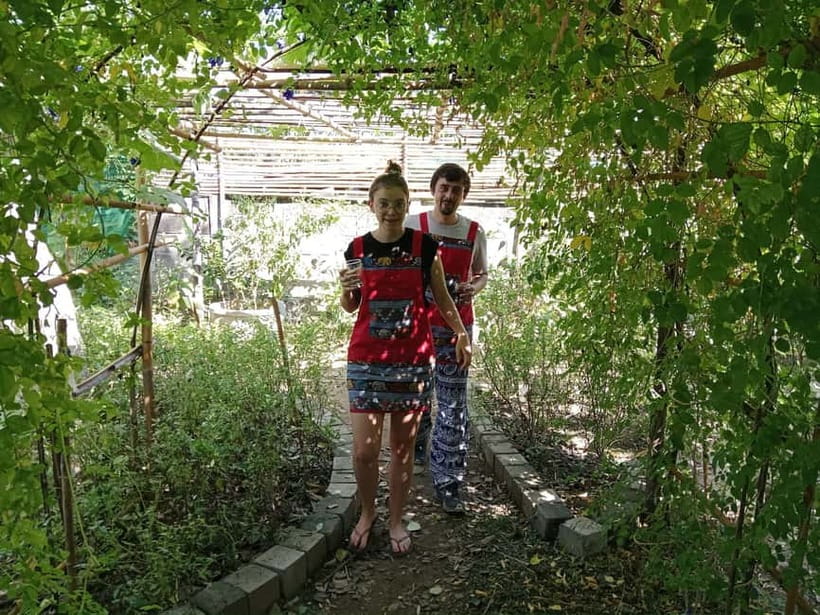
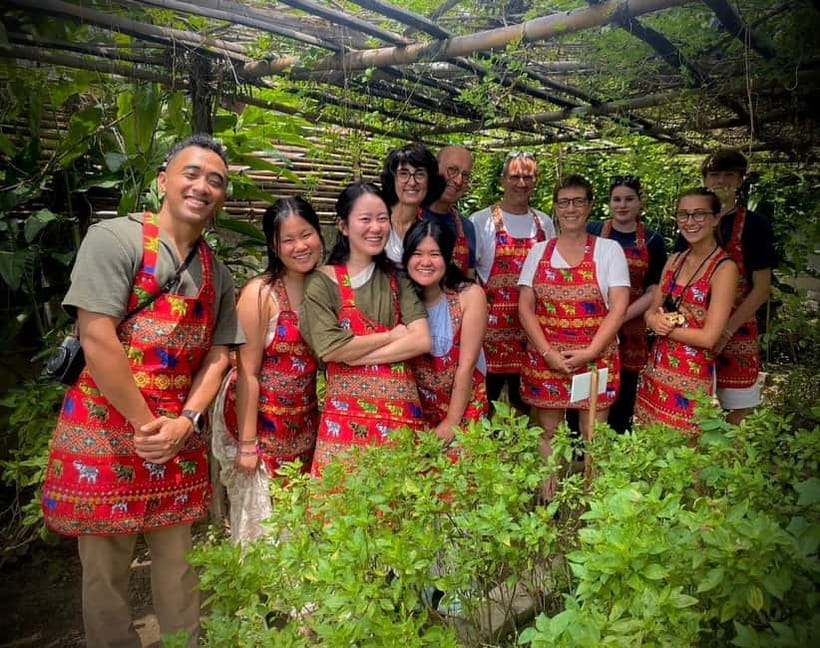
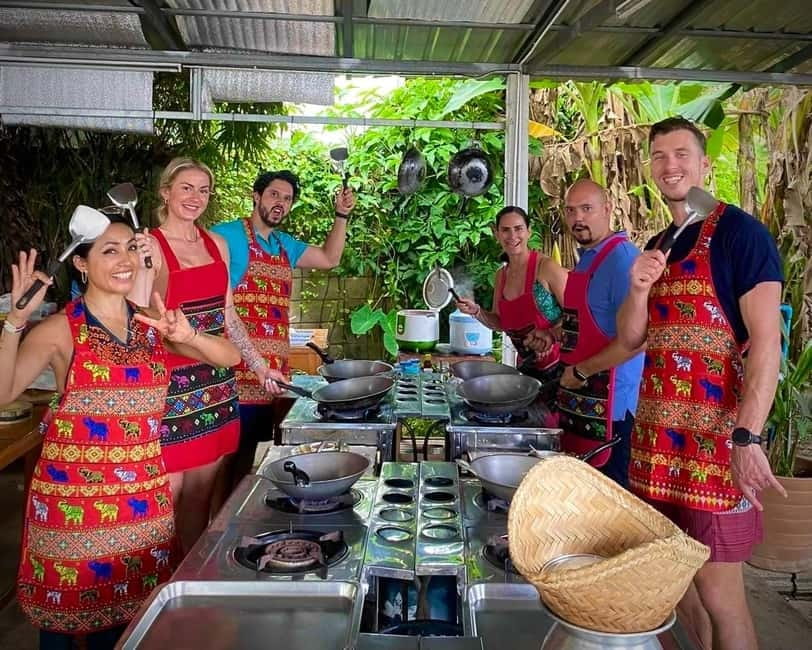
The setting helps. Thai Cottage Home Cookery School uses an organic kitchen garden rather than keeping the entire class inside a formal demonstration kitchen. You cook close to the herbs and ingredients that give Thai food its character, then eat in the same garden. It is a pleasant change from a standard restaurant meal, where the work behind the dish stays hidden.
The class lasts 210 minutes, or three and a half hours. That is long enough to include the market, ingredient lesson, preparation, cooking, and meal without turning the experience into an all-day commitment.
More Cooking Classes in Chiang Mai
- Half-Day Thai Cooking Class at Organic Farm in Chiang Mai
★ 5.0 · 19,087 reviews - Chiang Mai: Authentic Cooking Class with Market & Farm Visit
★ 4.9 · 4,546 reviews - Thai and Akha Cooking Class in Chiang Mai
★ 5.0 · 4,358 reviews
Starting at a local Chiang Mai market
Hotel pickup begins the day, with free transfer offered within 3 kilometers of Chiang Mai Old Town. You are asked to wait in your hotel lobby 15 to 30 minutes before class. Chiang Mai traffic can cause delays, so do not schedule a tight appointment immediately afterward.
If your hotel is outside the pickup area, you will need to meet the group at the designated meeting point. This is worth checking before booking, especially if you are staying outside the old city or in a resort area.
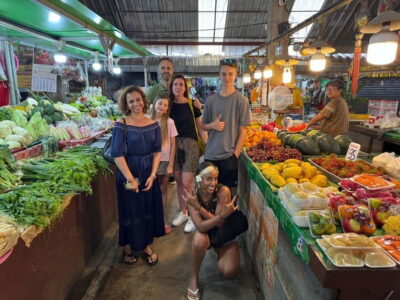
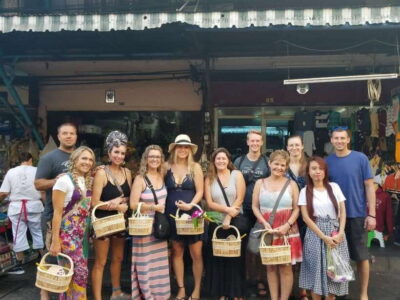
The market visit is not designed as a long shopping expedition. It is a short, focused introduction to the ingredients used in the class. You will see herbs, spices, vegetables, and other local food items, then learn how they appear in traditional Thai recipes.
This is one of the more useful parts of the morning because Thai ingredients can be confusing when you first encounter them. Galangal is not ginger, coconut milk changes the character of a soup, and different curry pastes bring different heat and aroma. Seeing the ingredients in their market setting gives you a better sense of what you are cooking later.
The market also adds a local touch without requiring you to plan a separate market visit. You may encounter unfamiliar foods and unusual sights, but the point is not simply to take photographs. Your guide explains what the ingredients are and how they are used.
One practical note: the market stop may feel short if you enjoy browsing food stalls. Think of it as an ingredient lesson rather than a full market tour. If you want a slow morning of shopping, this experience is not built for that. If you want enough context to make sense of the cooking class, the visit does its job.
Choosing your Thai dishes
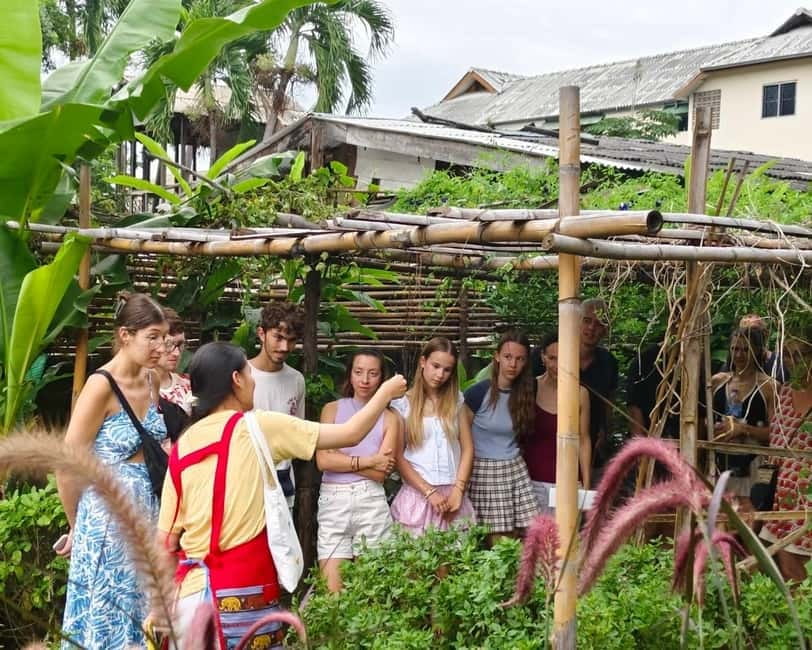
After the market, you head to the organic kitchen garden and select your dishes. The menu is broad enough to suit different tastes, and your choices help make the class feel personal rather than fixed.
For a starter, you can choose from:
- Hot and sour prawn
- Local chicken soup
- Chicken in coconut milk
- Turmeric chicken soup
For the main course, options include:
- Pad Thai
- Chicken fried rice
- Fried chicken with cashew nuts
- Pad Kra Pao
The menu covers several familiar Thai styles. Pad Thai gives you a well-known classic, while Pad Kra Pao offers a stronger introduction to the salty, spicy, aromatic flavors found in everyday Thai cooking. The soups show how herbs and coconut milk create very different results from similar basic ingredients.
You may find that everyone in your group chooses something different. That is a plus if you are traveling with family or friends, since you can compare dishes at the table. One family used the menu choices to prepare different dishes and share them, which is a smart way to sample more of the class without ordering extra food.
The cooking is organized so you can take part without needing advanced skills. Ingredients are prepared for the class, but you still handle the important steps yourself. You chop, mix, season, cook, and follow the dish from raw ingredients to finished plate.
That balance matters. If every ingredient were left unprepared, a three-and-a-half-hour class could become rushed. If everything were done for you, the experience would feel like a demonstration. Here, you get enough preparation support to keep moving while still doing the work that teaches you something.
Grinding curry paste with a mortar and pestle
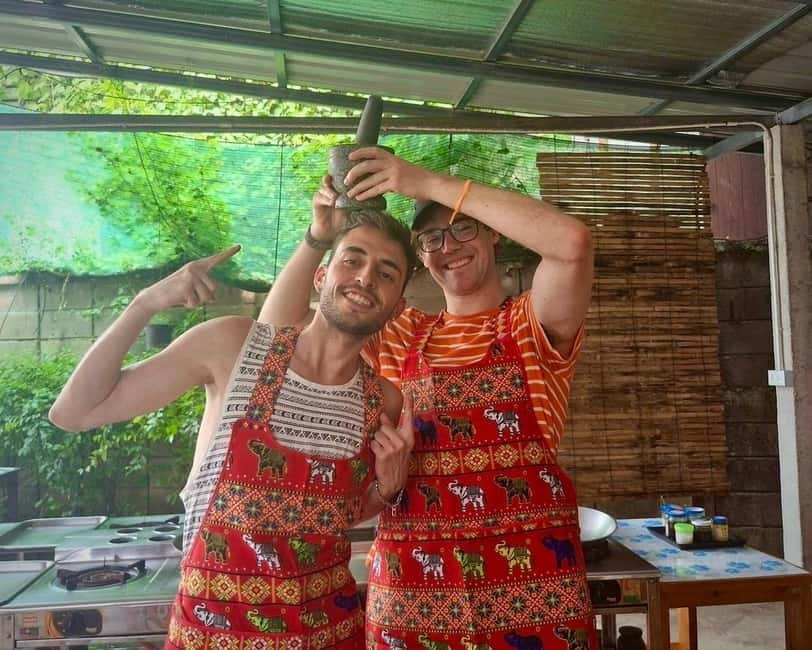
The curry paste session is the heart of the class. You choose a paste style, then make it from scratch with a mortar and pestle.
Available choices include red, green, Phanaeng, Massaman, and Khao Soi curry paste. These are not interchangeable. Red and green curry bring different herbal and chili notes, Phanaeng is typically thicker and more concentrated, Massaman has a warmer spice profile, and Khao Soi connects to the northern Thai cooking style associated with Chiang Mai.
The physical work of pounding the paste is part of the lesson. You notice how the herbs change as they break down, and you get a better feel for the texture that a blender may hide. It takes more effort than opening a container, but it also gives you a clearer idea of how the flavor develops.
The instructors are there to guide your technique and explain what each ingredient contributes. Several of the instructors, including Wave, Flook, Tu, Kat, and Balloon, are repeatedly praised for keeping the class clear, funny, and easy to follow. The names of the instructors can vary by date, but the format remains the same.
Once the paste is ready, you use it to make chicken and coconut milk curry. This connects the lesson to the meal in a satisfying way. You are not making curry paste as a separate exercise, then moving on to unrelated dishes. You see how the paste becomes the base of a finished curry.
You can also choose your preferred level of heat. Ask for spicy or non-spicy food according to your taste. That flexibility is useful in a mixed group, since one person may want serious chili heat while another prefers a gentler dish.
Same base, a completely different sort of day out:
- Chiang Mai: Elephant Sanctuary, Waterfall & Bamboo Rafting
★ 4.9 · 9,160 reviews - Chiang Mai: Elephant Sanctuary & Waterfall Group Tour
★ 4.9 · 5,780 reviews - Chiang Mai: Elephant Sanctuary Feeding Program Half-Day Tour
★ 4.8 · 4,527 reviews - Chiang Mai: Elephant Sanctuary, Long Neck & Sticky Waterfall
★ 4.9 · 2,262 reviews
Cooking in the organic kitchen garden
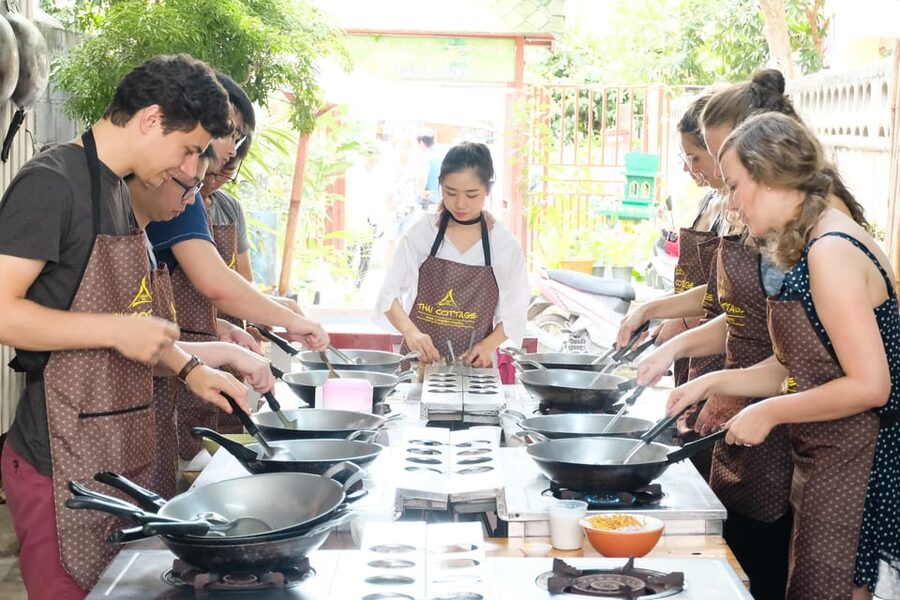
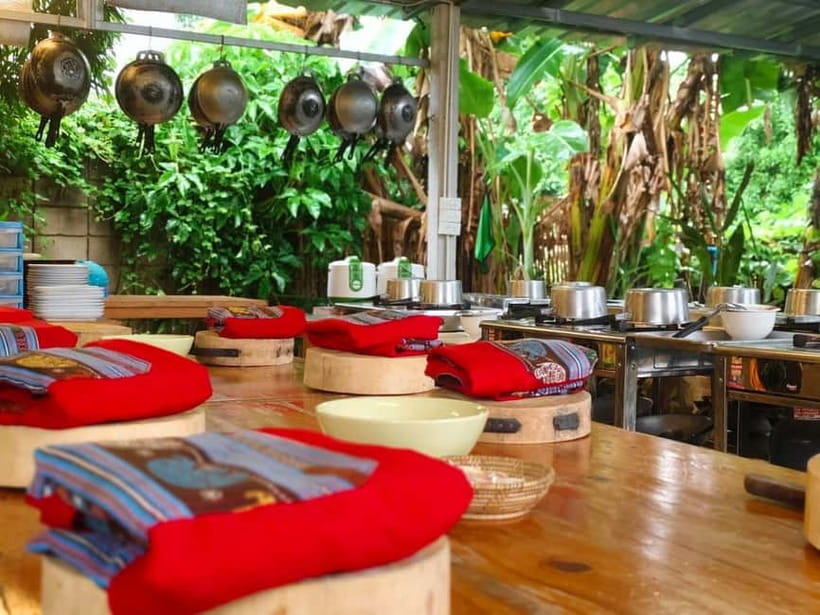
The outdoor kitchen garden gives the class much of its character. You cook near the herbs and plants used in Thai food, then sit down in the same setting to eat.
The garden is not just decoration. It helps link the market lesson to the cooking itself. You can connect the fresh ingredients you saw earlier with the dishes in front of you, which makes the recipes easier to remember.
Your instructor leads the group through the cooking steps and answers questions along the way. The atmosphere is social, and you will likely work near other people preparing different dishes. That can be especially enjoyable if you are traveling alone and want an easy way to meet people without committing to a full-day group tour.
The class also has a useful team feeling. You cook your own selections, but the shared setup means you can watch how other dishes come together. A person making Pad Thai can compare techniques with someone preparing curry, and everyone has a reason to talk once the food reaches the table.
The meal is served in traditional Thai style after the cooking is complete. The main reward is obvious: you eat food you prepared yourself, using the ingredients you just learned about. It is also a practical chance to taste the differences between your chosen dishes and the food being made around you.
Keep your clothing comfortable. You do not need formal attire, and cooking outdoors is best approached with clothes you can move in and do not mind wearing during food preparation.
How much food will you make?
The exact number of dishes depends on your selections, but the format includes a starter, a main course, a curry paste and curry dish, and dessert. You also make sweet sticky rice with mango, a Thai favorite that provides a sweet finish after the savory dishes.
The menu gives you a good spread of Thai flavors. You can experience sour and spicy soup, coconut-based dishes, stir-fried noodles or rice, curry, and a classic dessert in one session.
Because the meal is built into the class, the $31 price is easier to judge than the cost of a simple cooking demonstration. You are paying for hotel transfer within the service zone, a market visit, the ingredient lesson, all cooking ingredients, instruction, the meal, and a digital recipe book.
That is strong value for a half-day activity in Chiang Mai. You still need to pay separately for drinks, including alcoholic beverages if you want them, and for personal purchases at the market. Alcohol and drugs are not permitted as part of the activity.
The recipe book is sent digitally as a PDF. It is a useful extra because it gives you a chance to repeat the dishes at home. Thai cooking often depends on ingredient balance, so having the recipe after the class is more valuable than simply trying to remember what went into the mortar.
Vegetarian, vegan, halal, and allergy options
The class welcomes vegetarian, vegan, gluten-free, halal, and allergy-related dietary needs. Alternative ingredients are available, and you can also request food that is spicy or non-spicy.
Tell the provider about your needs when booking or before the cooking begins. The instructors can then help adjust your menu rather than leaving you to make changes at the last moment.
This flexibility has real value for groups with different diets. One person can prepare a vegetarian version while another cooks with chicken or prawns, allowing everyone to take part in the same activity.
Still, dietary needs are worth communicating clearly. The general information confirms that alternatives are available, but it does not list every substitution or guarantee a particular brand or ingredient. If you have a serious allergy, explain it directly to the instructor before handling food.
The guides make the difference
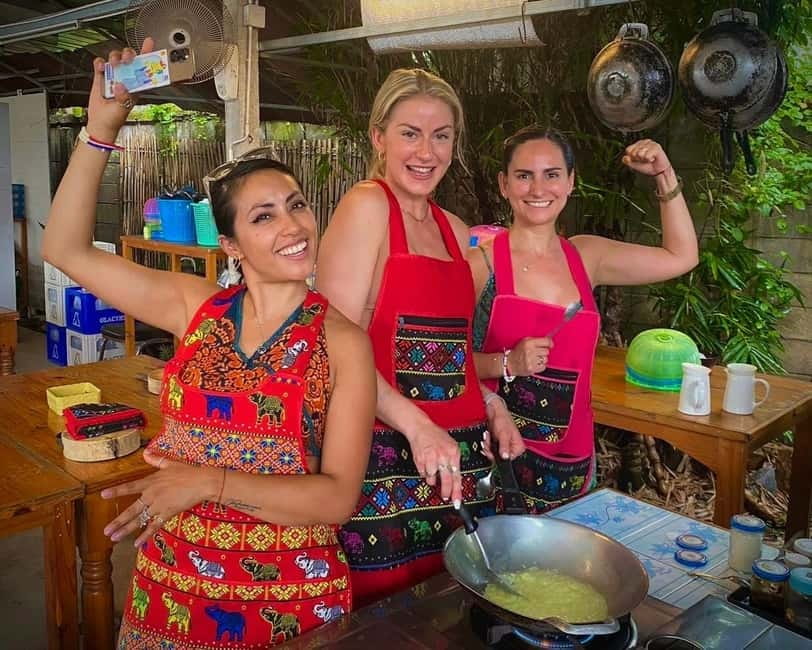
The class depends heavily on the person leading it. The instructors need to explain unfamiliar ingredients, keep several dishes moving, answer questions, and make sure nobody gets lost at the stove.
Wave is described as funny, friendly, and clear in English. Flook is known for a relaxed sense of humor and helpful instruction. Tu receives praise for patient explanations and for adjusting recipes when someone does not like a particular ingredient. Kat is especially good at explaining market herbs and keeping the cooking process organized. Balloon is another lively guide who helps groups work together.
You cannot select a specific instructor from the information provided, so treat the names as examples rather than a guarantee. The important point is that the activity uses English-speaking local instructors, not a prerecorded lesson or a hands-off kitchen setup.
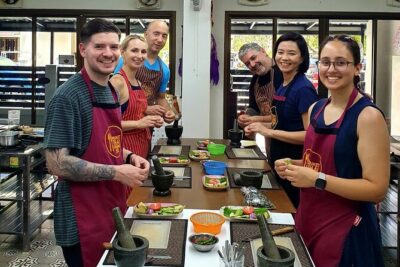
The group size can vary. One session had nine people, while a family of five cooked together with other participants. A group setting brings energy and makes it easier to taste several dishes, though anyone seeking a private, quiet lesson may prefer a smaller or private class.
Who should book this experience?
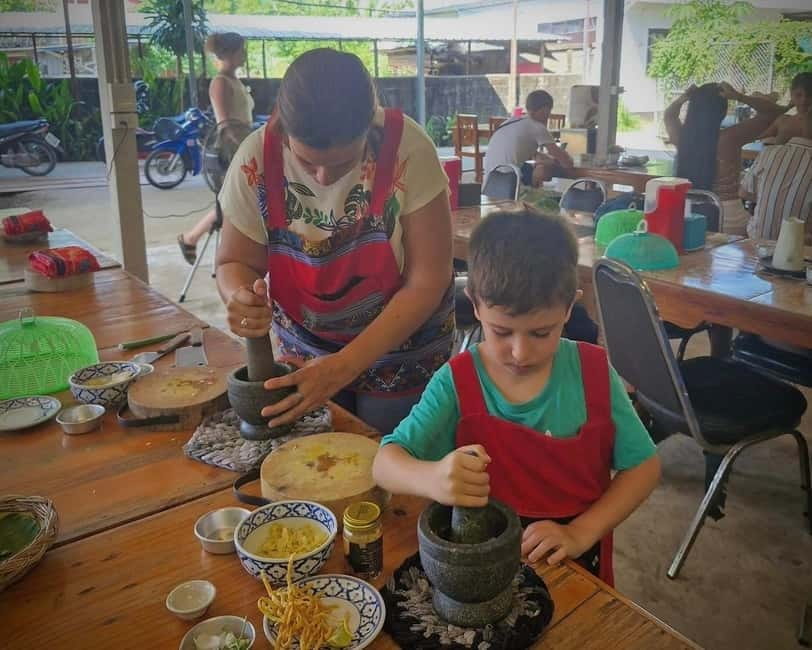
I would recommend this class to first-time visitors who want to understand Thai food beyond restaurant menus. It is also a good fit for couples, solo visitors, and families with older children who enjoy practical activities.
Children under 5 are not accepted, but older children can take part. One family reported that children aged 8, 10, and 12 were able to cook their own dishes, which suggests that the hands-on format can work well for school-age kids when supervised.
The class suits you especially well if you want:
- A half-day activity rather than a full-day excursion
- A local market introduction without arranging transport yourself
- A chance to cook several Thai dishes
- A menu that can be adapted for dietary needs
- A relaxed group setting
- Recipes you can use after returning home
It is less suitable if you dislike group activities, want a long market-shopping session, or prefer a formal restaurant-style demonstration. It also may not be ideal for anyone who finds standing, preparing food, or using a mortar and pestle uncomfortable.
Pickup, timing, and cancellation details
Pickup is included within 3 kilometers of Chiang Mai Old Town. Wait in your hotel lobby 15 to 30 minutes before the scheduled start, and allow extra time because traffic delays can happen.
If you are staying farther away, plan to meet the group at the assigned meeting point. Check this before paying, since transport outside the stated pickup area is not included.
The activity lasts 210 minutes, and start times depend on availability. You can reserve now and pay later, which helps if your Chiang Mai plans are still shifting. Cancellation is free up to 24 hours in advance for a full refund.
Should you book the Thai Cottage Home Cookery School class?
For $31, this is one of the better-value food activities in Chiang Mai. You get transport in the central pickup zone, a local market visit, a garden setting, a full meal, and a recipe book, not just a short cooking lesson.
Book it if you want to understand how Thai ingredients work and prefer learning by doing. The curry paste session, menu choices, and garden meal give the class more substance than a simple Pad Thai demonstration.
Skip it if your main goal is an extended market tour or a private chef lesson. The market stop is only one part of the morning, and the group format means your experience will depend partly on the other people and the instructor assigned that day.
For most visitors, though, this is a practical and enjoyable way to spend three and a half hours in Chiang Mai. You leave with a full meal in your stomach, a better sense of Thai flavors, and recipes you can try again at home.
FAQ
How long does the Chiang Mai cooking class last?
The activity lasts 210 minutes, or three and a half hours. This includes hotel transfer within the pickup area, the market visit, the cooking class, and the meal.
Is hotel pickup included?
Yes. Free hotel pickup and drop-off are available within 3 kilometers of Chiang Mai Old Town. You should wait in your hotel lobby 15 to 30 minutes before class, and traffic delays may occur.
What dishes can I choose to cook?
Starter choices include hot and sour prawn, local chicken soup, chicken in coconut milk, and turmeric chicken soup. Main courses include Pad Thai, chicken fried rice, fried chicken with cashew nuts, and Pad Kra Pao. You can also prepare red, green, Phanaeng, Massaman, or Khao Soi curry paste, followed by chicken and coconut milk curry and mango sticky rice.
Can I request vegetarian or allergy-friendly food?
Yes. Vegan, vegetarian, gluten-free, halal, and allergy-related alternatives are available. You can also request spicy or non-spicy food.
Is the class taught in English?
Yes. The instructor language is English. Guides may include Wave, Flook, Tu, Kat, Toey, Mew, or Balloon, depending on the session.
What happens if I need to cancel?
You can cancel up to 24 hours in advance for a full refund. The activity also offers a reserve-now-and-pay-later option.
More Markets in Chiang Mai
- Chiang Mai: Cooking Class with Market and Pickup
★ 4.9 · 1,365 reviews - Chiang Mai: Evening Cooking Class and Local Market Visit
★ 4.9 · 648 reviews - Chiang Mai: Evening Local Street Food Market Tour
★ 4.8 · 604 reviews - Chiang Mai: Kalare Night Bazaar Boxing Stadium Muay Thai
★ 4.7 · 507 reviews
Just added around Chiang Mai
- Chiang Mai Best City Tour with Doi Suthep & Iconic Temples★ 4.5 · 24 reviews
- Chiang Mai Michelin Food Walking Tour with Professional Tour Guide★ 4.5 · 13 reviews
- Private Chiang Mai Temple Tour with Doi Suthep and Wat Umong★ 5.0 · 52 reviews
- Secret Waterfall and Bamboo Rafting from Chiang Mai★ 5.0 · 30 reviews
- Bua Tong Waterfall Adventure& Huge Cave included Thai Buffet Tour★ 4.5 · 28 reviews
- Chiang Mai Sak Yant Tattoo By Ajarn Tu★ 5.0 · 25 reviews
- Chiang Mai Airport Transfer by Private Van – Arrival or Departure★ 4.5 · 11 reviews
- Chiang Mai Scavenger Hunt and Sights Self-Guided Tour★ 5.0 · 8 reviews
Cooking Classes, compared.
Half-Day Thai Cooking Class at Organic Farm in Chiang Mai
Read our review →
Authentic Cooking Class with Market & Farm Visit
Read our review →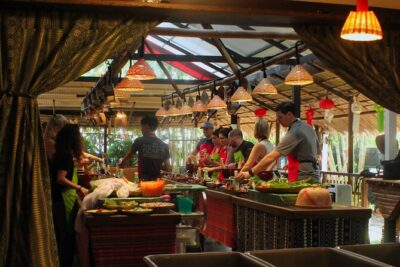
Phuket Thai Cooking Class with Market Tour Option
Read our review →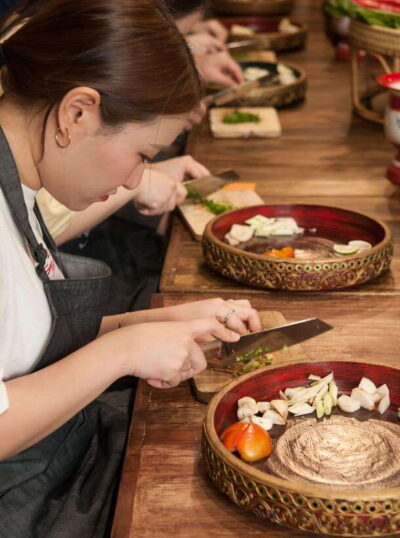
Tingly Thai Cooking School Half-Day Cooking Class
Read our review →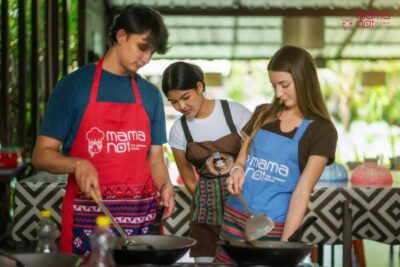
Browse the lists this tour appears in