
Reviewed · COOKING CLASSES
Chiang Mai: Traditional Thai-Akha Cooking Class& Market Tour
The most interesting part of this Chiang Mai cooking class is the Akha influence. You are not simply copying Pad Thai from a recipe card. You learn how tomato, herbs, lime, peanuts, curry pastes, and other everyday ingredients fit into the food traditions of the Akha people, whose families moved to Thailand from the mountains in the early 1900s.
I like the market visit and the generous amount of cooking. You get to see and taste ingredients before using them, then prepare a long list of dishes rather than one token curry. The main consideration is time: five to six hours, plus a very full meal, may be too much for anyone hoping for a quick lesson.
Key points
- Akha cooking meets familiar Thai favorites: Learn traditional Akha sauces, salads, and soup alongside Pad Thai and chicken curries.
- A real market stop comes first: See the ingredients, sample local treats, and choose produce before cooking.
- You can adjust the heat: The class adapts spice levels to suit your taste.
- Expect a serious amount of food: The full session can include as many as 11 dishes, depending on your choices.
- Hotel pickup is included: The experience begins with transport from your Chiang Mai hotel.
- You leave with useful takeaways: Recipes, a cookbook, and spices help you repeat the dishes at home.
Why the Akha connection matters in Chiang Mai

Thai food is often presented abroad through a short list of famous dishes. This class gives you a wider view by adding Akha food traditions to the lesson.
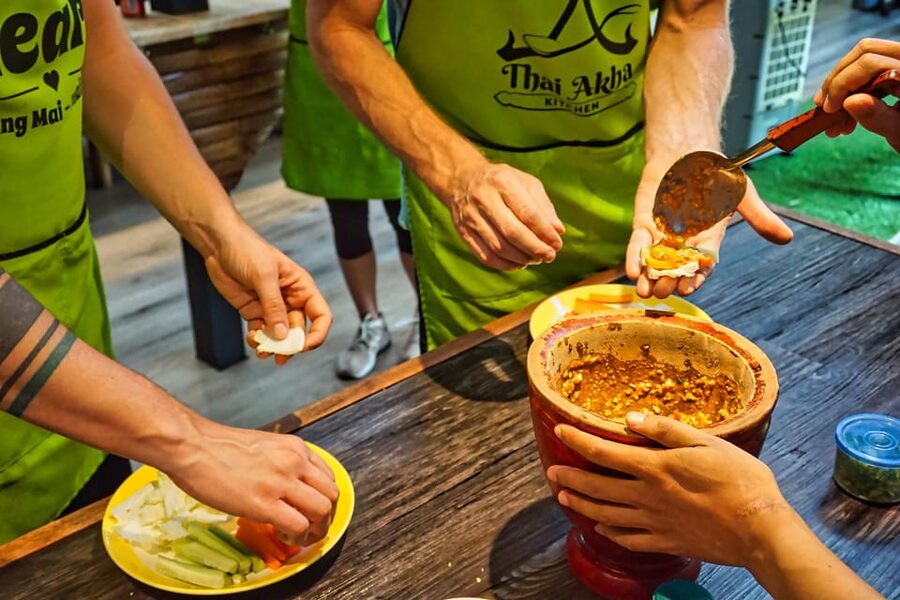
The Akha people developed their cooking around fresh ingredients, practical preparation, and food that suits mountain life. At Thai Akha Kitchen, that background appears in dishes such as Sapi Thong, a tomato dipping sauce, Akha salad with cucumber, coriander, lime, pepper, and ground peanuts, and Akha soup.
That difference matters. You still have the chance to cook familiar Thai dishes, but the Akha recipes give the session its own character. I would choose this class over a standard Thai cooking lesson if you want some cultural context with your lunch or dinner.
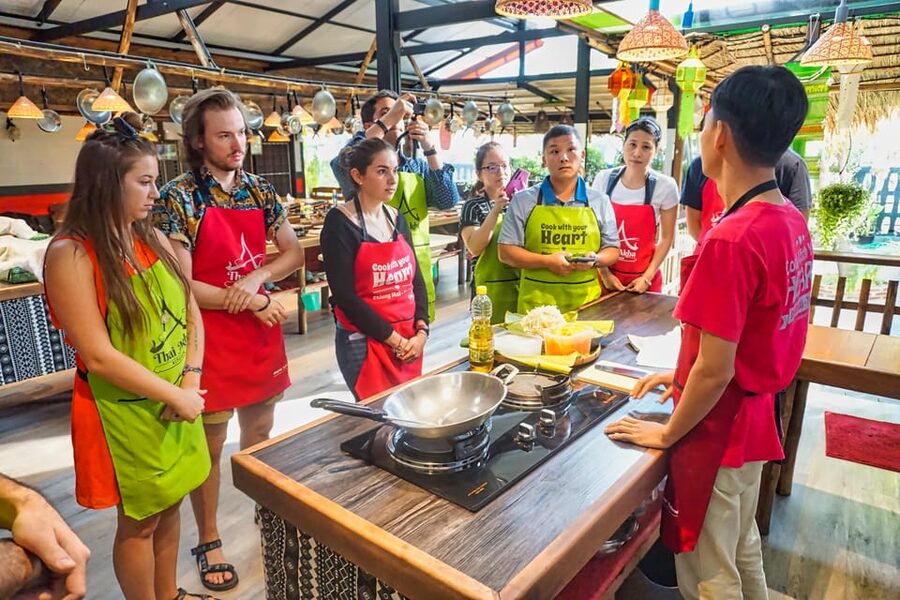
The class is presented in English and Thai. Instructors including An, Xuan, and Evelyn have been singled out for their warm, lively teaching style. That is useful in a hands-on class, where clear instructions make the difference between a smooth cooking session and a pan full of confusion.
More Cooking Classes in Chiang Mai
- Half-Day Thai Cooking Class at Organic Farm in Chiang Mai
★ 5.0 · 19,087 reviews - Chiang Mai: Cooking Class, Market & Thai Herbs Garden Tour
★ 4.9 · 4,824 reviews - Chiang Mai: Authentic Cooking Class with Market & Farm Visit
★ 4.9 · 4,546 reviews
The market tour sets up the cooking lesson
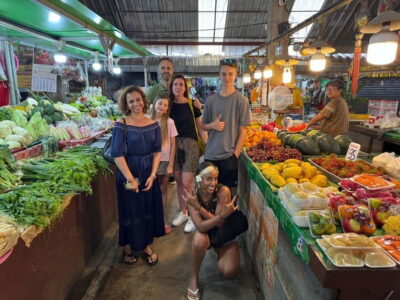
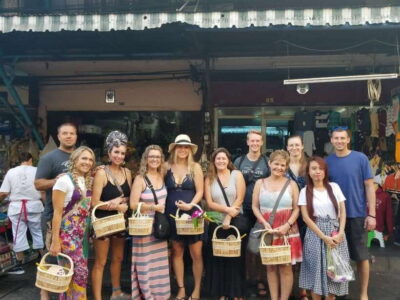
The class begins with a visit to a local market. This is more than a quick stop for a few vegetables. You get an introduction to the ingredients used in Thai and Akha cooking, with time to see, select, and sample local foods.
I like this order. A curry paste has more meaning when you have just seen the herbs and spices that go into it. A Thai salad makes more sense when you have handled the limes, tomatoes, cucumbers, coriander, and peanuts yourself.
The market visit also helps explain why Thai food tastes so fresh. You are introduced to the raw materials before they are chopped, fried, simmered, or mixed. The experience includes sampling local delicacies and treats, which adds a small but useful bit of food discovery to the tour.
The exact market route and timing are not specified, so you should not expect a fixed list of stalls or a formal market history lesson. The value is practical: learn what the ingredients look like, ask questions, and get ready for the kitchen.
If you choose an earlier starting time, the market visit forms part of a morning cooking day. The experience has also been offered as an evening class, so check the available start time when booking. That choice can affect how the market visit fits into your Chiang Mai plans.
What you cook at Thai Akha Kitchen
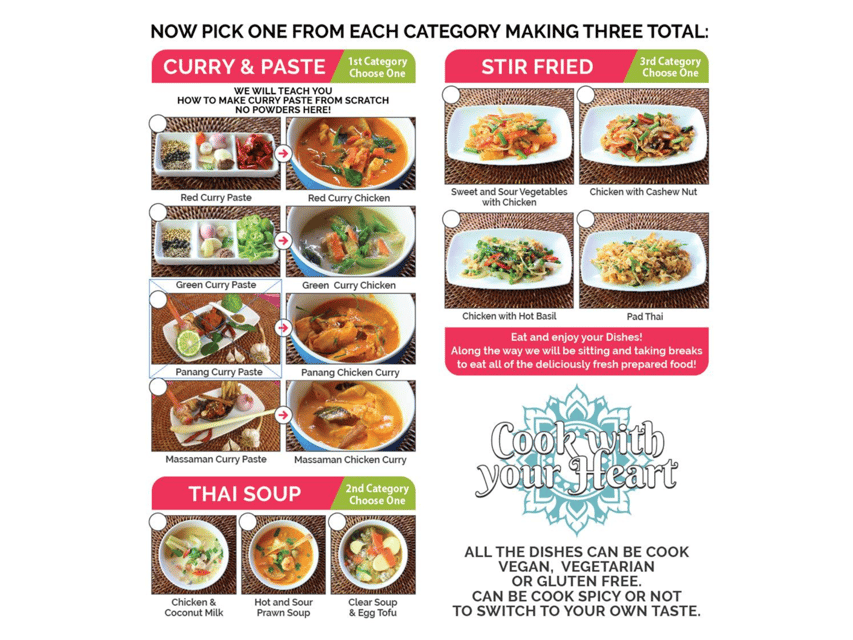
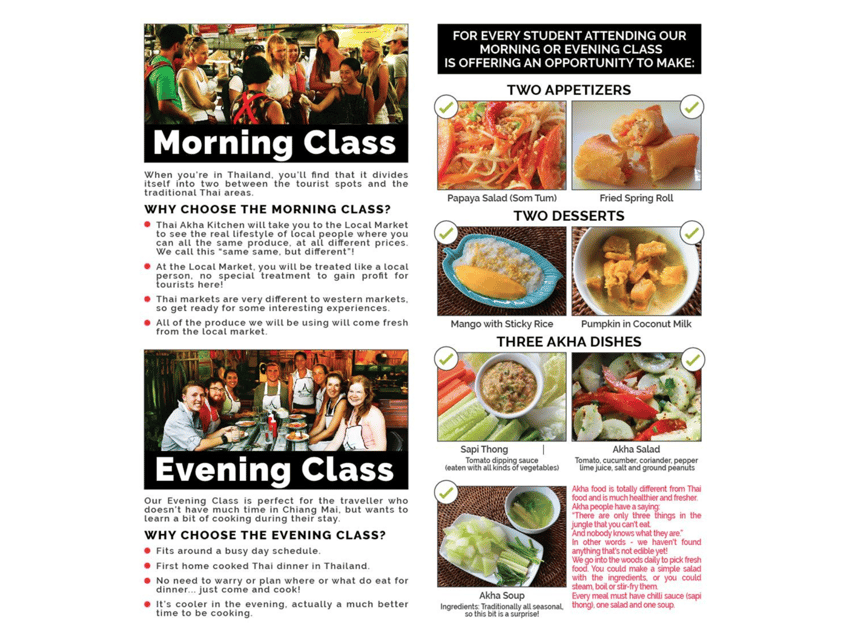
The menu is large for a half-day class. You prepare two appetizers, two desserts, three Akha dishes, one curry, one Thai soup, and one stir-fried dish.
The two appetizers are papaya salad and fried spring rolls. Papaya salad gives you a lesson in balancing sour, salty, spicy, and sweet flavors. Spring rolls offer a simpler contrast, with hands-on wrapping and frying.
For dessert, you make mango with sticky rice and pumpkin in coconut milk. These are useful dishes to learn because they show how Thai desserts depend on coconut milk, fruit, texture, and gentle sweetness rather than heavy pastry.
The three Akha dishes are:
- Sapi Thong, a tomato dipping sauce
- Akha salad with tomato, cucumber, coriander, pepper, lime juice, salt, and ground peanuts
- Akha soup
These are the heart of the class. They use familiar produce, but the combinations and seasoning give you a taste of Akha cooking rather than a menu made only of international Thai favorites.
You then choose one curry from four options:
- Red curry chicken
- Green curry chicken
- Panang chicken curry
- Massaman chicken curry
This is a good way to handle different tastes. Red curry and green curry offer two familiar Thai profiles, while Panang is generally thicker and richer, and Massaman brings a different spice character. The class lets you focus on one instead of rushing through all four.
For soup, you choose one of three dishes:
- Chicken with coconut milk
- Hot and sour prawn soup
- Clear soup with egg tofu
The prawn soup is the sharper, more sour option. Chicken with coconut milk gives you a softer, creamier direction. Clear soup with egg tofu is the mildest-sounding choice on the menu, though you should discuss any dietary needs before the class.
Finally, you choose one stir-fried dish:
- Sweet and sour vegetables and chicken
- Chicken with hot basil
- Chicken with cashew nut
- Pad Thai
Pad Thai is the obvious pick if you want to learn Thailand’s best-known noodle dish. Chicken with hot basil gives you a more direct lesson in fragrant herbs and heat. The choice lets you shape the class around what you actually want to cook at home.
A hands-on class with room for your taste
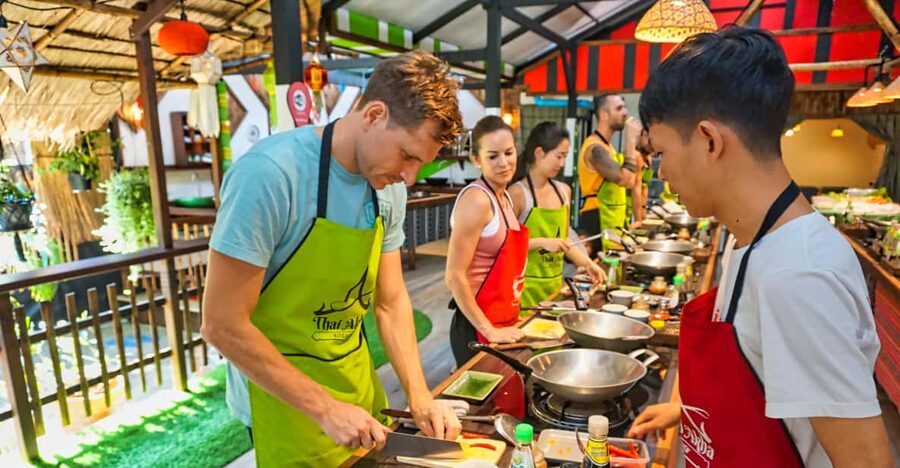
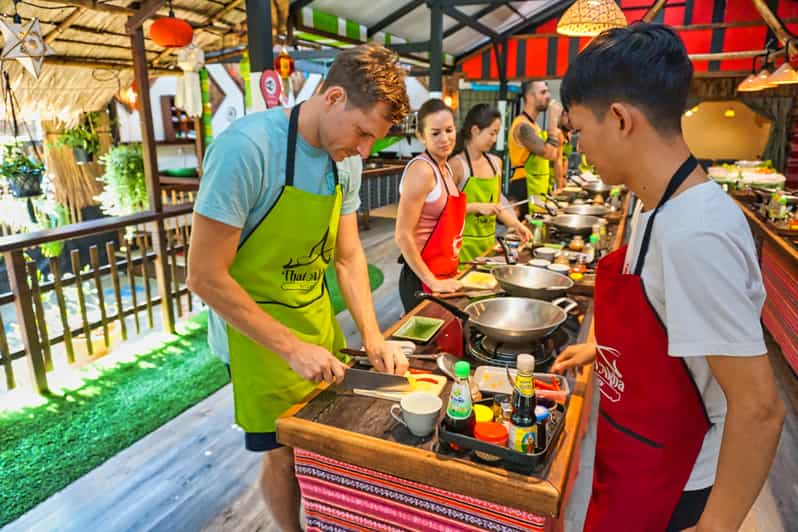
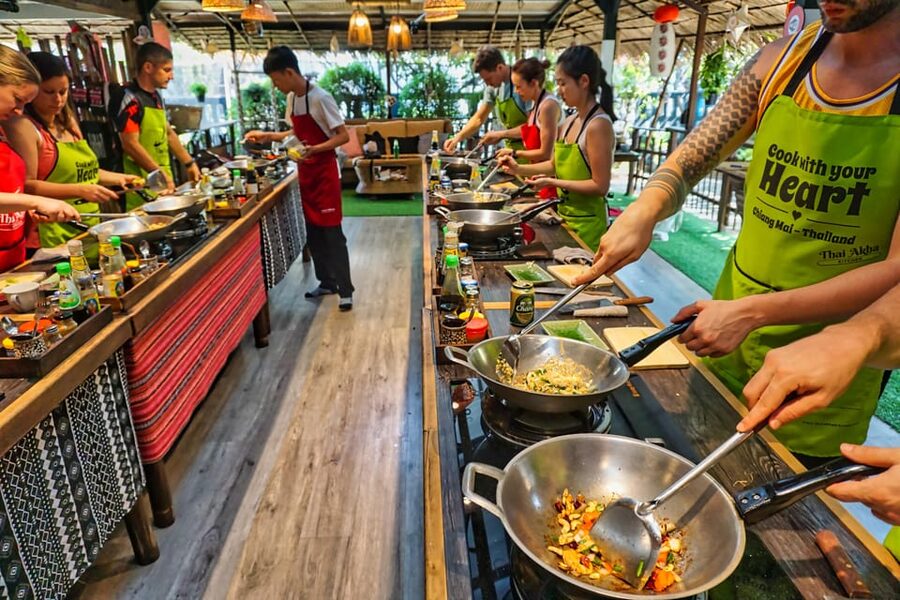
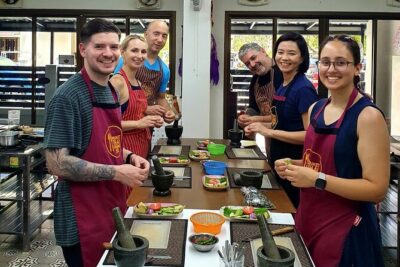
This is not a demonstration where you sit and watch someone else do all the work. You are expected to help prepare the food and follow the steps in the kitchen.
The class also allows you to adjust the spice level. That small point is important. Thai cooking can range from mild to eye-watering, and a dish is more useful if you can make it at a level you will actually eat later.
I would tell the instructor your preferred heat level early in the session. If you have a food allergy, contact the provider by email or WhatsApp before the class. Do not wait until the market or kitchen, since the menu includes chicken, prawns, peanuts, coconut milk, egg tofu, and other ingredients that may matter for your diet.
The number of dishes can make this a busy experience. One recent class was described as preparing 11 Thai dishes over about three hours in the kitchen. That is a lot of food and a lot of steps, even when the pace is well managed.
This works best if you enjoy doing things rather than simply taking photographs. You will chop, mix, season, cook, and eat. If you prefer a short lesson focused on one signature dish, this class may feel long.
More Hill Tribe Villages in Chiang Mai
- Thai and Akha Cooking Class in Chiang Mai
★ 5.0 · 4,358 reviews - Chiang Mai: Elephant Sanctuary, Long Neck & Sticky Waterfall
★ 4.9 · 2,262 reviews - 4-Hour Doi Suthep & Hmong Hill Tribe Village from Chiang Mai
★ 4.7 · 696 reviews - Chiang Dao Cave & 5 Hill Tribe villages
★ 5.0 · 181 reviews
Why the food quantity adds value

At $41 per person, the value comes from several parts working together: hotel pickup, the market tour, the cooking instruction, organic ingredients, the meal, recipes, a cookbook, and spices to take home.
You are not paying only for a plate of food. The market and kitchen together make the session last five to six hours, and the menu gives you several techniques to take away. You can learn how to make a curry, a soup, a salad, a stir-fry, and dessert in one outing.
The amount of food is also practical for anyone who wants a full meal. Expect to eat well. This is not the kind of class where you leave hungry after three tiny samples.
Still, value depends on your interests. If you dislike group cooking, have a very limited diet, or are looking for a quiet cultural tour, the price may not feel as attractive. The class is built around food preparation, and its strongest feature is the chance to cook many dishes in one session.
The included cookbook and recipes improve the long-term value. You can try the dishes again at home rather than letting the class become a pleasant memory with no practical use.
The instructors shape the mood
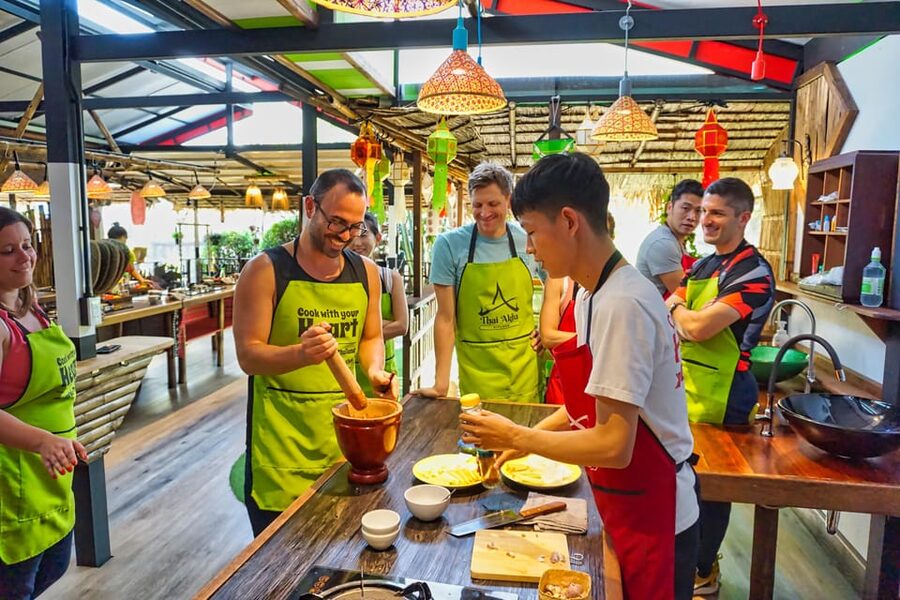
A cooking class can be technically sound and still feel stiff. Here, the instructors are a major part of the experience.
An has been praised for making the market, learning table, kitchen, and meal feel connected. Xuan and Evelyn have also been noted for being funny, kind, and welcoming. Their role is not just to hand out ingredients. They help explain the food, guide each step, and make adjustments when someone wants less heat.
The available language is English and Thai. That should work well for English-speaking participants, but cooking still involves gestures and visual instruction, which helps when learning a physical process.
The atmosphere appears to be friendly and social rather than formal. You should expect to work alongside other people and share the rhythm of preparing a large menu. That can be part of the fun, but it also means the pace may not be entirely your own.
Pickup makes a half-day easier
Hotel pickup from Chiang Mai hotels is included, which removes one of the minor hassles of arranging a cooking class. You do not need to find the kitchen on your own before the day begins.
The exact pickup time depends on the starting time you select. Since the experience lasts five to six hours, leave a generous gap before another fixed booking. A market visit, cooking session, meal, and return transfer can easily occupy much of your morning or afternoon.
This is especially handy if you are staying in Chiang Mai and want an activity with a clear beginning and end. If you are staying outside the stated hotel pickup area, confirm the arrangements before paying, since the included service is described specifically for Chiang Mai hotels.
The class can fit either a morning or evening plan, depending on availability. An evening session may work well after a slower day in the old city, while a morning session leaves your evening free. Check the offered start time rather than assuming every date follows the same schedule.
Who will enjoy this class most
I would recommend this experience to you if you meet one or more of these descriptions:
- You want to cook several Thai dishes instead of watching a single demonstration.
- You enjoy trying regional food that goes beyond the standard tourist menu.
- You want a market visit with a clear purpose.
- You like classes where you can adjust spice levels and make hands-on choices.
- You appreciate taking recipes and ingredients home.
- You are comfortable giving five to six hours to one food-focused activity.
Families, couples, solo participants, and groups can all find a good fit here, provided they enjoy active cooking. The social format is likely to suit people who do not mind working beside others.
I would be more cautious if you have serious allergies, strict dietary requirements, or little interest in meat, seafood, coconut milk, or peanuts. The menu includes chicken, prawns, peanuts, egg tofu, and dairy-free coconut-based dishes, but no special menu is promised. Contact the provider in advance with specific questions.
Practical details before you book
The price is $41 per person. The booking terms allow you to cancel up to 24 hours ahead for a full refund, and you can reserve now and pay later. Those options help if your Chiang Mai schedule is still shifting.
Tell the provider about food allergies by email or WhatsApp before the class. This is the most important preparation step because the menu includes many fresh ingredients and several dishes are prepared during the same session.
Wear something comfortable for a long cooking period. The supplied information does not specify a dress code or kitchen equipment, so I would avoid clothing you would worry about around oil, curry, or strong spices.
Plan to arrive ready to eat. The class covers enough dishes to make this a substantial meal, not a light snack between sightseeing stops.
The activity has a five-star rating from 25 reviews, with repeated praise for the market visit, the amount of food, the instructors, and the friendly teaching. I would treat those points as the clearest guide to what the class does well: it offers a full, active food experience rather than a brief recipe lesson.
Should you book the Thai-Akha cooking class?
Book it if you want a full half-day of food, market shopping, and hands-on cooking with a regional Akha angle. The combination of Sapi Thong, Akha salad, and Akha soup with curries, Pad Thai, spring rolls, and Thai desserts gives you more range than a basic introductory class.
The strongest reasons to choose it are the market visit, the ability to set your own spice level, the generous menu, and the take-home recipes and cookbook. Hotel pickup also makes the day easy to arrange.
Skip it if five to six hours of cooking sounds tiring, or if you want a short lesson centered on one dish. For everyone else, $41 is a fair price for a market tour, transport, a large meal, instruction, organic ingredients, and useful recipes you can try again after Chiang Mai.
FAQ
How long does the Chiang Mai Thai-Akha cooking class last?
The experience lasts five to six hours, including the local market tour and cooking session.
What languages are spoken during the class?
Instruction is available in English and Thai.
Is hotel pickup included?
Yes. Pickup service from Chiang Mai hotels is included.
Which dishes can I cook?
The menu includes papaya salad, fried spring rolls, mango with sticky rice, pumpkin in coconut milk, three Akha dishes, one curry, one Thai soup, and one stir-fried dish. You choose one option from each of the curry, soup, and stir-fried categories.
Can I choose how spicy my food is?
Yes. The class can adapt the spice level to suit your taste. Tell the instructor what you prefer during the session.
What do I take home after the class?
Recipes, a cookbook, and spices are included. Organic cooking ingredients and the cooking session are also included in the price.
More Markets in Chiang Mai
- Chiang Mai: Cooking Class with Market and Pickup
★ 4.9 · 1,365 reviews - Chiang Mai: Evening Cooking Class and Local Market Visit
★ 4.9 · 648 reviews - Chiang Mai: Evening Local Street Food Market Tour
★ 4.8 · 604 reviews - Chiang Mai: Kalare Night Bazaar Boxing Stadium Muay Thai
★ 4.7 · 507 reviews
Just added around Chiang Mai
- Chiang Mai Best City Tour with Doi Suthep & Iconic Temples★ 4.5 · 24 reviews
- Chiang Mai Michelin Food Walking Tour with Professional Tour Guide★ 4.5 · 13 reviews
- Private Chiang Mai Temple Tour with Doi Suthep and Wat Umong★ 5.0 · 52 reviews
- Secret Waterfall and Bamboo Rafting from Chiang Mai★ 5.0 · 30 reviews
- Bua Tong Waterfall Adventure& Huge Cave included Thai Buffet Tour★ 4.5 · 28 reviews
- Chiang Mai Sak Yant Tattoo By Ajarn Tu★ 5.0 · 25 reviews
- Chiang Mai Airport Transfer by Private Van – Arrival or Departure★ 4.5 · 11 reviews
- Chiang Mai Scavenger Hunt and Sights Self-Guided Tour★ 5.0 · 8 reviews
Cooking Classes, compared.
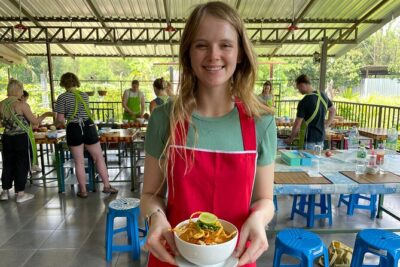
Half-Day Thai Cooking Class at Organic Farm in Chiang Mai
Read our review →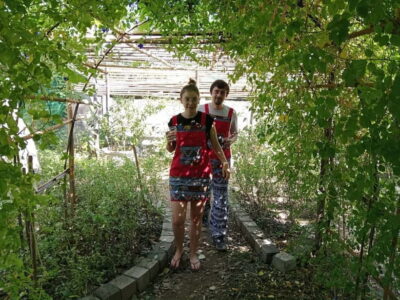
Cooking Class, Market & Thai Herbs Garden Tour
Read our review →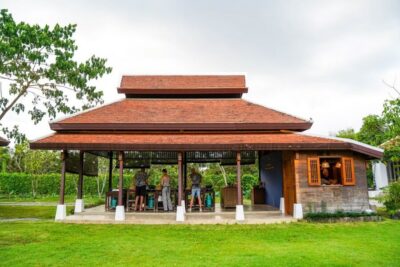
Authentic Cooking Class with Market & Farm Visit
Read our review →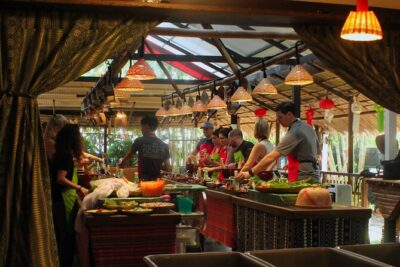
Phuket Thai Cooking Class with Market Tour Option
Read our review →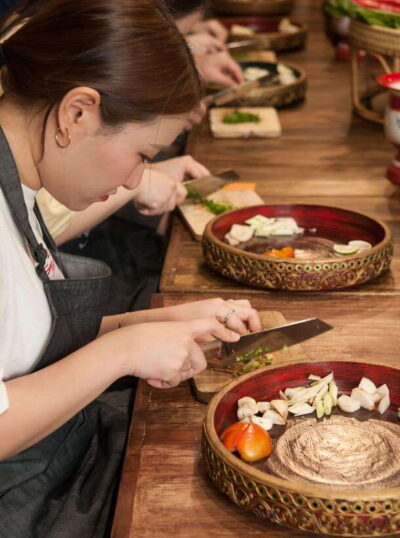
Tingly Thai Cooking School Half-Day Cooking Class
Read our review →Browse the lists this tour appears in