
Reviewed · WALKING TOURS
Bangkok: Chinatown & Taladnoi Street Art Guided Walking Tour
Bangkok’s Chinatown is at its best away from the main road, where old shrines, market lanes, Chinese shop houses, and street art tell a more personal story. This four-hour walk takes you from Wat Mangkon MRT station through Yaowarat and Talad Noi, ending beside the Chao Phraya River.
I like the mix of grand temples and ordinary neighborhood life. I also like that the tour explains Thai-Chinese immigration, trade, charity, and metalworking instead of treating Chinatown as a string of photo stops. The main drawback is the heat: four hours on foot, with little promise of shade, can be tiring if you are not used to Bangkok’s weather.
Key points to know before you book
- Wat Mangkon sets the tone: Begin at one of Bangkok’s key Chinese Buddhist temples, surrounded by incense, worshippers, and local spiritual life.
- The route goes beyond Yaowarat Road: Markets, shrines, old alleys, and community buildings provide a closer look at daily Chinatown.
- Talad Noi adds a different mood: Former ironworking lanes now mix old buildings, creative street art, and small shrines.
- The history is unusually well connected: Your guide links immigration and commerce with the Golden Buddha, charitable medicine, and local craft.
- The finish is useful: River City Bangkok gives you a practical place for lunch, art browsing, or a Chao Phraya boat ride.
- The price is modest: At $19 per person, the tour offers four hours of guiding and includes a bottle of water, but not food or entrance extras.
Starting at Wat Mangkon MRT station
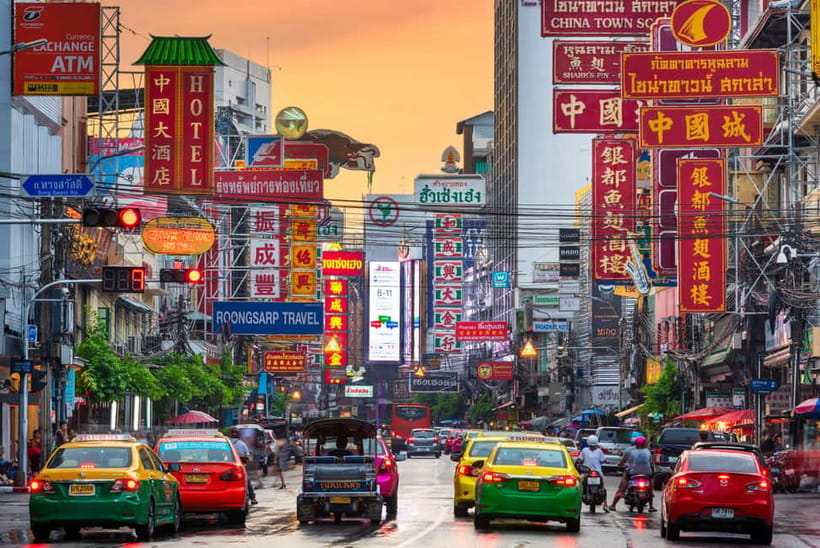
Your meeting point is MRT Wat Mangkon Exit 3, a sensible place to begin because it puts you close to the heart of Yaowarat. If you choose hotel pickup, be ready in the lobby at least five minutes early. Pickup costs extra, and the guide arrives with a sign showing your name.
The standard route starts on foot. Wear light clothing and comfortable shoes, and bring sunscreen and a hat. Bangkok’s Chinatown is not a museum corridor. You will cross busy streets, pass food stalls, and walk on uneven or crowded lanes, so sensible footwear matters more than looking polished.
The English-speaking guides named in the booking information include Jenny, Nok, Mai, Jib, Mariyah, Ploy, Jib, and others. The strongest pattern in the feedback is personal attention. Jenny was praised for clear explanations and patience with children, while Nok was singled out for advice and an attentive manner. Mai adapted the walk to one guest’s interests, and Jib handled a private hotel pickup with detailed explanations throughout the morning.
That flexibility matters. A good Chinatown walk should leave room for questions, photos, and the occasional slow patch in a market. The exact guide and group size can vary, so do not expect the same personality or route pace on every departure.
More Walking Tours in Bangkok
- Bangkok: City Highlights Temple and Market Walking Tour
★ 4.5 · 3,990 reviews - Bangkok: Grand Palace and Wat Phra Kaew Guided Walking Tour
★ 4.4 · 2,417 reviews - Bangkok: Wat Pho and Wat Arun Guided Walking Tour
★ 4.6 · 1,720 reviews
Wat Mangkon and the spiritual heart of Yaowarat
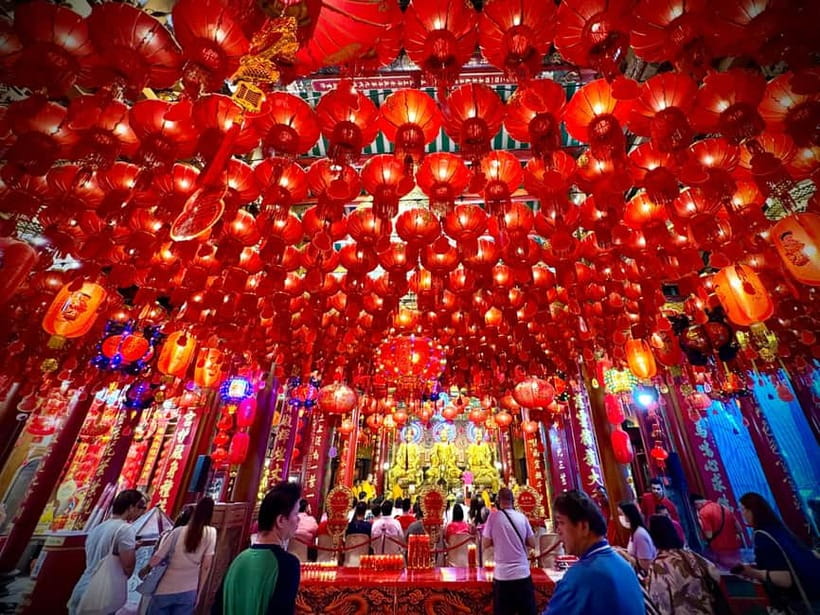
The first major stop is Wat Mangkon Kamalawat, one of the most important Chinese Buddhist temples in Bangkok. It is a busy place of worship, not simply a monument for sightseeing. Expect incense, altars, Chinese religious imagery, and people coming to make offerings.
Your guide helps you read the space and understand its place in Chinatown life. That is useful because temples in Bangkok can look visually dense at first. Without context, you may notice only the carvings and smoke. With an explanation, you begin to see how Thai and Chinese religious customs meet in this neighborhood.
This stop also gives you a quick lesson in the character of the tour. You are not only being led to the most famous building. You are being shown how the district works as a living community.
Morning markets, street food, and everyday Yaowarat
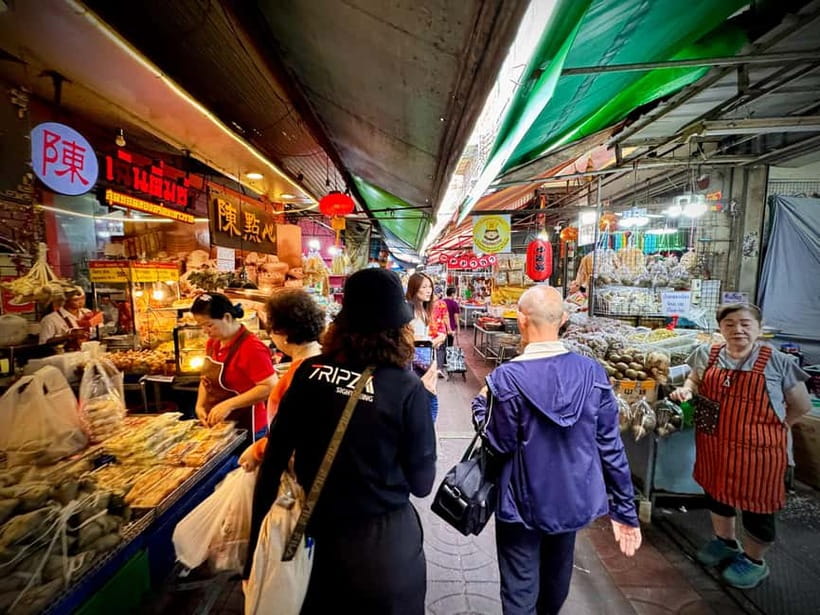
From Wat Mangkon, the route moves through a local morning market. This is one of the better parts of the walk if you want to see Chinatown before focusing on its famous food scene.
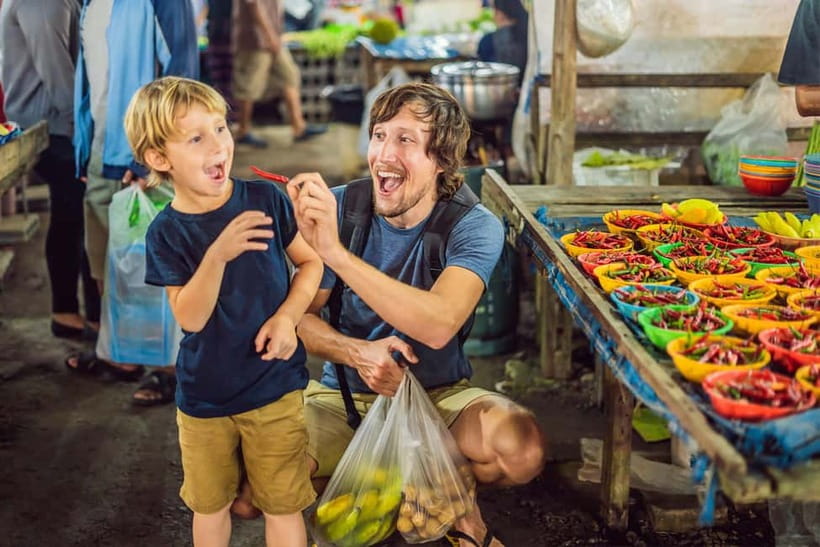
You will pass stalls with food, incense, and everyday goods. The tour does not include meals, so bring money if you want to buy something. The guide can help you understand what you are seeing, and one guide even brought traditional snacks for a guest during the walk. That sort of small, human touch can make a guided outing feel less formal.
The market is also where the walking pace may slow. Narrow lanes, shoppers, deliveries, and food preparation create a tight setting. Keep your belongings close and stay aware of your footing. The reward is a better sense of Chinatown as a working neighborhood, not only a place for evening dining.
Tian Fah Foundation Hospital and Chinatown’s charitable side
The route includes the Tian Fah Foundation Hospital, described as Thailand’s first Chinese charitable hospital. This is an important stop because it adds social history to the usual temple and market story.
Chinese immigrants helped build Bangkok’s commercial districts, but they also created institutions to support their own communities. A charitable hospital shows how organized Chinese associations responded to practical needs. It gives you a wider view of settlement and belonging, beyond the familiar tale of shops and restaurants.
I value this kind of stop because it explains how a community becomes established. You see that Chinatown’s story is not just about old buildings. It is also about aid, cooperation, and institutions that have served local people.
Same base, a completely different sort of day out:
- Bangkok: Damnoen Saduak Market and Maeklong Railway Market
★ 4.5 · 26,723 reviews - The Old Siam: Damnoen Saduak and Maeklong Railway Market
★ 4.5 · 10,992 reviews - Bangkok: Train Market & Floating Market with Boat Ride
★ 4.7 · 9,547 reviews - Bangkok Canal Tour: 2-Hour Longtail Boat Ride
★ 4.5 · 5,909 reviews
The Golden Buddha at Wat Traimit
The walk also covers the story of the Golden Buddha at Wat Traimit. The temple is famous for its large solid-gold Buddha image, and the story behind its discovery is one of Bangkok’s better-known religious surprises.
The important part here is the explanation. Your guide connects the statue with the movement of Chinese communities and the changing identity of Bangkok’s old commercial districts. The stop can be especially worthwhile if you enjoy stories about how objects survive political change, relocation, and changing city streets.
The supplied route describes the Golden Buddha as a story to learn about, so confirm at booking whether your particular departure includes entry inside Wat Traimit or focuses on the explanation from outside. That distinction matters if seeing the statue up close is your main reason for joining.
Wat Pathum Khongkha offers a quieter pause
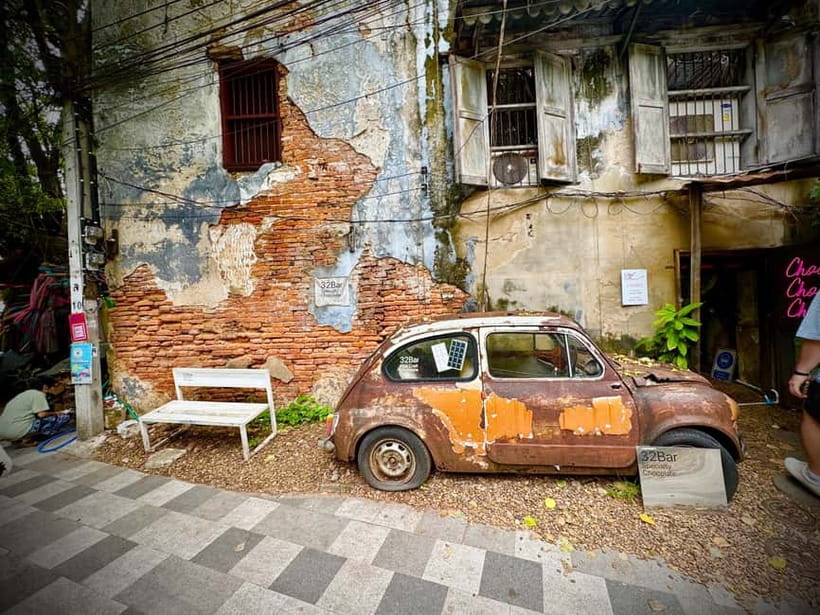
After the activity of Yaowarat, Wat Pathum Khongkha provides a calmer contrast. It is described as peaceful and connected with royalty, giving the walk a change of rhythm.
This is a welcome pause in a four-hour route. Chinatown can feel intense, with traffic, incense, market noise, and tight lanes. A quieter temple helps you reset before the walk continues toward Talad Noi.
The value of this stop is not only the architecture. It shows how different religious and historical spaces sit close together in central Bangkok. The tour moves between Chinese spiritual life, Thai temple traditions, charitable institutions, and commercial streets without pretending they are all the same.
Talad Noi’s old ironworking lanes
Talad Noi is where the tour takes a more local and creative turn. The narrow lanes once housed Chinese craftsmen who forged metal tools, and the old industrial character still shapes the area’s identity.
This is not the polished side of Bangkok. You will walk past older buildings and lanes where the story comes from work, family businesses, and long-established community life. The guide explains how trade and craft helped form Talad Noi, making the area easier to understand than it would be from a quick photo stop.
I particularly like this section for the link between history and ordinary labor. Grand temples tell you what people believed. Ironworking alleys tell you how people earned a living. Together, they give you a fuller picture of the district.
The tradeoff is that Talad Noi is still a neighborhood. Do not expect a tidy attraction with a fixed viewing platform at every stop. The appeal lies in looking carefully at small details, following the guide’s story, and accepting that the route may feel rough around the edges.
The Talad Noi Community Museum and street art
The Talad Noi Community Museum adds a more direct look at local history. It helps place the streets around you into a timeline of immigration, commerce, craft, and family life.
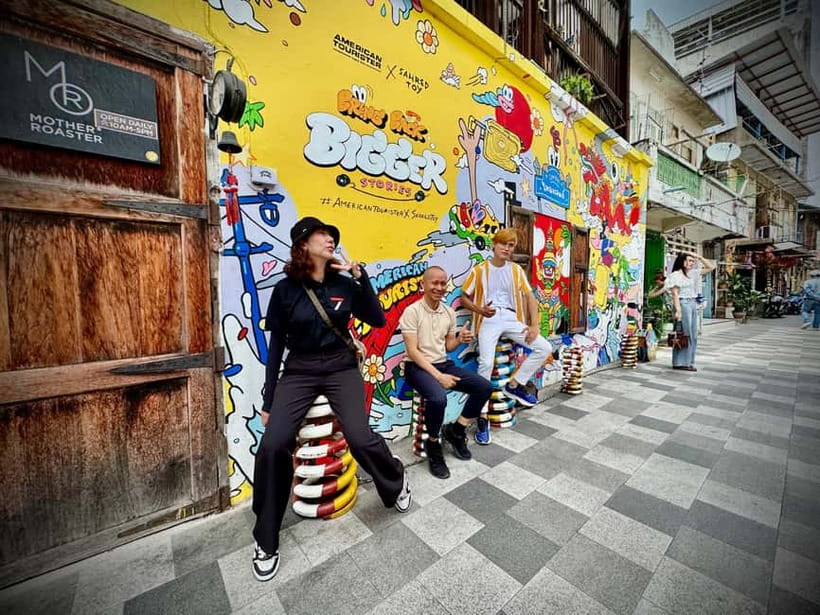
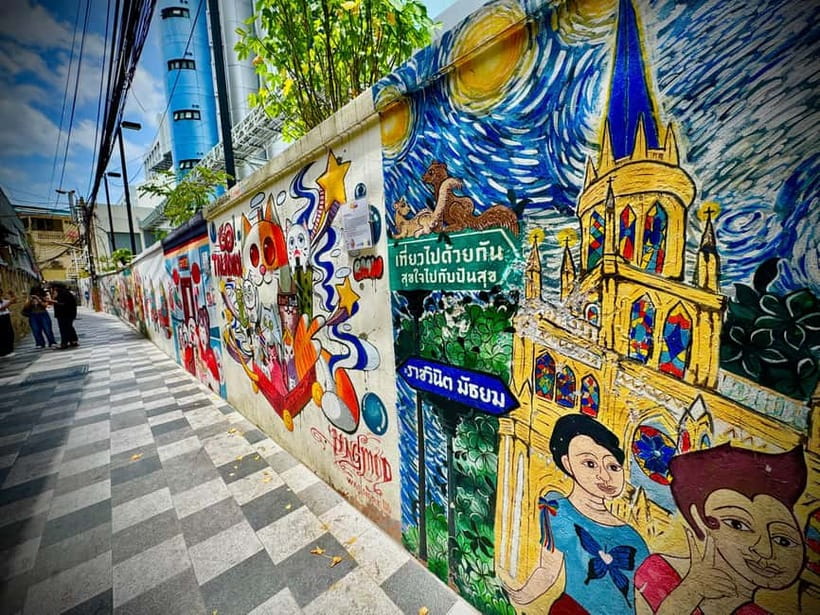
The tour then brings in colorful street art and small shrines tucked between old buildings. This combination is what makes Talad Noi memorable. You get photographs, but you also get clues about how the neighborhood has changed while keeping links to its past.
Street art can sometimes feel like a quick modern attraction added to an older district. Here, it works better when paired with the community museum and stories about local families. Your guide can explain why a particular lane matters rather than simply pointing out a painted wall.
Several guides were praised for making the route personal. Jenny was described as patient and clear with a family that included children. Mariyah was praised for explaining Thailand and Chinatown in a friendly way, while Ploy and Mariyah were noted for being thoughtful and accommodating. These details suggest that the human side of the walk is one of its strongest assets.
Hidden shrines and the stories between buildings
The shrines along the route are easy to miss if you are walking alone. They may sit in narrow gaps between shop houses or behind ordinary street fronts, which is exactly why a guide helps.
The tour focuses on local legend, immigration, commerce, and religious life. These themes connect the stops so the outing feels like one long neighborhood story rather than a checklist.
You should still allow time for your own observation. Look above storefronts, at doorways, and into side alleys where appropriate. The guide provides the background, but you provide the curiosity. This is a good tour for people who enjoy noticing small pieces of a city rather than only photographing its largest landmarks.
Finishing at River City Bangkok
The walk ends at River City Bangkok, beside the Chao Phraya River. This is a practical finish because you are not left in an unfamiliar lane with no obvious next step.
You can continue with lunch near the river, browse the building, or look into a scenic boat ride. The tour itself does not include a meal or boat ticket, so plan to pay separately for anything you do after the walk.
Ending by the river also gives the day a clear change of scenery. You begin in the tight streets of Yaowarat and Talad Noi, then finish in a more open riverside setting. If you are planning a full day in central Bangkok, this makes the walk easy to combine with other sightseeing.
Is $19 good value?
At $19 per person, this is strong value if you want context rather than simply directions. Four hours with an English-speaking guide covers temples, a market, a historic hospital, the Golden Buddha story, a second temple, Talad Noi’s industrial past, a community museum, shrines, street art, and the riverside finish.
A bottle of water is included, but food, personal purchases, and optional pickup are not. The price also does not guarantee a private tour. Some departures may feel intimate, while others may have more people. One guest received a private walk, but that appears to depend on the booking rather than being a standard feature.
You are paying for local interpretation and a carefully connected route. If you would rather move quickly between major sights or spend most of your time eating, this may feel too slow. If you want to understand why these neighborhoods look and function as they do, the cost is easy to justify.
Who should book this walk?
I would recommend it to first-time Bangkok visitors who want an introduction to Chinatown without staying on Yaowarat Road. It also suits repeat visitors who have already seen the main temples and want a closer look at Talad Noi.
Families can benefit from the clear explanations and flexible guiding style, though younger children must be comfortable walking for four hours. It is also a good choice for solo visitors who want local orientation without committing to a full-day excursion.
The route is not suitable for pregnant women or wheelchair users. Anyone who struggles with heat, uneven paths, or long periods on foot should think carefully before booking. A hat, sunscreen, light clothing, and plenty of water will make the morning easier.
Should you book it?
Book this walk if you want Bangkok’s Chinatown explained through people, work, faith, and migration, not just temples and food stalls. The strongest guides appear to be warm, flexible, and clear, with Jenny, Nok, Mai, Jib, Ploy, and Mariyah all noted for personal service in different ways.
Skip it if you want a relaxed vehicle tour, a dedicated food tasting, or a short visit to only the major landmarks. For most visitors who can handle four hours of walking in the heat, this is an affordable way to connect Yaowarat and Talad Noi before continuing along the river.
FAQ
Where does the tour begin?
The standard meeting point is MRT Wat Mangkon Exit 3.
Can I book hotel pickup?
Yes. Pickup is available as an optional paid extra. You should wait in your hotel lobby at least five minutes before the scheduled pickup time, and the guide will hold a sign with your name.
How long does the walking tour last?
The tour lasts four hours.
What language does the guide speak?
The live tour guide speaks English.
What places are included?
The route includes Chinatown, Wat Mangkon Kamalawat, a local market, Tian Fah Foundation Hospital, the story of the Golden Buddha at Wat Traimit, Wat Pathum Khongkha, Talad Noi, the Talad Noi Community Museum, street art, shrines, and River City Bangkok.
Is food included?
No. Meals are not included. You can bring money for food or personal purchases during or after the walk.
What should I wear?
Wear comfortable shoes and light clothing. A hat and sunscreen are also recommended because much of the route is outdoors.
Is the tour suitable for wheelchair users?
No. The activity is not suitable for wheelchair users.
Can I cancel the booking?
You can cancel up to 24 hours in advance for a full refund. Reserve now and pay later is also available.
Just added around Bangkok
- Wonderful Pearl Dinner Cruise★ 3.5 · 27 reviews
- Yoga in the Park Thailand★ 5.0 · 12 reviews
- re:leaf spa and massage★ 4.0 · 10 reviews
- 3-Hour Bangkok Walking Tour: Wat Pho and Wat Arun★ 5.0 · 102 reviews
- White Orchid Sunset Dinner Cruise Calypso Ladyboy Cabaret Show★ 4.0 · 10 reviews
- Visit temples in and around Bangkok with a former monk of 10 years★ 5.0 · 30 reviews
- Morning Buddhist Almsgiving, Grand Palace and Flower Market Tour in Bangkok★ 3.5 · 9 reviews
- Visit Wat Pho and Wat Arun with Local Expert★ 4.0 · 14 reviews
Walking Tours, compared.
City Highlights Temple and Market Walking Tour
Read our review →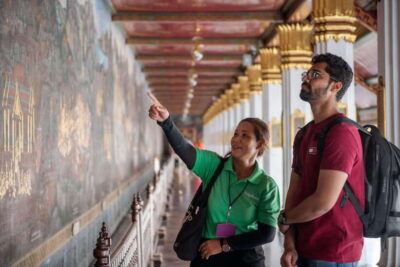
Grand Palace and Wat Phra Kaew Guided Walking Tour
Read our review →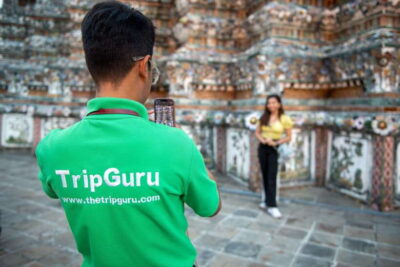
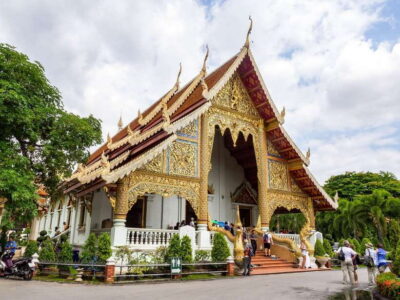
3 Hour Old City and Temples Guided Walking Tour
Read our review →
Beach walk with elephants, rain & care. 2.5 hours
Read our review →
Bukit Elephant Park Sanctuary Walk and Feed Tour
Read our review →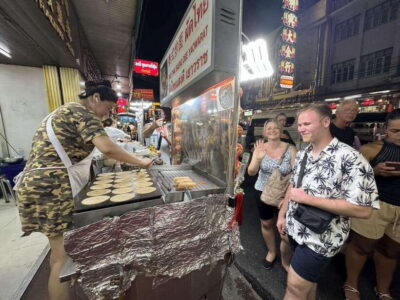
Bangkok Authentic Tasting Thai-Chinatown Walking Food Tour
Read our review →
Browse the lists this tour appears in