
Reviewed · DEATH RAILWAY MEMORIALS
From Bangkok: Historical Day Tour to River Kwai
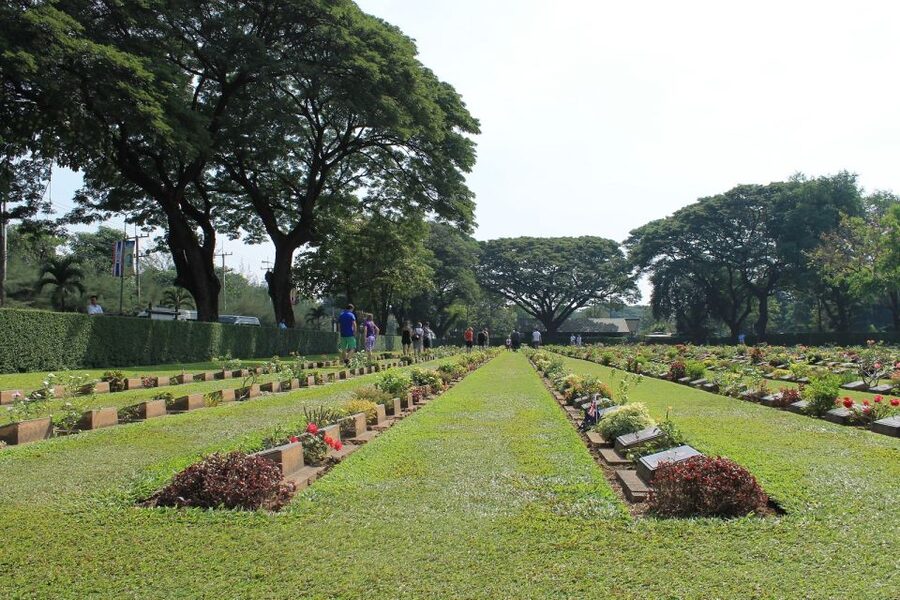
The most moving part of this River Kwai tour is not the bridge. It is the quiet war cemetery, followed by the museum’s account of prisoners of war forced to build the Thailand-Burma Railway. The train ride then puts you on a surviving stretch of that line, with rural views outside the window and a difficult past under your wheels.
I like the thoughtful order of the day: the cemetery and museum give meaning to the bridge and train ride. I also like the small-group feel, careful drivers, and guides such as Luke, William, Woody, and Jokey, who are often praised for clear explanations and kind attention. The drawback is the road time. Bangkok to Kanchanaburi can take about three hours each way, and traffic may turn a planned 10-hour trip into a 12-hour day.
Key points at a glance
- Begin with the war cemetery and museum: The early stops provide essential context before you see the bridge and railway.
- Ride the original Death Railway track: The train journey lasts about an hour and passes rural scenery and the wooden viaduct near the river.
- Walk near Krasae Cave: You can follow the track and see a Buddha statue inside a cave, but uneven ground calls for sensible shoes.
- Small groups improve the day: A compact van makes hotel pickups and short stops easier, and some departures become almost private.
- Lunch is included: A restaurant meal follows the train ride, with meat-free choices available.
- Plan for a long day: The distance is the main trade-off, especially during heavy Bangkok traffic.
Why the River Kwai story begins at the cemetery
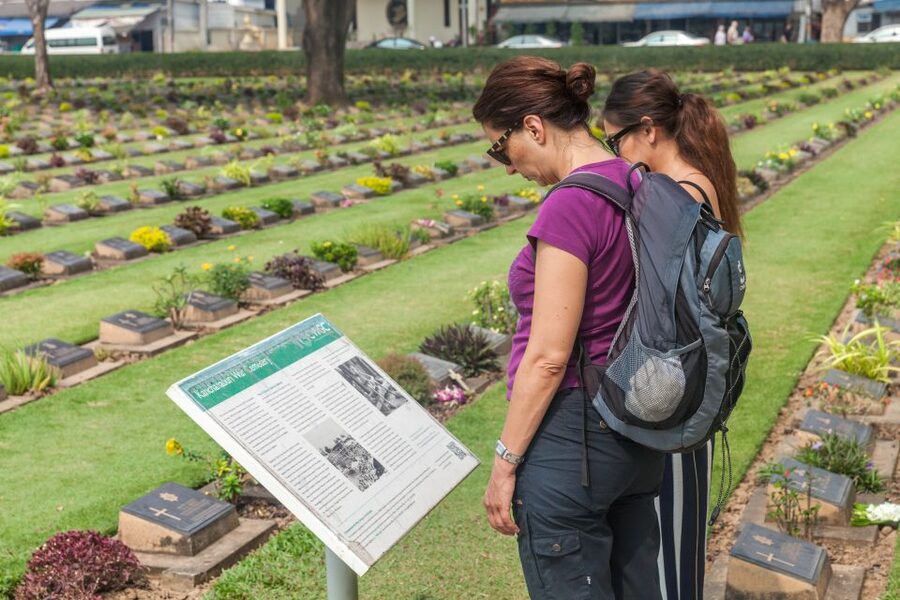
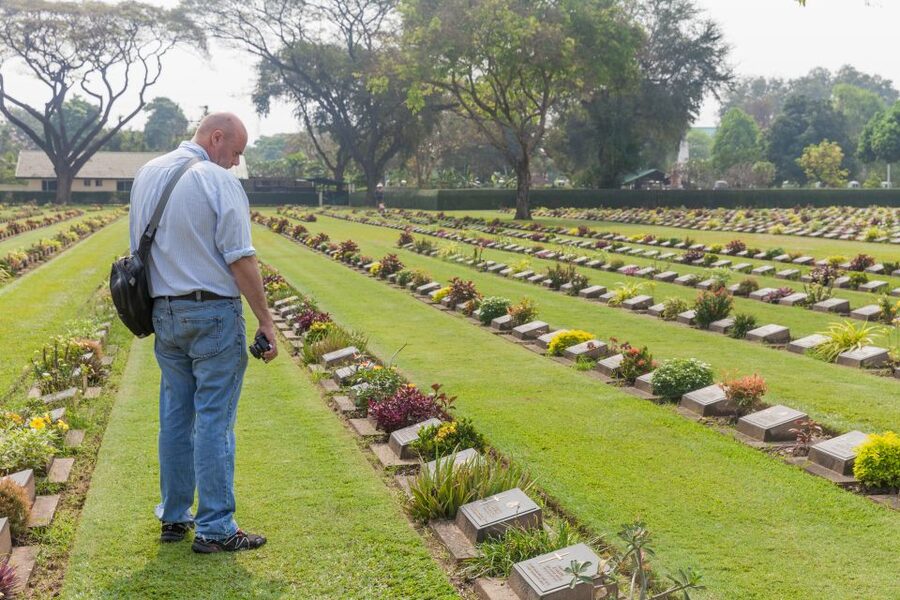
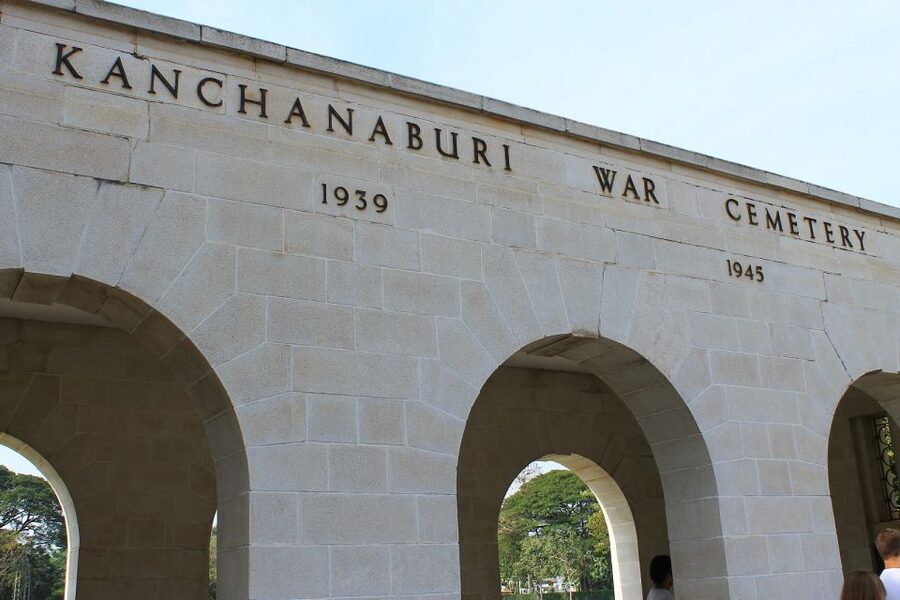
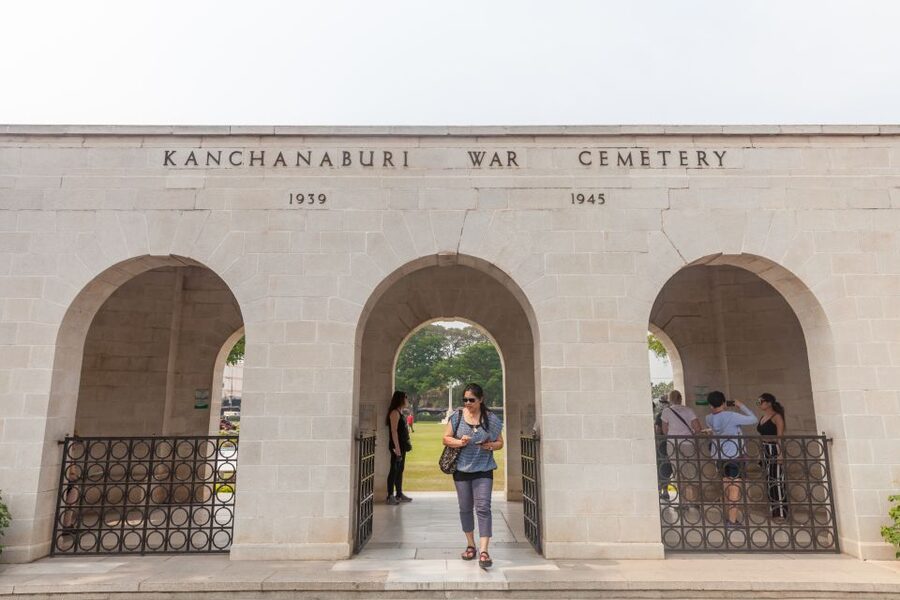
This is a history tour first and a sightseeing trip second. Kanchanaburi’s War Cemetery is carefully maintained and contains the graves of an estimated 9,000 Allied soldiers who died during construction of the railway. You are given time to walk among the rows, read names, and pay your respects.
The setting is calm, but the subject is not. The cemetery makes the human cost clear before you reach the more famous sights. I would not rush this stop, though the schedule can feel tight when traffic delays the morning arrival. Some people would like more time here, and I agree that an extra 10 minutes would help you pause rather than simply pass through.
Your guide usually gives background on the railway, the prisoners of war, and Thailand before you explore on your own. Guides named Luke, Henry, Woody, William, and Jokey have received especially strong praise for their explanations, good humor, and attention to the group. Exact guide assignments vary, but the experience depends heavily on having someone who can connect the sites rather than just point at them.
More Death Railway memorial sites:
- Bridge on the River Kwai and Thailand-Burma Railway Tour
★ 4.5 · 658 reviews - Erawan Waterfalls and Bridge Over River Kwai Tour from Bangkok
★ 4.5 · 372 reviews - Bridge on the River Kwai and Thailand-Burma Railway Guided Tour
★ 4.5 · 353 reviews
Inside the Thailand-Burma Railway Centre
The Thailand-Burma Railway Centre is an interactive museum and research center devoted to the railway built during World War II. Photographs, objects, displays, and personal accounts help explain how the line was planned and constructed.
The museum is important because the bridge alone can be misleading. It is easy to arrive, take a few photographs, and treat the site as a film location. The museum supplies the hard facts behind the image: the railway was built by Allied prisoners of war under brutal conditions, and many died during the work.
You will usually have about an hour here, although the time can vary with traffic and train schedules. That is enough to see the main displays, but not enough to read everything closely on both floors. If you care strongly about World War II history, move at a steady pace and focus on the sections that interest you most.
A useful detail is that the museum stop comes before the train on many departures. That order works well. You first learn what the Death Railway meant, then travel on part of the original route. A small café or refreshment stop may be available near the departure point, but do not count on a leisurely museum visit.
Walking across the River Kwai Bridge
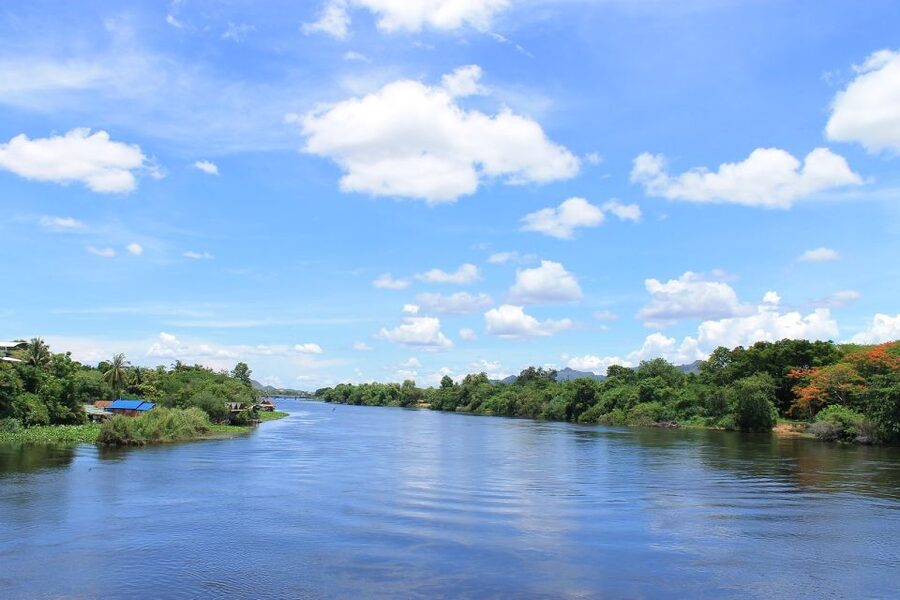
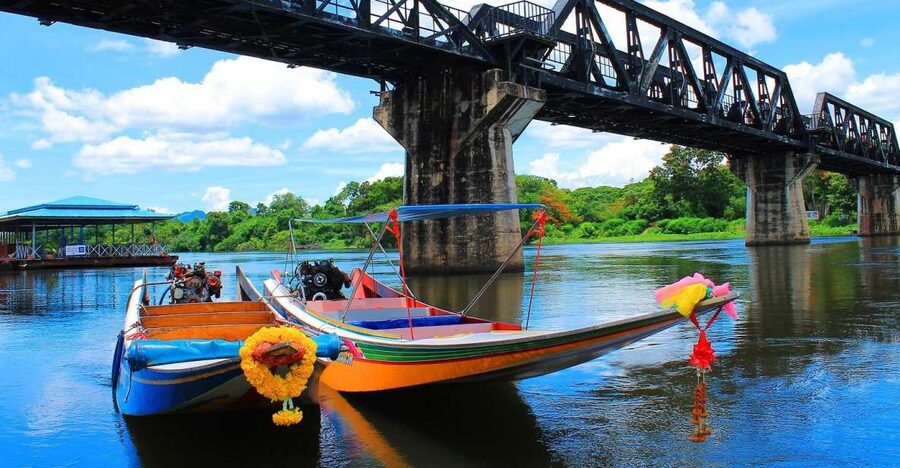
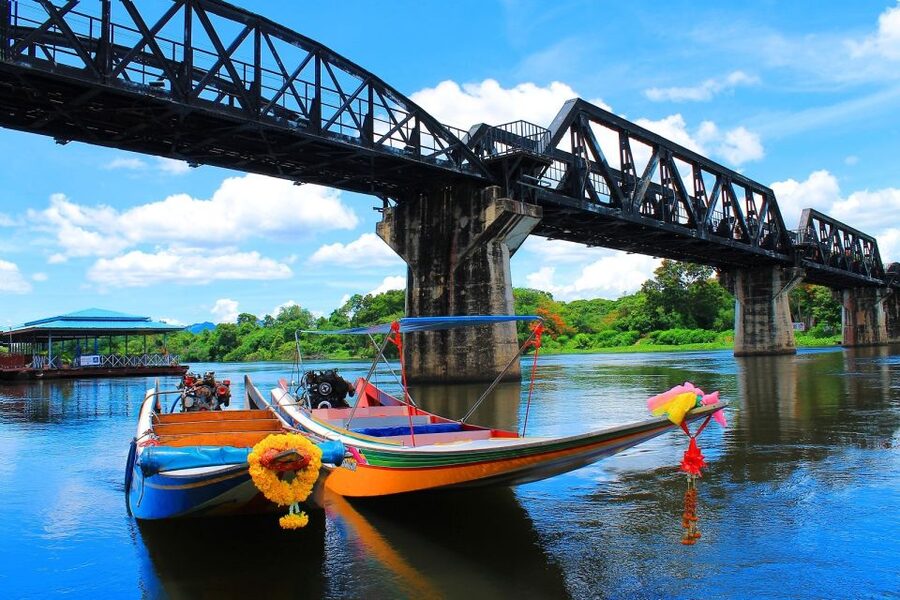
The famous bridge is a short drive from the cemetery and museum. You get time to walk onto it, take photographs, and watch the railway line pass over the river. If a train comes through while you are there, the moment is especially memorable, though train timing is not something the tour can control.
The bridge is narrower and more practical than its reputation suggests. You are walking on an active railway structure, so you need to pay attention and follow your guide’s instructions. This is a place for photographs, but it also rewards a slower look at the river, the rails, and the surrounding countryside.
Some schedules allow more time here than others. If you want a long, unhurried visit, a private trip may suit you better. On this group tour, the bridge is one part of a full day that also includes the cemetery, museum, train, cave area, lunch, and the long return drive.
Riding the Death Railway toward Tham Krasae
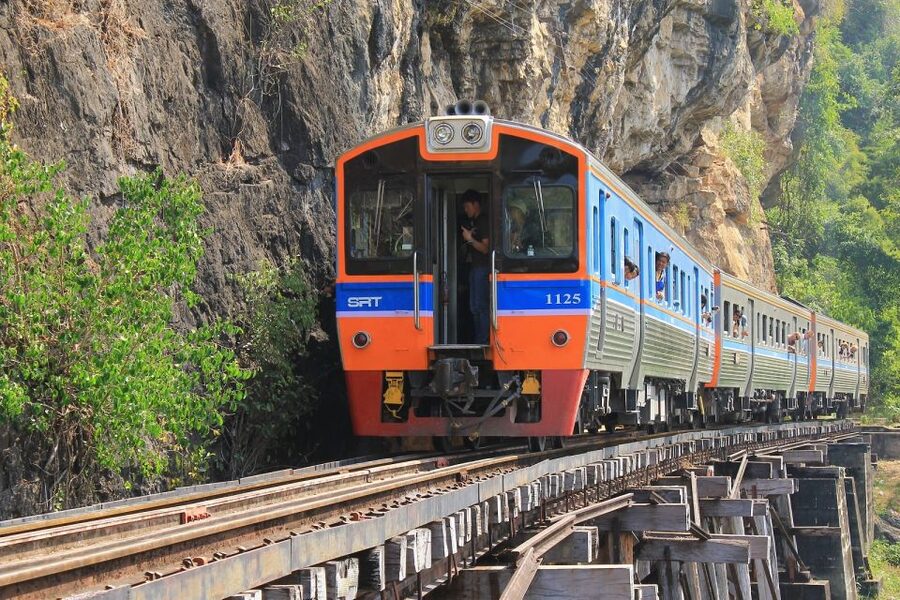
The train ride is the day’s most enjoyable change of pace. You board a local train and travel for roughly an hour along the original Death Railway track, usually toward Tham Krasae station. The route gives you views of rural Thailand and the wooden viaduct built along the river.
This is not a polished tourist train. That is part of its appeal. The basic fare included in the tour gets you onto the train, but it does not guarantee an assigned seat. You can pay an additional THB 200 per person for a reserved seat. Depending on how the group is placed in the train, some people manage to sit without paying extra, but you should not rely on that.
Your guide may help position the group and suggest the better side for views. One well-organized departure placed the group in the last carriage, which meant an easier exit near the viewpoint and cave. That kind of timing matters because the platform and track area can become crowded.
The train ride is also where the tour shifts from museum learning to direct experience. You see the wooden structures, river bends, and countryside at a slow speed. Several hours in a van are balanced by this quieter stretch, though you should remember that the train is a basic public service, not a luxury carriage.
More Historical Tours in Kanchanaburi:
- River Kwai Day Tour from Bangkok – History, Scenery & Culture
★ 4.5 · 206 reviews - River Kwai Day Tour from Bangkok: History, Scenic Views & Culture
★ 4.5 · 36 reviews - Private Historic River Kwai Death Railway, War Cemetery and Hellfire Pass Tour
★ 4.5 · 12 reviews - From Bangkok: Ayutthaya Historical Park Guided Day Trip
★ 4.6 · 3,020 reviews
Krasae Cave and the wooden viaduct
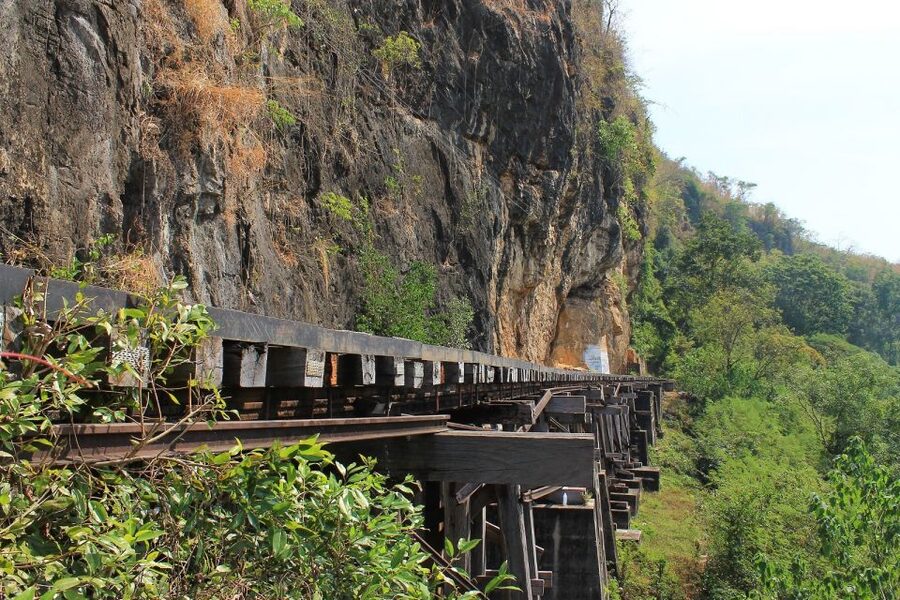
After leaving the train, you have time to walk beside the track and see the wooden viaduct near Krasae Cave. A Buddha statue sits inside the cave. The ground can be uneven and muddy, so wear shoes with a firm sole rather than sandals that slip easily.
The cave is a small addition to the route, but it gives you another angle on the railway. You can see how the line follows the river and how difficult the terrain must have been for construction crews. If you have limited mobility, ask your guide how far you need to walk before deciding whether to enter.
One useful point from the day’s practical experience: a senior visitor advised going only as far into the muddy cave as the Buddha statue. That is sensible advice. You do not need to push farther into a slippery space to understand the stop.
Lunch after the train ride
Lunch is included at a local restaurant after the train journey. It is generally described as tasty, clean, and satisfying rather than elaborate. The meal may offer several choices, including alternatives for people who do not eat meat.
One review noted that the standard meal was enough and that a larger buffet cost extra. This makes the included lunch good value, particularly after an early start. You are not spending another hour searching for food in an unfamiliar area, and the meal gives the group a proper break before the drive back to Bangkok.
Do not expect a long restaurant stop with a wide menu. The point is a dependable meal folded into a packed schedule. If you have strict dietary needs, tell the guide early and check the available choices when you arrive.
The van ride and the real length of the day
The advertised duration is 10 hours, but the road distance is the main issue. Kanchanaburi lies about 130 kilometers west of Bangkok, and the drive can take approximately three hours each way. Heavy traffic can delay both pickup and hotel drop-off.
The air-conditioned van is important here. A good driver makes a real difference on such a long day, and drivers are often praised for smooth, cautious driving. Water, toilet stops, and occasional comfort breaks help, but this remains a full-day outing with several hours on the road.
Pickup options are available from parts of Sukhumvit, Khaosan, and Silom. The listed times are around 6:00 AM for Sukhumvit and Khaosan, and 6:15 AM for Silom. You can also meet at the Bigcountry meeting point at River City Bangkok, 23 Charoen Krung Soi 24, Talad Noi, Sampantawong.
Hotel pickup is convenient, but it can add time as the van collects people. Some departures have used a local taxi to bring hotel guests to the central meeting point first. If you have an evening flight or fixed Bangkok plans, leave a wide margin after the expected return.
Is $51 good value for this day trip?
At $51 per person, the tour includes transportation in an air-conditioned van, an English-speaking guide, entrance fees, lunch, and the basic THB 100 train fare. That is a solid package for a destination that is awkward to reach independently in one day.
The value comes from the number of elements combined: cemetery, museum, bridge, train, cave area, and lunch. You also avoid arranging separate tickets and working out how to connect the railway stops. A careful guide adds real value because the sites need explanation.
The price does not include an assigned train seat, which costs THB 200 per person. That is worth considering if you want to sit with certainty or if you have trouble standing during the journey. The basic fare is enough for the ride itself, but seating remains subject to availability.
The main cost is not money. It is time. You spend a large part of the day traveling from Bangkok, and delays can make the trip longer than planned. If your Bangkok stay is short, compare this with an overnight visit to Kanchanaburi. If you want a focused history day without changing hotels, this tour is efficient.
Who will enjoy this tour most
I would choose this tour if you want World War II history, a guided introduction to Kanchanaburi, and a train ride through the countryside. It suits first-time visitors who would rather have transport and context handled for them.
It is also a good choice for solo visitors. Small groups can feel friendly, and one-person bookings may sometimes join only a few other people. The guides’ attention is useful when you need help with train seating, photographs, water, or the walking sections.
You should think twice if you dislike early starts, long road journeys, heat, or a tightly timed schedule. The day includes outdoor stops, and November departures can be particularly hot. Bring water, a hat, sun protection, and comfortable shoes.
The subject matter is serious. The bridge and train are visually appealing, but the central story concerns prisoners of war, forced labor, and death. You should be prepared for a reflective day rather than a light sightseeing outing.
Booking details worth knowing
The tour is offered with English and Thai-speaking guides. The guide names vary by departure, with Luke, William, Woody, Jokey, Henry, and others leading different days. The strongest pattern is clear: a good guide makes the long journey worthwhile by explaining Thailand, the railway, and each stop in plain language.
You can cancel up to 24 hours in advance for a full refund, and the reserve-now, pay-later option keeps your plans flexible. Pickup is optional, so choose the central meeting point if you want to avoid extra hotel collections and already have an easy way to reach River City Bangkok.
Allow more than 10 hours in your schedule. Twelve hours is possible once Bangkok traffic is included. Do not book a tight dinner reservation, airport transfer, or evening show immediately after the expected return.
Should you book the River Kwai day tour?
Book it if you want the main Kanchanaburi sights in one organized day and you value historical explanation. The cemetery and museum give the bridge and train ride weight, while the train adds a genuine local experience rather than another museum visit.
Skip it if you have little patience for long drives or want extensive time at each site. The schedule is efficient, not leisurely, and some stops may feel brief. For most people interested in the Death Railway, though, the combination of serious history, a real railway journey, lunch, and reliable transport makes $51 a fair price.
FAQ
How long is the River Kwai tour from Bangkok?
The scheduled duration is 10 hours. The drive to Kanchanaburi takes approximately three hours each way, and Bangkok traffic can extend the day to around 12 hours.
What is included in the tour price?
The price includes lunch, entrance fees, an English-speaking guide, air-conditioned van transportation, and the basic THB 100 train fare on the Death Railway track.
Is a train seat included?
The basic train fare does not guarantee an assigned seat. You can pay THB 200 per person in advance for an assigned seat.
Where does the tour meet?
The main meeting point is BMP Bigcountry at River City Bangkok, 23 Charoen Krung Soi 24, Talad Noi, Sampantawong, Bangkok 10100.
Is hotel pickup available?
Optional pickup is available from Sukhumvit areas 1 to 39 and 2 to 26 at 6:00 AM, Khaosan at 6:00 AM, and Silom at 6:15 AM.
Which places does the tour visit?
The tour visits the War Cemetery, Thailand-Burma Railway Centre, River Kwai Bridge, the Death Railway track, and the Krasae Cave area near the train route.
Can I cancel the booking?
Yes. You can cancel up to 24 hours in advance for a full refund. The reserve-now, pay-later option is also available.
Just added around Kanchanaburi
- Floating & Railway Markets and Erawan Waterfall [Optional Luxury]★ 5.0 · 43 reviews
- Train trip death railway Bridge on river Kwai from Bangkok to Kanchanaburi trip★ 4.0 · 17 reviews
- River Kwai Day Tour from Bangkok: History, Scenic Views & Culture★ 4.5 · 36 reviews
- Private Tour to Kanchanaburi Death Railway and Elephant Haven★ 5.0 · 15 reviews
- Private Historic River Kwai Death Railway, War Cemetery and Hellfire Pass Tour★ 4.5 · 12 reviews
- Private Tour: Kanchanaburi Erawan Waterfall Tour from Bangkok★ 4.5 · 13 reviews
- Private Erawan Waterfall, River Kwai, Death Railway Tour from Bangkok★ 4.5 · 22 reviews
- Private Tour: Death Railway, Hellfire Pass and Erawan Waterfall★ 5.0 · 55 reviews
Death Railway Memorials, compared.
Bridge on the River Kwai and Thailand-Burma Railway Tour
Read our review →
Erawan Waterfalls and Bridge Over River Kwai Tour from Bangkok
Read our review →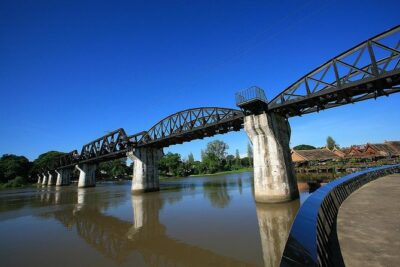
Bridge on the River Kwai and Thailand-Burma Railway Guided Tour
Read our review →
Kanchanaburi Full Day Tour: River Kwai and Erawan Falls
Read our review →
Floating Markets and Bridge on River Kwai Tour from Bangkok
Read our review →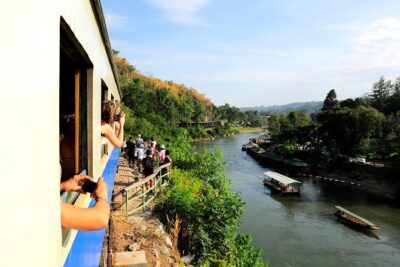
River Kwai Day Tour from Bangkok – History, Scenery & Culture
Read our review →
Bridge over River Kwai and Hellfire Pass Tour with Train Ride
Read our review →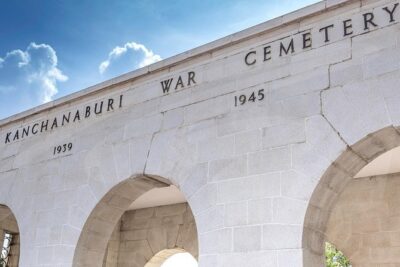
Private Tour: Thai–Burma Death Railway Bridge on the River Kwai from Bangkok
Read our review →Browse the lists this tour appears in