
Reviewed · WALKING TOURS
Small-Group: Unseen Bangkok’s Chinatown Walking Tour
Bangkok’s Chinatown is much more than Yaowarat’s neon signs and food stalls. This walk takes you into narrow market lanes, old Chinese houses, shrines, and neighborhood corners that are easy to miss when you explore alone. You also get a local meal and small food tastes along the way, so the tour connects daily life with the area’s past.
I like the way the tour combines Sampeng Market and quieter community streets, rather than treating Chinatown as one big shopping stop. I also like the personal scale. Guides such as Bobby, Aom, Mai, Eng, Gee, Pat, and George have been praised for adapting the walk, explaining local customs, and sometimes staying longer to help with food or sightseeing suggestions.
The main consideration is expectation. This is not a nonstop shopping tour or a grand-temple tour. It is a walking introduction to local Chinatown life, and the commentary at major temples may feel brief if you want detailed architectural or religious instruction.
Key points to know before you book
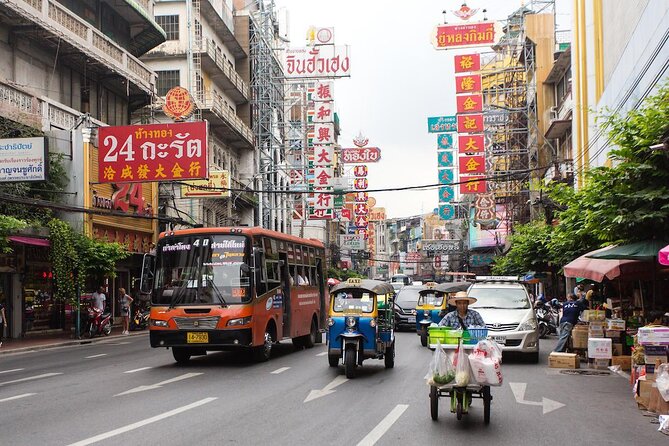
- Sampeng Market is part of the story, not the whole show: Expect wholesale shops, tight lanes, bargain browsing, and quick stops rather than a dedicated shopping expedition.
- The food is built into the walk: You receive snack tastes, local coffee or another drink, and a Thai-Chinese lunch at a restaurant operating for about 30 years. Drinks are available to buy, while alcohol is not included.
- You see several sides of Chinatown: The route includes Chinese shrines, an old Chinese house, a former red-light district, a 150-year-old fresh market, and street art areas.
- Guides make a real difference: Bobby is noted for stories and photos, Aom for a comfortable pace, Mai for local heritage, and Pat for adding ferry travel and extra food stops on one outing.
- Plan for a three-hour walk: Comfortable shoes, weather protection, and moderate fitness matter. Bangkok heat, traffic, uneven pavement, and crowded lanes can make the distance feel longer.
- The meeting point is easy to reach: Start at 10:00 am outside Hua Lamphong MRT, at Exit 1 and the Better Coffee building. The walk returns to the same meeting area.
Why this Chinatown walk feels different
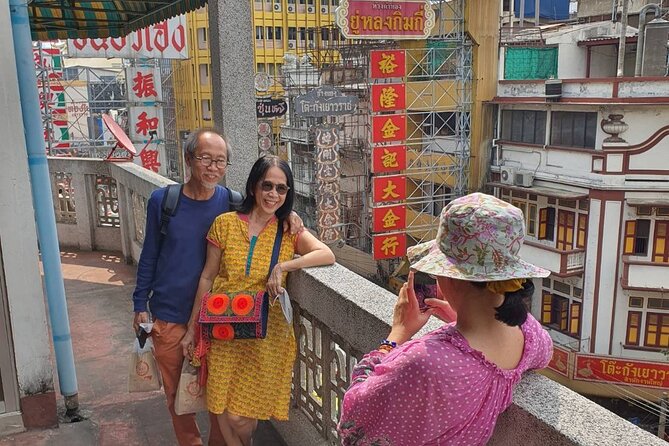
The useful idea behind this tour is simple: Chinatown makes more sense when you move through it slowly. From a taxi window, you see signs, traffic, and shopfronts. On foot, you notice the scale of the lanes, the way wholesale goods fill the stores, and how Chinese religious spaces sit beside ordinary working streets.
The walk begins at Hua Lamphong MRT at 10:00 am. Your guide meets you at street level near Exit 1, at the Better Coffee building. This is a practical starting point because it avoids the confusion of meeting in the middle of Yaowarat’s busiest streets.
The group is advertised as no more than eight, although the general activity information allows up to ten. Either way, this is much smaller than a standard city tour. A small group lets you hear the guide in a narrow lane and makes it easier to pause for food, photographs, or questions.
Several guides have made a strong impression through different strengths. Bobby has been praised for clear explanations, local stories, photographs, and even staying past the planned end. Aom is associated with a relaxed pace and broad explanations of Thailand. Mai is noted for enthusiasm about Chinatown’s heritage, while Eng combines breaks, temples, markets, coffee, and lunch in a manageable three-hour route.
More Walking Tours in Bangkok
- Bangkok: City Highlights Temple and Market Walking Tour
★ 4.5 · 3,990 reviews - Bangkok: Grand Palace and Wat Phra Kaew Guided Walking Tour
★ 4.4 · 2,417 reviews - Bangkok: Wat Pho and Wat Arun Guided Walking Tour
★ 4.6 · 1,720 reviews
Old houses, shrines, and the community behind Chinatown
The first section focuses on the Chinese community and the old streets around Chinatown and Talat Noi. You walk toward a street art area and visit a Chinese shrine, an old Chinese house, and local community spaces.
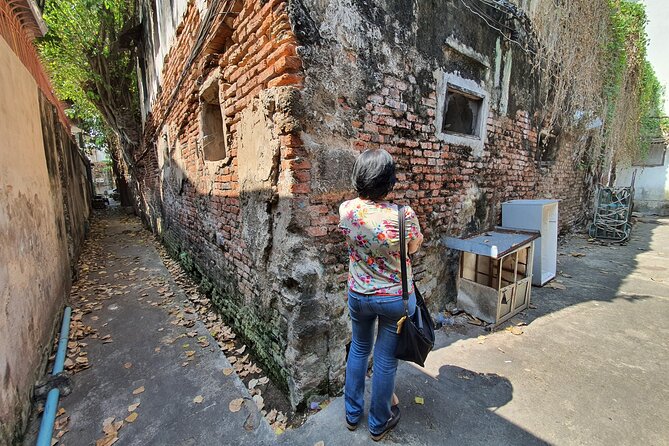
The old Chinese house is one of the more unusual elements. It gives the walk a domestic scale. Instead of only seeing major monuments, you get a sense of how Chinese families and businesses shaped the neighborhood over generations.
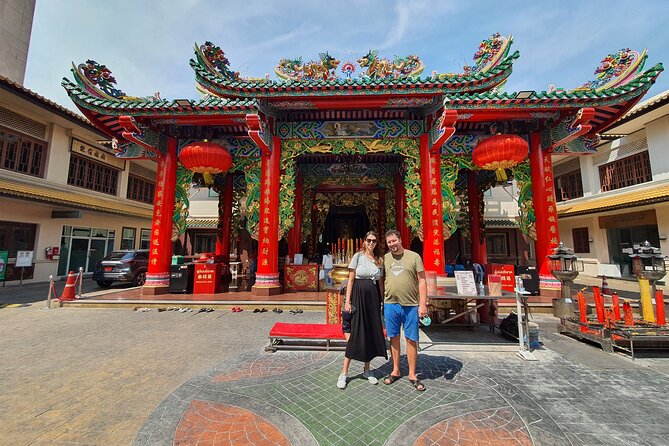
The shrine visit adds another layer. A shrine is not just a stop for photographs. It is a place where local people still come to make offerings and observe custom. Your guide can explain how these spaces fit into everyday life, though the depth of that explanation depends on the guide and the questions you ask.
Aom, Bobby, Gee, and other guides have been praised for explaining culture and local life in a friendly way. One guide even showed a shrine located above a police station, an unexpected detail that captures the compact nature of Bangkok’s older neighborhoods. You may also pass older buildings whose stories are easier to understand with someone who knows the area.
The route includes a hidden school and a local coffee shop. The school is an interesting stop because it shifts attention from temples and markets to education and community life. The coffee stop gives you a chance to sit, cool down, and watch the neighborhood at a slower pace.
Do not expect an academic lecture at every building. One piece of feedback points out that temple explanations can be limited. If you want more detail, ask direct questions about the shrine, the Chinese traditions, the building’s age, or how the local community uses the site today.
The former red-light district and changing Chinatown
One short stop covers Chinatown’s former red-light district. The visit lasts about 15 minutes, so this is mainly a context stop rather than a large attraction.
That brief pause is useful because it shows that Chinatown has not always been defined by food and shopping. Bangkok neighborhoods change as business patterns, migration, and tourism shift. A guide can help connect the old district with the streets you see now.
This part may be less interesting if you are expecting a major landmark. It is better understood as one piece of the area’s social story. The value comes from the explanation and the contrast with the temples, markets, and family businesses nearby.
The walking route can also include old buildings and street art. These stops help break up the market sections and give you different subjects for photographs. They are not presented as a formal art tour, so keep your expectations focused on local atmosphere and neighborhood history.
Sampeng Market, Bangkok’s narrow shopping maze
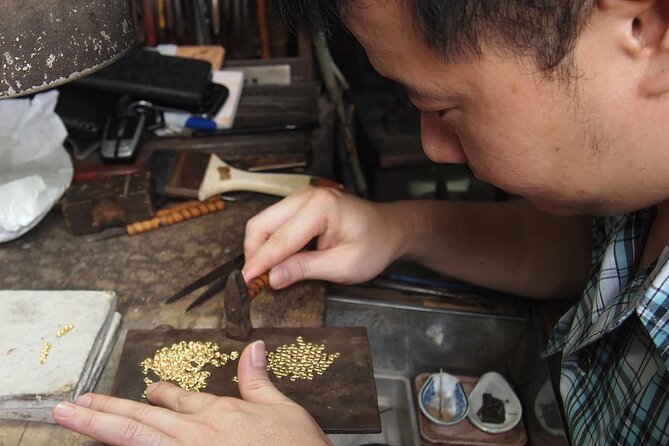
Sampeng Market is the most active part of the walk. You move through small alleys lined with wholesale shops, bargain goods, and displays that can make the pavement feel even narrower.
This is not a relaxed browse through a shopping mall. Goods are sold in working quantities, lanes can be crowded, and shopkeepers are focused on trade. That is exactly why a guide helps. You can learn what the market is used for, where local people shop, and how to move without blocking the flow.
The tour includes time to look for bargains, but shopping is not the main purpose. One disappointed participant expected a dedicated Chinatown shopping experience, so be clear about the balance before booking. The walk gives you a look at Sampeng Market within a larger historical and food-focused route.
You might find small gifts, household items, accessories, or other low-cost goods, but the exact selection changes. Bargaining may be possible in some shops, yet you should follow your guide’s lead rather than treating every price as an invitation to negotiate.
The market is also a test of comfort. You will be on your feet, moving through tight spaces and crossing active streets. Keep your bag close, wear shoes with a firm sole, and avoid bringing anything that makes it hard to walk or turn around.
Same base, a completely different sort of day out:
- Bangkok: Damnoen Saduak Market and Maeklong Railway Market
★ 4.5 · 26,723 reviews - The Old Siam: Damnoen Saduak and Maeklong Railway Market
★ 4.5 · 10,992 reviews - Bangkok: Train Market & Floating Market with Boat Ride
★ 4.7 · 9,547 reviews - Bangkok Canal Tour: 2-Hour Longtail Boat Ride
★ 4.5 · 5,909 reviews
A 150-year-old fresh market and the food stops
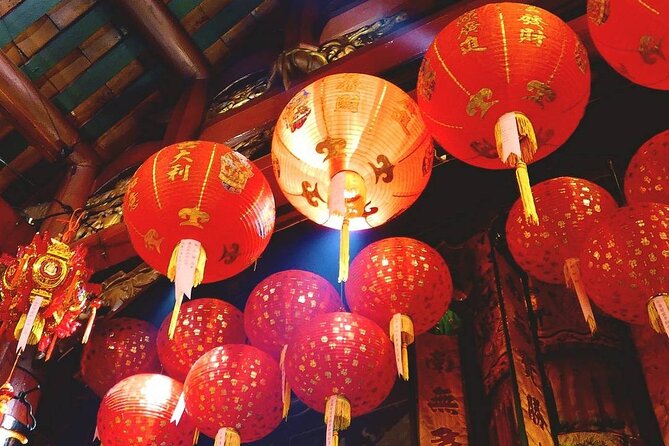
Another stop brings you to a fresh market described as about 150 years old. This gives the route a more practical feel. You are not only seeing places built for visitors. You are seeing where food and supplies support neighborhood life.
The exact products and activity can vary, but a fresh market usually rewards attention to small details: shop displays, smells, deliveries, and the movement of people buying ingredients. Your guide is the person who gives those details meaning. Ask about common ingredients, Chinese influence on local cooking, and what is eaten at home rather than only at restaurants.
Food samples are included throughout the experience. The description refers to Chinese street vendor snacks, and individual outings have included items such as dim sum, noodle soup, fried oysters, and other local tastes. The exact snack selection is not fixed, so consider these samples a chance to try several small bites rather than a guaranteed menu.
Coffee is another recurring part of the experience. Guides have taken people to local coffee shops for Thai coffee, iced tea, or another drink. These breaks are especially welcome in Bangkok’s heat and help keep the pace comfortable.
One guide, Pat, added a street-food stop at a Michelin-recommended shop and fried oysters to the day. That detail should not be treated as a guaranteed inclusion for every departure, but it shows how the route can change with the guide and the group.
Lunch in a restaurant with local roots
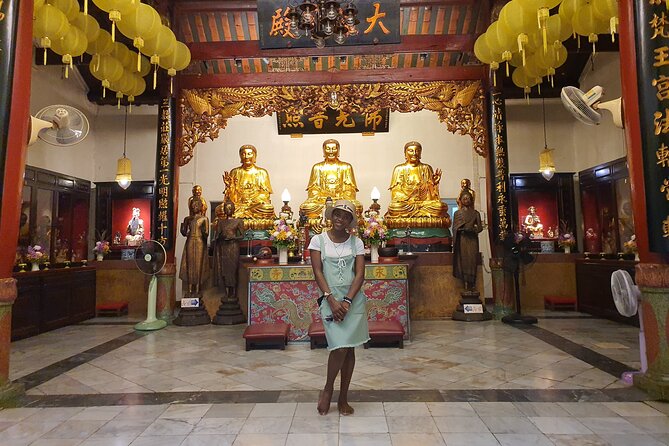
The walk ends its food section with lunch at a restaurant that has been open for about 30 years. The meal features typical Thai-Chinese dishes and is included in the tour. Drinks are available for purchase, while alcoholic beverages are not included.
This sit-down meal is more useful than another quick snack. It gives you time to rest, talk with the guide, and ask about dishes that may be unfamiliar. It also shows how Chinese cooking traditions have become part of Bangkok’s everyday food culture.
Past outings have included noodle soup and other local dishes, but there is no fixed menu in the information provided. If you have allergies, strong food restrictions, or concerns about spice, tell the provider before the walk. The supplied details do not promise a special dietary menu.
The lunch also helps explain the tour’s value. At $52.14 per person, you are paying for a local guide, food and drink samples, lunch, and local transportation used during the tour. You are not paying simply for entry to a single attraction. The price is reasonable if you value interpretation, a small group, and food arranged in places you might not find easily.
It is less compelling if you only want to wander independently, shop, or eat as much as possible. Chinatown is free to explore on your own, and this tour’s value depends on how much you want the guide to connect the pieces.
How the pace and transport work
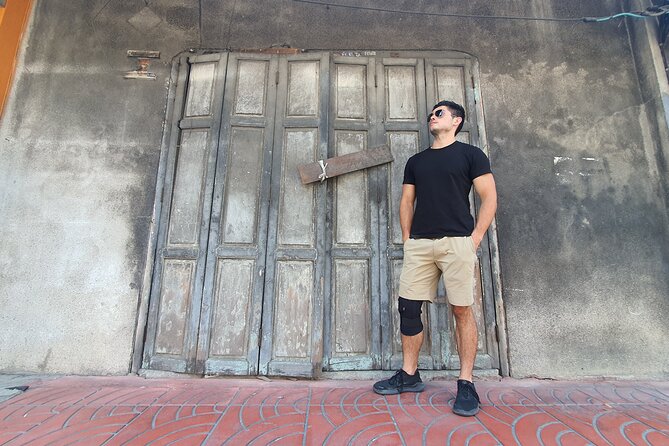
The experience lasts about three to four hours, with the advertised walking portion lasting around three hours. Breaks for coffee, food, temples, and lunch keep it from becoming one long march, but you still need moderate physical fitness.
Local transportation costs during the trip are included. The specific form can vary. One outing used a ferry from the Sathorn area before reaching Chinatown, but the regular meeting details begin at Hua Lamphong MRT. Do not assume the ferry is part of every departure.
The tour ends back at the meeting point. That is useful when planning the rest of your day, especially if you want to return to your hotel or continue exploring Bangkok by MRT.
Bangkok weather can be hot, humid, or wet. The tour runs in all weather, so bring suitable clothing and wear comfortable walking shoes. A light rain layer, sun protection, and water are sensible choices, though the tour information does not list these as supplied items.
Who will get the most from this tour
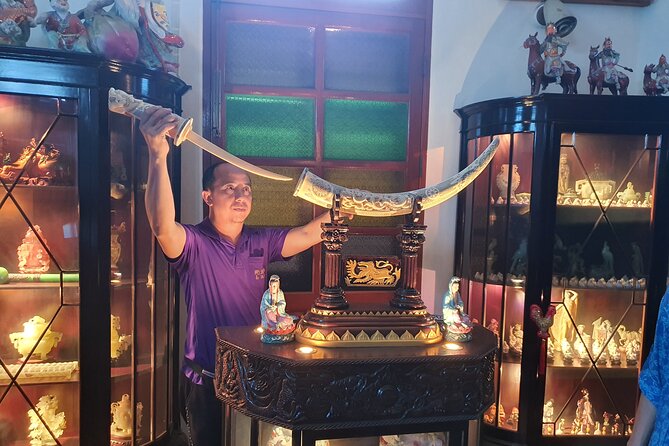
I would recommend this walk to you if you want more than the main Yaowarat strip. It suits first-time visitors who want an introduction to Chinatown, as well as people who have already seen the main food streets and want more context.
It is also a good choice for solo visitors. With a small group, you get conversation without the formality of a large coach tour. One outing even ran with only one participant and two guides, allowing the route to adjust to that person’s interests.
The tour works well for people who enjoy food, local stories, older buildings, markets, and ordinary neighborhood scenes. It is less suited to anyone who dislikes walking, heat, narrow lanes, or informal market conditions.
Families may appreciate the snacks and visual variety, but the physical demands and crowded spaces are worth considering. The supplied details do not specify a child age policy, so check before booking if you are traveling with young children.
The tour is also a good early-Bangkok activity. You will learn where Chinatown’s markets and food streets are, and guides may point out restaurants or places you can revisit later. One guide helped a participant understand how close several food spots were to a hotel, making the walk useful beyond the scheduled hours.
Booking details and practical value
The tour costs $52.14 per person and is usually booked about 28 days ahead. That booking pattern suggests you should not leave it until the last minute if your Bangkok dates are fixed, especially if you want a small group.
Confirmation arrives at booking time, and the ticket is mobile. Hotel pickup and drop-off are not included, so you need to reach the Hua Lamphong meeting point yourself.
Free cancellation is available up to 24 hours before the start time for a full refund. Cancellations or changes made inside that window are not refunded or accepted, using local Bangkok time as the cutoff.
The 4.8 rating from 54 reviews and 96 percent recommendation fit the tour’s main strengths: friendly guides, local food, less familiar streets, and a personal pace. The lower feedback is useful too. It warns you that the tour may not satisfy someone expecting a shopping-heavy route or detailed temple lectures.
Should you book the Unseen Bangkok Chinatown walk?
Book it if you want a small-group Chinatown walk built around local streets, food, and context. The strongest parts are the old Chinese house, community shrines, Sampeng Market, the fresh market, coffee break, and Thai-Chinese lunch.
Choose another experience if your priority is major temple architecture, a long shopping session, or a carefully fixed food menu. For everyone else, $52.14 is fair for a guided three-hour introduction that helps you see Chinatown as a living neighborhood rather than just a row of restaurants.
FAQ
Where does the tour start?
It starts at 10:00 am at street level near Hua Lamphong MRT Station Exit 1, by the Better Coffee building at 320 TangHuaPak.
Where does the tour end?
The activity ends back at the meeting point near Hua Lamphong MRT.
How long does the Chinatown walking tour last?
It lasts about three to four hours, with the main walking experience described as approximately three hours.
How large is the group?
The tour is promoted as a small-group experience limited to eight people. The additional information allows a maximum of ten travelers.
Is lunch included?
Yes. Lunch featuring typical Thai-Chinese dishes is included. Drinks are available for purchase.
Are food and drink samples included?
Yes. Food and drink samples are included, with stops that may include local snacks and coffee or another local drink.
Is alcohol included?
No. Alcoholic beverages are not included.
Is hotel pickup provided?
No. Hotel pickup and drop-off are not included. You must reach the Hua Lamphong meeting point independently.
What should I wear?
Wear comfortable walking shoes and dress appropriately for the weather. The tour operates in all weather conditions and requires moderate physical fitness.
Can I cancel for a full refund?
Yes. You can cancel at least 24 hours before the local start time for a full refund. Cancellations or changes made less than 24 hours before departure are not accepted for a refund.
Just added around Bangkok
- Yoga in the Park Thailand★ 5.0 · 12 reviews
- re:leaf spa and massage★ 4.0 · 10 reviews
- Wonderful Pearl Dinner Cruise★ 3.5 · 27 reviews
- 3-Hour Bangkok Walking Tour: Wat Pho and Wat Arun★ 5.0 · 102 reviews
- White Orchid Sunset Dinner Cruise Calypso Ladyboy Cabaret Show★ 4.0 · 10 reviews
- Visit temples in and around Bangkok with a former monk of 10 years★ 5.0 · 30 reviews
- Morning Buddhist Almsgiving, Grand Palace and Flower Market Tour in Bangkok★ 3.5 · 9 reviews
- Visit Wat Pho and Wat Arun with Local Expert★ 4.0 · 14 reviews
Walking Tours, compared.
City Highlights Temple and Market Walking Tour
Read our review →
Grand Palace and Wat Phra Kaew Guided Walking Tour
Read our review →
3 Hour Old City and Temples Guided Walking Tour
Read our review →
Beach walk with elephants, rain & care. 2.5 hours
Read our review →
Bukit Elephant Park Sanctuary Walk and Feed Tour
Read our review →
Bangkok Authentic Tasting Thai-Chinatown Walking Food Tour
Read our review →
Browse the lists this tour appears in