
Reviewed · DEATH RAILWAY MEMORIALS
Private Historic River Kwai Death Railway, War Cemetery and Hellfire Pass Tour
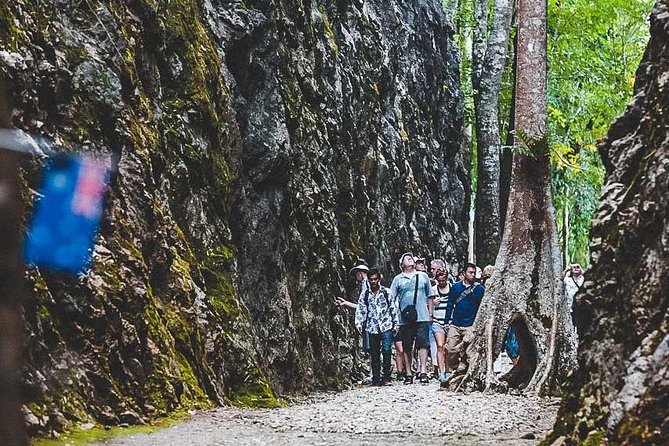
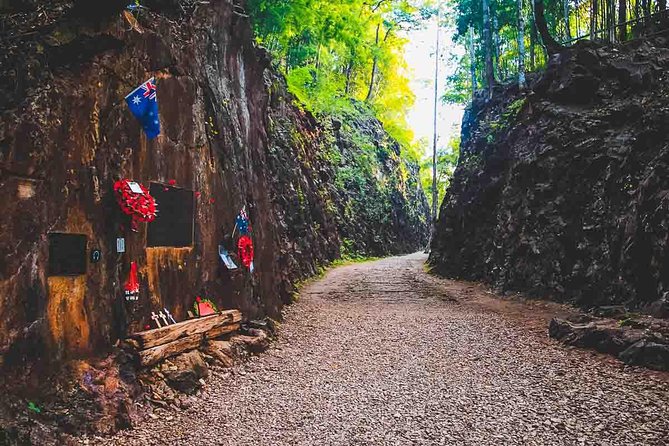
The most sobering part of this private River Kwai tour is Hellfire Pass, where you walk through the rock cutting made by prisoners of war and Asian laborers during World War II. The silence, rough path, and scale of the work make the history feel close and physical, not just something read on a museum panel.
I like the personal guide and private vehicle, which give you room to ask questions and adjust the pace. I also like that lunch, bottled water, hotel transfers, and entrance fees are bundled into the price. The drawback is the distance: with roughly three hours each way from Bangkok, this is a long day on the road.
Key points to know before booking
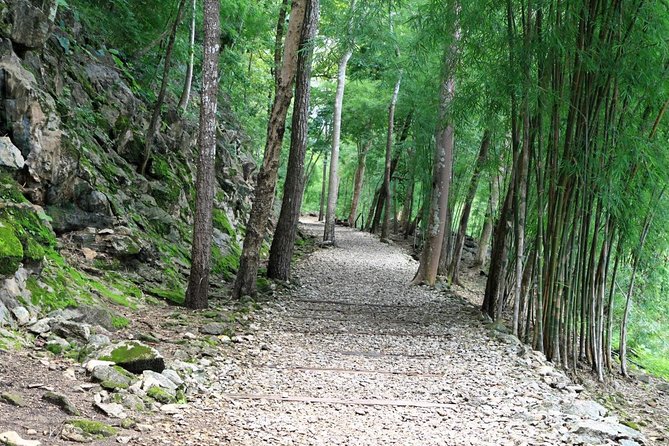
- Hellfire Pass is the emotional center: Allow about two hours for the interpretive centre and memorial walking trail.
- The day begins early: Pickup starts at 6:30 am, helping you reach Kanchanaburi before the return traffic becomes a larger problem.
- You visit several different WWII sites: The cemetery, museum, railway, cave, and bridge each tell a different part of the story.
- Private touring changes the pace: Only your group takes part, so you can ask questions without keeping up with strangers.
- The price covers the practical basics: Air-conditioned transport, a professional guide, lunch, water, and entrance fees are included.
- Expect moderate physical activity: The Hellfire Pass trail and railway walk require more than simply stepping off a coach for photographs.
Why this 10-hour Kanchanaburi trip is worth your time
Kanchanaburi is far enough from Bangkok that visiting the main sites independently takes planning, transport, and a full day. This tour removes much of that work. You are collected in an air-conditioned vehicle, driven between scattered memorials, and returned to Bangkok after lunch and the final bridge visit.
I see the private format as the main reason to choose this outing over a basic shared excursion. You are not locked into a large group’s pace. If a display at the Hellfire Pass Interpretive Centre raises a question, you can stop and ask. If you need a few quiet minutes at the cemetery, you do not have to rush because a bus is waiting for dozens of people.
The guide is also important here. The sites are moving, but their meaning is not always obvious from the scenery alone. Guides named Nan and Peter have received particular praise for being informative, helpful, punctual, and able to shape the day around the group. Guide quality can vary, but a good one helps connect the railway, prison camps, forced labor, and memorials into one clear story.
The tour costs $162.40 per person. That is not a bargain if you only want to see the River Kwai Bridge and take a few photographs. Several stops have no separate admission charge, and one past assessment correctly pointed out that a private driver could cover the route for less.
The value improves if you want history explained on site, hotel pickup, a private vehicle, lunch, and help managing a demanding route. You are paying for convenience and interpretation, not simply entry tickets. For a first visit to Kanchanaburi, that can be a sensible trade.
More Death Railway memorial sites:
- From Bangkok: Historical Day Tour to River Kwai
★ 4.6 · 868 reviews - Bridge on the River Kwai and Thailand-Burma Railway Tour
★ 4.5 · 658 reviews - Erawan Waterfalls and Bridge Over River Kwai Tour from Bangkok
★ 4.5 · 372 reviews
The Kanchanaburi War Cemetery begins the day quietly
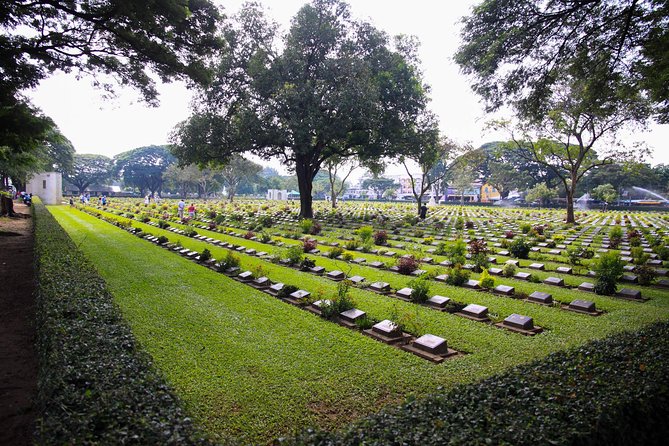
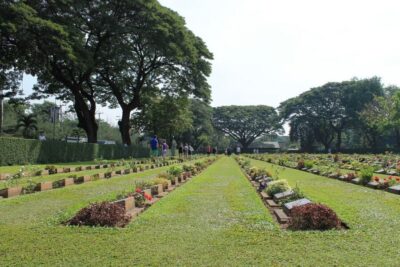
The first stop is the Kanchanaburi War Cemetery, where 6,982 Allied prisoners of war who died during construction of the Thai-Burma Death Railway are buried. It is a carefully maintained place, with rows of graves that make the scale of the deaths easier to grasp than a general history display can.
You have about 30 minutes here. That is enough for a quiet walk and some reflection, though it is not a long guided visit. The cemetery is not a place for a rushed photo stop. Give yourself time to read a few names and take in how ordered and peaceful the grounds are compared with the conditions faced by the men remembered there.
This is a useful opening to the day because it puts people before engineering. Later, you will see the bridge, railway, and rock cutting. Here, you are reminded that every mile of track came at a human cost.
Hellfire Pass puts the railway story under your feet
Hellfire Pass is the tour’s strongest stop. You spend about two hours at the interpretive centre and memorial walking trail, including time to see the museum and walk to the cutting.
The pass was blasted and cut through rock by prisoners of war and Asian laborers under brutal wartime conditions. The supplied history notes that more than 16,000 Allied prisoners and countless Asian laborers died during the construction of the railway. The cutting itself is the important part. You are not only looking at an old photograph or reading a date. You are walking through the place where the work was carried out.
The trail gives this stop its weight, but it also means you need a moderate level of fitness. Wear comfortable shoes and expect some walking on an uneven memorial route. The tour data does not give a precise trail length or detailed accessibility information, so anyone with mobility concerns should ask the provider before booking.
The museum adds essential background. It helps explain the railway project and the suffering behind it, while the outdoor trail gives you a physical sense of the rock and space. The two parts work better together than either would alone.
Plan to keep your voice low here. Hellfire Pass is not a cheerful sightseeing stop, and the experience is more respectful when you allow the site to set the mood. A private guide can help, but you may also want some time without commentary.
The Death Railway Museum fills in the missing details
The Death Railway Museum and Research Centre receives about 30 minutes on the schedule. This stop adds context after Hellfire Pass and before the railway and bridge visits.
The museum is useful if you want a clearer account of the wartime project, rather than seeing the railway only as a scenic attraction. The day moves through several connected places, and this stop helps tie them together.
Thirty minutes is a short visit, so do not expect to read every display in detail. If you are especially interested in military history, prison camps, or railway construction, you may wish the schedule allowed more time. On the other hand, the tour has a lot of ground to cover, and the shorter museum stop keeps the day moving.
The schedule also describes a walk along the notorious Death Railway. That gives you another chance to see how the line sits beside the river and why building it through this terrain was such a difficult task.
More Historical Tours in Kanchanaburi:
- River Kwai Day Tour from Bangkok – History, Scenery & Culture
★ 4.5 · 206 reviews - River Kwai Day Tour from Bangkok: History, Scenic Views & Culture
★ 4.5 · 36 reviews - From Bangkok: Ayutthaya Historical Park Guided Day Trip
★ 4.6 · 3,020 reviews - UNESCO’s Ayutthaya Historical Park: Full-Day Tour from Bangkok
★ 4.5 · 1,559 reviews
Tham Kra Sae combines a cave with a railway view
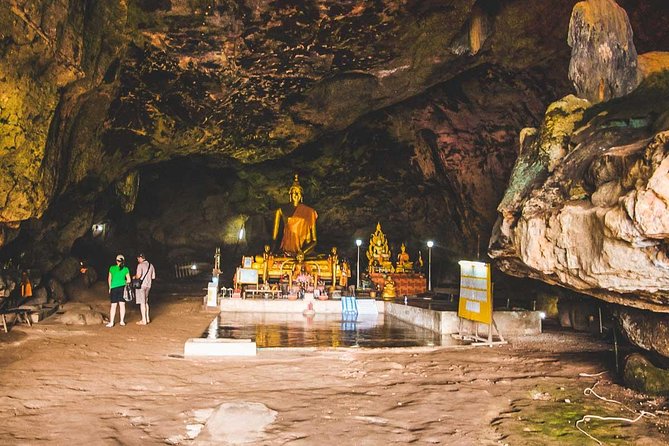
At Tham Kra Sae Bridge, you visit a cave containing a Buddha image. The cave was formerly a prisoner-of-war camp during construction of the railway, giving the stop a direct connection to the people who built the line.
You have about 15 minutes here, so this is a brief stop rather than an extended cave visit. The contrast is striking: a religious image and a place of wartime hardship occupy the same small setting. It is also one of the tour’s more unusual stops, since it links a local spiritual site with the railway’s history.
The timing matters. Fifteen minutes allows you to see the cave and absorb the setting, but not to linger for long. If you prefer a slower pace at each location, tell your guide early in the day. A private tour gives you more flexibility than a group trip, but the route still has a fixed return to Bangkok.
The River Kwai Bridge is more than a famous photograph
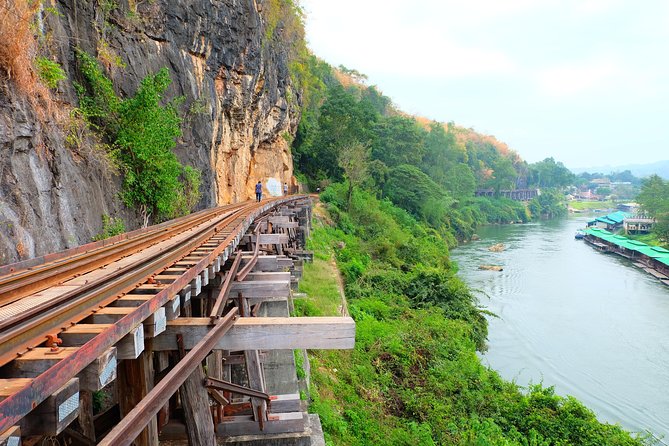
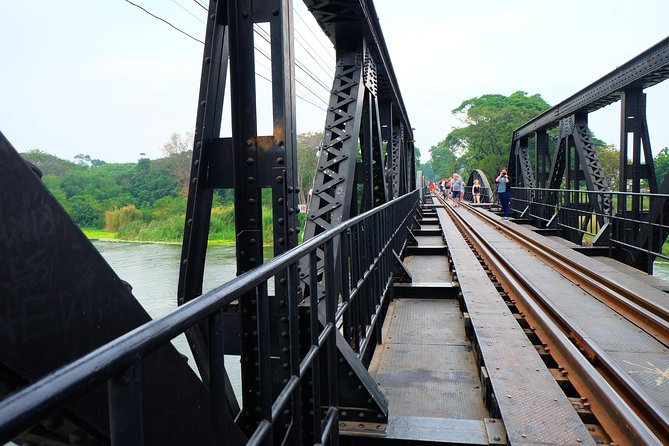
The final major stop is the River Khwae Bridge, known around the world as the Bridge over the River Kwai. You have about an hour to walk along the iron bridge and take in its setting.
The bridge can be the most familiar sight on the tour, thanks to books and films. It is also the stop most likely to feel like ordinary sightseeing, with people wanting photographs and a closer look at the structure. The guide’s role is useful here because the bridge is easy to reduce to an image unless you connect it back to the railway project and the wartime deaths.
Take care while walking. The tour information describes a walk along the bridge, but it does not provide details about barriers, crowd levels, or access arrangements. Keep your attention on the surface and other people rather than focusing only on photographs.
The bridge is a fitting final stop because it brings the day’s themes together. You have seen the graves, the cutting, the museum, the cave camp, and the railway. Now you see the structure that has become the public symbol of the entire route.
Early pickup and Bangkok traffic shape the day
The tour starts at 6:30 am. That is early, but it is sensible for a journey that can take roughly three hours each way. Starting early gives you more useful time in Kanchanaburi and may help limit the impact of Bangkok traffic.
You should expect a full 10-hour day, with a large share spent in the vehicle. This is not a quick half-day escape. The drive is the price of reaching Hellfire Pass and the other sites from Bangkok, and Thai traffic can make the return journey longer.
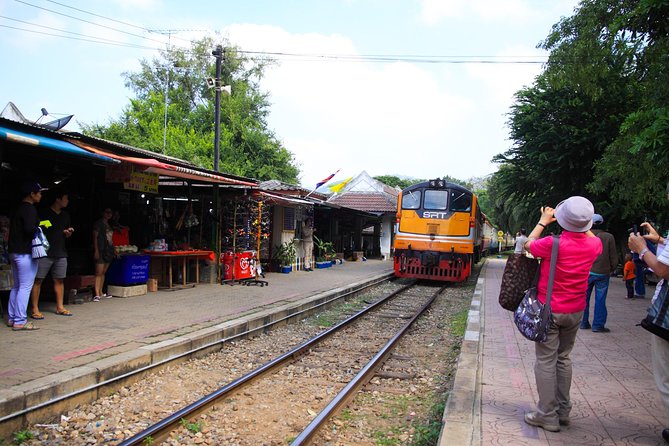
The air-conditioned vehicle matters, especially after walking outdoors. Private transportation also means you are not changing between public buses or trying to coordinate several separate transfers. Bottled water is included, and lunch is provided, so you do not need to pack a meal.
The exact pickup arrangement is described as hotel transfers, with the listed start time at 6:30 am. Make sure your accommodation is suitable for pickup when you reserve. Confirmation is normally issued at booking, though reservations made within two days of travel may take up to 48 hours and depend on availability.
What the private format does and does not give you
Only your group participates, which is the clearest difference from a standard group outing. You can ask direct questions, spend longer at a memorial if the schedule allows, and tell the guide when you need a short break.
The private format does not turn the day into a slow, unstructured visit. Five main stops are packed into about 10 hours, and Bangkok is a long way from Kanchanaburi. You still need to be ready at the start time and keep a reasonable pace.
This format suits couples, families, and small groups with a shared interest in World War II history. It also works well if you want a guide but do not want to spend the day with a large coach group. It is less suitable if you dislike long drives, have limited walking ability, or want a relaxed day with little time pressure.
How the price compares with going alone
At $162.40 per person, this is a mid-to-high priced day trip from Bangkok. The included items are practical: private transportation, an air-conditioned vehicle, a professional guide, lunch, bottled water, and entrance fees.
The strongest value comes from combining several services in one day. You do not need to find a driver, negotiate the route, arrange lunch, or work out how to connect the cemetery with Hellfire Pass and the bridge. You also gain a guide who can explain the sites as you go.
The weaker value is clear too. Many of the listed stops are described as free admission, and a private driver could potentially take you to the same places for less. If you are comfortable doing your own research and only need transport, the tour may feel expensive.
I would pay the difference if history is the reason you want to visit. I would think twice if the main goal is a bridge photograph. The tour earns its price through time saved and interpretation, not through expensive tickets.
What to bring for a more comfortable day
You should wear walking shoes and bring sun protection. The Hellfire Pass trail and railway areas call for more practical footwear than sandals meant only for hotel pools.
Carry any personal items you need, since private expenses are not included. Lunch and bottled water are supplied, but the tour does not promise snacks, special meals, or extra purchases. If you have dietary needs, ask the provider before departure.
A phone or camera is useful, but this is a day for more than pictures. At the cemetery and Hellfire Pass, give yourself permission to put the camera away. The strongest part of the visit comes from noticing the place and its story.
Free cancellation is available if you cancel at least 24 hours before the start time. Cancellations or changes made within 24 hours are not refunded or accepted, and the cutoff follows local time.
Should you book this River Kwai tour?
Book it if you want a private, guided introduction to Kanchanaburi and the Death Railway, especially if you value hotel transfers and do not want to plan a complicated day from Bangkok. The cemetery, Hellfire Pass, museum, cave, railway, and bridge provide a well-connected view of the area’s wartime story.
Choose a driver-only arrangement if you are confident researching the history yourself and want to reduce the cost. Also skip this tour if a three-hour drive each way sounds exhausting or if moderate walking is not comfortable for you.
For most people who want meaning as well as sightseeing, I think the private guide and well-planned route justify the price. The day is long and serious, but Hellfire Pass gives the trip a purpose that a simple bridge visit cannot match.
FAQ
How long does the private River Kwai tour last?
The tour lasts approximately 10 hours, beginning at 6:30 am.
Does the tour include hotel pickup?
Yes. Hotel transfers are provided in an air-conditioned vehicle.
Is lunch included?
Yes. Lunch and bottled water are included in the tour price.
Is this a private tour?
Yes. Only your group participates in the activity.
What level of fitness is needed?
A moderate level of physical fitness is recommended. The schedule includes the Hellfire Pass memorial walking trail and a walk along the Death Railway and River Kwai Bridge.
How many Allied POWs are buried at Kanchanaburi War Cemetery?
The cemetery contains the remains of 6,982 Allied prisoners of war who died during construction of the Thai-Burma Death Railway.
Can I cancel for a full refund?
Yes, if you cancel at least 24 hours before the experience starts. Cancellations and changes made less than 24 hours before the start time are not refunded or accepted.
Just added around Kanchanaburi
- Floating & Railway Markets and Erawan Waterfall [Optional Luxury]★ 5.0 · 43 reviews
- Train trip death railway Bridge on river Kwai from Bangkok to Kanchanaburi trip★ 4.0 · 17 reviews
- River Kwai Day Tour from Bangkok: History, Scenic Views & Culture★ 4.5 · 36 reviews
- Private Tour to Kanchanaburi Death Railway and Elephant Haven★ 5.0 · 15 reviews
- Private Tour: Kanchanaburi Erawan Waterfall Tour from Bangkok★ 4.5 · 13 reviews
- Private Erawan Waterfall, River Kwai, Death Railway Tour from Bangkok★ 4.5 · 22 reviews
- Private Tour: Death Railway, Hellfire Pass and Erawan Waterfall★ 5.0 · 55 reviews
- Private Tour: Floating Markets and Bridge on River Kwai Day Trip from Bangkok★ 3.5 · 35 reviews
Death Railway Memorials, compared.
Bridge on the River Kwai and Thailand-Burma Railway Tour
Read our review →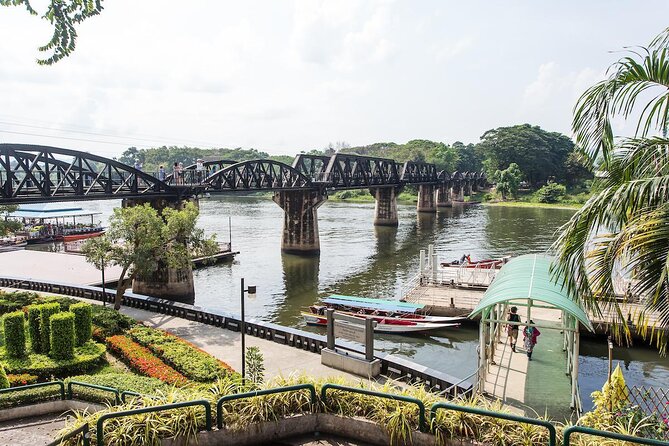
Erawan Waterfalls and Bridge Over River Kwai Tour from Bangkok
Read our review →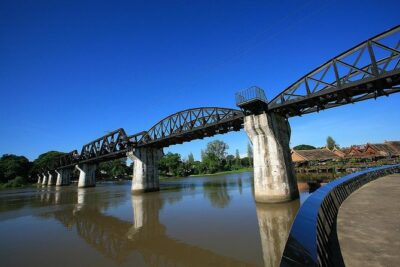
Bridge on the River Kwai and Thailand-Burma Railway Guided Tour
Read our review →
Kanchanaburi Full Day Tour: River Kwai and Erawan Falls
Read our review →
Floating Markets and Bridge on River Kwai Tour from Bangkok
Read our review →
River Kwai Day Tour from Bangkok – History, Scenery & Culture
Read our review →
Bridge over River Kwai and Hellfire Pass Tour with Train Ride
Read our review →Browse the lists this tour appears in