
Reviewed · TEMPLE TOURS
Private Tour of Bangkok’s Temples Including Reclining Buddha (Wat Pho)
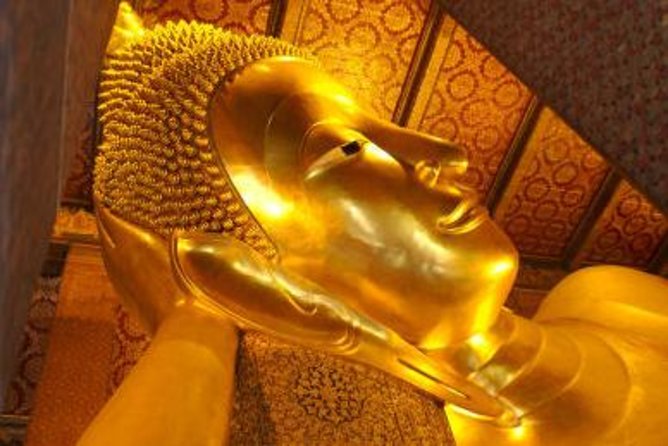
Bangkok’s temple story begins with two unforgettable images: a 5.5-ton solid-gold Buddha at Wat Traimit and the enormous Reclining Buddha at Wat Pho. Add the elegant Marble Temple, and this three-hour outing gives you a quick look at three very different sides of Thai Buddhist art.
I like the private guide and the easy hotel pickup, especially in a city where traffic and heat can wear you down. I also like the short format. You see major sights without giving up an entire day, and guides such as Jenny, Luck, and Napat have been praised for clear explanations, photo help, and careful pacing.
The main consideration is time. The listed temple visits total about two hours and 15 minutes, with extra stops at Chinatown, the flower market, and a gem gallery. That makes this a brisk overview, not a slow, contemplative temple day. The gem gallery stop may also feel commercial, and it has not always been included in every outing.
Key points to know before booking
- Wat Traimit’s Buddha is solid gold: The seated image weighs 5.5 tons, measures about 3 meters high, and is believed to date from the 13th or 14th century.
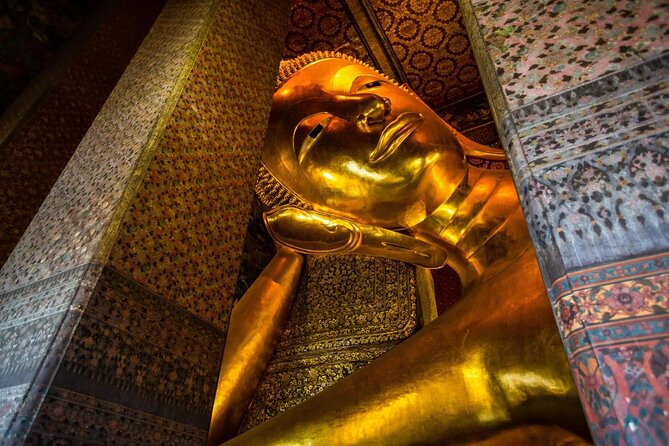
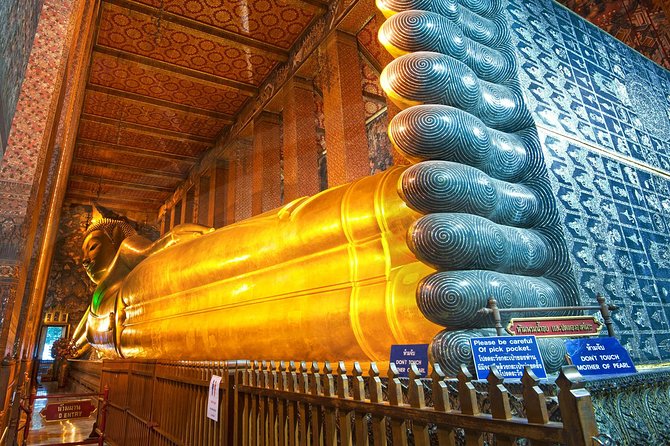
- Wat Pho provides the tour’s grandest sight: Its Reclining Buddha measures 46 meters long and 15 meters high.
- A private vehicle saves effort: Pickup and return are available from selected hotels, with transport just for your group.
- The Marble Temple changes the mood: Wat Benchamabophit uses white marble and combines Thai and European design.
- Chinatown and the flower market add street life: These short drive-through or visit stops show Bangkok beyond temple walls.
- The pace suits a half-day plan: Choose a morning or afternoon departure, but expect a compact schedule.
Three major temples in one focused morning
This tour is built for you if you want Bangkok’s headline temples without committing to a full-day city tour. The private format matters. Instead of waiting for a large group, you can ask questions, request a photo stop, and move at a pace that fits your energy.
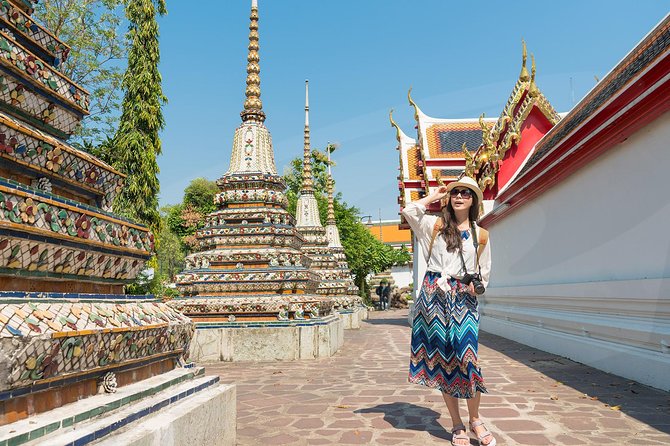
The route includes three temples, each with a different look and purpose. Wat Traimit gives you a remarkable object and a story of concealment. Wat Pho combines a famous Buddha with a large temple compound and a long connection to Thai learning and massage. Wat Benchamabophit offers clean lines, pale marble, and a more polished architectural style.
A three-hour estimate includes driving, so the time inside each site is limited. You receive about 45 minutes at Wat Traimit, an hour at Wat Pho, and 30 minutes at the Marble Temple. That is enough for orientation and photographs, but you should not expect every corner of each compound.
More Temple Tours in Bangkok
- Bangkok: City Highlights Temple and Market Walking Tour
★ 4.5 · 3,990 reviews - Bangkok by Night: Temples, Markets and Food Tuk-Tuk Tour
★ 5.0 · 3,752 reviews - Bangkok: Grand Palace, Wat Pho, and Wat Arun Guided Tour
★ 4.8 · 3,632 reviews
Wat Traimit and Bangkok’s 5.5-ton Golden Buddha
The first temple is Wat Traimit, near Hua Lamphong Railway Station and the edge of Chinatown. Its central attraction is a seated Buddha made of solid gold. At about 3 meters tall and weighing 5.5 tons, it is a striking object even before you hear its story.
The statue is believed to have been made in the 13th or 14th century. Its importance is not only its size or value. The figure was covered with plaster for a long period, apparently protecting it from theft or damage, before the gold beneath was revealed. Your guide can provide the religious and historical background that makes the statue more than a quick photo stop.
You have about 45 minutes here, including admission. That is a fair amount of time for the main temple, though the stop will feel brief if you want to study details or explore slowly.
The best reason to begin here is contrast. The gold Buddha is direct and dramatic. Later, Wat Pho gives you a reclining figure on a much larger scale, while the Marble Temple shifts attention toward architecture. The three stops work well together because you are not seeing three copies of the same place.
Chinatown, herbs, and Bangkok’s flower market
Between the temples, the route passes through Chinatown. You may see street food, Chinese herbs, and shops selling Chinese and Thai goods. This part is not a long walking tour, but it helps explain Bangkok as a meeting point of cultures rather than a city shaped by one tradition alone.
The flower market, Pak Klong Talad, is described as Bangkok’s largest wholesale fresh-flower market. It adds a useful change of scene after the first temple. Instead of polished religious buildings, you get a working market tied to daily life, offerings, ceremonies, and decoration.
Do not expect a long market visit unless your guide and traffic conditions allow it. The official temple visits already take most of the three-hour window. Think of Chinatown and the flower market as short windows into the city, not full attractions with extended time.
This is one place where a private tour can help. You can ask your guide what the herbs, flowers, and offerings are used for, or request a little extra context while passing through. The exact amount of time will depend on traffic and the schedule.
Wat Pho and the 46-meter Reclining Buddha
Wat Phra Chetuphon, commonly called Wat Pho, is the emotional center of the tour for many people. Its Reclining Buddha measures 46 meters long and 15 meters high, making it hard to take in all at once. The figure represents the Buddha resting in the final stage before death, a subject with a calmer mood than the towering golden image at Wat Traimit.
You have about an hour here, the longest temple visit of the day. Use it well. Look beyond the scale of the Buddha and pay attention to the surrounding compound, its religious decoration, and the way the site functions as a major place of worship.
Wat Pho is also linked with the origins of Thai massage and is protected by UNESCO. The site carries religious, educational, and cultural importance, so a good guide adds real value here. Jenny has been praised for explaining Buddhist beliefs and temple construction, while Luck has been singled out for patient, detailed guidance. Your assigned guide will vary, but the private setup gives you a chance to ask for explanations instead of simply following a flag.
Photography is part of the appeal, and guides have helped with photo angles and timing. Still, remember that Wat Pho is an active religious place. Dress modestly, keep your voice down, and follow instructions about where you can stand or take photographs.
The main drawback is crowd pressure. Wat Pho is one of Bangkok’s most visited temples, so even a private tour cannot make the compound private. A morning departure may help with heat and general comfort, though the tour offers both morning and afternoon options.
Same base, a completely different sort of day out:
- Bangkok: Damnoen Saduak Market and Maeklong Railway Market
★ 4.5 · 26,723 reviews - The Old Siam: Damnoen Saduak and Maeklong Railway Market
★ 4.5 · 10,992 reviews - Bangkok: Train Market & Floating Market with Boat Ride
★ 4.7 · 9,547 reviews - Bangkok Canal Tour: 2-Hour Longtail Boat Ride
★ 4.5 · 5,909 reviews
Wat Benchamabophit and the Marble Temple
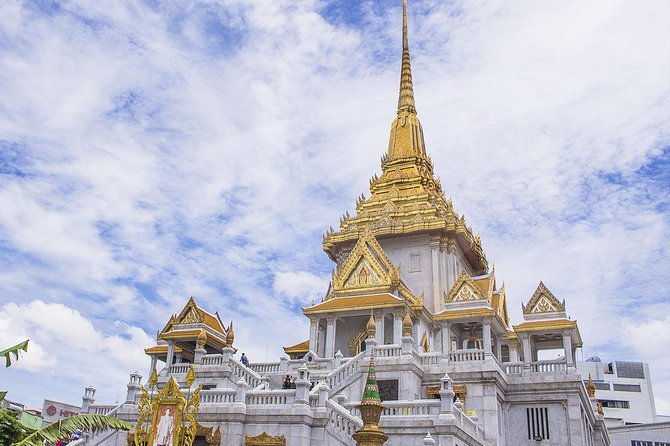
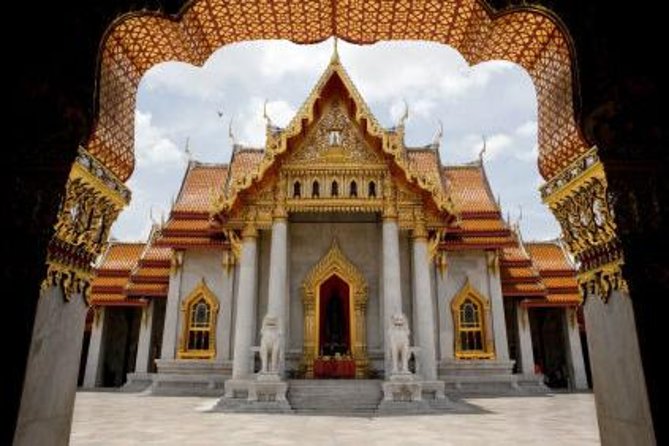
Wat Benchamabophit is often called the Marble Temple. Its white marble gives it a cooler, more formal appearance than Wat Pho, and the design combines Thai and European influences. The temple is also pictured on the back of Thailand’s 5-baht coin.
You receive about 30 minutes here. That is enough to see the main structure, notice the marble work, and look at the collection of 53 Buddha images inside. It is not enough for a leisurely architectural study, but the short stop works as a final temple visit because it provides a clear visual change.
I would pay attention to the details rather than rushing to recreate the coin image. The mixture of Thai forms and European touches gives the building its appeal. If Wat Traimit is about the presence of one extraordinary statue and Wat Pho is about scale and religious meaning, Wat Benchamabophit is about proportion, material, and design.
This stop may be especially useful for first-time visitors who want a quick introduction to different periods and styles of Bangkok temple architecture. If you already plan to spend several days visiting temples, you may prefer more time at fewer sites. The tour’s compact schedule does not allow for long pauses.
The gem gallery stop: useful context or unwanted shopping?
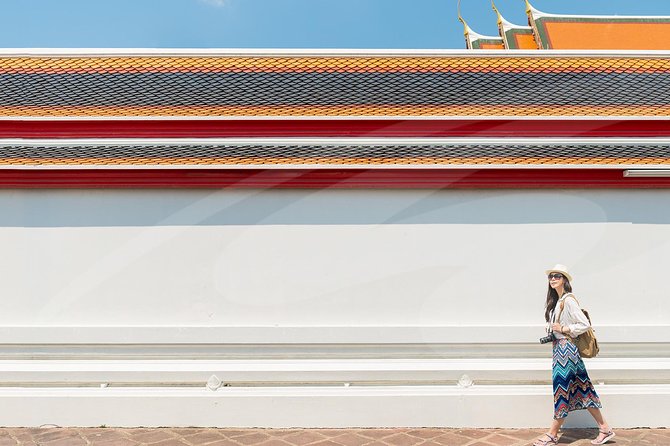
The final listed stop is Gems Gallery International Manufacturer, where you receive an explanation of how stones are extracted, cut, and polished. A guide is available to explain the process and assist with questions.
This is the least predictable part of the experience. One account specifically noted that the gem stop did not happen, so you should not treat it as a guaranteed highlight. It also changes the tone from religious and civic sites to a commercial presentation.
If you are interested in Thai stones, jewelry production, or the steps behind polished minerals, the visit may be worthwhile. If you want every minute devoted to temples, you may find it less appealing. Since the tour is only around three hours, even a 20-minute stop has a noticeable effect on the schedule.
I would ask your guide early in the outing how the route is being handled. That lets you know if the gallery is planned and how much time remains for the temples.
Why the private format earns its price
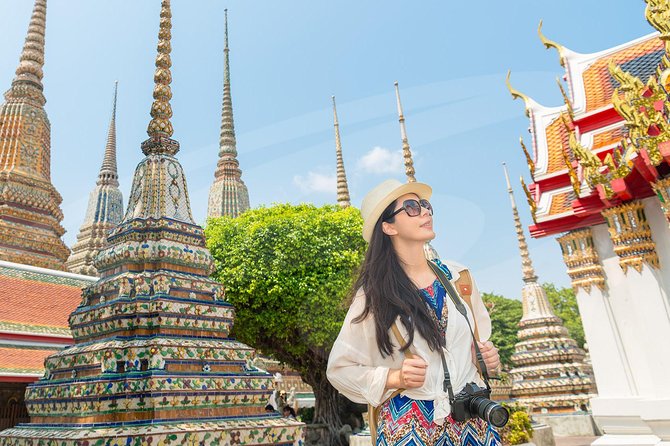
The price is about $65.06 per person. For a private three-hour tour, that is reasonable if you value a vehicle, hotel pickup, admission to all three temples, and a guide assigned only to your group.
You are not paying only for entry tickets. You are also paying to avoid arranging transport between sites, finding each temple, and sorting out the basic cultural details on your own. Bangkok traffic can make a short route feel complicated, so a driver who knows the city adds practical value.
The cost becomes less attractive if you are traveling alone or prefer public transport and self-guided sightseeing. The tour does not include gratuities, and hotel pickup is limited to selected hotels. You must provide your hotel details when booking, or the reservation may be canceled.
For two or more people, the private arrangement can make more sense because the cost is per person but the vehicle and guide serve the whole group. You also gain flexibility. One couple had a driver drop them at a shopping center instead of returning directly to the hotel, which shows that small requests may be possible when the schedule permits.
Guides, drivers, and the pace of the visit
The strongest part of the experience is the human service. Guides have been praised for explaining Buddhism, answering questions, helping with photographs, and adjusting the time spent at places that matter most to you.
Napat has been praised for a strong command of the sites and a comfortable pace. Jenny received specific praise for explaining Buddhist religion and temple construction, while Luck was described as patient and full of detail. These names are examples, not a promise of who will lead your tour.
English ability may vary by guide. One rating praised the guide’s friendly manner and attention to comfort but noted that the English was not always fully clear. That is worth keeping in mind if detailed historical explanation is your main reason for booking.
Drivers have also received strong praise for safety, punctual pickup, and considerate service. Air-conditioned private transport is useful in Bangkok’s heat, particularly after walking around Wat Pho and Wat Benchamabophit.
Timing, clothing, and practical planning
You can choose a morning or afternoon departure. I would lean toward the morning if you dislike strong heat or want to keep the rest of the day open. An afternoon departure may suit a later start, but traffic and temple closing times can matter, so confirm the schedule at booking.
Wear light clothing that still covers your shoulders and knees. The supplied dress guidance is especially strict for the Grand Palace and Temple of the Emerald Buddha, which are not listed as stops on this tour, but modest clothing remains the sensible choice at Buddhist temples. Men should bring long trousers and a shirt with sleeves. Women should avoid bare shoulders and see-through clothing. If you wear sandals or flip-flops, bring socks.
Restrooms are available, and most people can take part. The tour is near public transport, though the included private vehicle makes that less important for the planned route.
Free cancellation is available until 24 hours before the start time. Changes or cancellations inside that window are not refundable, based on local time.
Who should book this Bangkok temple tour?
I would choose this tour if you have limited time in Bangkok, want the main temple images, and prefer a guide to explain what you are seeing. It is also a good fit if heat, traffic, or navigating the city on your own would make the day harder.
Families, first-time visitors, and couples who want a private schedule should find the format practical. The tour also suits you if you want photographs and short explanations rather than a full day of temple visits.
I would look elsewhere if you want long, quiet periods at each compound, a walking tour of Chinatown, or a guaranteed market and gem-gallery experience. You may also prefer to visit independently if you already understand Buddhist art and can arrange transport easily.
Should you book it?
Book this tour if you want a compact, private introduction to Bangkok’s major temples and value a guide who can connect the statues, architecture, and Buddhist customs. Wat Traimit’s gold Buddha, Wat Pho’s giant reclining figure, and the Marble Temple make a strong three-part visit.
Skip it if you want an unhurried temple day or dislike commercial stops. Before paying, confirm your hotel qualifies for pickup, ask whether the gem gallery is included, and dress for religious sites. For a short first look at Bangkok, the price is fair and the private transport makes the plan pleasantly simple.
FAQ
How long does the private Bangkok temple tour last?
The tour lasts approximately three hours, including transport and the scheduled stops.
Which temples are included?
Admission is included for Wat Traimit, Wat Phra Chetuphon, also called Wat Pho, and Wat Benchamabophit, known as the Marble Temple.
Is the Reclining Buddha at Wat Pho included?
Yes. The tour includes Wat Pho, home to the Reclining Buddha, which measures 46 meters long and 15 meters high.
Is hotel pickup available?
Round-trip hotel pickup and drop-off are available from selected hotels. You must provide your hotel details when booking.
Is the tour private?
Yes. Only your group participates, and transportation is provided by private vehicle with a private English-speaking local guide.
Can I choose a morning or afternoon departure?
Yes. The tour offers both morning and afternoon departure options.
What is the cancellation policy?
You can cancel up to 24 hours before the experience start time for a full refund. Cancellations or changes made less than 24 hours before the start time are not refundable.
Just added around Bangkok
- Wonderful Pearl Dinner Cruise★ 3.5 · 27 reviews
- Yoga in the Park Thailand★ 5.0 · 12 reviews
- re:leaf spa and massage★ 4.0 · 10 reviews
- 3-Hour Bangkok Walking Tour: Wat Pho and Wat Arun★ 5.0 · 102 reviews
- White Orchid Sunset Dinner Cruise Calypso Ladyboy Cabaret Show★ 4.0 · 10 reviews
- Visit temples in and around Bangkok with a former monk of 10 years★ 5.0 · 30 reviews
- Morning Buddhist Almsgiving, Grand Palace and Flower Market Tour in Bangkok★ 3.5 · 9 reviews
- Visit Wat Pho and Wat Arun with Local Expert★ 4.0 · 14 reviews
Temple Tours, compared.
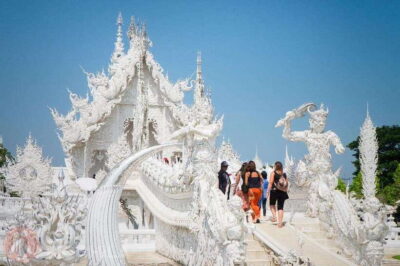
Chiang Rai Temples, Karen Tribe and Hot Springs
Read our review →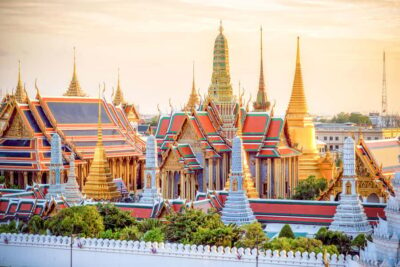
City Highlights Temple and Market Walking Tour
Read our review →
Bangkok by Night: Temples, Markets and Food Tuk-Tuk Tour
Read our review →
Grand Palace, Wat Pho, and Wat Arun Guided Tour
Read our review →
Tiger Cave Temple, Emerald Pool and Hot Springs Tour
Read our review →
Chiang Rai White Temple and Blue Temple Day Tour
Read our review →Browse the lists this tour appears in