
Reviewed · CHIANG MAI TOURS
Chiang Mai: Thai Buffalo and Rice Planting Experience
Thai buffalo, a muddy rice field, and a plate of green curry make a far better lesson in rural Thailand than a quick photo stop. At Hang Tueng farm, you cut grass with a sickle, feed the animals, learn how rice seedlings are prepared, and plant rice the traditional way.
I like the hands-on work and the clear focus on farm life. I also like the thoughtful setup: farm clothes and boots are provided, children can take part, and the meal includes green chicken curry, a herbal drink, and mango sticky rice. The main drawback is value. At $57 per person, this is not a cheap half-day outing, and you should not assume hotel pickup is included just because farm transport is provided.
Key points to know before you book
- Cut grass for the buffalo: You harvest feed with a sickle before meeting the animals, so the visit begins with real farm work rather than a staged photo session.
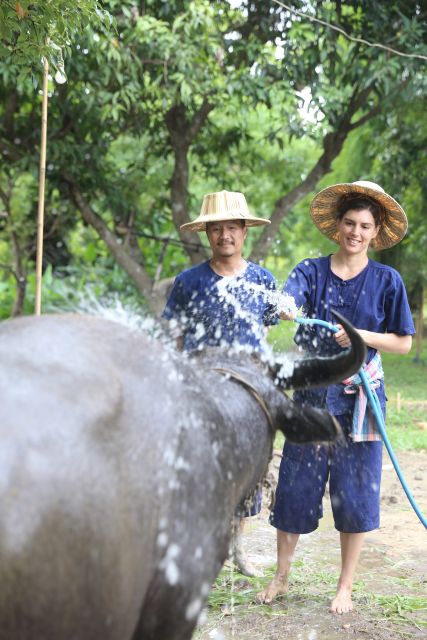
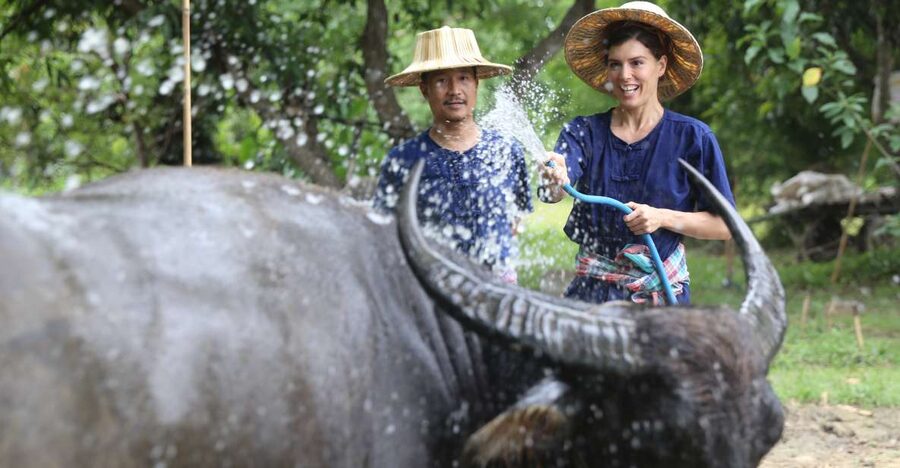
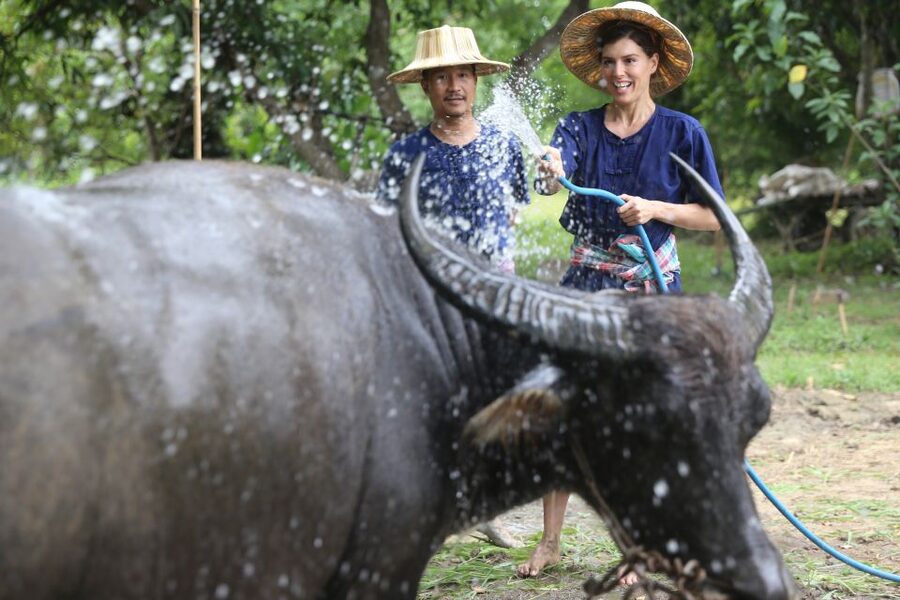
- Feed and bathe Thai buffalo: You can offer grass and fruit, then spray water on the buffalo as they relax in their enclosure.
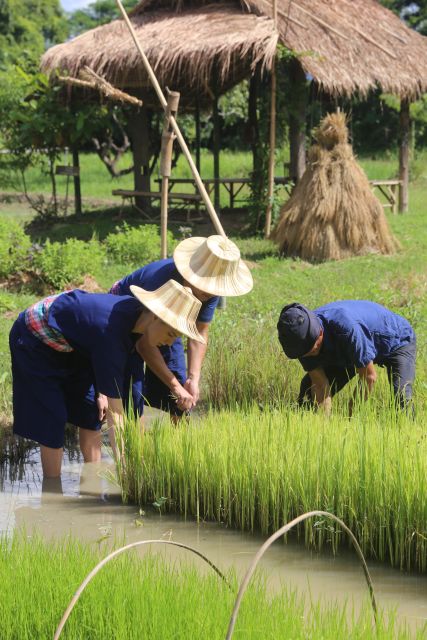
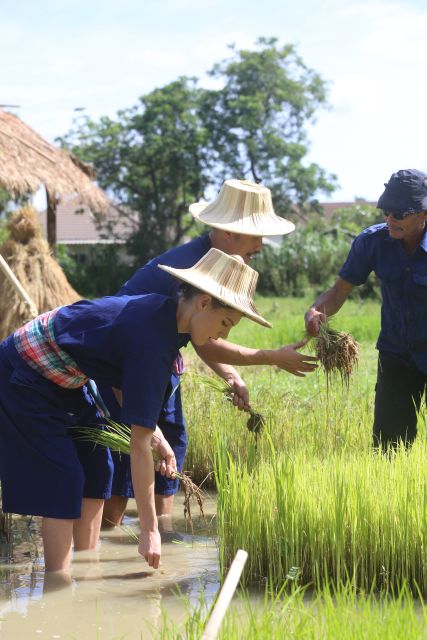
- Plant rice in the mud: You learn to uproot seedlings, remove mud from their roots, and place them in the field using traditional methods.
- Small group, bilingual instruction: The group is limited to 10 people, with teaching in English and Thai.
- Lunch is part of the lesson: Green chicken curry, rice, a herbal drink, and mango sticky rice finish the visit.
- Bring easy-change clothes: You receive farm clothing and boots, but the rice field gets muddy. Wear something simple to change in and bring sandals for the rinse afterward.
A working farm, not just a countryside photo stop
Hang Tueng farm sits in Chiang Mai Province, about 20 minutes from the historic center according to the available visitor information. The meeting point is Hang Tueng farmstay and workshop Chiang Mai, so check the map carefully before setting out.
The red taxi service takes you to and from the farm area. Pickup and drop-off are listed as included, but the meeting point is still the farm itself, and hotel transfer is not clearly guaranteed for every address. I would confirm the exact collection arrangement before booking, especially if you are staying outside central Chiang Mai.
Once you arrive, you meet the farmer and receive an introduction to the property, the animals, and the farming tasks. This matters because the activities make more sense when you understand the work behind them. Cutting grass is not a random add-on. It shows you one small part of the daily routine needed to care for buffalo.
The farm also functions as an educational center. That gives the visit a more useful purpose than feeding animals for a few minutes and leaving. You get an explanation of the rice cycle, traditional tools, and the role of buffalo in farm life before trying the work yourself.
A few more Chiang Mai days worth weighing up
- Half-Day Thai Cooking Class at Organic Farm in Chiang Mai
★ 5.0 · 19,087 reviews - Chiang Mai: Elephant Sanctuary, Waterfall & Bamboo Rafting
★ 4.9 · 9,160 reviews - Chiang Mai: Elephant Sanctuary & Waterfall Group Tour
★ 4.9 · 5,780 reviews
Cutting grass with a sickle before meeting the buffalo
The first practical task is harvesting grass for the buffalo. You use a sickle to cut and gather the feed, which adds a little effort and a little caution to the activity. It also gives children a simple job they can understand immediately.
This is one of the better parts of the experience because it connects the food in your hand with the labor needed to produce it. You are not simply handed a basket of grass. You take part in preparing it.
After gathering the grass, you meet the Thai buffalo in their natural farm setting. The lesson covers how to feed and care for them. The buffalo also eat fruit, and you can give them a bath by spraying water over them. The animals may lie down in the water and mud, which is a charming sight and especially appealing for young children.
You should still treat the buffalo as working animals, not oversized pets. Listen closely to the farm guide and follow instructions when feeding or washing them. The calm setting helps, but these are large animals, so sensible behavior matters.
The animal segment works best for families and for anyone who wants contact with ordinary rural life rather than a formal animal show. It is also a good option if you prefer a quieter activity. There is no mention of riding the buffalo, and that is a positive point for people who want to see them cared for without turning them into a performance.
Learning the rice cycle in a real field
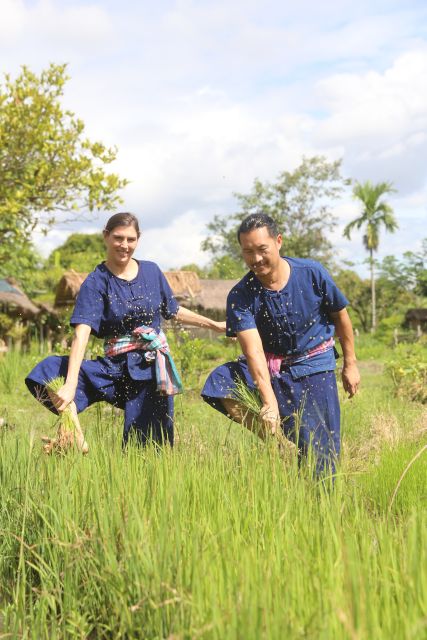
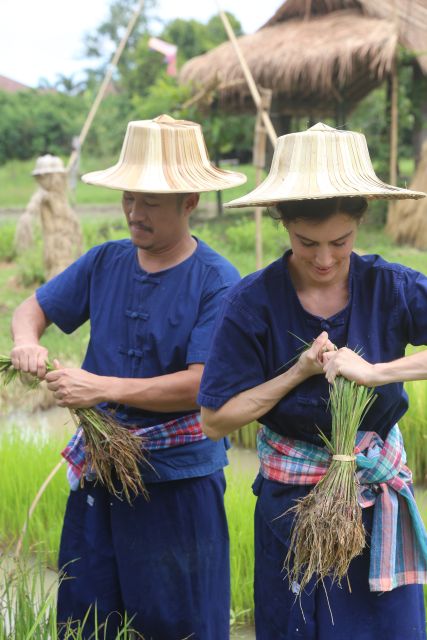
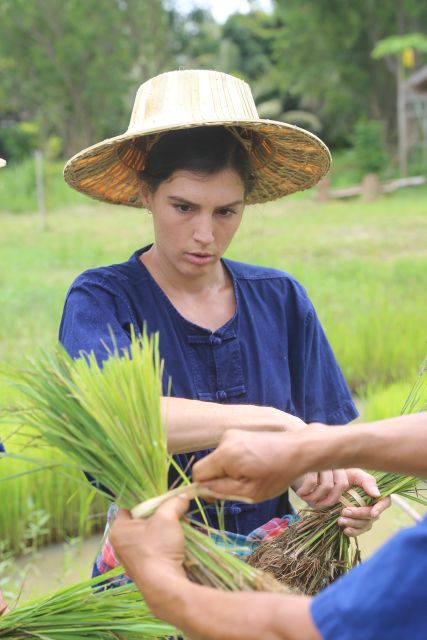
The rice portion explains how seedlings are handled before they reach the main field. You learn to uproot rice from a nursery and remove mud from the seedlings in the traditional way.
That detail gives the lesson some depth. Rice planting is not only a matter of pushing green shoots into wet soil. Seedlings first need to be raised, lifted, cleaned, and replanted. Seeing those stages helps you understand how much hand work sits behind a bowl of rice.
Then you step into the paddy and plant the rice yourself. The field is muddy, and the activity is meant to be done in the traditional manner. The supplied farm clothes and boots protect your regular outfit for most of the visit, although one detailed account notes that participants go barefoot in the paddy itself.
This is the part I would expect to create the biggest smiles and the most mud. It is also the part that requires the least polish. You will not get a tidy, dry demonstration from the edge of a field. You get the squelch, the awkward first steps, and a short taste of the physical work.
The amount of planting is kept manageable. That makes the activity suitable for younger children and for adults who want a taste of farming without spending a full day bent over in a field. You should still expect muddy lower legs and plan your clothing accordingly.
Afterward, you can wash off in a shower. Wear sandals or another easy-to-clean pair of shoes for this stage. Choose clothes that are simple to remove and put back on because you can change at the farm.
Lunch that completes the farm lesson
The meal is not an afterthought. You finish with rice, green chicken curry, a herbal drink, and mango sticky rice. After working in the field, the meal gives the visit a natural rhythm: prepare food for the buffalo, learn how rice is grown, then sit down to eat.
Green curry is the main savory dish specified, and one family received fried rice for a child. If you are booking with children or have dietary concerns, ask ahead about the meal rather than relying on an informal adjustment on the day.
Mango sticky rice provides the sweet finish, while the herbal drink offers something simple and local alongside lunch. The menu is not presented as a cooking class, so book this for the farming experience and treat the meal as part of the welcome.
I like that rice appears in both the activity and the meal. You first see the plant as a seedling, then work with it in the field, then eat rice at the table. That small connection makes the whole visit feel more coherent.
Same base, a completely different sort of day out:
- Chiang Mai: Cooking Class, Market & Thai Herbs Garden Tour
★ 4.9 · 4,824 reviews - Chiang Mai: Authentic Cooking Class with Market & Farm Visit
★ 4.9 · 4,546 reviews - Chiang Mai: Elephant Sanctuary Feeding Program Half-Day Tour
★ 4.8 · 4,527 reviews - Thai and Akha Cooking Class in Chiang Mai
★ 5.0 · 4,358 reviews
How the timing works
The advertised duration is 150 minutes, or two and a half hours. The broader schedule information also allows about three hours, so I would keep a little extra time free rather than arranging a tight connection immediately afterward.
The experience includes a short transfer to the farm, instruction, buffalo care, rice planting, washing, and lunch. You are not spending the entire time in a vehicle, but the red taxi journey is part of the outing.
A 150-minute session is a good length for this kind of activity. A shorter visit could feel rushed, while a full day of muddy field work would be too much for many people. The rice planting itself is limited enough for small children to enjoy without wearing themselves out.
The group limit is 10 people. That is small enough for questions and close instruction, particularly during the rice work, when you need to see how to handle the seedlings. If the group is not full, the farm visit may feel almost private, but you should book with the stated maximum in mind rather than expecting a one-on-one lesson.
Instruction is available in English and Thai. The quality of the experience depends partly on how much explanation you want, so ask questions as you go. This is not a silent activity where you simply copy the guide.
What to wear and bring
The farm provides traditional farmer costumes and boots. That is a major convenience because you do not need to sacrifice your own clothes to mud and water.
Even so, dress for changing. Wear clothes that are easy to remove and put back on. Bring sandals or another pair of washable shoes for the shower and the walk afterward. The paddy can leave mud on your lower legs even after the main outfit comes off.
You should also bring:
- A change of clothes
- A towel if you prefer to use your own
- A small bag for muddy items
- Sun protection
- Water, if you like having your own bottle
The supplied details confirm a shower for rinsing off, but they do not specify towels, lockers, or storage arrangements. Keep valuables to a minimum.
The farm clothing helps, but it does not make the experience spotless. If the idea of wet soil between your toes bothers you, this may not be your ideal Chiang Mai activity. If you see mud as part of the point, you will probably enjoy the rice field much more.
Is $57 a fair price?
At $57 per person, the experience sits above the price of a simple farm visit or local meal. The value comes from the combination of instruction, transport, clothing, boots, lunch, and several hands-on activities in one small group.
You are paying for more than access to a field. The session includes a bilingual instructor, contact with buffalo, grass cutting, rice nursery work, rice planting, farm clothing, a meal, and red taxi transportation to and from the farm area.
Still, the price deserves a clear-eyed look. If you only want to feed an animal and take a few pictures, $57 may feel high. If you want a structured lesson that works for adults and children, the cost is easier to justify.
Hotel pickup is the point to check carefully. Pickup and drop-off are included in the activity information, but the listed meeting point is Hang Tueng farm. Do not assume that a red taxi will collect you from any hotel in the wider Chiang Mai area. Confirm this before payment, particularly if you are staying far from the old city.
The reserve-now, pay-later option and cancellation up to 24 hours before the start provide useful flexibility. Those terms are helpful if your Chiang Mai plans are still shifting, but they do not change the basic question: you need to value a hands-on cultural lesson, not just a short outing.
Who will enjoy this most?
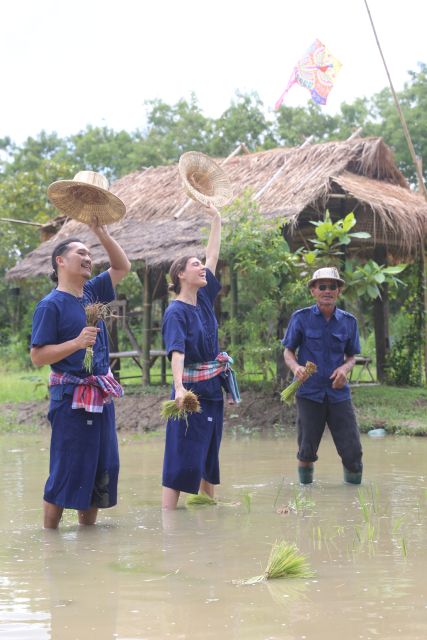
Families are a strong match. Children can cut grass, feed buffalo, plant rice, and see how a working farm operates. The planting section is short enough to remain fun, and a child’s lunch can be adjusted in some cases, as with fried rice.
This is also a good choice for adults who want to understand daily rural work. You get specific explanations about farming tools, buffalo care, and the rice cycle instead of a general speech about Thai culture.
The experience suits visitors who want an active morning or afternoon. You will walk, work with your hands, step into mud, and change clothes. It is not the right pick if you want a polished, dry, air-conditioned attraction.
It may also suit people who care about educational projects. Hang Tueng farm is used as a place to teach people about farming, and the activity helps support that kind of operation. The information does not claim a formal conservation program, so I would not book it on that assumption. Book it because you want a working farm lesson with animals and rice.
A few limits to keep in mind
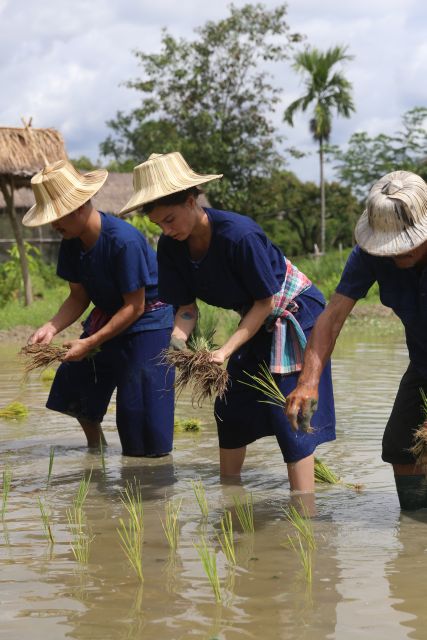
The activity is short, so do not expect a complete course in Thai agriculture. You get an introduction and a practical sample of several tasks. That is enough to make the work understandable, but not enough to cover every stage of rice production.
The farm setting is traditional and muddy. Facilities may be simple, and the provided information does not promise a full changing-room setup, towels, or extensive comfort services. Pack for practicality rather than polish.
The buffalo interaction is a highlight, but the experience is not an animal sanctuary visit with long observation time. The schedule also includes rice work and lunch, so the animal portion is one part of a wider program.
English instruction is available, though the experience also operates in Thai. If you need detailed language support for a complex dietary or mobility issue, communicate your needs before arriving.
Should you book the Hang Tueng farm experience?
I would book this if you want a short, active introduction to northern Thai farm life and you are comfortable getting muddy. The strongest reasons are the real work involved, the chance to feed and bathe buffalo, the manageable rice planting session, and the meal that ties the day together.
I would hesitate if you are mainly looking for the lowest-cost activity, dislike mud, or need guaranteed hotel pickup. At $57, the experience earns its price only if you take part fully rather than treating it as a quick photo stop.
For families, curious food lovers, and visitors who want something more grounded than another city attraction, this is a good Chiang Mai choice. Confirm the meeting point and transport details, wear easy-change clothes, bring sandals, and arrive ready to work with your hands.
FAQ
Where does the Thai buffalo and rice planting experience take place?
It takes place at Hang Tueng farmstay and workshop in Chiang Mai Province. Search for Hang Tueng farm stay and workshop Chiang Mai on Google Maps to find the meeting point.
How long does the experience last?
The advertised activity lasts 150 minutes, or two and a half hours. The broader schedule allows roughly three hours, so keep a little extra time available.
What activities are included?
You cut grass with a sickle, feed Thai buffalo, learn about their care, handle rice seedlings, plant rice in a paddy, and enjoy lunch at the farm.
Is transportation included?
Pickup and drop-off are included, with red taxi transportation to and from the farm area. Because the stated meeting point is the farm, confirm whether collection from your specific hotel is available.
What food is served?
Lunch includes rice with green chicken curry, a herbal drink, and mango sticky rice. A child received fried rice during one visit, but you should ask ahead about special meal needs.
Are farm clothes and boots provided?
Yes. Traditional farmer costumes and boots are included. You should still bring easy-change clothes and sandals for washing off after the rice field.
Can children take part?
Yes. The activities are suitable for children, including cutting grass, feeding buffalo, and a limited rice planting session. The provided information also notes that children can receive a different lunch option in some cases.
What languages are available?
Instruction is available in English and Thai.
Just added around Chiang Mai
- Chiang Mai Best City Tour with Doi Suthep & Iconic Temples★ 4.5 · 24 reviews
- Chiang Mai Michelin Food Walking Tour with Professional Tour Guide★ 4.5 · 13 reviews
- Private Chiang Mai Temple Tour with Doi Suthep and Wat Umong★ 5.0 · 52 reviews
- Secret Waterfall and Bamboo Rafting from Chiang Mai★ 5.0 · 30 reviews
- Bua Tong Waterfall Adventure& Huge Cave included Thai Buffet Tour★ 4.5 · 28 reviews
- Chiang Mai Sak Yant Tattoo By Ajarn Tu★ 5.0 · 25 reviews
- Chiang Mai Airport Transfer by Private Van – Arrival or Departure★ 4.5 · 11 reviews
- Chiang Mai Scavenger Hunt and Sights Self-Guided Tour★ 5.0 · 8 reviews
Chiang Mai Tours, compared.
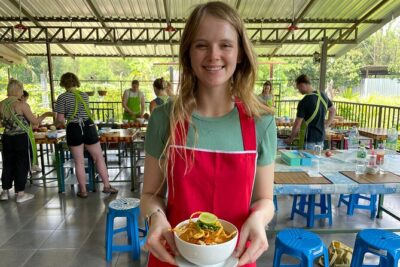
Half-Day Thai Cooking Class at Organic Farm in Chiang Mai
Read our review →
Elephant Sanctuary, Waterfall & Bamboo Rafting
Read our review →
Cooking Class, Market & Thai Herbs Garden Tour
Read our review →
Authentic Cooking Class with Market & Farm Visit
Read our review →
Elephant Sanctuary Feeding Program Half-Day Tour
Read our review →
Elephant Sanctuary, Long Neck & Sticky Waterfall
Read our review →Browse the lists this tour appears in