
Reviewed · COOKING CLASSES
Chiang Mai: Morning Cooking Class with Market Visit
The best part of this Chiang Mai cooking class happens before you reach the stove. You visit a local market, smell and inspect Thai ingredients, then pick herbs in an organic garden. That gives you useful context for the six dishes you cook later, rather than handing you a recipe with unfamiliar names.
I like the wide choice of dishes, from Pad Thai and spring rolls to Tom Yum and mango sticky rice. I also like the practical teaching from New, whose clear English and helpful cooking tips made it easy for beginners to keep up. The main thing to check is transportation: pickup covers many central areas, but not every hotel, and the separately listed visitor fee should be confirmed before booking.
Key points at a glance
- A market visit comes first: See fresh Thai ingredients in a local setting before cooking with them.
- Pick herbs at an organic garden: Learn how Thai vegetables and herbs are grown and collect ingredients for your class.
- Cook six dishes: Choose a starter, main course, soup, curry, and dessert, with curry paste included in the cooking session.
- Air-conditioned dining room: Eat your finished food indoors after the lesson, a welcome break in Chiang Mai’s heat.
- Good dietary flexibility: Vegetarian, vegan, Halal, and gluten-free options are available, along with support for allergies.
- Recipes go home with you: The PDF cookbook helps you repeat the dishes after your trip.
From Chiang Mai market to the Galangal kitchen
This five-hour experience starts with hotel pickup between about 8:30 and 9:00 AM. The driver asks you to wait in your hotel lobby 5 to 10 minutes early, and pickup is shared across several addresses, so a small delay is possible.
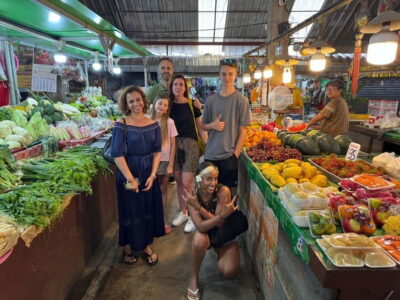
The market visit is a useful first lesson. Instead of beginning with a row of labeled ingredients in a classroom, you see the raw materials where local shoppers buy them. You can look at vegetables, herbs, curry ingredients, noodles, and other basics before the cooking begins.
The market stop depends on your interest, so it may not suit someone who wants a tightly timed sightseeing tour. Still, I would keep it. The market is described as genuinely local, with few foreign visitors, and it helps you understand why Thai cooking depends so much on fresh herbs, aromatics, chilies, coconut milk, and lime.
Your guide explains the ingredients and points out possible substitutes for cooks living outside Thailand. That detail matters. You may not find every Thai herb at home, but understanding what each ingredient contributes helps you make sensible replacements rather than guessing.
More Cooking Classes in Chiang Mai
- Half-Day Thai Cooking Class at Organic Farm in Chiang Mai
★ 5.0 · 19,087 reviews - Chiang Mai: Cooking Class, Market & Thai Herbs Garden Tour
★ 4.9 · 4,824 reviews - Chiang Mai: Authentic Cooking Class with Market & Farm Visit
★ 4.9 · 4,546 reviews
Picking herbs in the organic garden
After the market, you visit an organic garden and learn how vegetables and herbs are grown in Thailand. You also pick some ingredients to use during the cooking class.
This is a small part of the day, but it adds a hands-on touch that many cooking schools skip. I like the connection between growing, shopping, preparing, and eating. By the time you start chopping, the ingredients are no longer anonymous items on a workbench.
The garden also gives the class a slower rhythm. You are not simply rushed from one recipe to the next. You get a chance to see the source of some of the flavors that make Thai food so distinctive.
Keep your expectations sensible. This is an ingredient and farming visit, not a full agricultural tour. Its value comes from the short practical lesson and the chance to pick herbs, not from a long presentation about farming.
Six dishes, with plenty of room to choose
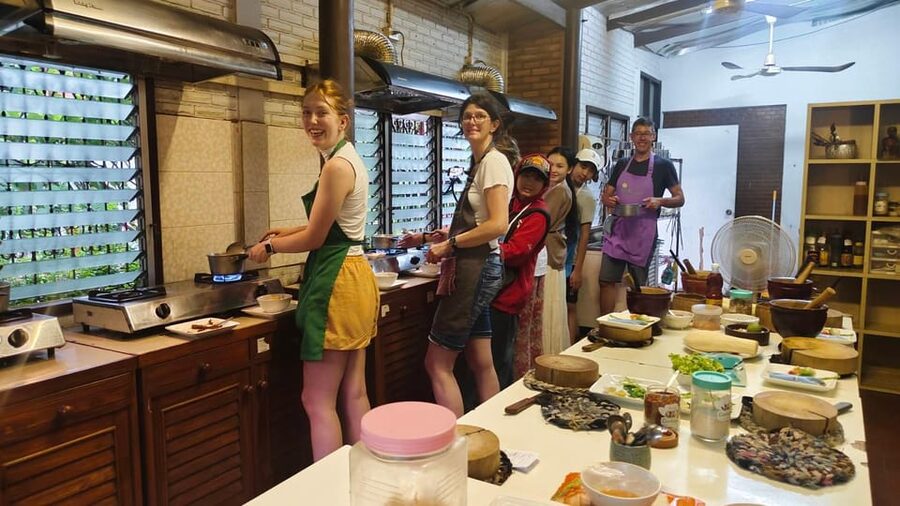
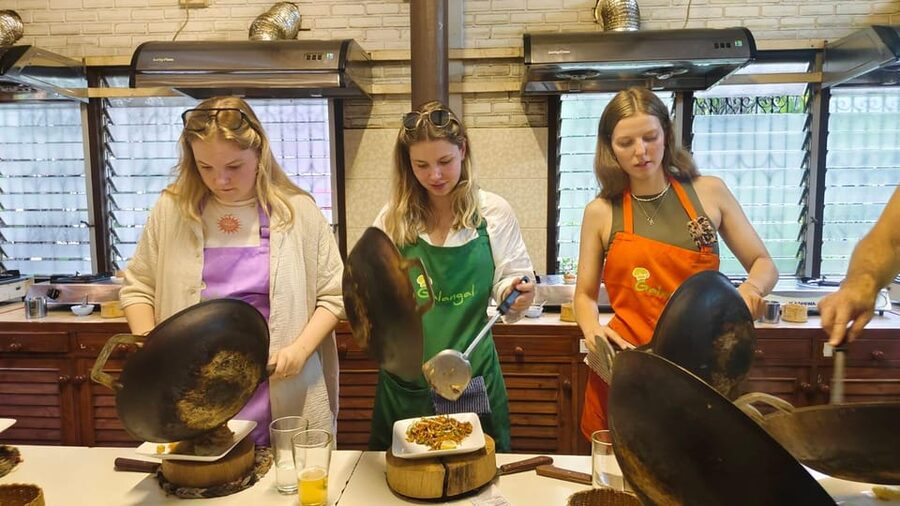
At the cooking studio, the instructor explains basic Thai cooking skills before you begin. The menu is flexible, which is one of the strongest reasons to choose this class over a fixed-menu course.
You select one dish from several categories:
- Starter: Som Tam, Por Pia Thod, Larb Kai, or Yam Woon Sen
- Main course: Pad Thai, Pad See Ew, chicken with cashew nuts, or minced chicken with holy basil
- Soup: Tom Yum Kung, Tom Kha Kai, vegan Tom Kha, or Tom Zap Kai
- Curry: green, red, yellow, Massaman, or Panang
- Dessert: mango sticky rice with ice cream or fried banana
The class also covers curry paste, bringing the total to six dishes. That is a lot of food for one morning, so you should arrive hungry. You will eat what you prepare at the end, with water, tea, and coffee available during the session.
The choice is especially helpful for repeat visitors to Thailand. If you have already made Pad Thai, you can choose Pad See Ew or holy basil chicken. If you avoid meat, you can select vegetarian or vegan alternatives and choose a coconut-based vegan soup.
Learning the starter, from Som Tam to spring rolls
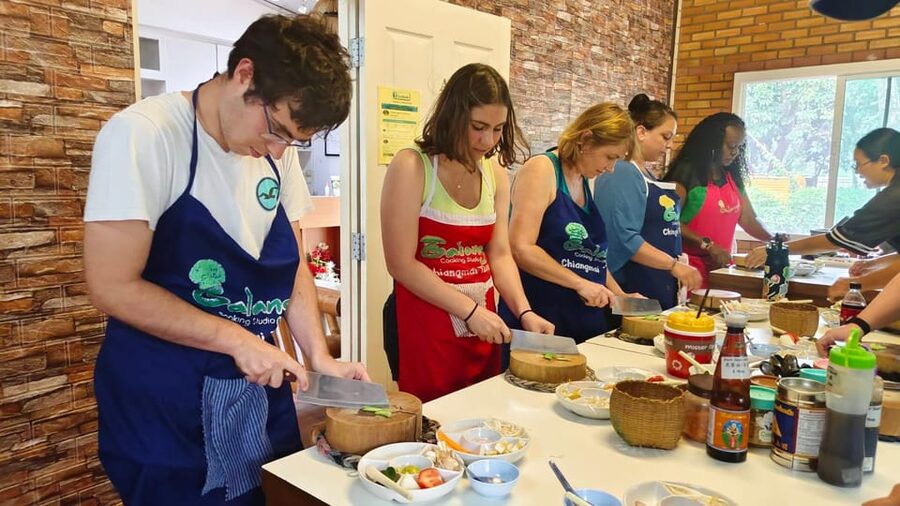
The starter selection gives you several different kinds of Thai cooking.
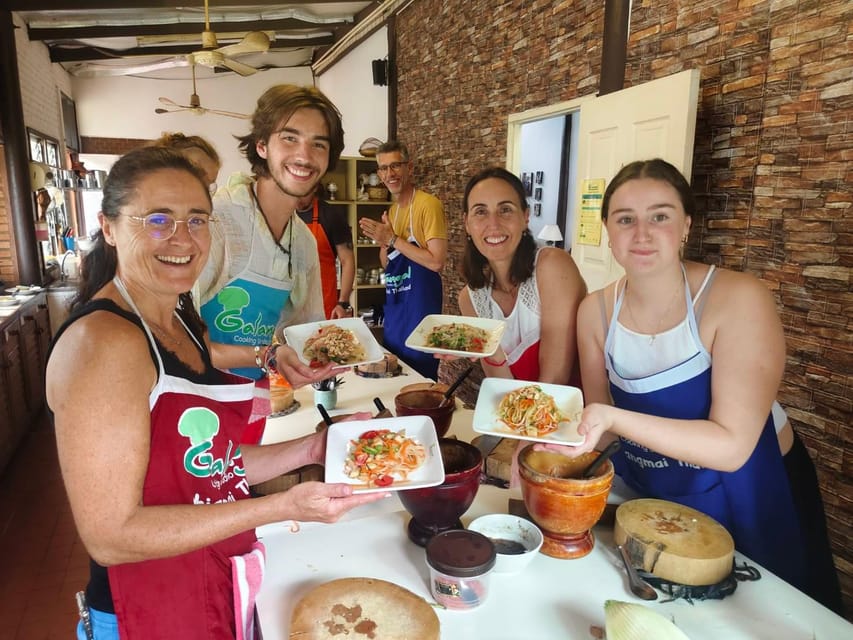
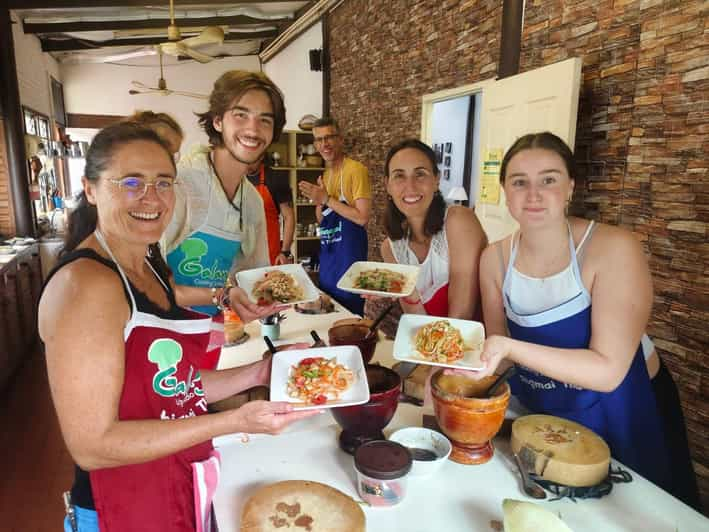
Som Tam, or green papaya salad, teaches you how sweet, sour, salty, spicy, and savory flavors work together. Por Pia Thod, the fried spring roll option, is more about filling, folding, and cooking technique. Larb Kai introduces a seasoned chicken salad, while Yam Woon Sen uses glass noodles.
This menu is well suited to mixed groups. One person can choose papaya salad while another makes spring rolls. You get to focus on the dish you most want to learn instead of making a recipe chosen for the whole class.
The instructor demonstrates each step, then lets you work through it. That approach is useful for beginners because Thai recipes can look simple on paper but depend on small decisions about texture and seasoning. You learn how ingredients should look and taste as you go.
Same base, a completely different sort of day out:
- Chiang Mai: Elephant Sanctuary, Waterfall & Bamboo Rafting
★ 4.9 · 9,160 reviews - Chiang Mai: Elephant Sanctuary & Waterfall Group Tour
★ 4.9 · 5,780 reviews - Chiang Mai: Elephant Sanctuary Feeding Program Half-Day Tour
★ 4.8 · 4,527 reviews - Thai and Akha Cooking Class in Chiang Mai
★ 5.0 · 4,358 reviews
Pad Thai is only one main-course option
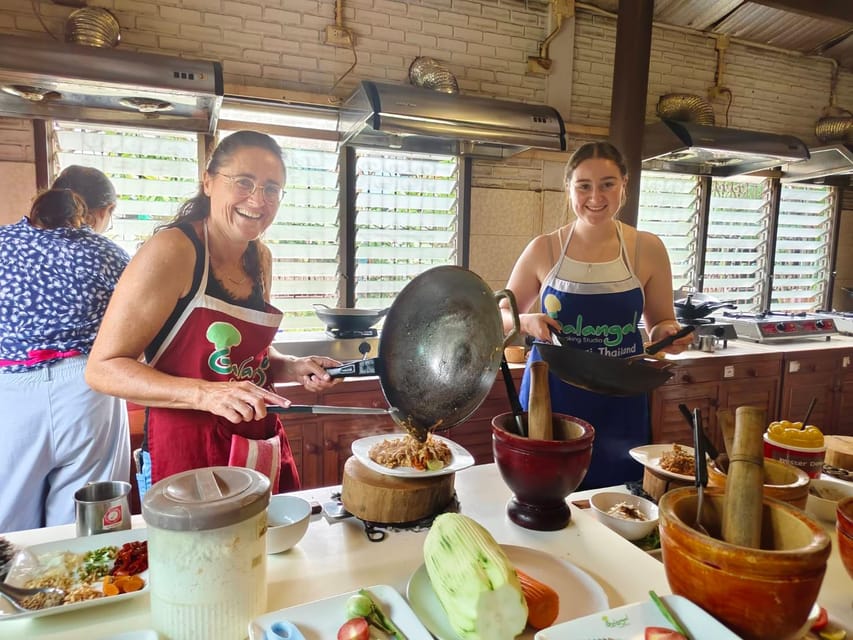
Pad Thai is the familiar choice, but the other main courses are worth considering. Pad See Ew uses fresh noodles and chicken. Chicken with cashew nuts gives you a sweet and savory stir-fried dish with crunch. Minced chicken with holy basil is a stronger, herb-forward option.
I would choose based on what you want to repeat at home. Pad Thai is easy to recognize and share, while Pad See Ew may be useful if you prefer a less tangy noodle dish. Holy basil chicken is a good pick if you want a fast rice accompaniment rather than another noodle recipe.
The class explains what can be found in other countries, which is helpful for home cooks. You are not left with a list of Thai ingredient names and no idea how to proceed after your holiday.
Soup and curry show the real range of Thai flavor
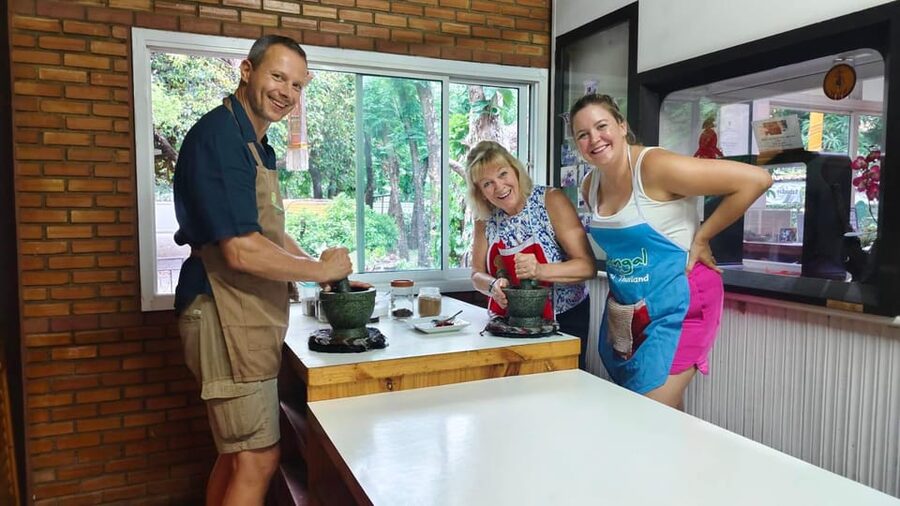
The soup selection moves from hot and sour Tom Yum Kung to creamy Tom Kha Kai. You can also choose vegan Tom Kha or Tom Zap Kai, a hot and sour chicken soup.
This is where the class becomes more than a Pad Thai lesson. You learn how Thai soups can be bright and sharp, creamy and fragrant, or hot and sour without tasting the same. Prawn, chicken, and vegan options also make the menu easier to adapt.
You then choose a curry style: green, red, yellow, Massaman, or Panang. The curry paste lesson is important because paste carries much of the dish’s flavor. Making it yourself gives you a better sense of how herbs, spices, chilies, and aromatics work together.
Five curry choices can feel like too much if you do not know Thai food well. Ask the instructor for help if you are unsure. The choices are a benefit, but they also mean you should decide ahead of time if you want to keep the morning moving.
Dessert and an indoor lunch
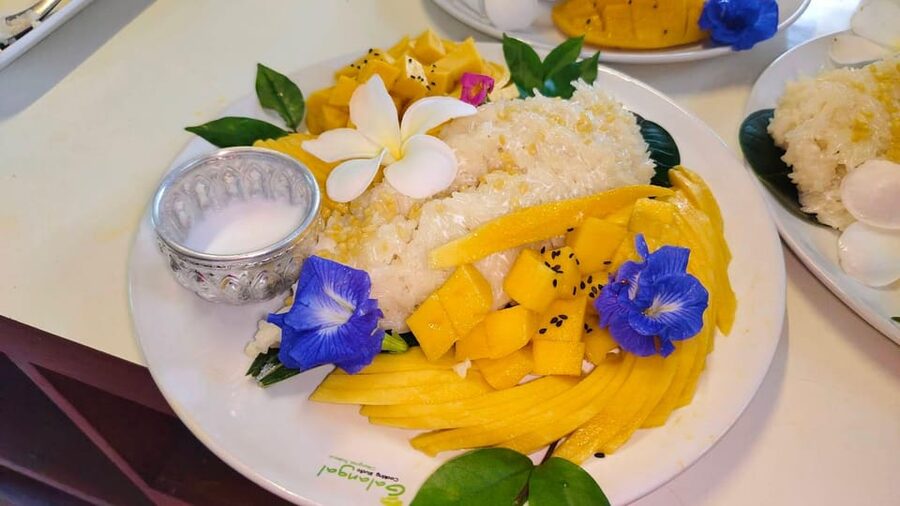
Dessert is either mango sticky rice with ice cream or deep-fried banana. Mango sticky rice is the more recognizably Thai choice, while fried banana is simple, sweet, and approachable.
The dessert comes after the savory dishes, and then you eat the meal you have prepared in the indoor kitchen and air-conditioned dining room. That setting matters in Chiang Mai, especially after a morning spent walking through a market and garden.
The class is not just a demonstration. You prepare the food and then sit down to eat it. That makes the final meal feel earned, and it also lets you taste the results while the instructions are still fresh.
The teaching style and atmosphere
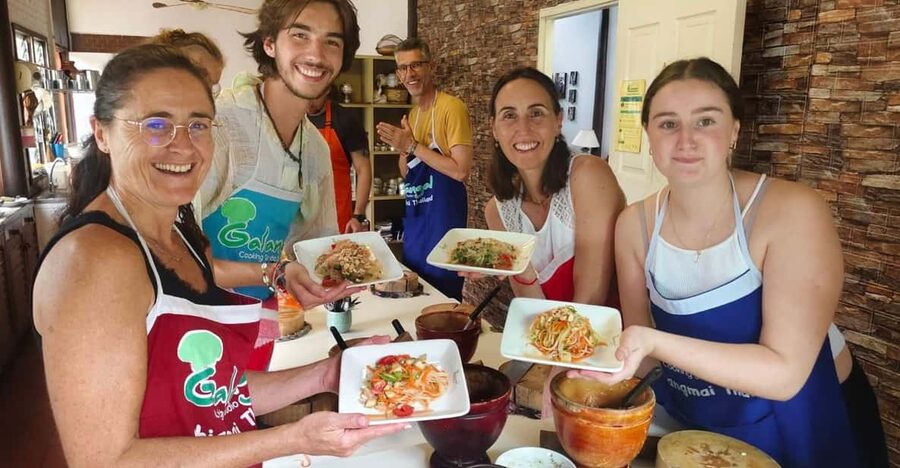
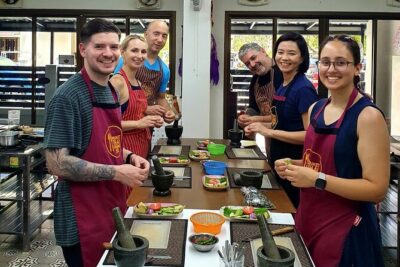
Instructor New receives particular praise for clear English, patience, and useful cooking advice. The teaching works for complete beginners as well as people who already cook at home. A family with a four-year-old was also welcomed, and the child was able to cook alongside the adults.
That does not mean every child will manage five hours happily. Young children need to stay near the cooking area and follow instructions, so parents should judge their own child’s attention span. Infant seats are available, and the activity is stroller accessible.
The cooking studio has an air-conditioned dining room, which makes the lesson more comfortable than an open-air kitchen during hot weather. The group size is not specified, and the number of participants may affect how much individual help you receive. On a quieter day, New has been able to give very close instruction.
Dietary needs and accessibility
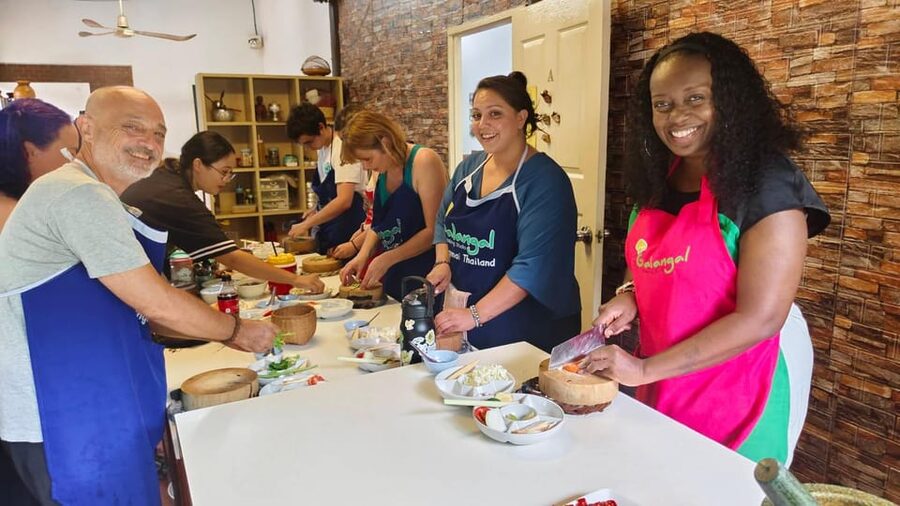
The class is designed for vegan, vegetarian, Halal, and gluten-free diets. Allergies can also be accommodated, but you should provide the details when booking and repeat them to the instructor before cooking begins.
This flexibility is a real advantage because Thai food often uses fish sauce, shrimp paste, soy sauce, and other ingredients that may not suit every diet. Do not rely on a casual assumption that a dish is safe simply because it contains vegetables. Clear communication matters.
The activity is wheelchair accessible and stroller accessible. It is near public transportation, and infant seats are available. If you do not need hotel pickup, you can go directly to the cooking studio, or arrange your own transport to the market or school after receiving the arrival details.
Is the $41 price good value?
At $41 per person, the price covers hotel pickup and drop-off in many central Chiang Mai areas, the market and garden visits, instruction, ingredients, equipment, drinks, and a PDF recipe book. You also receive a substantial meal made up of six dishes.
That is good value if you want more than a quick demonstration. The market and garden add useful context, while the number of menu choices lets you shape the lesson around your own interests. The recipe book adds value after the trip, especially if you can find suitable local substitutes at home.
Check the extra charge listed for visitors before paying. The information gives a visitor adult fee of 500 baht per person and a visitor child fee of 350 baht for ages 6 to 12, but it does not clearly explain how those charges fit with the advertised price. Ask the provider to confirm the final total.
Pickup is included only in selected areas. Service covers hotels in Chiang Mai’s old city, Santitham, and parts of Huay Keaw Road, Nimman, Sirimongkrajan Road, Wat Ket Road, Chang Phueak, Chang Klan, and Chang Moi. Some addresses in those areas may still be too far away, so verify your hotel before booking.
Timing, cancellations, and what to bring
Plan for a five-hour morning activity. Wear comfortable clothes suitable for cooking, though the only specifically requested item is personal medication. Alcohol and drugs are not allowed.
Arrive with an empty stomach. You will be preparing and eating a large amount of food, and starting hungry makes the final meal much more enjoyable.
Free cancellation is available up to 24 hours before the activity for a full refund. You can also reserve now and pay later, which helps if your Chiang Mai plans are still changing.
Who should book this Chiang Mai cooking class?
I would recommend it to first-time visitors who want a practical introduction to Thai food, couples who enjoy cooking together, families with children, and anyone who wants recipes they can use after returning home.
It is also a good fit for vegetarians, vegans, Halal diners, and people who need gluten-free choices, provided you explain your requirements clearly. The English instruction is strong, and the menu gives you enough choice to avoid dishes you already know.
I would look elsewhere if you want a very small private class with a guaranteed fixed schedule, or if your hotel is outside the pickup area and arranging transport is inconvenient. The market visit is optional, and traffic can delay the morning pickup, so this is not the best choice for a tightly packed day.
Should you book it?
Book this class if you want to connect Thai food with the market ingredients, garden herbs, and cooking methods behind it. The strongest features are the flexible six-dish menu, New’s clear instruction, dietary options, and the recipe PDF you can use at home.
Before you confirm, check the pickup address and clarify the separate visitor charge. Once those details are settled, the $41 price offers a generous half-day of cooking, eating, and learning, with enough practical information to make Thai dishes again after Chiang Mai.
FAQ
How long does the Chiang Mai cooking class last?
The activity lasts five hours, including the hotel pickup, market visit, organic garden visit, cooking lesson, meal, and hotel drop-off.
What time does hotel pickup take place?
Pickup is scheduled between 8:30 and 9:00 AM. You should wait in the hotel lobby 5 to 10 minutes before your scheduled time.
Is hotel pickup available everywhere in Chiang Mai?
No. Pickup is offered in many parts of the old city, Santitham, Huay Keaw Road, Nimman, Sirimongkrajan Road, Wat Ket Road, Chang Phueak, Chang Klan, and Chang Moi. Some addresses in these areas may not qualify, so the provider checks each accommodation.
Can I go directly to the cooking studio?
Yes. You can go directly to the cooking studio if you do not want hotel transportation. You can also arrange your own transport to the cooking school or market after receiving the address and arrival details.
How many dishes will I cook?
You will cook six dishes, including a starter, main course, soup, curry paste, curry, and dessert.
Which Thai dishes can I choose?
Starter choices include Som Tam, spring rolls, Larb Kai, and glass noodle salad. Main courses include Pad Thai, Pad See Ew, chicken with cashew nuts, and minced chicken with holy basil. Soup, curry, and dessert also have several choices.
Are vegetarian and vegan options available?
Yes. Vegetarian, vegan, Halal, and gluten-free options are available. The soup menu includes a vegan coconut milk soup.
Is the class suitable for people with allergies?
Yes, the activity is available for people with allergies. Tell the provider and instructor about your allergies before cooking begins.
Is the experience wheelchair accessible?
Yes. The activity is wheelchair accessible and stroller accessible. Infant seats are also available.
What do I receive after the class?
You receive a PDF recipe book so you can make the dishes again at home. Water, tea, and coffee are included during the activity.
More Markets in Chiang Mai
- Chiang Mai: Cooking Class with Market and Pickup
★ 4.9 · 1,365 reviews - Chiang Mai: Evening Cooking Class and Local Market Visit
★ 4.9 · 648 reviews - Chiang Mai: Evening Local Street Food Market Tour
★ 4.8 · 604 reviews - Chiang Mai: Kalare Night Bazaar Boxing Stadium Muay Thai
★ 4.7 · 507 reviews
Just added around Chiang Mai
- Chiang Mai Best City Tour with Doi Suthep & Iconic Temples★ 4.5 · 24 reviews
- Chiang Mai Michelin Food Walking Tour with Professional Tour Guide★ 4.5 · 13 reviews
- Private Chiang Mai Temple Tour with Doi Suthep and Wat Umong★ 5.0 · 52 reviews
- Secret Waterfall and Bamboo Rafting from Chiang Mai★ 5.0 · 30 reviews
- Bua Tong Waterfall Adventure& Huge Cave included Thai Buffet Tour★ 4.5 · 28 reviews
- Chiang Mai Sak Yant Tattoo By Ajarn Tu★ 5.0 · 25 reviews
- Chiang Mai Airport Transfer by Private Van – Arrival or Departure★ 4.5 · 11 reviews
- Chiang Mai Scavenger Hunt and Sights Self-Guided Tour★ 5.0 · 8 reviews
Cooking Classes, compared.
Half-Day Thai Cooking Class at Organic Farm in Chiang Mai
Read our review →
Cooking Class, Market & Thai Herbs Garden Tour
Read our review →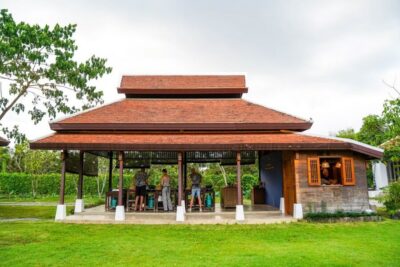
Authentic Cooking Class with Market & Farm Visit
Read our review →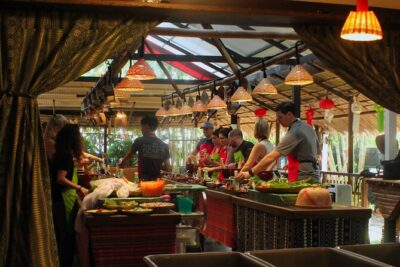
Phuket Thai Cooking Class with Market Tour Option
Read our review →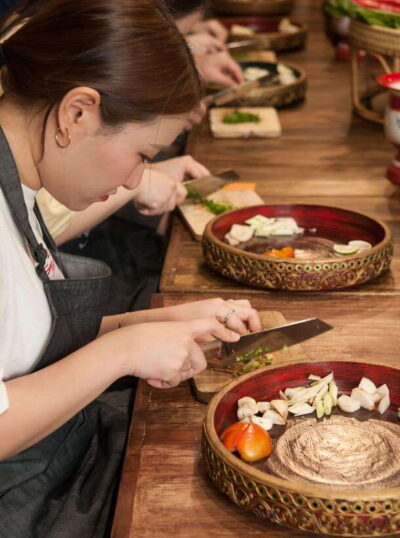
Tingly Thai Cooking School Half-Day Cooking Class
Read our review →Browse the lists this tour appears in