
Reviewed · COOKING CLASSES
Chiang Mai: Local Northern Thai Cooking Class at Grandma’s
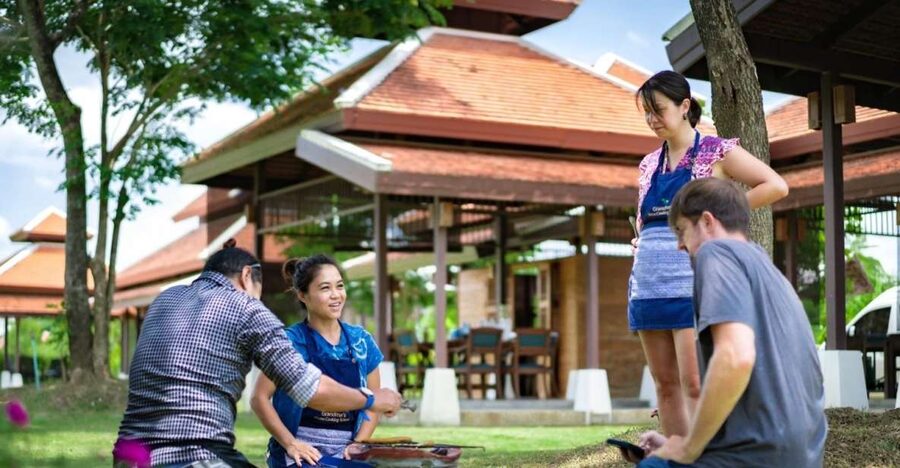
Northern Thai cooking is at its best when you get your hands dirty. At Grandma’s Home Cooking School, you do more than stir a curry. You visit a market, pick herbs on an organic farm, light a charcoal grill, mill flour with a stone, and grate coconut by hand. I like the old-fashioned kitchen work and the chance to make your own food from start to finish.
I also like the small-group feel reported for recent classes, with five to eight people receiving close help from the guide, Best. The main consideration is the menu description, which lists five core dishes but also mentions grilled egg and coconut pancakes in the broader class outline. Ask for the exact day’s menu if those dishes matter to you.
Key points at a glance
- A market visit comes first: Learn what Northern Thai herbs, seasonings, and vegetables look like before you cook with them.
- The farm is part of the lesson: Walk through the organic garden, pick ingredients, and visit the chicken coop to collect eggs.
- You use traditional tools: Mill flour with a stone mill and grate coconut meat with a hand grater.
- The class is practical: You learn to light a charcoal grill, wash vegetables, prepare dishes, and cook under English-speaking guidance.
- The group size can be intimate: Recent classes had only five or eight people, allowing plenty of direct help.
- The price covers a full day: At $48 per person, you receive transport, market and farm visits, lunch, refreshments, dessert, and recipes.
A six-hour introduction to Lanna cooking
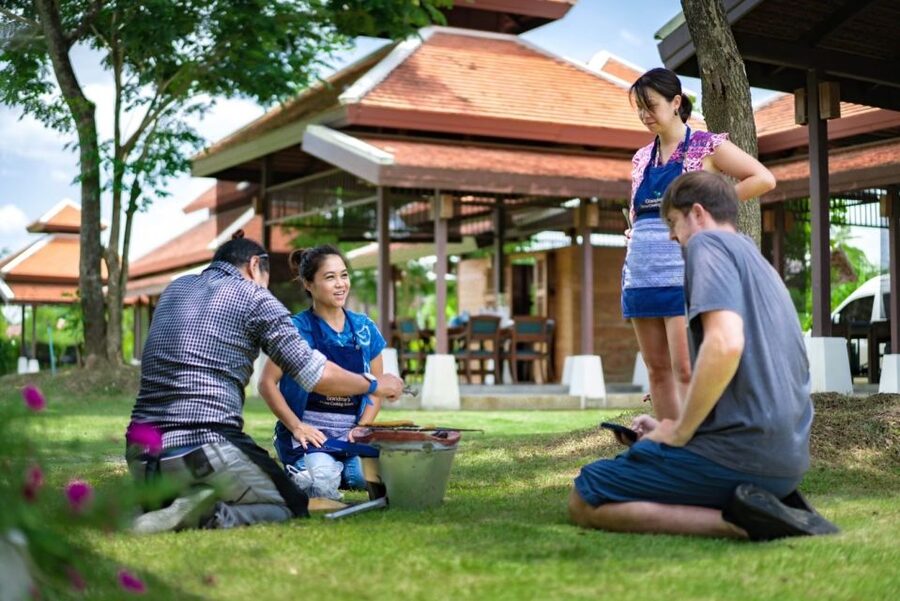
This is not a quick pad Thai lesson squeezed between sightseeing stops. Grandma’s Home Cooking School presents Northern Thai food as a complete process, from buying ingredients to eating the finished meal.
The course lasts about six hours. Pickup is usually between 8:30 and 9:00 in the morning, and you should be waiting in your hotel lobby by 8:30. Round-trip hotel transfers are included, which makes the early start easier and removes the need to arrange transport to the school.
The setting gives the class a cultural angle. Northern Thai cooking uses familiar ingredients in combinations that may be new to you: pork with tomato and chili, young jackfruit in curry, fragrant herbs, coconut, banana leaves, and grilled preparations. The point is not only to follow a recipe. You learn what each ingredient does and how the cooking methods fit local food traditions.
More Cooking Classes in Chiang Mai
- Half-Day Thai Cooking Class at Organic Farm in Chiang Mai
★ 5.0 · 19,087 reviews - Chiang Mai: Cooking Class, Market & Thai Herbs Garden Tour
★ 4.9 · 4,824 reviews - Chiang Mai: Authentic Cooking Class with Market & Farm Visit
★ 4.9 · 4,546 reviews
Start at a Chiang Mai market
The first stop is a local market. This is where the class begins to make sense.
An English-speaking instructor introduces the ingredients and seasonings used in Northern Thai cooking. You can expect to see the raw materials before they are chopped, ground, grilled, or mixed into curry. That matters because many herbs and vegetables can look alike if you only meet them in a prepared dish.
The market visit also gives you a better feel for the balance of Northern Thai food. Chili, herbs, vegetables, pork, coconut, and curry ingredients each play a clear role. Instead of treating the recipes as a list of steps, you begin to understand how a Northern Thai cook might shop for the meal.
The market is a useful part of the day, but it is not a long independent shopping session. The experience is organized around instruction, so you should expect a guided introduction rather than free time to browse every stall.
Pick herbs and vegetables on the organic farm
After the market, you tour the organic farm at the cooking school. The instructor explains the herbs and vegetables used in the recipes, then helps you pick ingredients for the meal.
I like this part because it connects the cooking bench to the source of the food. You do not simply receive a bowl of pre-measured herbs. You see where ingredients grow and learn how they are used in specific dishes.
The farm visit is also hands-on in a simple, useful way. You wash vegetables, select produce, and visit the chicken coop to collect eggs. These are modest tasks, but they help the class feel like a working kitchen lesson rather than a demonstration where you only watch.
The farm is large enough to give the class some space, while the cooking area can still feel separate from other groups. That combination may suit you if you want a quieter lesson instead of a crowded cooking school.
Traditional tools make the class memorable
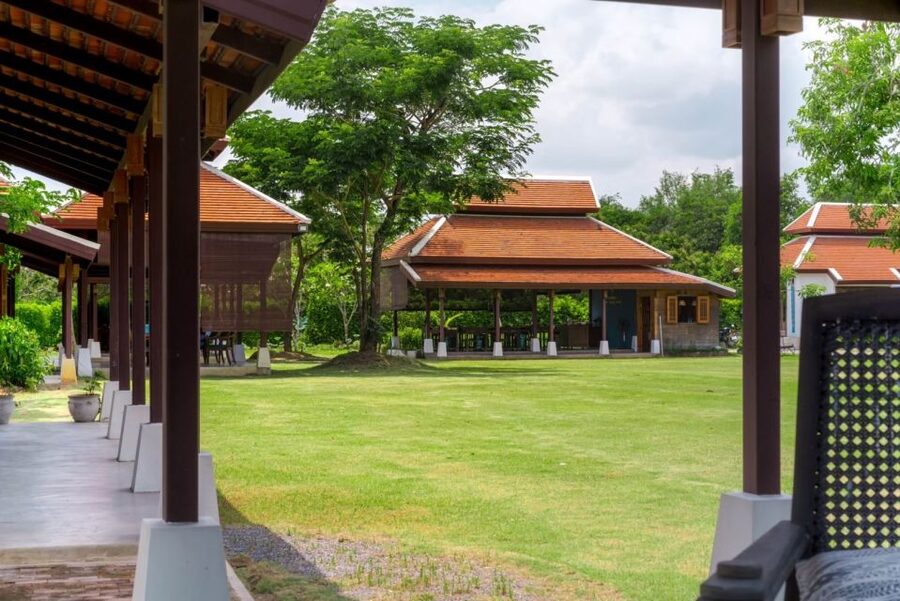
Some of the most interesting work happens before the cooking begins. You learn to mill flour using a traditional millstone and grate coconut meat with a hand-operated coconut grater.
These tasks take more effort than opening a packet or turning on a modern appliance. That is exactly why they are worth doing. You get a clearer sense of how older cooking methods shaped the texture and flavor of Thai food.
The coconut work is especially useful for the dessert session. Freshly grated coconut is not just a decorative topping. It becomes part of the preparation, and the manual process shows you how much work goes into a simple sweet.
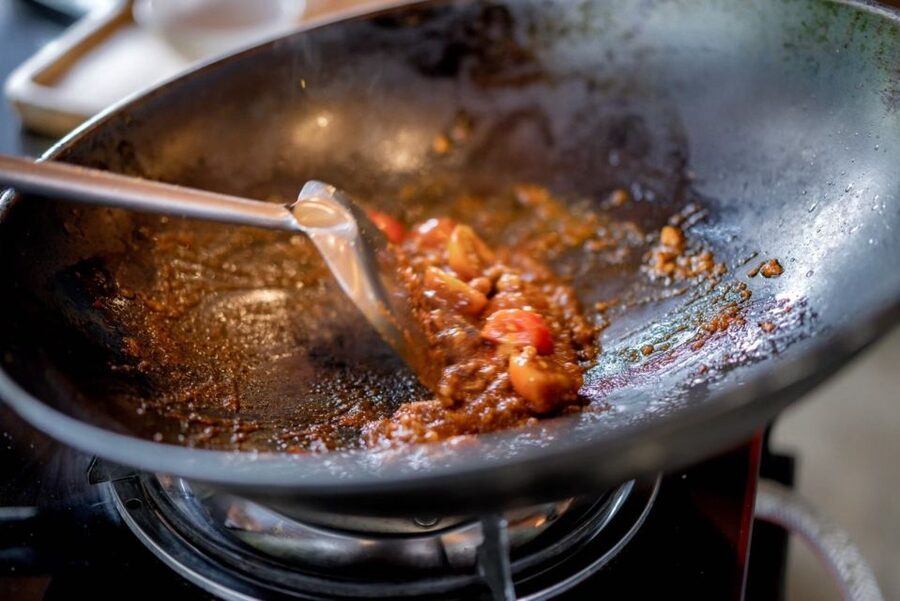
You also learn to light a charcoal grill. This is a practical skill for the grilled parts of the menu, including the grilled egg in banana leaf described in the class outline. If you are used to an electric or gas stove, charcoal adds another element to the lesson: heat must be built and managed, not simply dialed up.
The work can be messier and slower than a standard home cooking class. Bring comfortable shoes, and do not bring valuables. You will be handling ingredients and working around charcoal and traditional equipment.
Same base, a completely different sort of day out:
- Chiang Mai: Elephant Sanctuary, Waterfall & Bamboo Rafting
★ 4.9 · 9,160 reviews - Chiang Mai: Elephant Sanctuary & Waterfall Group Tour
★ 4.9 · 5,780 reviews - Chiang Mai: Elephant Sanctuary Feeding Program Half-Day Tour
★ 4.8 · 4,527 reviews - Thai and Akha Cooking Class in Chiang Mai
★ 5.0 · 4,358 reviews
The Northern Thai dishes you prepare
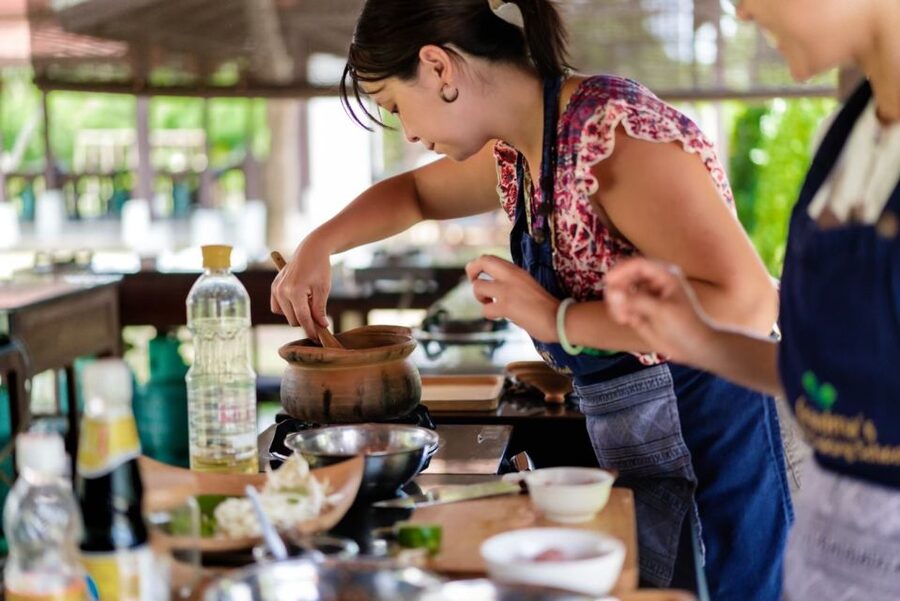
The included menu centers on five traditional Northern Thai preparations. Some dishes offer a choice, so the meal can have a different balance from one class to another.
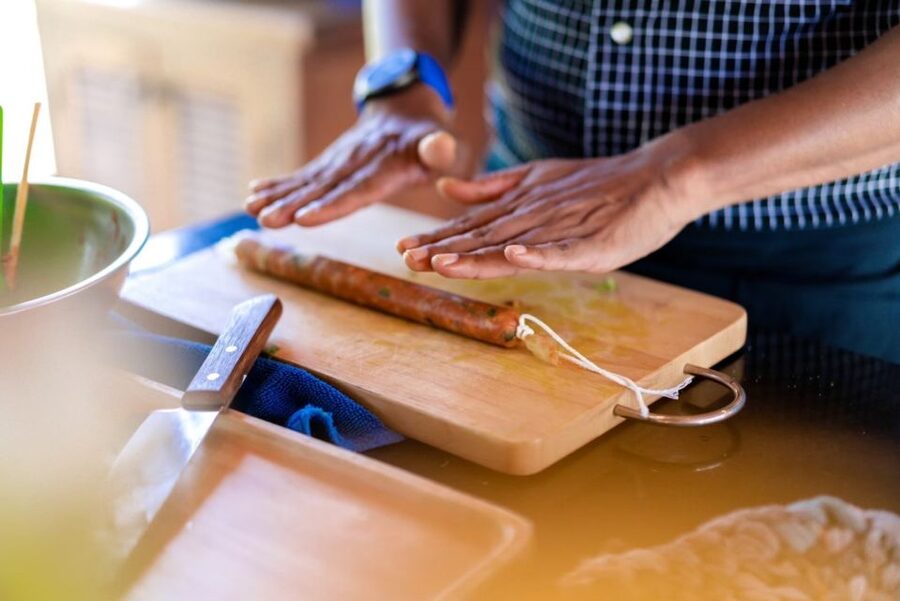
Northern Thai sausage
Northern Thai sausage is one of the best-known foods in the region. In class, you learn the preparation rather than simply ordering a sausage from a restaurant menu.
The value here is in seeing how the seasoning is built and how the sausage fits into a Northern Thai meal. It is a substantial, savory dish and gives you a chance to work with a preparation that feels different from making a simple stir-fry.
Nam Prik Ong or Nam Prik Num
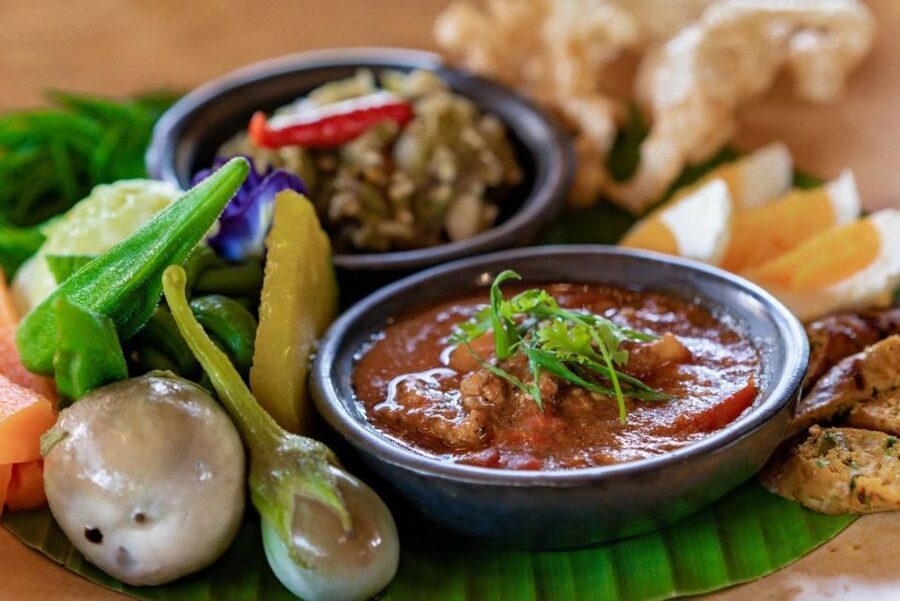
You can prepare Nam Prik Ong, a spicy Northern Thai pork and tomato dip, or Nam Prik Num, a Northern Thai green chili dip.
This choice gives you two different directions. Nam Prik Ong brings pork and tomato into the mix, while Nam Prik Num focuses on green chili. Both are served as dips, so they show how Northern Thai meals use strong flavors alongside vegetables and other dishes.
If you are sensitive to chili, tell the instructor about your preference. The activity states that special dietary requirements can be accommodated, but it does not promise a specific level of spice unless you discuss it with the school.
Hang Lay curry
Northern pork belly curry, also known as Hang Lay curry, gives the menu a slow, hearty centerpiece. The dish is quite different from the coconut-heavy curries many visitors first associate with Thailand.
Cooking it as part of a class helps you notice how the seasonings work with pork and how the curry is assembled. You are not only tasting a finished bowl. You are building one of Northern Thailand’s signature dishes with guidance from the instructor.
Curry young jackfruit
Kraeng Khanun-on, or curry young jackfruit, adds a vegetable-based dish to the meal. Young jackfruit has a different texture from ripe fruit, and preparing it as curry can be a useful introduction if you have never cooked with it.
This is one of the menu items that makes the class feel distinctly Northern Thai. You are not simply repeating the same curry format with a different protein. The ingredient itself changes the texture and character of the dish.
Stuffed dough pyramid
The dessert section includes stuffed dough pyramid, listed as Ka Nhom Tian or Kanomjok. The class outline also describes Thai coconut pancakes and the traditional preparation of the dessert.
Because the published menu uses more than one dessert name, confirm which sweet you will make on your date. Either way, the dessert work includes flour milling, coconut grating, and traditional preparation, so it is not an afterthought added at the end of lunch.
The broader class description also mentions grilled egg in banana leaf and Thai coconut pancakes. The included menu identifies five core dishes, while the full outline names additional preparations. This is the one point I would clarify before booking if you want a particular recipe.
Lunch turns the lesson into a meal
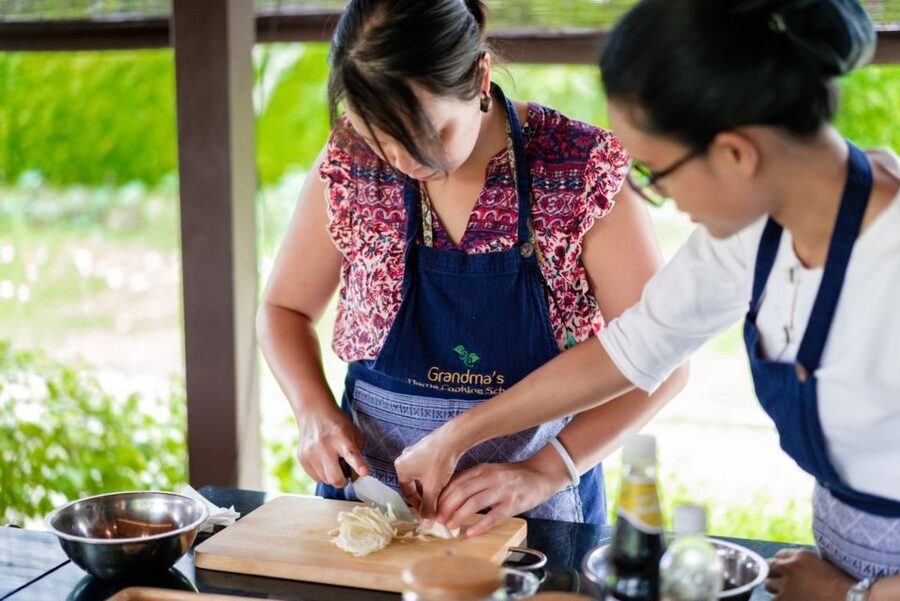
After the cooking work, you eat the dishes you helped prepare. This is more useful than receiving a separate meal because you can connect each taste to the techniques you just practiced.
You also get a chance to see how the dishes work together. A rich curry needs contrast. A chili dip changes the way you taste vegetables and other foods. Sausage brings a different texture, while a dessert provides a sweet finish after the savory meal.
The school provides lunch, welcome snacks, a refreshing drink, and a later dessert and refreshment session. If you cannot finish everything, takeaway containers may be available. Recent classes had leftovers packed to take home, which is a practical touch, though you should not count on every dish being packed in every situation.
A small class can make a real difference
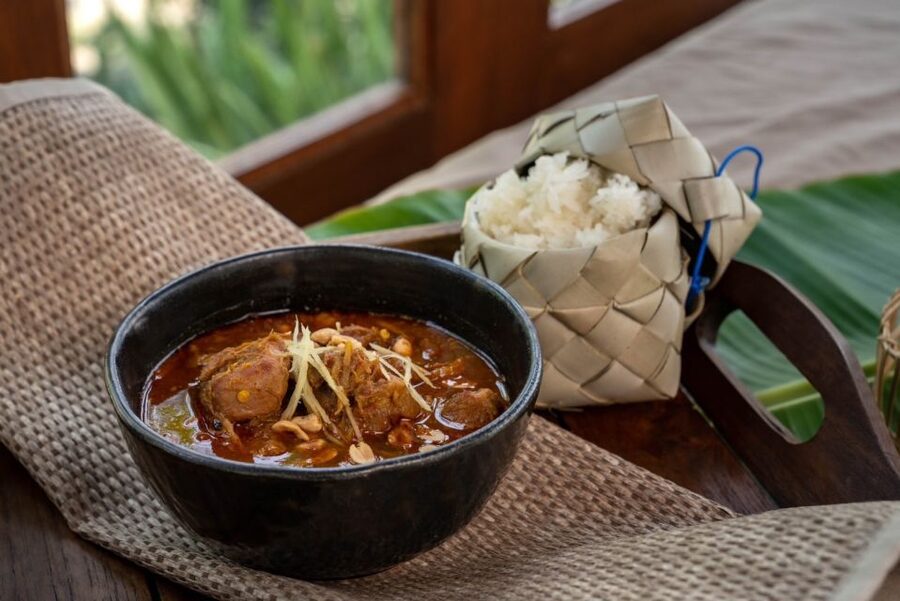
Recent class sizes were particularly appealing: one group had five people, and another had eight. A small group means you can ask for help while you are chopping, shaping, grilling, or seasoning.
That matters in a cooking lesson because the tricky moments happen at the work surface. You may need help judging heat, handling a traditional tool, or understanding a step that moves quickly. A guide who can give individual attention is more useful than a large demonstration where you only see the front counter.
The instructor Best received especially strong praise for being friendly, humorous, patient, and attentive. The class is taught in English, and the guidance is intended to help everyone prepare their own portions. The school also makes an effort to keep each person’s food identified, so you can keep track of what you made.
The group size is not guaranteed, so you should not book expecting a private class. Still, the recent pattern suggests a more personal setting than the very large cooking schools found in central tourist areas.
Value at $48 per person
At $48, this is not the cheapest way to eat lunch in Chiang Mai. It is a fair price for a six-hour activity because the fee includes several separate parts: hotel transfers, a market visit, the organic farm tour, hands-on instruction, ingredients, lunch, refreshments, dessert, and an e-recipe book.
The value is strongest if you want to learn techniques you can repeat at home. The digital recipe book gives you a way to revisit the dishes after your trip, and the class covers more than one recipe style. You work with sausage, curry, chili dip, vegetables, grilling, flour, coconut, and dessert.
The value is weaker if you only want a quick meal or a short cooking demonstration. Six hours is a large block of your Chiang Mai schedule, and some of the time is spent on washing, gathering, milling, and preparation. Those steps are part of the appeal, but they may feel slow if you only want to cook one famous dish.
Dietary needs, children, and access
The activity can accommodate special dietary requirements. Tell the school in advance so the instructors can plan around your needs. The available information does not spell out every possible substitution, so ask specific questions if you avoid meat, seafood, dairy, gluten, eggs, or chili.
Children aged 0 to 10 can join as observers. That is useful for families, but the information describes them as observers rather than full cooking participants. If your child needs a hands-on station or wants to prepare every dish, confirm the arrangements before booking.
The activity is wheelchair accessible. Pickup is included, but the information does not provide details about the exact vehicle or every surface at the market and farm. If you use a wheelchair, contact the provider ahead of time with your mobility needs.
Cancellation is free up to 24 hours before the activity for a full refund, and you can reserve now and pay later. These policies help if your Chiang Mai schedule is still changing.
Who should book this class?
I would choose this class if you want a full morning and afternoon built around food, not just a restaurant meal. It suits cooks who like practical work, families who want a cultural activity, and visitors who want to understand Northern Thai ingredients at their source.
It is also a good choice if you prefer smaller groups and direct help. The reported five to eight-person classes, the friendly guide Best, and the chance to keep leftovers all add to the personal feel.
You may want a shorter class if your schedule is tight. You may also prefer a different school if you want a fixed menu with no ambiguity about the dessert or the grilled egg. The menu descriptions include five main dishes but also refer to additional recipes, so clarification is sensible.
Should you book Grandma’s Home Cooking School?
Book it if you want to learn by doing. The market, farm, charcoal grill, stone mill, coconut grater, chicken coop, cooking stations, lunch, and dessert make this a full Northern Thai food lesson rather than a single recipe workshop.
At $48, the package offers good value for a six-hour day, especially with transport and food included. I would ask the school to confirm the exact menu and explain any dietary needs before paying. If you are happy with a hands-on schedule and a slower pace, this is one of the more useful food experiences you can add to a Chiang Mai visit.
FAQ
How long does the cooking class last?
The activity lasts six hours, with pickup usually scheduled between 8:30 and 9:00 in the morning. You should be ready in your hotel lobby at 8:30.
Is hotel pickup included?
Yes. Round-trip transfers to and from your hotel are included.
What language is the class taught in?
The class is taught in English by English-speaking instructors.
Which dishes will I cook?
The included menu lists Northern Thai sausage, Nam Prik Ong or Nam Prik Num, Hang Lay curry, curry young jackfruit, and stuffed dough pyramid. The broader course description also mentions grilled egg in banana leaf and Thai coconut pancakes, so ask the school to confirm the exact menu for your date.
Is lunch included?
Yes. You eat the dishes you prepare during the lunch break. Welcome snacks, refreshments, and a dessert tasting session are also included.
Can the class accommodate dietary requirements?
Yes. The activity states that special dietary requirements can be accommodated. You should provide your requirements when booking or contact the school in advance.
Can children join?
Visitors aged 0 to 10 can join as observers. The provided information does not state that children in this age group take part as full cooking participants.
What should I bring?
Wear comfortable shoes and bring sunglasses. Valuables are not allowed, so leave them behind or keep them to a minimum.
Just added around Chiang Mai
- Chiang Mai Best City Tour with Doi Suthep & Iconic Temples★ 4.5 · 24 reviews
- Chiang Mai Michelin Food Walking Tour with Professional Tour Guide★ 4.5 · 13 reviews
- Private Chiang Mai Temple Tour with Doi Suthep and Wat Umong★ 5.0 · 52 reviews
- Secret Waterfall and Bamboo Rafting from Chiang Mai★ 5.0 · 30 reviews
- Bua Tong Waterfall Adventure& Huge Cave included Thai Buffet Tour★ 4.5 · 28 reviews
- Chiang Mai Sak Yant Tattoo By Ajarn Tu★ 5.0 · 25 reviews
- Chiang Mai Airport Transfer by Private Van – Arrival or Departure★ 4.5 · 11 reviews
- Chiang Mai Scavenger Hunt and Sights Self-Guided Tour★ 5.0 · 8 reviews
Cooking Classes, compared.
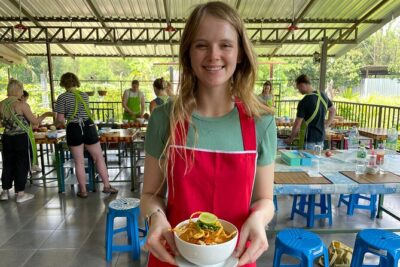
Half-Day Thai Cooking Class at Organic Farm in Chiang Mai
Read our review →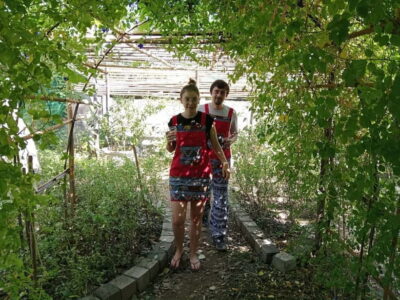
Cooking Class, Market & Thai Herbs Garden Tour
Read our review →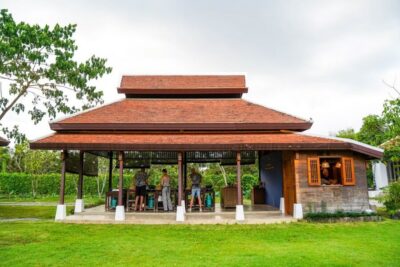
Authentic Cooking Class with Market & Farm Visit
Read our review →
Phuket Thai Cooking Class with Market Tour Option
Read our review →
Tingly Thai Cooking School Half-Day Cooking Class
Read our review →Browse the lists this tour appears in