
Reviewed · ELEPHANT SANCTUARIES
Chiang Mai: Elephant Sanctuary, Monk Trail & Doi Suthep Tour
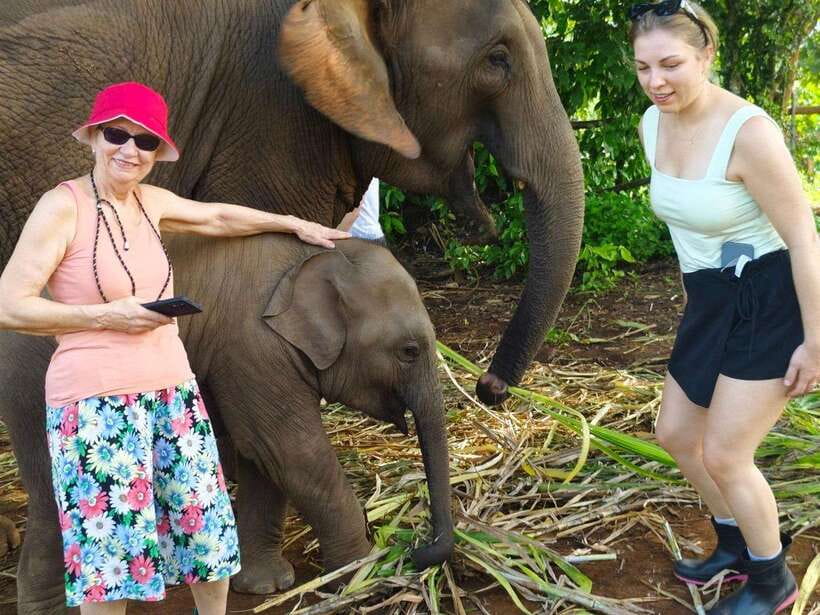
The best part of this Chiang Mai day is the contrast: you move from a quiet forest path and Buddhist temples to a working elephant sanctuary where the animals set the pace. At Pon Elephant Thailand, you feed elephants, prepare medicine balls, walk beside them, and help bathe them in the river, with no riding or forced tricks.
I like the peaceful Monk Trail to Wat Pha Lat and the way the guides connect Buddhist customs, local history, and elephant care. I also like the value: $57 includes transport, entry fees, lunch, water, elephant food, insurance, and an English-speaking guide. The drawback is the length. With long van rides and a 40-minute forest hike, this is a full day rather than a quick outing.
Key points at a glance
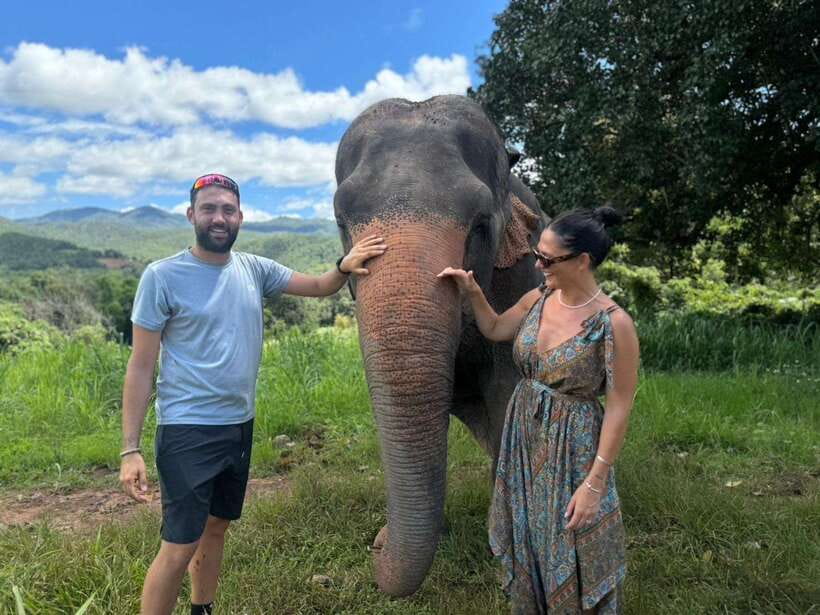
- Feed and bathe elephants without riding them: The animals are allowed to move freely and are not forced to perform.
- Walk the 40-minute Monk Trail: Expect forest shade, birds, streams, and a quiet route to Wat Pha Lat.
- See Chiang Mai’s most important temple: Wat Phra That Doi Suthep brings golden architecture, mountain views, and Buddhist tradition.
- Guides make the cultural stops worthwhile: Guides including Sumit, Paul, Ronnie, Suriya, and Yoong are praised for clear explanations, humor, and good photos.
- Plan for a wet, muddy day: Bring swimwear, a towel, dry clothes, insect repellent, and shoes that can handle a trail.
- Small groups can feel almost private: Group size varies, and some departures have had only two or three people.
A full day that links forest, faith, and elephants
This tour works because the three main parts feel different. Wat Pha Lat gives you a quiet start in the woods. Doi Suthep provides Chiang Mai’s grand religious landmark. The elephant visit then shifts the focus from monuments to animal welfare and daily care.
Pickup is available from hotels in central Chiang Mai or from a central meeting point, depending on the option you choose. The day commonly begins around 8 a.m. and returns around 5 p.m., though the exact start time depends on availability and the pickup plan.
The van rides are part of the bargain and part of the trade-off. The route includes about 20 minutes to the Monk Trail, another short transfer to Doi Suthep, and roughly 80 minutes each way to the elephant camp in Mae Wang District. Air conditioning, drinking water, and careful driving matter here, especially on the winding mountain roads.
Some guides who have received especially strong praise include Sumit, Paul, Ronnie, Suriya, Yoong, and Jakkie. The guide can shape the day. Sumit is often noted for temple stories and photography, Paul for warmth and cultural explanations, and Ronnie for humor and practical help. Your guide is assigned by the operator, so you should not count on a particular person unless the provider confirms it.
More Elephant Sanctuaries in Chiang Mai
- Chiang Mai: Elephant Sanctuary, Waterfall & Bamboo Rafting
★ 4.9 · 9,160 reviews - Chiang Mai: Elephant Sanctuary & Waterfall Group Tour
★ 4.9 · 5,780 reviews - Chiang Mai: Elephant Sanctuary Feeding Program Half-Day Tour
★ 4.8 · 4,527 reviews
Walking the Monk Trail to Wat Pha Lat
Wat Pha Lat is the quietest stop of the day. The route takes about 40 minutes on foot through wooded terrain, with shade, birds, a stream, ordained trees, and a wooden tunnel. The temple does not have the scale or gold of Doi Suthep. Its appeal is the setting and the stillness.
This is not a hard mountain trek for a reasonably fit person, but it is still a real walk. Recent rain can make the path muddy, and sandals may leave you slipping or worrying about your footing. Hiking shoes are the sensible choice. One useful detail is that the walk may be downhill depending on the day’s arrangement, which makes it less tiring but can be harder on knees and ankles.
The forest gives you a better feel for northern Thai religious life than a quick temple photo stop. Wat Pha Lat functions as a place for quiet reflection and meditation, and the guide can explain how monks use the trail and temple area. Some departures place the Monk Trail after Doi Suthep, while others may approach the sites in a different order. The operator says the schedule can change with conditions.
You should dress for both the walk and the temple. Knees and shoulders need to be covered at the religious sites. Comfortable clothing that can tolerate dirt is useful, but it should still be respectful.
Doi Suthep, Chiang Mai’s essential temple visit
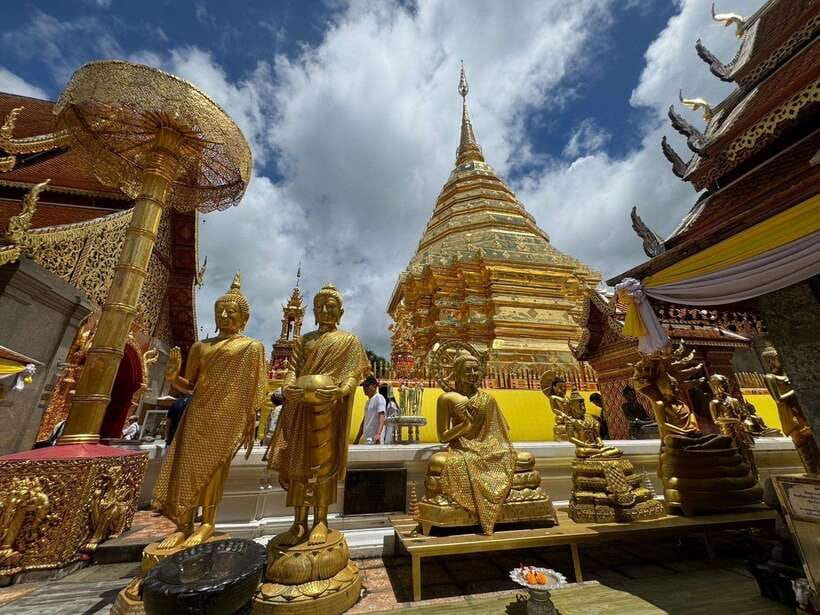
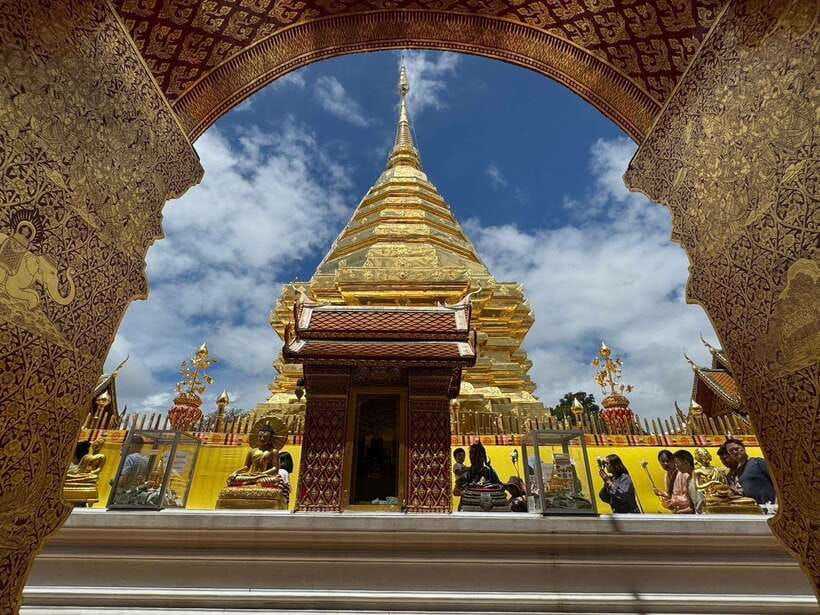
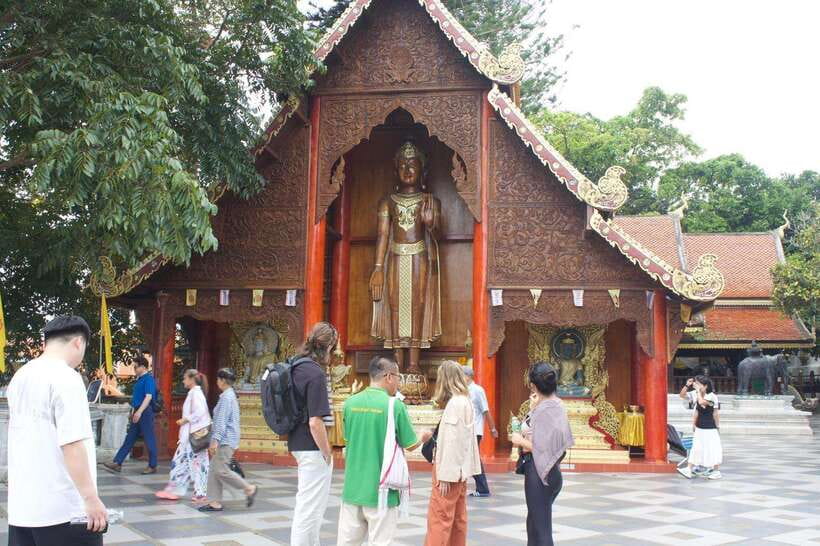
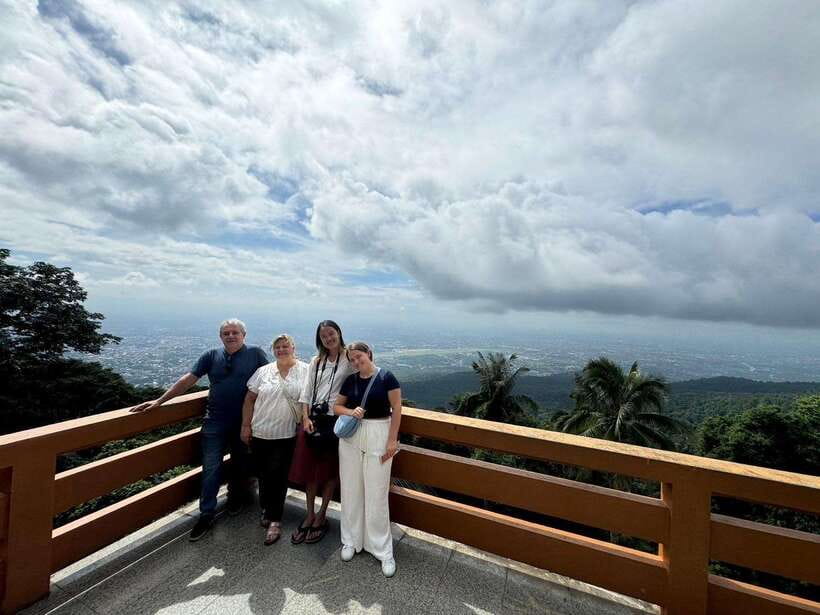
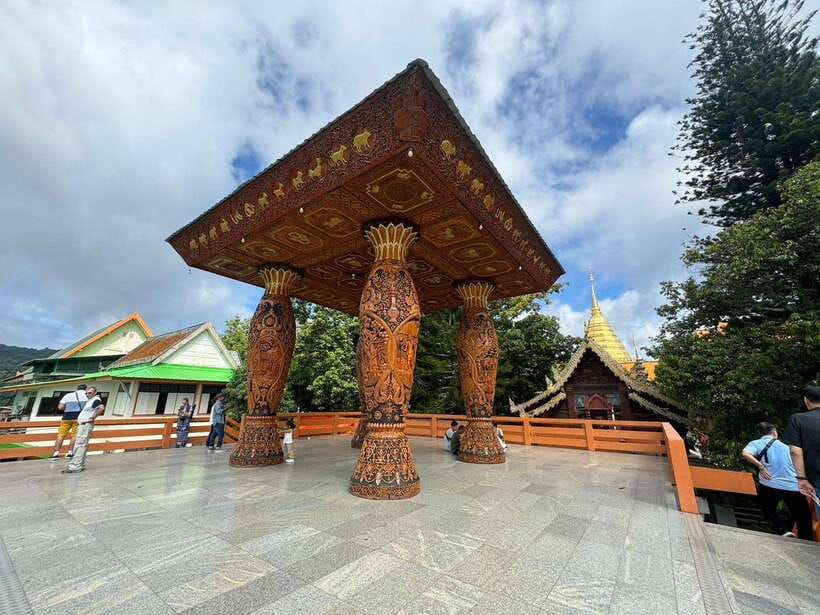
Wat Phra That Doi Suthep is the most famous stop, and rightly so. The temple sits high above Chiang Mai and includes a gold pagoda, ornate halls, Buddha figures, shrines, fruit trees, and rock gardens. From the temple area, you can look toward the city below, with the view often becoming one of the day’s strongest photo moments.
The value of having a guide here is not just finding the best angle for a picture. A guide such as Suriya, Ronnie, or Paul can explain Buddhist customs, the temple’s role in Chiang Mai, and how to pray respectfully. Some departures have included a meeting with monks and a blessing, but you should treat that as dependent on the day rather than a guaranteed feature.
You have about 1.5 hours at the temple, enough time to walk through the main areas without making the visit feel like a rushed stop. The temple can be busy, so the guide’s timing helps. One useful approach is to listen to the explanation first, then take a few minutes to explore on your own.
The temple is also where proper clothing matters most. Cover your shoulders and knees before entering sacred areas. Bring sunscreen and water, but remember that this is a religious site, not simply a viewpoint with decorations.
Pon Elephant Thailand and the ethics of animal contact
The elephant portion lasts about 3.5 hours at Pon Elephant Thailand in Mae Wang District. That gives you much more time than a brief photo stop, but it also means the activity is hands-on and physical.
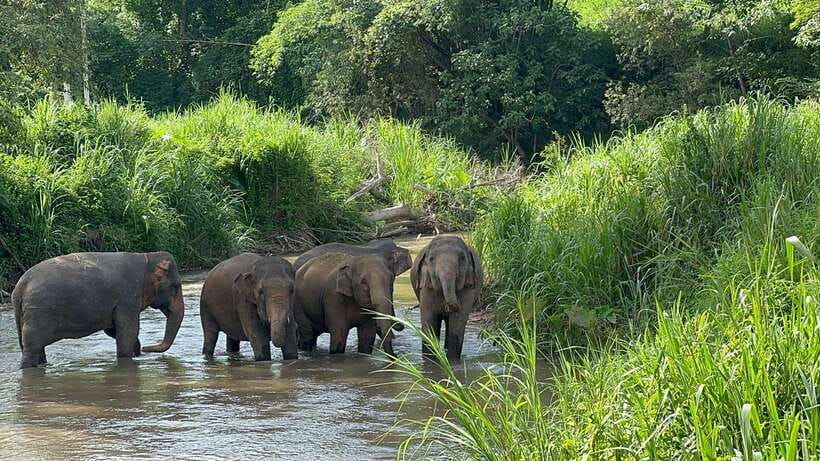
You learn about Thai elephants, their behavior, and their care before taking part in several tasks. These include feeding the animals, walking beside them through the forest, making medicine balls, and bathing them in a river. Food for the elephants is included, along with shower rooms and toilets.
The most important welfare point is simple: riding is prohibited, and the elephants are not forced to perform. They can move around freely, and the activity is built around feeding, walking, and bathing rather than shows or tricks. That does not remove every question anyone might have about elephant tourism, but it is a much better fit for someone who wants close contact without sitting on an animal or watching it perform.
You should keep your expectations realistic. This is not a hands-off wildlife sighting. You will be close to large animals, helping prepare food and possibly getting wet while bathing them. The elephants decide how much interaction they want, so the best experience comes from staying calm and following the guide’s instructions.
The river portion is the wettest part of the day. Bring swimwear, flip-flops or secure water footwear, a towel, and a complete change of clothes. Wear clothing that can get dirty. You can shower afterward, but do not assume a towel is supplied because it is specifically excluded.
Same base, a completely different sort of day out:
- Half-Day Thai Cooking Class at Organic Farm in Chiang Mai
★ 5.0 · 19,087 reviews - Chiang Mai: Cooking Class, Market & Thai Herbs Garden Tour
★ 4.9 · 4,824 reviews - Chiang Mai: Authentic Cooking Class with Market & Farm Visit
★ 4.9 · 4,546 reviews - Thai and Akha Cooking Class in Chiang Mai
★ 5.0 · 4,358 reviews
Lunch with a local family
Lunch is provided after the elephant activities and is described as a homemade Thai meal with seasonal fruit and local desserts. This is a useful break after walking and standing in the sun, and it keeps you from having to search for food in an unfamiliar area.
Food quality can vary. Some meals have been praised as delicious, while one account found the food cold and less satisfying. I would treat lunch as a convenient included meal rather than the reason to book the tour. Vegetables and fruit are included, but if you have strict dietary needs, ask ahead rather than assuming every request can be handled.
The meal also helps the day feel connected to the local area instead of being one long chain of attractions. You are eating near the sanctuary, after seeing how the elephant food is prepared and used.
What the $57 price really covers
At $57 per person, this is strong value if you want several Chiang Mai highlights in one day. The price includes central hotel transfers, an English-speaking guide, entry tickets, first-class travel accident insurance, drinking water, lunch, and food for feeding the elephants.
If you booked the temple visits, transport to Mae Wang, a half-day elephant program, and meals separately, the costs and planning would add up quickly. The real savings are not only financial. You avoid working out the route between Chiang Mai, Doi Suthep, Wat Pha Lat, and the sanctuary.
The price is less attractive if you want a slow, private temple day or dislike long van rides. The drive to Mae Wang takes about 80 minutes each way, so roughly 2 hours and 40 minutes of the day can be spent on transfers. Small groups improve the experience, but group size is not fixed. Some departures have been very intimate, while others may have more people.
Hotel pickup is limited to Chiang Mai city center. If you stay outside that area, you may need to reach the meeting point. At the meeting point, look for the Pon Elephant Thailand sign and the guide holding the relevant name sign.
Who will enjoy this day most
I would recommend this tour to you if you want a packed first or second day in Chiang Mai. It gives you a forest walk, two important temples, an elephant welfare experience, lunch, and transport without asking you to arrange separate bookings.
It suits active couples, families with older children, solo visitors who want a guide, and anyone interested in both Buddhism and elephants. The guides often add value by explaining how to pray, telling stories about Chiang Mai, discussing elephant behavior, and taking photos.
It is not a good match for someone seeking a very relaxed schedule. The day involves a hike, uneven ground, van travel, temple walking, and wet clothing. The activity is not suitable for children under two, pregnant women, people with major mobility, heart, back, or recent surgery concerns, wheelchair users, people with low fitness, or people with animal allergies. The supplied restrictions also exclude people with epilepsy, altitude sickness, serious motion sickness, and several age groups, including people over 70 and over 80. Because those age limits are listed inconsistently, ask the operator to confirm eligibility before booking.
People afraid of heights may also want to think twice because of the mountain setting and elevated temple location. Bring personal medicine, since the tour does not replace your own medical preparation.
Practical packing advice for a smoother day
Pack less than you think you need, but make every item useful. Your day bag should include:
- Comfortable walking or hiking shoes
- Swimwear and a full change of clothes
- A towel
- Sunscreen and insect repellent
- Flip-flops for the river and shower area
- Cash and personal medicine
- A passport, or an accepted copy
Keep temple clothing in mind from the start. Shorts that cover the knees and a shirt covering the shoulders are the easy solution. If your trail clothes are too casual for the temple, bring a cover-up.
Do not bring a drone, large stroller, non-folding wheelchair, scooter, handcart, glass objects, alcohol, or drugs. Smoking is not allowed in the vehicle, and animal riding is not part of the program.
Rain can change the feel of the Monk Trail. During wet months, a poncho can be useful, though guides have provided ponchos on some rainy departures. A waterproof bag for your phone is sensible because the river bathing can soak more than your clothes.
Should you book the Chiang Mai elephant and temple tour?
Book it if you want a well-filled day that combines ethical elephant contact, forest walking, and Chiang Mai’s main mountain temple. The $57 price is fair because it covers transport, tickets, lunch, water, elephant food, and guiding, while the animal program avoids riding and forced performances.
Skip it if you want to spend a whole day at one sanctuary, avoid long drives, or need a very gentle schedule. The strongest reason to choose it is the range: you get quiet nature at Wat Pha Lat, Buddhist culture at Doi Suthep, and meaningful animal care at Pon Elephant Thailand. Bring proper shoes, dry clothes, and patience for the road, and this is a smart way to see several sides of Chiang Mai in one day.
FAQ
Is hotel pickup included?
Yes. Hotel transfers are included for accommodations in Chiang Mai city center. Pickup is optional depending on the selected booking option, and you should wait in the hotel lobby 10 minutes before the pickup time if using it.
How long does the tour last?
It is a full-day activity. Departures commonly run from about 8 a.m. until around 5 p.m., although the exact start time depends on availability and the selected option.
How long is the Monk Trail walk?
The walk to Wat Pha Lat takes about 40 minutes. The trail can be muddy after rain, so hiking shoes or sturdy walking shoes are recommended.
Do I need to cover my shoulders and knees?
Yes. You need to dress respectfully for the temple visits, with your shoulders and knees covered.
Can I ride the elephants?
No. Elephant riding is prohibited. The elephants are not forced to perform activities during the program.
Will I get wet at the sanctuary?
You might. The program includes bathing elephants in a river, so bring swimwear, a towel, flip-flops, and a change of clothes. Clothes that can get dirty are recommended.
Is lunch included?
Yes. Lunch, drinking water, and food for feeding the elephants are included. The meal is a homemade Thai lunch with seasonal fruit and local desserts.
Is the tour suitable for people with mobility or health concerns?
The tour is not suitable for wheelchair users or people with mobility impairments, major back, heart, or recent surgery concerns. It is also not recommended for pregnant women, people with low fitness, epilepsy, animal allergies, motion sickness, or altitude sickness. Contact the operator before booking if you have a medical concern.
Just added around Chiang Mai
- Chiang Mai Best City Tour with Doi Suthep & Iconic Temples★ 4.5 · 24 reviews
- Chiang Mai Michelin Food Walking Tour with Professional Tour Guide★ 4.5 · 13 reviews
- Private Chiang Mai Temple Tour with Doi Suthep and Wat Umong★ 5.0 · 52 reviews
- Secret Waterfall and Bamboo Rafting from Chiang Mai★ 5.0 · 30 reviews
- Bua Tong Waterfall Adventure& Huge Cave included Thai Buffet Tour★ 4.5 · 28 reviews
- Chiang Mai Sak Yant Tattoo By Ajarn Tu★ 5.0 · 25 reviews
- Chiang Mai Airport Transfer by Private Van – Arrival or Departure★ 4.5 · 11 reviews
- Chiang Mai Scavenger Hunt and Sights Self-Guided Tour★ 5.0 · 8 reviews
Elephant Sanctuaries, compared.
Elephant Sanctuary, Waterfall & Bamboo Rafting
Read our review →
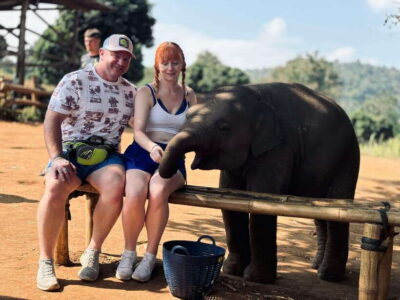
Elephant Sanctuary Feeding Program Half-Day Tour
Read our review →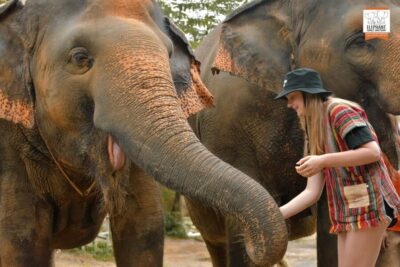
Elephant Jungle Sanctuary Ethical Feeding Experience
Read our review →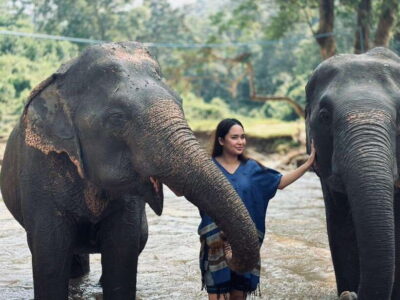
Elephant Sanctuary, Long Neck & Sticky Waterfall
Read our review →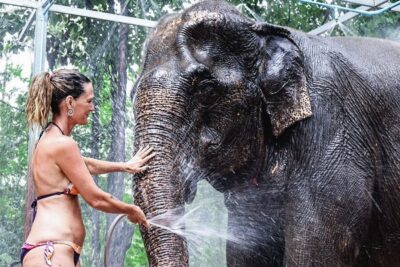
Elephant Bathing Session at Krabi Elephant Shelter
Read our review →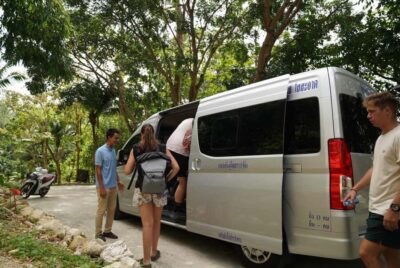
Elephant Sanctuary Guided Tour with Hotel Transfers
Read our review →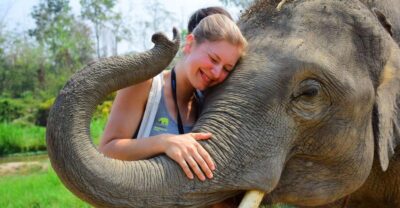
Browse the lists this tour appears in