
Reviewed · COOKING CLASSES
Chiang Mai: Evening Cooking Class and Local Market Visit
Thai food is built on fresh herbs, sharp flavors, and quick cooking, and this evening class lets you see those pieces before they reach your plate. You begin at a local market and organic garden, then return to an air-conditioned kitchen to prepare your own meal with an English-speaking instructor such as New, Aoy, or Oi.
I like the freedom to choose your menu, since you can pick dishes such as Pad Thai, green curry, khao soi, tom yum, or papaya salad. I also like the hotel pickup and drop-off, a useful service when Chiang Mai traffic is thickening at dinner time. The main point to consider is the size of the meal: you cook several dishes, so arrive hungry and expect a long, food-heavy evening.
- Choose from four cooking categories: stir-fried dishes, soup, appetizers, and curry or curry paste.
- Shop for ingredients at a local market and learn how Thai herbs and vegetables are used.
- Visit an organic garden to see how some ingredients are grown.
- Cook in an air-conditioned kitchen and dining room, with equipment and ingredients provided.
- Eat what you make and receive recipes by email or PDF for cooking at home.
- Get central Chiang Mai transport, with pickup generally scheduled between 3:15 and 3:45 pm.
What the Five-Hour Evening Actually Includes
The class is sold as a five-hour experience, though the exact finish depends on group size. Larger groups of 10 to 12 people may run from around 4 pm to 8:30 pm. Smaller groups can finish earlier, so do not treat the end time as fixed if you have a later booking.
The evening begins with hotel pickup in a shared vehicle, often a red truck. Pickup covers hotels in Chiang Mai’s Old City, Santitham, and much of Huay Kaew Road between Kad Suan Kaew and Maya Shopping Mall. Some addresses around Nimmanhaemin, Sirimongkrajan, Wat Ket, Chang Phueak, Chang Khlan, and Chang Moi are included, but coverage depends on the exact location.
You should wait in your hotel lobby 5 to 10 minutes before the scheduled time. The driver may arrive before 3:45 pm, and traffic or several pickup stops can cause delays. The driver waits no longer than five minutes, so this is not the time for a last-minute shower or a slow search for your room key.
The transport arrangement is one of the experience’s practical strengths. An evening class can be awkward to reach if you are unfamiliar with Chiang Mai’s smaller streets, and getting back after a substantial meal is easier when the return ride is already arranged. If your accommodation falls outside the service area, you will be told to arrange your own transport to the school or market.
Starting at the Market and Organic Garden
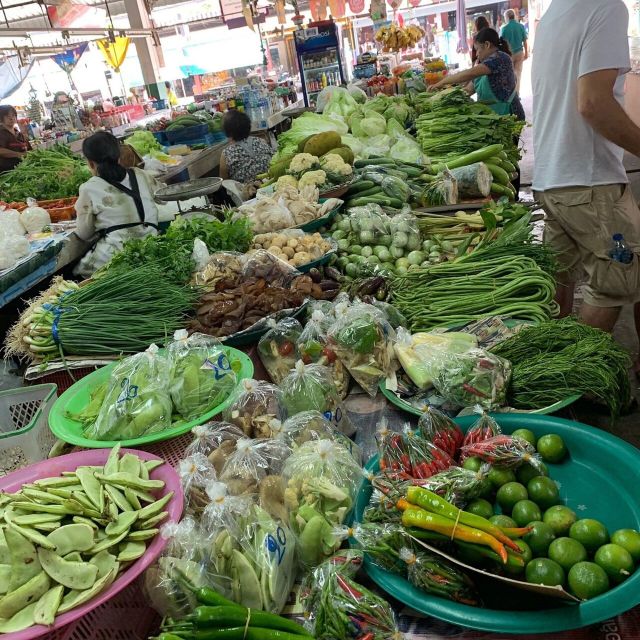
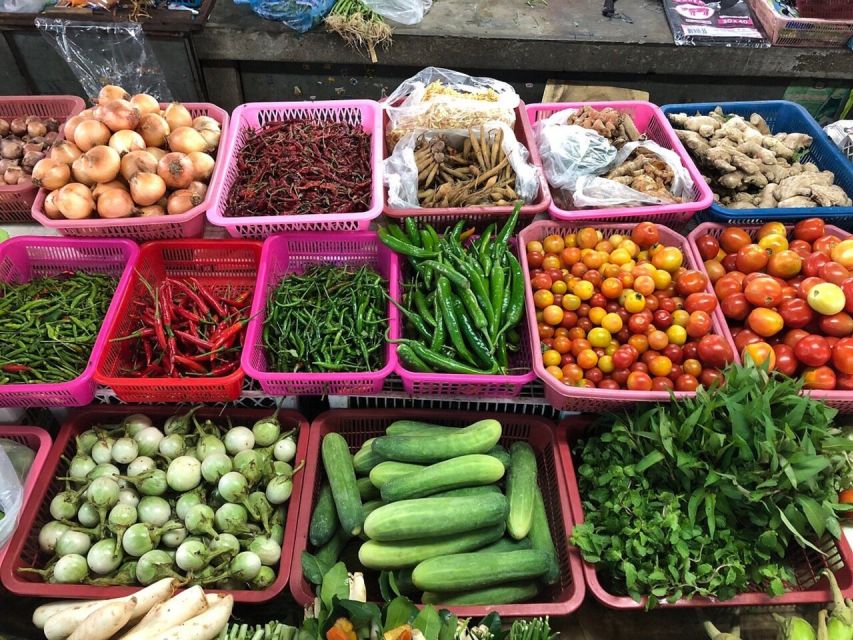
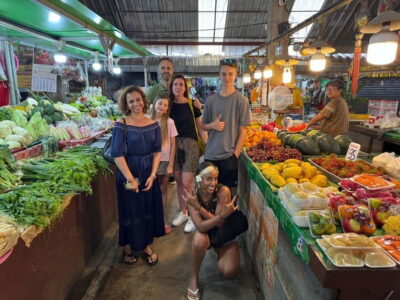
The market visit gives the cooking lesson some useful context. Instead of meeting a pile of prepared ingredients at the school, you first see the raw materials used in Thai kitchens. Your instructor can explain vegetables, herbs, curry ingredients, and other items before you begin chopping and cooking.
The market stop is described as depending on interest, so do not expect a long guided food tour with a formal tasting program. It is a short practical visit tied to the evening’s menu. You may have some time to look around independently, but the main purpose is to help you recognize what goes into the recipes.
That small distinction matters. The market is not the main event, and you should not book this class mainly for market shopping. Its value is in making the cooking lesson feel less like a classroom exercise. When you later see the ingredients on your worktable, they have a place and a name.
The organic garden adds another short stop. You can walk through the garden and see how herbs and vegetables are cultivated in Thailand. The information provided does not promise a large farm tour or a long gardening demonstration, so think of it as a brief look at growing methods rather than a separate attraction.
I like this beginning because it connects Thai food to ordinary local ingredients. It also helps first-time cooks who may not know the difference between the herbs, vegetables, and curry components laid out for them.
More Cooking Classes in Chiang Mai
- Half-Day Thai Cooking Class at Organic Farm in Chiang Mai
★ 5.0 · 19,087 reviews - Chiang Mai: Cooking Class, Market & Thai Herbs Garden Tour
★ 4.9 · 4,824 reviews - Chiang Mai: Authentic Cooking Class with Market & Farm Visit
★ 4.9 · 4,546 reviews
Choosing Between Pad Thai, Khao Soi, and Green Curry
The menu is the most appealing part of the class because you are not locked into one fixed dish. You choose one item from each main category, allowing you to build an evening around familiar favorites or try something strongly associated with northern Thailand.
The stir-fried choices include:
- Pad Thai, fried noodles in the Thai style
- Pad See Ew, fresh noodles stir-fried with chicken
- Chicken with cashew nuts
- Minced chicken with holy basil
Soup choices include tom yum kung, tom kha kai, vegetarian or vegan tom kha, and tom zap kai. The first is hot and sour prawn soup, while tom kha uses coconut milk. The vegetarian and vegan option makes this category useful for people who do not eat meat or seafood.
For an appetizer, you can choose som tam, Thai papaya salad, spring rolls, larb kai, or glass noodle salad. Some of these are assembled rather than cooked over high heat, which gives you a break from the stove while still teaching you how Thai flavors are balanced.
The curry choices cover a wide range. You can make Massaman, green, Panang, red, yellow, or dry red curry, along with khao soi, the northern Thai noodle dish with chicken. The class also includes curry paste making, which is a valuable skill if you want to understand where the curry’s flavor begins.
The description refers to learning five Thai dishes, while the practical menu and repeated booking details describe each person making four dishes, one from each category. Plan on four dishes as the reliable expectation: a stir-fry, soup, appetizer, and curry or curry paste. The actual number may vary with the group and teaching format.
A Hands-On Class for New Cooks
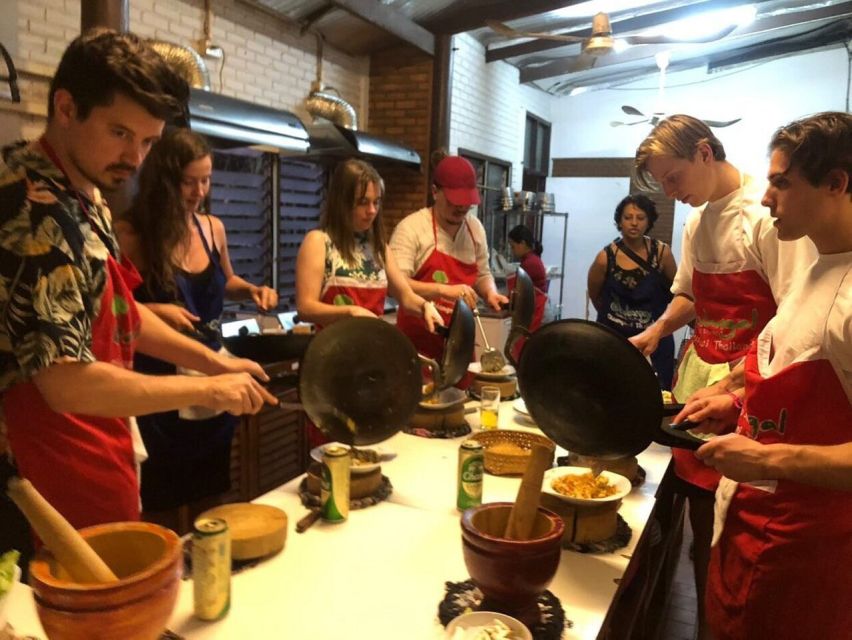
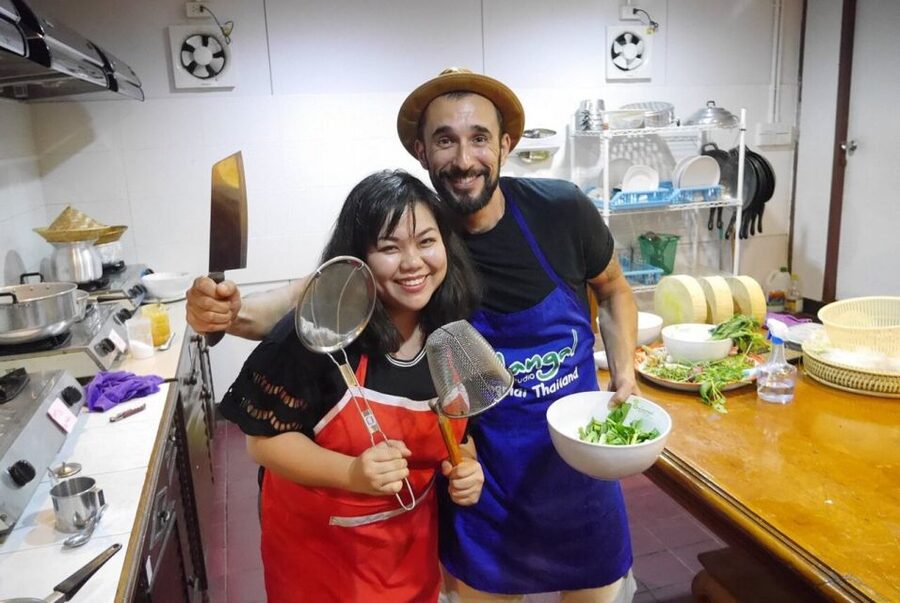
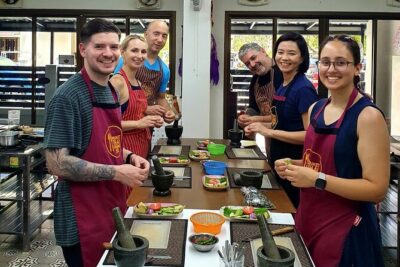
This is not a demonstration where you watch an instructor do everything. You roll up your sleeves, work with the ingredients, and follow cooking instructions as the teacher guides the group.
The recipes are designed to be manageable rather than technically demanding. That is good news if you are not a confident cook. The cooking is hands-on, but the instructions are structured, and the class is set up so you can prepare several dishes without needing advanced kitchen skills.
Instructors such as New, Aoy, and Oi are repeatedly praised for being patient, friendly, and clear. New is noted for remembering students’ names and keeping everyone involved. Aoy is described as having a good sense of humor and a calm teaching style. These personal touches matter in a group class, where one person may be comfortable with a wok and another may be holding a chef’s knife carefully for the first time.
You can also expect substitutions when needed. The class accepts vegan, vegetarian, Halal, and gluten-free participants, as well as people with allergies. Seafood can be replaced, and vegetarian ingredients can be used in suitable dishes. Tell the school about dietary needs when booking and repeat them to your instructor at the start, since the menu involves several separate dishes.
The kitchen and dining room are air-conditioned. That is a real advantage in Chiang Mai, especially when you are cooking multiple dishes over several hours. The class supplies all ingredients and equipment, along with water, tea, and coffee.
Eating Four Dishes You Prepared Yourself
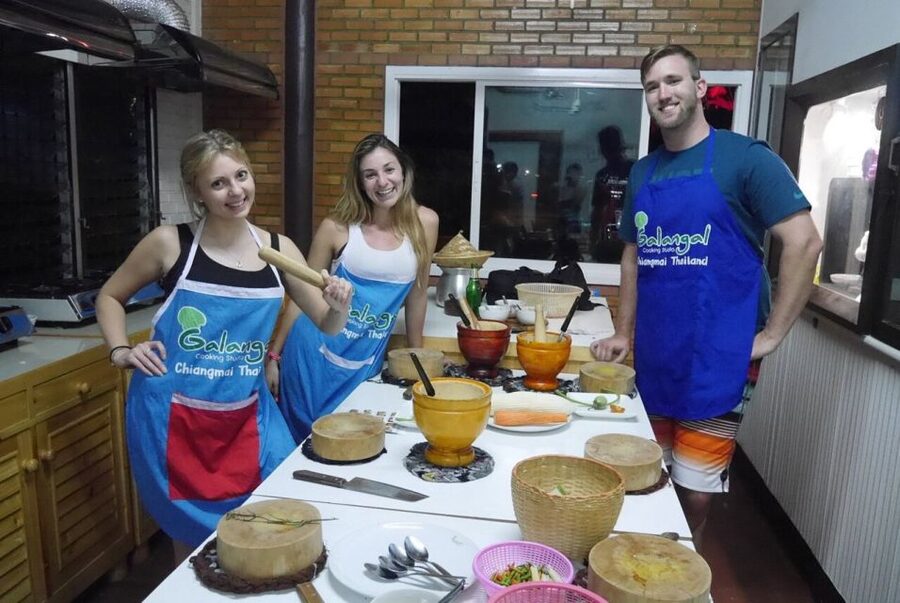
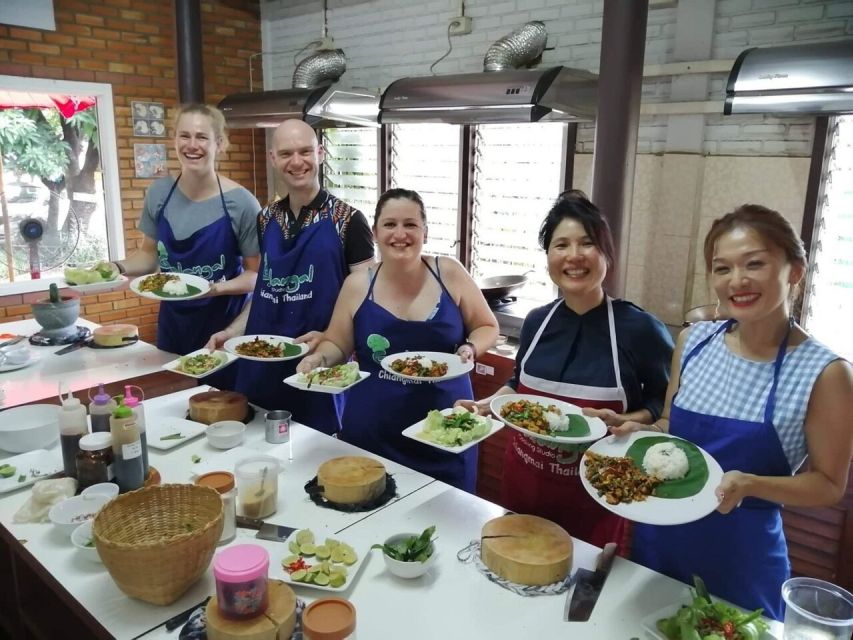
At the end, you sit down and eat the food you made. This is more than a final reward. It gives you a chance to compare flavors across the menu and see how the ingredients work together.
The meal can be large. You may prepare a noodle dish, soup, appetizer, and curry, so the sensible advice is to skip a large late lunch. Several people leave with leftovers, and the school may pack food to take away when there is more than you can finish.
The format also makes the class social without forcing a separate group activity. You cook alongside other people, share the dining room, and learn at the same worktables. Group size can reach 10 to 12 or more, while smaller bookings may feel more personal and can finish earlier.
A small group has clear benefits: more direct help, less waiting, and a better chance to ask detailed questions. A larger class can be more lively, but you may need to keep pace with the rest of the group. The instructors are expected to keep everyone on track, yet this is still a shared class rather than a private chef lesson.
Same base, a completely different sort of day out:
- Chiang Mai: Elephant Sanctuary, Waterfall & Bamboo Rafting
★ 4.9 · 9,160 reviews - Chiang Mai: Elephant Sanctuary & Waterfall Group Tour
★ 4.9 · 5,780 reviews - Chiang Mai: Elephant Sanctuary Feeding Program Half-Day Tour
★ 4.8 · 4,527 reviews - Thai and Akha Cooking Class in Chiang Mai
★ 5.0 · 4,358 reviews
The Recipe Book Makes the Class Worth More
At $28 per person, the class offers strong value if you make use of the recipes after returning home. Transport, the market and garden visit, ingredients, equipment, instruction, drinks, the cooked meal, and a PDF recipe book are included.
Many cooking classes seem inexpensive until you add transport, food, and the cost of a printed recipe collection. Here, the main value comes from the number of dishes. You are not paying for one quick recipe and a short demonstration. You get several preparations and a chance to repeat them at home.
The recipe book is supplied in PDF form, and some participants have received the recipes by email. Keep the file somewhere easy to find, because the class moves quickly and you may not remember every quantity or cooking order by the next day.
The recipes are also a practical souvenir. A market visit gives you memories, but a recipe for khao soi or green curry can bring the Chiang Mai experience back to your own kitchen. If you enjoy Thai food but rarely cook it, choose dishes you are likely to make again rather than selecting only the most unfamiliar option.
Getting Pickup Right in Chiang Mai Traffic
The transport service is helpful, but it requires attention. Pickup is offered across central areas, not every hotel in Chiang Mai. The operator checks each address, and you may need to make your own way to the school or market if your hotel is outside the service area.
Traffic is a factor in the late afternoon. The pickup window begins around 3:15 pm, and the vehicle may arrive early or run late. Keep your phone available, wait in the lobby, and do not schedule another activity immediately after the class.
The return ride is included, which removes one common worry after an evening meal. Still, the end time can shift, especially if the group is large or pickup takes longer than expected.
The activity is wheelchair and stroller accessible, and infant seats are available for pickup. The school is near public transportation if you need to arrange your own route. Smoking indoors, alcohol, and drugs are not allowed.
Who Will Get the Most From This Class
I would recommend this class to you if you want a practical introduction to Thai cooking without spending a full day away from Chiang Mai. It suits couples, solo visitors, families with older children, and people who want a social evening with a clear activity.
It is especially good for:
- First-time Thai cooks who want simple, guided recipes
- People who want to learn northern dishes such as khao soi
- Vegetarians, vegans, Halal diners, and people with gluten restrictions
- Families who can manage a five-hour evening and several dishes
- Anyone who values hotel transport and does not want to arrange an evening ride
- Cooks who want recipes they can use at home
It may be less suitable if you want a quiet private lesson, a short tasting session, or a long market tour. It is also not a good match if you are not prepared to eat a large amount of food or spend several hours in a group setting.
The activity notes that it is not suitable for people with altitude sickness, though this is a city cooking class rather than a high-altitude mountain trip. If that warning applies to you, ask the operator for clarification before booking.
Is This Chiang Mai Cooking Class Worth Booking?
Yes, I think it is a strong choice for the price, especially if you want more than a simple cooking demonstration. The best features are the menu choice, the market and garden introduction, the air-conditioned kitchen, and the number of dishes you prepare.
Book it if you want to cook Pad Thai, khao soi, curry, soup, or papaya salad and then sit down to eat your own work. Choose a different activity if your main goal is a long market exploration, a private lesson, or a tightly fixed schedule.
Arrive hungry, share all dietary requirements before cooking, and wait in the lobby early for pickup. At $28, the combination of food, instruction, transport, and recipes makes this one of the more useful evening activities in Chiang Mai.
FAQ
How long does the Chiang Mai cooking class last?
The advertised duration is five hours. Larger groups may run from about 4 pm to 8:30 pm, while smaller groups may finish earlier.
What time is hotel pickup?
Pickup is scheduled between approximately 3:15 and 3:45 pm. You should wait in the hotel lobby 5 to 10 minutes before the scheduled time.
Which Chiang Mai areas have hotel pickup?
Pickup is available in the Old City, Santitham, and parts of Huay Kaew Road, Nimmanhaemin Road, Sirimongkrajan Road, Wat Ket Road, Chang Phueak, Chang Khlan, and Chang Moi. The exact address must be checked.
How many dishes will I cook?
The practical format provides one selection from each of four categories: stir-fried food, soup, appetizer, and curry or curry paste. The activity information also refers to five Thai dishes, so the exact format can vary.
Can people with dietary restrictions join?
Yes. The class is available for vegan, vegetarian, Halal, gluten-free, and allergy-related requirements. Substitutions can be arranged, including alternatives for people who cannot eat seafood.
What is included in the price?
The $28 price includes hotel pickup and drop-off within the service area, the market and garden visit, ingredients, equipment, cooking instruction, water, tea, coffee, the meal you prepare, and a PDF recipe book. Observer fees are extra.
More Evening Tours in Chiang Mai
- Chiang Mai: Doi Suthep and Wat Umong Enchanting Evening Tour
★ 4.6 · 1,811 reviews - Small-Group Chiang Mai Evening Street Food Tour
★ 4.5 · 826 reviews - Best seller!! Amazing Night tour, Doi Suthep + Wat umong – Top Must visit!
★ 4.5 · 451 reviews - Chiang Mai Temples and Market Tuk-Tuk Evening Night Tour
★ 4.5 · 201 reviews
More Markets in Chiang Mai
- Chiang Mai: Cooking Class with Market and Pickup
★ 4.9 · 1,365 reviews - Chiang Mai: Evening Local Street Food Market Tour
★ 4.8 · 604 reviews - Chiang Mai: Kalare Night Bazaar Boxing Stadium Muay Thai
★ 4.7 · 507 reviews - Evening Cooking Class in Organic Farm with Local Market Tour
★ 5.0 · 394 reviews
Just added around Chiang Mai
- Chiang Mai Best City Tour with Doi Suthep & Iconic Temples★ 4.5 · 24 reviews
- Chiang Mai Michelin Food Walking Tour with Professional Tour Guide★ 4.5 · 13 reviews
- Private Chiang Mai Temple Tour with Doi Suthep and Wat Umong★ 5.0 · 52 reviews
- Secret Waterfall and Bamboo Rafting from Chiang Mai★ 5.0 · 30 reviews
- Bua Tong Waterfall Adventure& Huge Cave included Thai Buffet Tour★ 4.5 · 28 reviews
- Chiang Mai Sak Yant Tattoo By Ajarn Tu★ 5.0 · 25 reviews
- Chiang Mai Airport Transfer by Private Van – Arrival or Departure★ 4.5 · 11 reviews
- Chiang Mai Scavenger Hunt and Sights Self-Guided Tour★ 5.0 · 8 reviews
Cooking Classes, compared.
Half-Day Thai Cooking Class at Organic Farm in Chiang Mai
Read our review →
Cooking Class, Market & Thai Herbs Garden Tour
Read our review →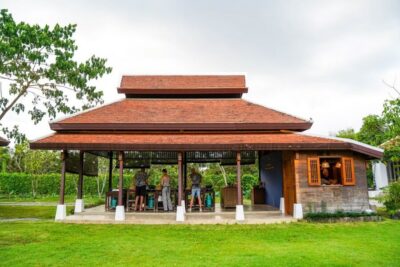
Authentic Cooking Class with Market & Farm Visit
Read our review →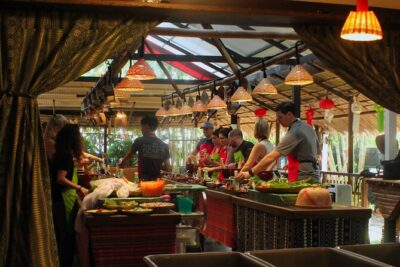
Phuket Thai Cooking Class with Market Tour Option
Read our review →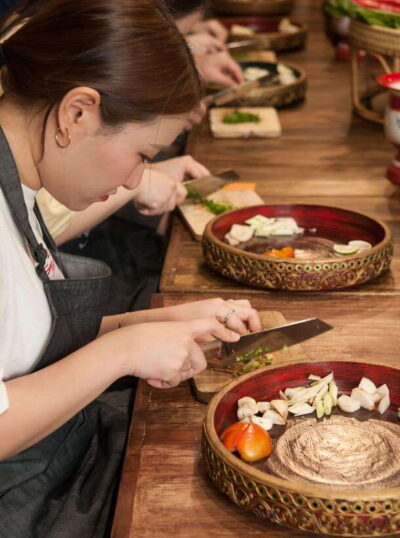
Tingly Thai Cooking School Half-Day Cooking Class
Read our review →Browse the lists this tour appears in