
Reviewed · ELEPHANT SANCTUARIES
Chiang Mai: Elephant Sanctuary Feeding Program Half-Day Tour
The best part of this Chiang Mai excursion is the close contact without elephant riding. You feed the animals, watch them move through forest and farms, and may help wash them in the river if they choose to bathe. I like the family-run feel, the clear care shown by the mahouts, and the chance to learn why each elephant has different needs.
I also like that the five-hour schedule packs in several feeding areas, food preparation, and river time rather than one rushed photo stop. The main drawback is the long drive south of Chiang Mai, roughly 1.5 hours in the supplied description, plus some walking and a chance that rain, river conditions, or the elephants themselves will change the plan.
Key points to know before booking
- Four activity areas give you repeated chances to feed and observe different elephants rather than one brief encounter.
- River bathing is optional for the elephants, so you may get wet, or you may simply watch them near the water.
- The drive takes time, but it carries you away from the city into hills, forest, and local farming country.
- Guides such as Pat, Toto, Jackie, Tuto, Pan, and King Kong have been praised for clear explanations and good humor.
- A half-day can still feel full, with feeding, herbal food preparation, walking, photographs, and time at the river.
- The $27 starting price is strong value if your booking includes the main program, though hotel transfer may depend on the option selected.
A forest setting south of Mae Wang
Pon Elephant Thailand sits well outside central Chiang Mai. The journey south of Mae Wang takes you through hills, forest, and local farms, with the drive described as roughly 1.5 hours each way in the activity information. That travel time is the tradeoff for reaching a quieter setting with room for the elephants to move.
I would allow more time than the simple five-hour label suggests. The activity is listed as five hours, or 330 minutes, but hotel pickup, traffic, and the road out to the sanctuary can affect your day. One traveler also noted that the approximate travel time was not made clear enough, so check your starting time carefully if you have a flight, cooking class, or another booking later.
Pickup is optional. If you choose it, wait in your hotel lobby 5 to 10 minutes before the scheduled time, since drivers wait no longer than five minutes after pickup. Transport has earned strong marks, with 87 percent of the supplied transport ratings at the top score, and several accounts describe clean, comfortable vans.
More Elephant Sanctuaries in Chiang Mai
- Chiang Mai: Elephant Sanctuary, Waterfall & Bamboo Rafting
★ 4.9 · 9,160 reviews - Chiang Mai: Elephant Sanctuary & Waterfall Group Tour
★ 4.9 · 5,780 reviews - Chiang Mai: Elephant Sanctuary, Long Neck & Sticky Waterfall
★ 4.9 · 2,262 reviews
Meeting the elephants and the sanctuary team
Arrival begins with an introduction to the sanctuary, the people who care for the elephants, and the rules for staying close to such large animals. You receive an explanation of their habitat, history, habits, and behavior before approaching them. That briefing matters. An elephant can be calm and accustomed to people while still being powerful, unpredictable, and deserving of space.
The guides work in several sections of the visit rather than always staying with one group. Names that appear in the supplied information include Pat, Toto, Tuto, Jackie, Pan, Oom, Saki, and King Kong. The strongest praise centers on guides who explain things in simple English, keep the group laughing, and give people enough time at each stop.
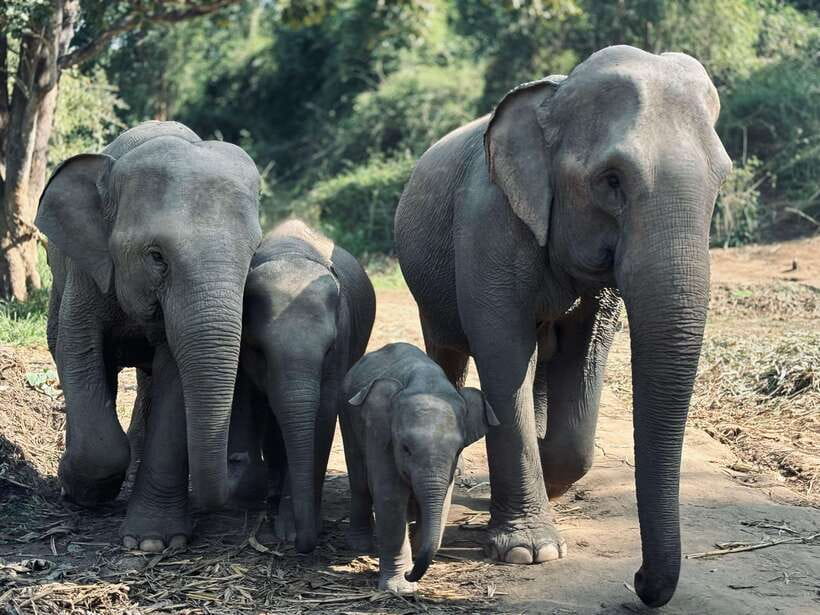
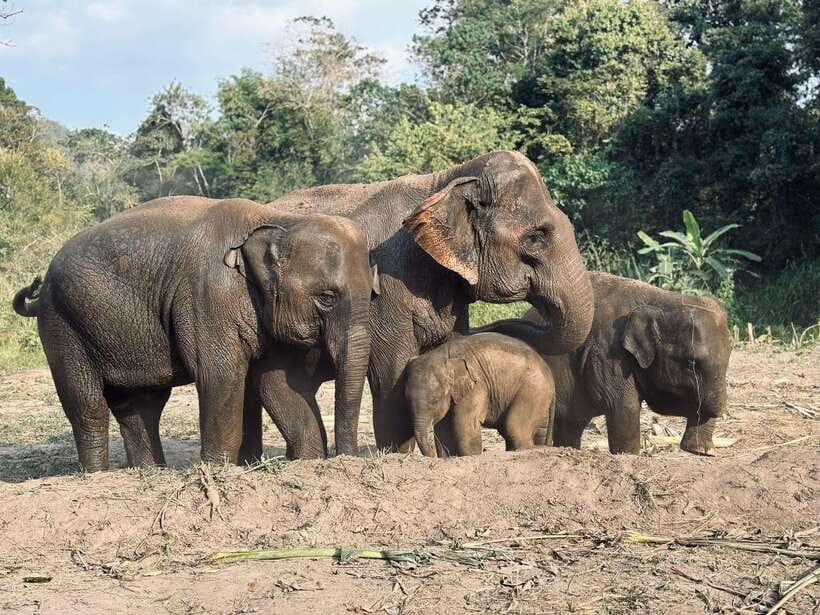
You may hear about the elephants as individuals, not simply as a herd. This is one of the more valuable parts of the visit. The people caring for them know their personalities, ages, dietary needs, and family relationships. One account described elephants ranging from a one-year-old to a 74-year-old, while another highlighted a mother with three daughters.
The sanctuary is described as home to about 15 elephants, with more than 60 acres for them to roam. A rescued bull is also mentioned among the animals. These details help you understand the setting: this is not a quick roadside enclosure where an elephant waits beside a photo platform.
Feeding bananas, sugarcane, and Napier grass
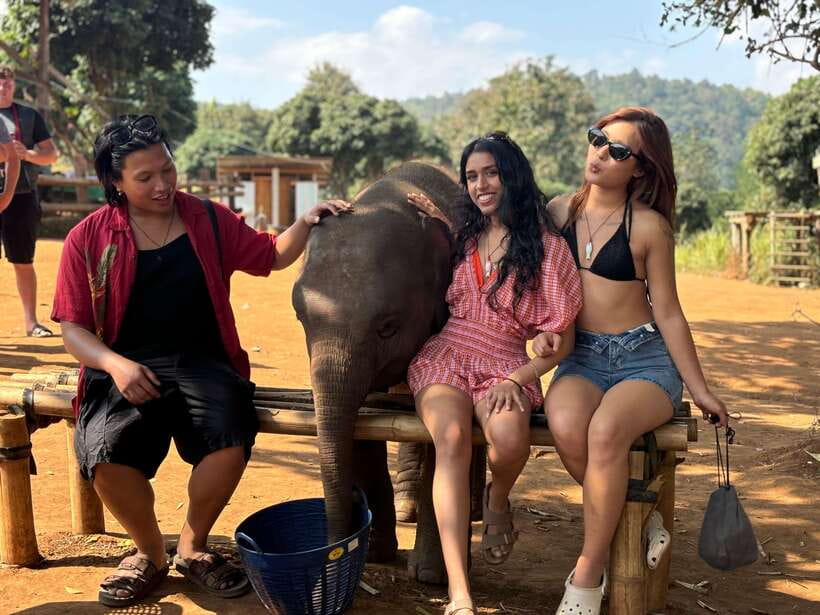
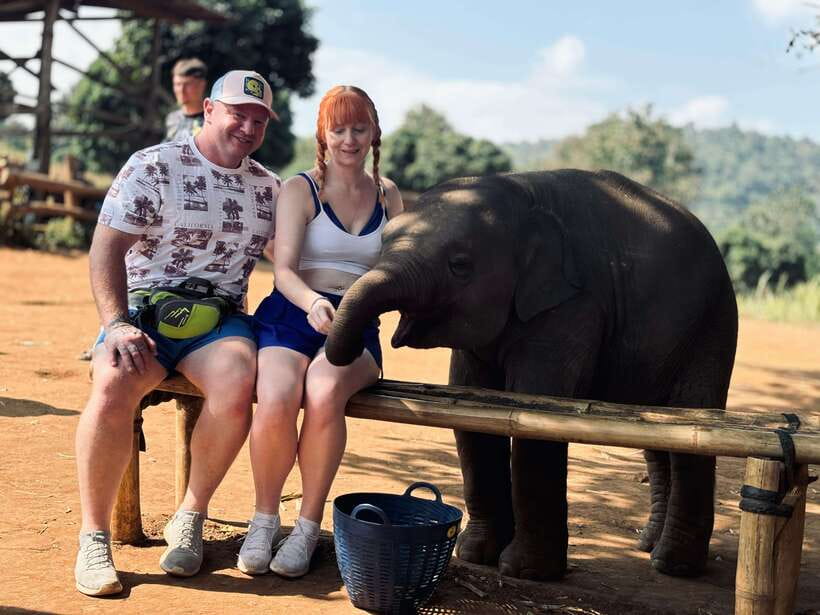
Feeding is the most direct way to interact with the elephants, and it begins early in the visit. You may offer bananas, sugarcane, and Napier grass while learning how food is handled and why different elephants may need different diets.
Expect trunks reaching toward you, soft but surprisingly strong. The guides show you where to stand and how to offer food. Pay attention to their instructions instead of stepping in front of an elephant or waving food around. The point is not to make the animal perform. It is to watch a natural feeding behavior at close range.
Several feeding points help keep the experience moving. You may meet different elephants at four stations, with short walks between them. That variety is useful because the animals do not all behave alike. Some may approach quickly, while others may take their time or wander off.
The activity description also includes preparing herbal treats. Some accounts specifically mention making vitamin balls for an elderly elephant. This adds more meaning than simply handing over fruit. You see a small part of the daily care routine and learn that feeding an elephant is not just about giving it something tasty.
There is a practical point here: the program includes fruit for the elephants and drinking water for you. Bring a camera or charged smartphone, but keep hold of it when an elephant comes close. A phone case or small waterproof pouch is sensible if river bathing goes ahead.
Walking the forest with the elephants
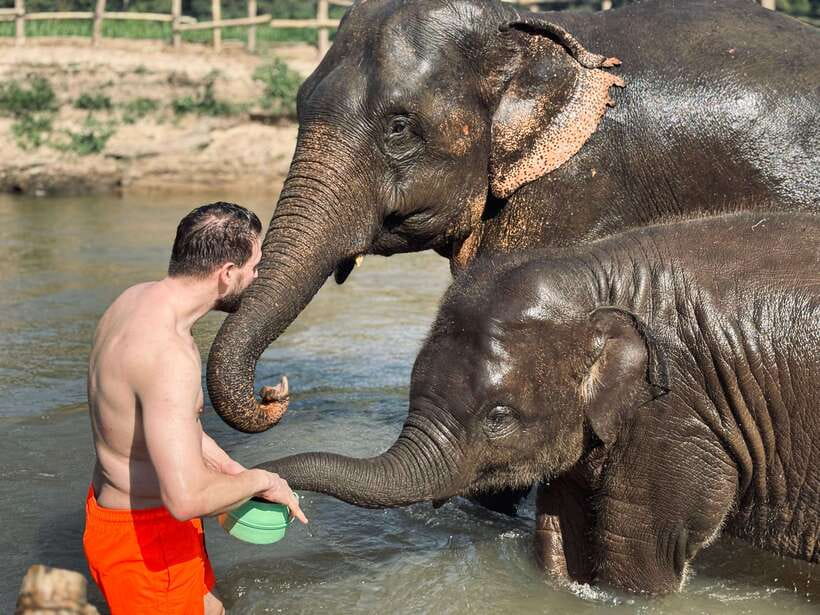
After the briefing, you join a nature walk with the rangers. The walk links the feeding areas and brings you into the forest setting where the elephants spend time. You should expect uneven ground, outdoor heat, insects, and some walking between stations.
The supplied information lists a wobbly bridge as part of the route. It is described as safe, but it may feel uncomfortable if you dislike heights, unstable footing, or narrow crossings. This is not a polished city attraction with level paths throughout.
That said, one account says elderly parents managed the walking, while another found the half-day a little long and noted that there was a lot of walking. I would describe the physical demand as moderate rather than strenuous, but the tour is not a good fit for people with low fitness, mobility impairments, back problems, recent surgery, or epilepsy.
The walk also changes the mood of the visit. Feeding gives you an active role, while following the elephants lets you slow down and observe. You might see them stop, graze, or choose their own direction. The staff’s stated approach is to let the animals decide whether to take part in activities.
Same base, a completely different sort of day out:
- Half-Day Thai Cooking Class at Organic Farm in Chiang Mai
★ 5.0 · 19,087 reviews - Chiang Mai: Cooking Class, Market & Thai Herbs Garden Tour
★ 4.9 · 4,824 reviews - Chiang Mai: Authentic Cooking Class with Market & Farm Visit
★ 4.9 · 4,546 reviews - Thai and Akha Cooking Class in Chiang Mai
★ 5.0 · 4,358 reviews
The river, bathing, and the chance to get soaked
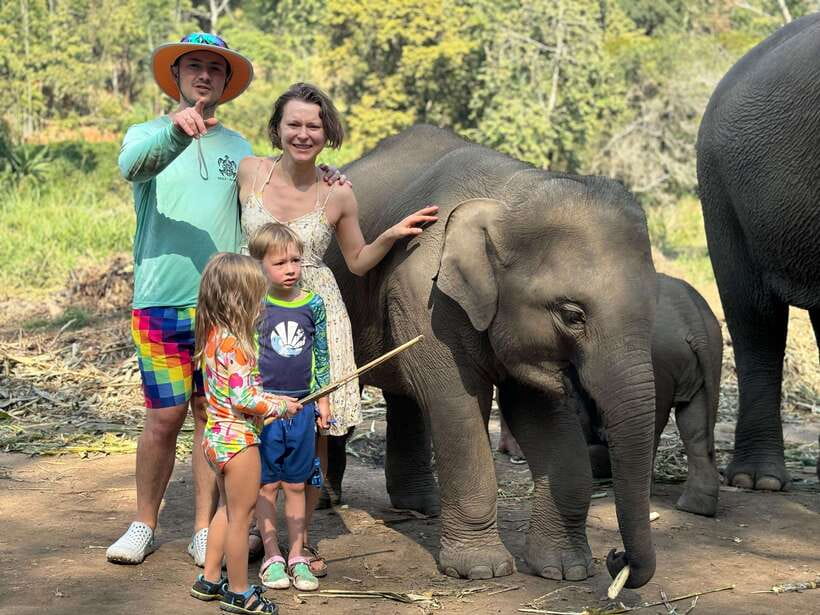
The river is the most playful part of the program, but it is also the part you should treat as conditional. The elephants may enter the water, and you may help splash or wash them. They may also decide not to bathe, in which case the schedule changes.
That choice is important. The activity information makes clear that the staff do not force the elephants into the river. A responsible visit has to accept that the animal, not the timetable, gets the final word.
If the elephants do enter, prepare to get wet. One account describes the day ending with elephant washing and a water fight, while others mention splashing beside the animals. Bring beachwear, clothes that can get dirty, a towel, and a complete change of clothes. A towel and change of clothes are not included, so do not assume the sanctuary will supply either.
Biodegradable sunscreen and insect repellent are recommended. Apply them before entering the area and choose biodegradable products to reduce harm to the forest and river. Cash may also be useful, though no specific extra charge is provided in the activity details.
You can take photographs, including a photo with the elephants, but keep the animal’s comfort first. The best image may be one of an elephant feeding or walking away, not a forced pose. The setting gives you plenty to remember without turning every moment into a staged picture.
Why the community connection matters
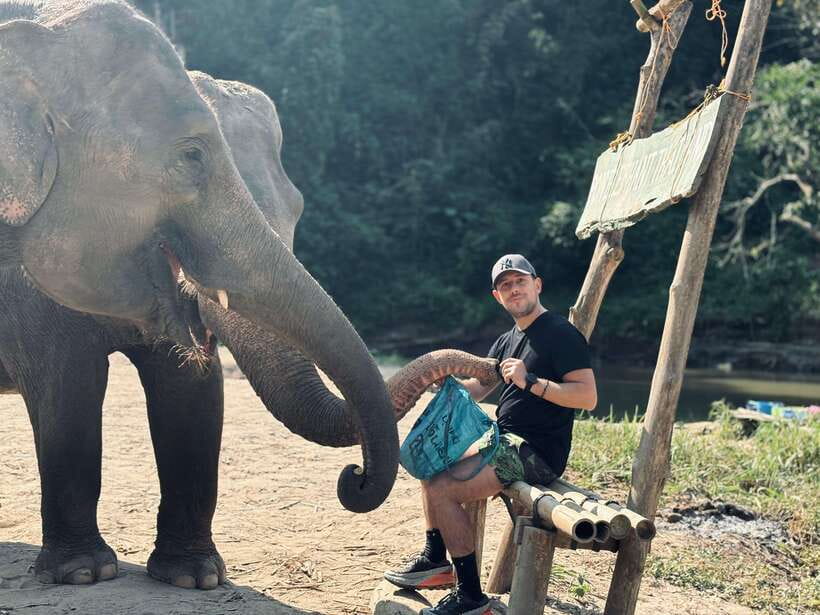
The program links elephant care with local hill-tribe communities and village support. The sanctuary says that helping the elephants also helps protect and sustain the community forest over the long term.
That connection gives the visit a wider purpose. Elephants in Thailand have long been tied to transport, logging, tourism, and domestic work. A sanctuary cannot undo that history in a morning, but it can show you a different relationship, one built around care, food, space, and observation rather than riding.
The supplied information says riding is not allowed, and the activity rules also prohibit forcing animals to take part. Those are important standards to check when comparing elephant programs around Chiang Mai. The presence of close contact does not automatically make a program responsible, so watch how the staff manage the group. Do they give the elephant room? Do they let it walk away? Do they avoid shouting or pushing it toward people? Here, the stated rules and the repeated description of free movement point in the right direction.
I would still keep your expectations sensible. You are visiting a working sanctuary, not observing elephants in a fully wild setting. The animals are accustomed to people, and the program is built around feeding and interaction. That can be meaningful, but it is not the same as a silent wildlife safari.
What the $27 price really covers
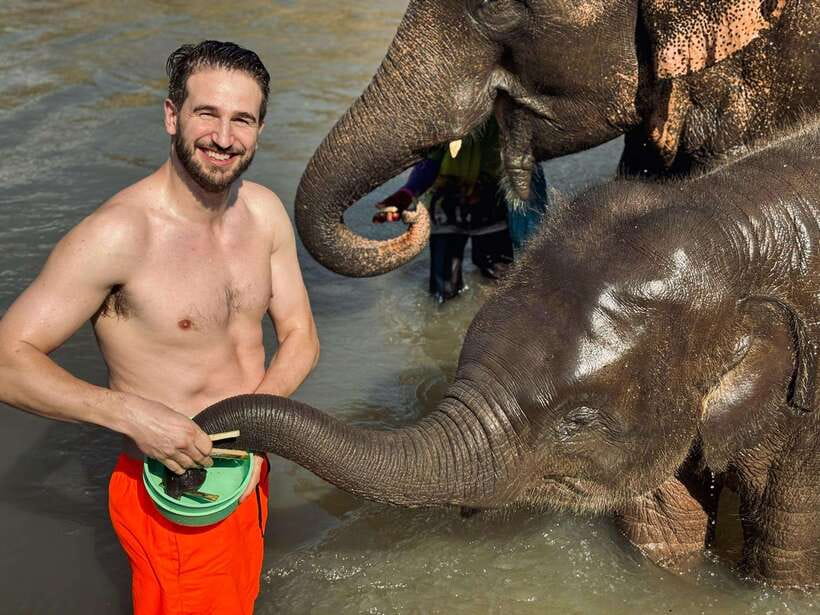
At $27 per person, this is an unusually accessible way to spend half a day around elephants. The price includes an English-speaking guide, insurance, elephant fruit, and drinking water. Hotel pickup and drop-off are included only if you choose the appropriate option, so compare the booking choices before paying.
The value is strongest if you want several kinds of contact: feeding, learning, preparing food, walking, and possible river time. You are not paying for a single photograph and a short encounter. You receive a full program in a forest setting, with transport available as an option.
One supplied account says a no-transfer booking cost 800 baht. Treat that as an example rather than a guaranteed current price, since the final amount depends on the option and booking date. If you are staying near the sanctuary or can arrange your own transport, the lower price may make sense. If you are based in Chiang Mai, the hotel pickup can be worth paying for because the road journey is long and unfamiliar.
The free-cancellation window is 24 hours before the activity for a full refund, and the reserve-now-pay-later option keeps your money available until closer to the visit. Those terms help if your Chiang Mai plans are still shifting.
Group comfort, timing, and practical limits
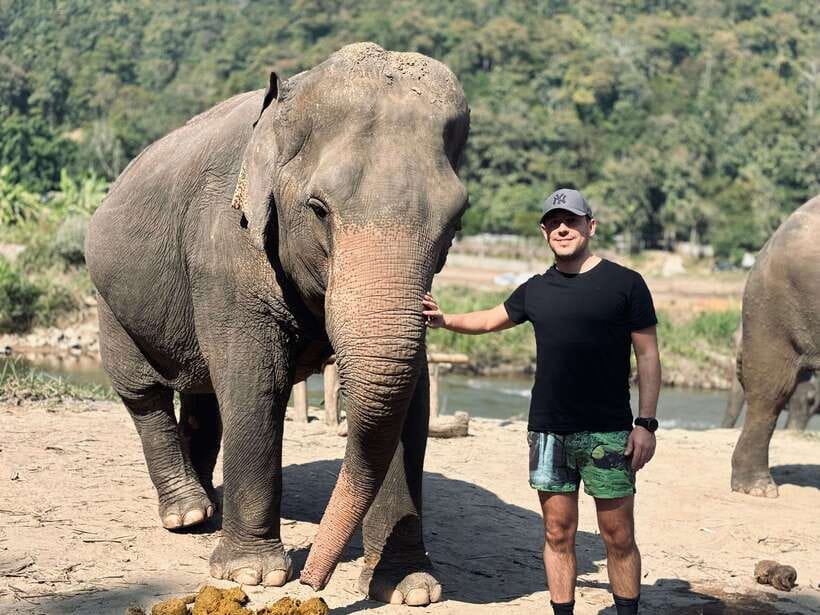
The group size can vary by booking. One account described a group of about seven people, while other groups joined together for the walk. You may have a small van ride followed by a larger group at the sanctuary.
The visit is suitable for families in some cases. A six-month-old baby was accommodated with help from the guides, and several accounts describe staff being patient with children. Still, the physical setting includes walking, a bridge, mud or wet ground, insects, and large animals. You remain responsible for deciding if your child can handle that environment.
The activity is not suitable for wheelchair users, people with mobility impairments, people with back problems, people with epilepsy, people with animal or insect allergies, or people with recent surgery. It is also not recommended for people with visual impairment or a low level of fitness. These limits are not minor footnotes. The sanctuary is outdoors and close to elephants, with no promise of a fully accessible route.
Do not bring weapons or sharp objects, alcohol, drugs, fireworks, explosives, fishing gear, skateboards, skates, or anything used to make a fire. Party groups, including bachelor and bachelorette groups, are not accepted. Never litter, and never bring extra food to feed the animals.
What I would pack for this half-day
Keep your packing simple:
- Comfortable clothes that can get dirty
- Beachwear or quick-drying clothing
- A full change of clothes
- A towel
- Biodegradable sunscreen
- Biodegradable insect repellent
- Comfortable walking shoes
- A camera or charged smartphone
- Cash
- Your passport, or an accepted copy
The passport requirement is worth checking before you leave your hotel. If you plan to swim or wash elephants, place your phone and valuables in something that can handle water. The sanctuary provides drinking water, but you may still want a refillable bottle for the drive.
Wear shoes with a secure grip. The route includes a bridge and forest paths, and wet ground is possible near the river. You do not need fancy clothing. The right outfit is one you can stain, soak, and wash easily.
Who will get the most from this experience?
You should consider booking if you want direct contact with elephants but do not want riding. It suits people who enjoy learning a little about animal care, who are happy to follow staff instructions, and who can handle a long road journey followed by outdoor walking.
It also suits families with older children, couples, first-time visitors to Chiang Mai, and anyone with only one free morning or afternoon. The half-day format is useful if you have an evening train, another activity, or a later flight. One person with a 3 p.m. flight was able to use the short format, but I would still allow a large buffer for the drive and traffic.
You may prefer another kind of outing if you want a quiet wildlife observation with no feeding or touching. You may also want to skip this one if you dislike getting wet, crossing uneven ground, or being around insects. The river portion may not happen, and the elephants may not follow the schedule you imagined.
Should you book Pon Elephant Thailand?
I would book this tour if your priority is a reasonably priced, close-up elephant encounter with clear limits on riding and forced activity. The strongest features are the caring staff, repeated feeding opportunities, food preparation, the forest setting, and the chance to watch a family group move at its own pace.
Go in with the right expectations: the journey is long, the route can be physical, and bathing depends on the elephants. Pack for rain, mud, and a soaking. If you can accept those conditions, this half-day program offers a lot for $27, especially when your Chiang Mai schedule cannot spare a full day.
FAQ
How long does the Chiang Mai elephant sanctuary tour last?
The activity is listed as five hours, or 330 minutes. The total day may feel longer if you select hotel pickup because the sanctuary is south of Mae Wang and the drive is roughly 1.5 hours according to the supplied description.
Is hotel pickup included?
Hotel pickup and drop-off are included only with the option that lists them. If pickup is selected, wait in your hotel lobby 5 to 10 minutes before the scheduled time. Drivers wait no longer than five minutes after that time.
What languages are available?
The live tour guide service is available in English and Thai.
Can I ride the elephants?
No. Riding the elephants is not allowed.
Will I be able to bathe with the elephants?
You may be able to wash and splash with the elephants in the river, but the activity depends on whether the elephants choose to enter the water. Staff do not force them to bathe, so this part can change.
What should I bring?
Bring comfortable clothes, clothes that can get dirty, beachwear, a change of clothes, a towel, a camera, cash, biodegradable sunscreen, biodegradable insect repellent, a charged smartphone, and a passport or accepted copy.
Are food and drinks provided?
Fruit for the elephants and drinking water for you are included. A towel and change of clothes are not included.
Can I cancel the booking?
You can cancel up to 24 hours before the activity for a full refund. A reserve-now-pay-later option is also available.
Just added around Chiang Mai
- Chiang Mai Best City Tour with Doi Suthep & Iconic Temples★ 4.5 · 24 reviews
- Chiang Mai Michelin Food Walking Tour with Professional Tour Guide★ 4.5 · 13 reviews
- Private Chiang Mai Temple Tour with Doi Suthep and Wat Umong★ 5.0 · 52 reviews
- Secret Waterfall and Bamboo Rafting from Chiang Mai★ 5.0 · 30 reviews
- Bua Tong Waterfall Adventure& Huge Cave included Thai Buffet Tour★ 4.5 · 28 reviews
- Chiang Mai Sak Yant Tattoo By Ajarn Tu★ 5.0 · 25 reviews
- Chiang Mai Airport Transfer by Private Van – Arrival or Departure★ 4.5 · 11 reviews
- Chiang Mai Scavenger Hunt and Sights Self-Guided Tour★ 5.0 · 8 reviews
Elephant Sanctuaries, compared.
Elephant Sanctuary, Waterfall & Bamboo Rafting
Read our review →
Elephant Jungle Sanctuary Ethical Feeding Experience
Read our review →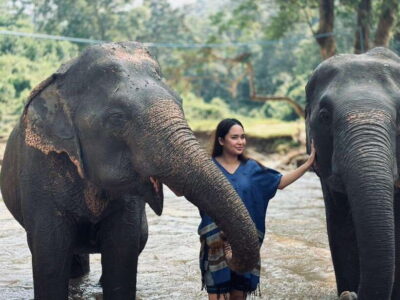
Elephant Sanctuary, Long Neck & Sticky Waterfall
Read our review →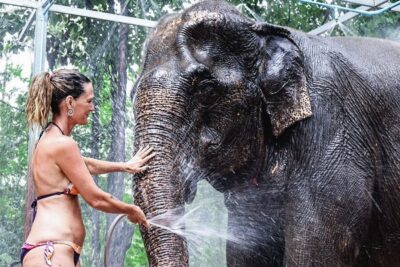
Elephant Bathing Session at Krabi Elephant Shelter
Read our review →
Elephant Sanctuary Guided Tour with Hotel Transfers
Read our review →
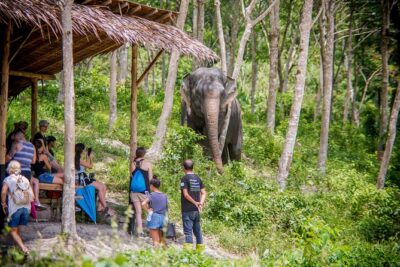
A Morning with the Elephants at Phuket Elephant Sanctuary
Read our review →Browse the lists this tour appears in