
Reviewed · TEMPLE TOURS
Chiang Mai: Chiang Rai Temples and Long-Neck Karen Village
Chiang Rai’s famous temples are the main event here, but the day gains variety from Mae Kachan Hot Springs and a stop at a Long-Neck Karen village. I like the White Temple’s strange, modern take on Buddhist ideas, and I like the small-group format, which can make a long day in a comfortable van feel more personal.
The trade-off is distance. You spend much of the day on the road from Chiang Mai, and the hot springs are a developed roadside stop rather than a wild nature setting. The village visit also calls for care and respect, since it can feel more commercial than a normal neighborhood visit.
Key points before you book
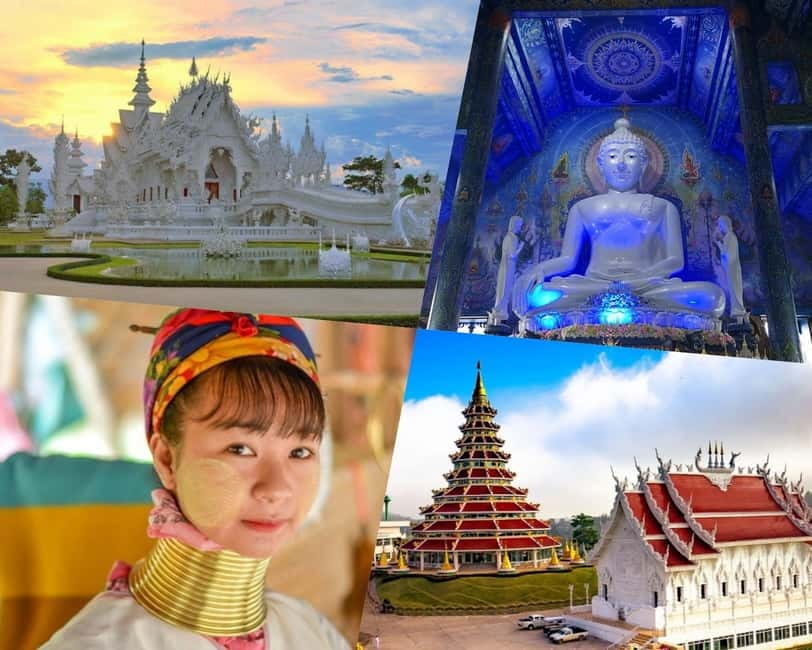
- Wat Rong Khun is the star attraction: White walls, mirrored details, dramatic sculptures, and modern murals make this unlike a traditional Thai temple.
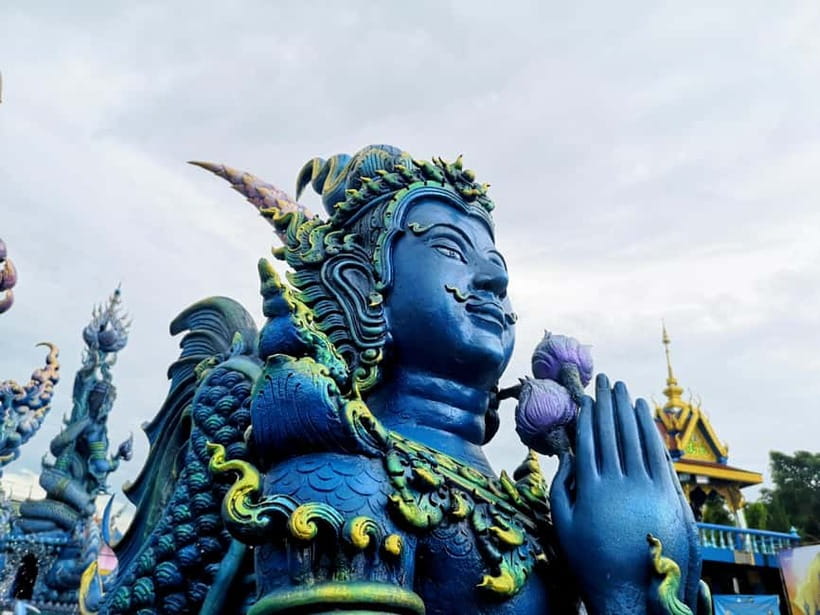
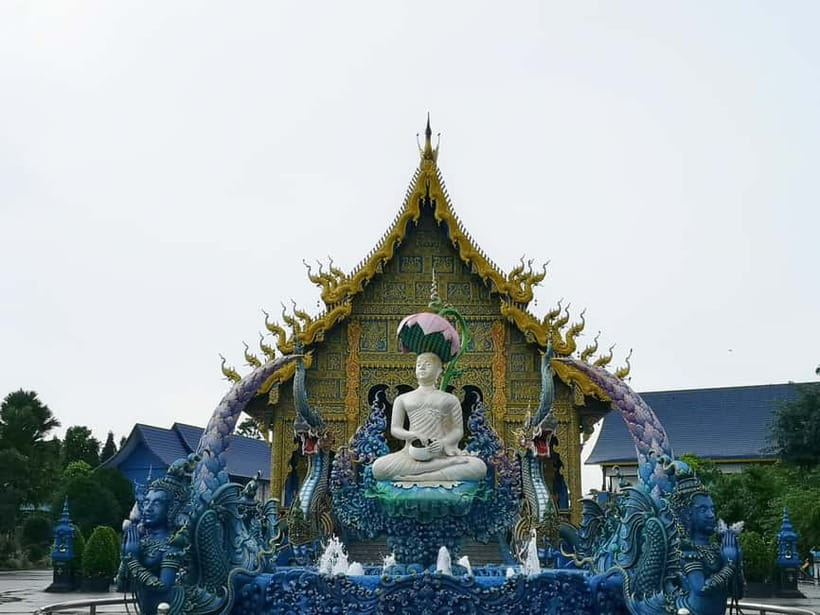
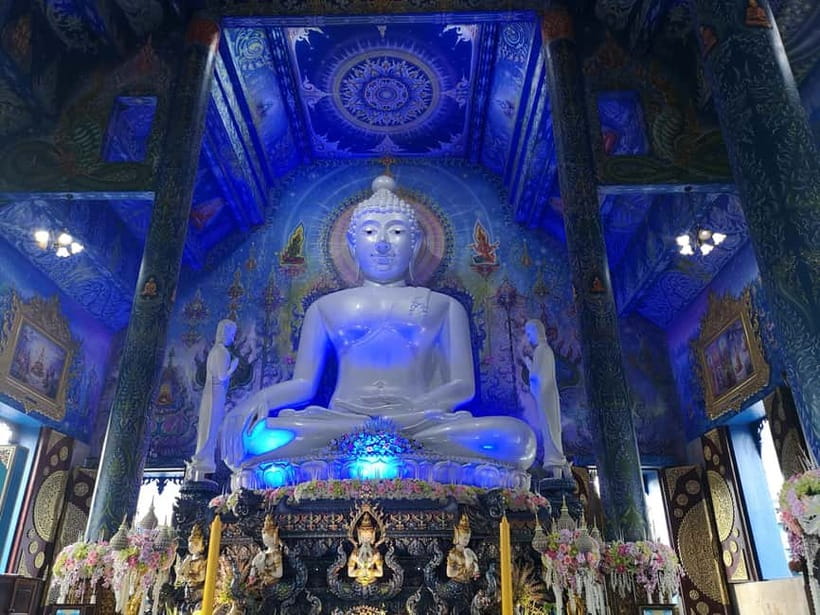
- The Blue Temple brings a different mood: Deep blue interiors, gold trim, and a large Buddha create strong photo opportunities.
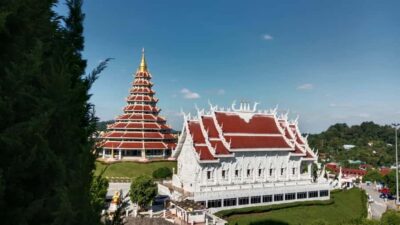
- Wat Huay Pla Kang adds broad views: Take the elevator inside the giant Guan Yin statue and visit the nine-tiered pagoda.
- The hot springs are a quick, quirky break: Warm water and egg boiling give you a chance to stretch after the drive.
- The Karen village needs a thoughtful approach: Ask before photographing people and treat shopping as optional support, not an obligation.
- The $61 price covers the basics: Transport, guide, admission, lunch, bottled water, and insurance are included.
A long Chiang Rai day from Chiang Mai
This is a full-day outing built around Chiang Rai’s most recognizable sights. You travel by air-conditioned van with an English-speaking guide and a maximum group size of 12, which is a useful middle ground: more intimate than a large coach, but still affordable at $61 per person.
I see the value in the package. Admissions, lunch, bottled water, insurance, and transport are already covered, so you are not constantly reaching for your wallet. A private vehicle would cost far more, while arranging the same route yourself would require transport between four separate stops and careful timing.
The catch is simple: Chiang Rai is not next door to Chiang Mai. The road time makes this a demanding day, especially if you dislike sitting in a vehicle or have back trouble. The tour is not suitable for pregnant people, wheelchair users, people with back problems, or anyone over 220 pounds, or 100 kilograms.
The van matters on a day like this. One especially positive account described the vehicle as luxurious and comfortable, with personal attention from the guide. Still, comfort cannot remove the basic fact that this is a packed regional sightseeing trip. Wear clothes you can sit in for long periods, bring water, and save your energy for the temples.
More Hill Tribe Villages in Chiang Rai
- Chiang Rai: White, Blue, Red Temples, Long Neck Tour
★ 4.8 · 652 reviews - Chiang Mai: Long Neck Village & Chiang Rai’s Iconic Temples
★ 4.3 · 338 reviews - Chiang Rai Full Day Tour with Boat Trip and Longneck Village
★ 4.0 · 112 reviews
Mae Kachan Hot Springs: a short stop with a local twist
The first break is Mae Kachan Hot Springs. It gives you a chance to leave the van, stretch your legs, and see naturally heated mineral water bubbling from the ground.
You can dip your feet into the warm pools, although the setting is best understood as a developed roadside stop. Do not picture a quiet forest bath. The springs are located near a parking area, which makes the stop convenient but less scenic than the description might suggest.
The odd little tradition here is boiling eggs in the hot water. That is the kind of simple travel detail that can make a short stop memorable. It is not a major sightseeing site, and you will not spend hours here, but it breaks up the ride and gives the morning a local flavor.
I would keep your expectations modest. If you want a peaceful soak surrounded by untouched nature, this is not that. If you enjoy unusual roadside stops and need to move after sitting in a van, it does the job.
Wat Rong Khun and its glittering white surfaces
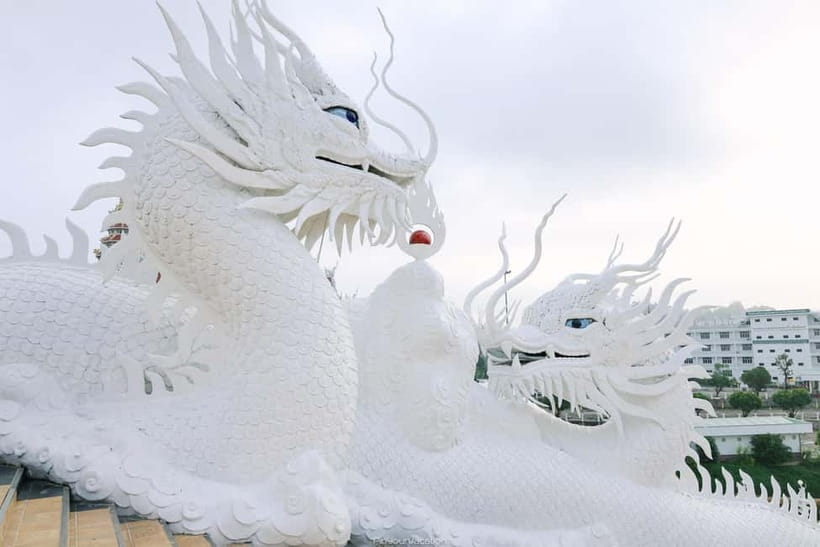
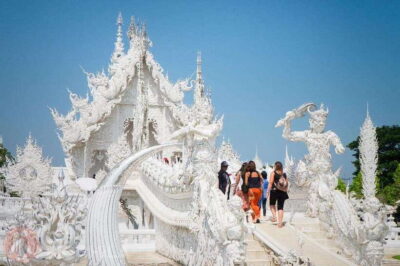
Wat Rong Khun, better known as the White Temple, is the reason many people choose this tour. Its bright white structure is covered with small mirrored pieces that catch the sunlight. From a distance, it looks almost unreal. Up close, the decoration is crowded, sharp, and full of detail.
This is not an old temple in the usual sense. It is a contemporary work that uses Buddhist symbols, traditional forms, and modern artistic ideas. The result can feel playful, unsettling, and beautiful at the same time.
Look carefully at the sculptures as you approach. The bridge and surrounding figures refer to human desire, suffering, death, and rebirth. Inside, the murals move away from purely traditional religious imagery and tell larger stories about moral choices and the modern world.
That blend is what makes the White Temple worth the long trip. You are not simply admiring an ornate building. You are being asked to think about what the images mean, even if you only have a short visit.
The strong sunlight is part of the visual appeal, but it can also make the white surfaces hard to photograph. Sunglasses, sunscreen, and a hat are useful. Comfortable shoes matter too, since the day includes walking and stairs.
Give yourself time to look beyond the most obvious photo. The mirrored surfaces sparkle, but the darker sculptures and unusual details often reward closer attention. Your guide should help explain the symbols, though guide quality can affect how much context you receive. Clear English is especially important at a site that relies on visual stories.
Lunch and the practical middle of the day
Lunch at a local restaurant is included in the price, so you do not need to plan a separate meal. That is helpful on a tightly arranged day, especially when the group needs to stay on schedule.
Food quality may be more functional than memorable. One account described the meal as being served in an ordinary cafeteria and rated it poorly, so I would treat lunch as fuel rather than a major culinary stop. The tour’s strongest value comes from transport and access to the sights, not from a special restaurant experience.
If you have dietary concerns, the supplied information does not specify menu choices or special meal arrangements. It is sensible to ask before booking if that matters to you.
More Temple Tours in Chiang Rai
- Chiang Mai: Chiang Rai Temples, Karen Tribe and Hot Springs
★ 4.7 · 5,401 reviews - Chiang Rai White Temple and Blue Temple Day Tour
★ 4.6 · 3,366 reviews - Chiang Rai Temples: Private Tour from Chiang Mai
★ 5.0 · 1,267 reviews - From Chiang Mai: Chiang Rai’s Temples Exploration Day Trip
★ 4.5 · 871 reviews
Wat Rong Suea Ten, the Blue Temple
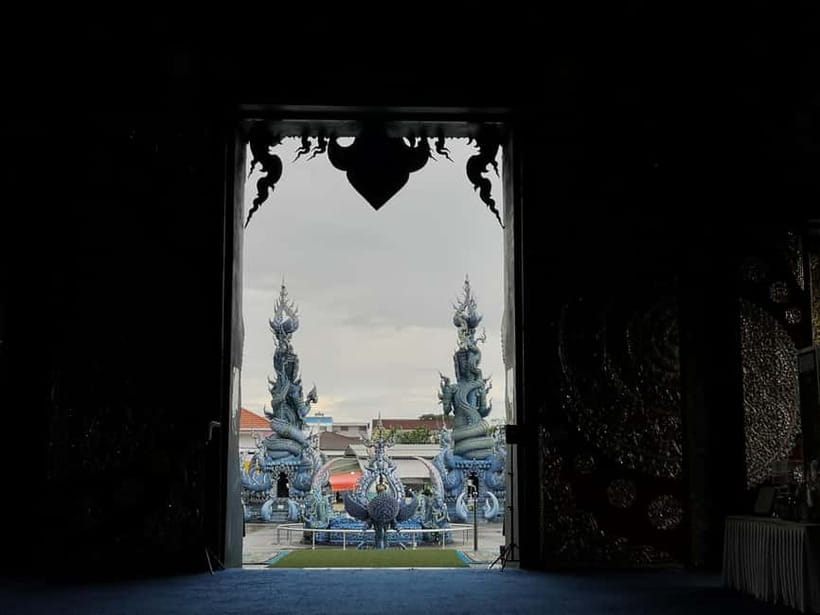
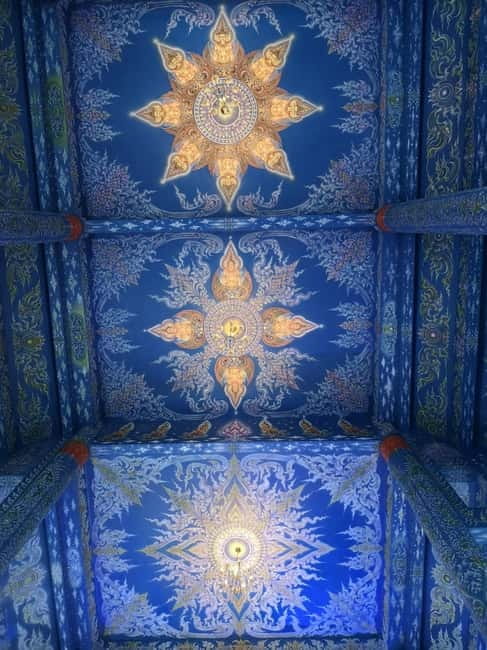
The Blue Temple offers a sharp visual change after the white, reflective surfaces of Wat Rong Khun. Its name means Blue Tiger Temple, and the deep blue color gives the interior a cooler, more dramatic mood.
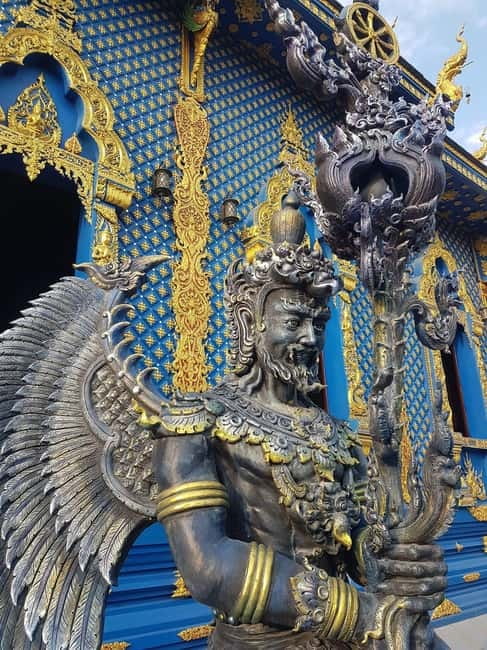
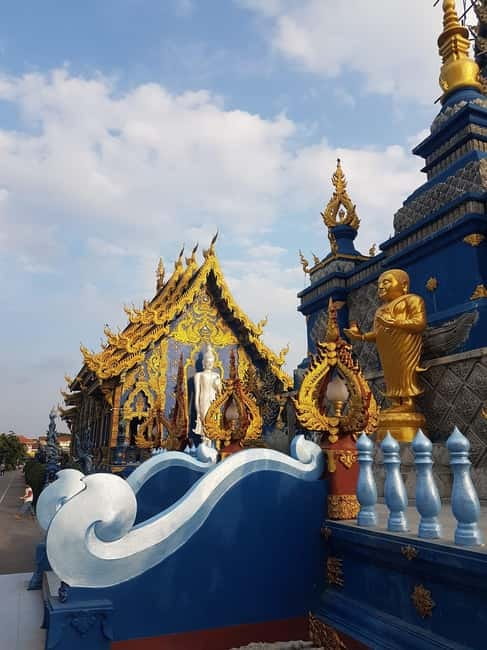
Gold accents break up the dark tones, while the main Buddha image draws your attention as soon as you enter. The color scheme is not subtle, but it is effective. This is a place where you can understand the appeal almost instantly through shape, color, and scale.
I like the contrast between the two temples. The White Temple feels busy, symbolic, and slightly surreal. The Blue Temple feels more unified and calm, even with its strong decoration. Seeing both in one day helps you appreciate the range of modern temple design in Chiang Rai.
This is also one of the better stops for photography, but remember that it remains a working sacred site. Keep your voice low, dress modestly, and follow any instructions about where to stand or photograph.
Wat Huay Pla Kang and the giant Guan Yin statue
Wat Huay Pla Kang changes the pace again. The main visual feature is a colossal statue of Guan Yin, said here to rise 25 stories. The scale is difficult to grasp from a distance, so the elevator ride to the top gives the visit extra impact.
From inside the statue, you can look out over Chiang Rai’s surrounding countryside. These are broad views rather than a close study of city streets, and they give you a welcome pause after the tighter temple interiors.
The complex also includes an elegant nine-tiered pagoda and quiet gardens. The pagoda adds a more traditional vertical shape to the visit, while the gardens offer room to slow down and take in the setting.
Be prepared for stairs around parts of the complex, even though the statue itself has an elevator. This stop may be difficult if you tire easily or have mobility limits. The tour already lists wheelchair users and people with back problems as unsuitable, so take that warning seriously.
The giant statue is easy to remember, but I would not rush past the pagoda and gardens. They give the stop balance. You get a big sight for the camera, then a quieter place to look around.
Meeting the Karen community with respect
The final major stop is a Long-Neck Karen village. The Karen are known for the brass neck rings worn by some women, and the visit introduces you to traditions, daily life, and local crafts.
This is the part of the day that requires the most care from you. The people you meet are not a display. Ask permission before taking photographs, avoid intrusive close-ups, and listen rather than treating the visit as a quick photo stop.
You may have the chance to see handmade goods and learn about craft production. Purchasing a souvenir can support the community, but you should never feel that buying something replaces respectful behavior. Take time to notice the work itself and ask your guide for context.
A coffee-making demonstration may also be part of the village experience, depending on the day and the precise route. The supplied schedule emphasizes traditions, daily life, and craftsmanship, so do not book this expecting a long cultural lecture or a museum-style presentation.
This stop can feel less rewarding if you want an extensive explanation of Karen history and social issues. The listed experience is more direct and informal. You meet community members, see crafts, and learn a little about their way of life. That can be worthwhile, but it is not a substitute for a deeper cultural program.
Guide quality, group size, and the day’s pace
A group capped at 12 is one of the better features of this trip. A smaller group makes it easier to hear the guide, get help at the temples, and keep the van from feeling crowded.
The guide is meant to provide English explanations throughout the day. Reports about guide performance have been mixed: some describe a friendly, professional guide with good personal attention, while another found limited English made communication difficult. That difference can shape your experience, especially at the White Temple, where context adds a lot.
Punctuality also matters. The route contains several stops, so a late start or slow return from one site can shorten time elsewhere. Be ready at every meeting point. A guide becoming frustrated with late group members is not hard to understand on this route, but it can affect the mood for everyone.
The schedule may change slightly because of traffic, weather, or group preferences. That flexibility is practical, though it means you should not expect every minute to follow a fixed timetable. The stop order may also vary.
What to wear and bring
Sacred temples require clothing that covers your shoulders and knees. Loose trousers or a longer skirt, a light shirt with sleeves, and a scarf or cover-up are safer choices than trying to improvise at the entrance.
Wear shoes that are comfortable for walking and stairs. Bring a hat, sunscreen, water, and a camera. Bottled water is included, but carrying your own supply is still sensible for a full day outside.
Smoking and pets are not allowed. Keep your belongings compact, since van space is shared with the rest of the group.
The hot springs and temple grounds can be exposed, while the van may feel cool because of the air conditioning. A light layer is useful if you are sensitive to temperature changes.
Is $61 good value for this route?
For $61, I consider the package good value if you want Chiang Rai’s major sights without arranging several transfers yourself. Transport, an English-speaking guide, admission fees, lunch, bottled water, and insurance are included. The small group improves the deal compared with a large bus excursion.
The value is less clear if you want a relaxed day with long visits at each site. This route covers a lot: hot springs, three temple complexes, lunch, and a village visit. The reward is variety, but the cost is time in the van and a fairly brisk pace.
I would also separate the value of the village visit from the temple visits. The White Temple, Blue Temple, and Wat Huay Pla Kang offer clear architectural and visual appeal. The Karen village depends more on your interest in community encounters and your willingness to approach the visit thoughtfully.
Free cancellation up to 24 hours before departure and the option to reserve now and pay later make the booking less risky. Those policies are useful if your Chiang Mai plans may shift.
Who should book this Chiang Rai day trip?
I would recommend this tour to you if you are staying in Chiang Mai and want a practical first look at Chiang Rai without renting a vehicle. It suits people who enjoy unusual architecture, religious sites, photography, and a day with many different stops.
It is also a good fit if you value a smaller group and an all-in price. The route gives you the White Temple, Blue Temple, giant Guan Yin statue, hot springs, lunch, and a cultural visit in one package.
I would hesitate if you dislike long road journeys, need generous time at each site, or want a quiet natural hot spring. I would also think twice if your main goal is serious cultural study of the Karen people, since the village stop is brief and the information provided may depend heavily on the guide.
Should you book it?
Book this tour if the White Temple is high on your Thailand list and you want Chiang Rai’s best-known sights bundled into one manageable day. The small group, included admissions, and comfortable air-conditioned transport make $61 a fair price.
Skip it if you want an unhurried schedule or have physical limitations that make stairs, long sitting, and walking difficult. Go with realistic expectations: the temples are the strongest part, the hot springs are a roadside break, lunch is basic, and the Karen village deserves respect rather than a quick photo hunt.
FAQ
How much does the Chiang Rai tour cost?
The tour costs $61 per person.
How long does the experience last?
It is a one-day tour. Starting times are checked when you select your date, and the exact schedule may change because of traffic, weather, or group preferences.
What attractions are included?
The route includes Mae Kachan Hot Springs, Wat Rong Khun or the White Temple, Wat Rong Suea Ten or the Blue Temple, Wat Huay Pla Kang, and a Long-Neck Karen village.
Is lunch included?
Yes. Lunch, bottled water, admission fees, transportation, an English-speaking guide, and insurance are included.
How large is the group?
The tour is limited to 12 participants and uses an air-conditioned van.
What should I wear to the temples?
Wear clothing that covers your shoulders and knees. Comfortable shoes are recommended because the tour includes walking and stairs.
Can I cancel or pay later?
You can cancel up to 24 hours in advance for a full refund. You can also reserve your place and pay later.
Just added around Chiang Rai
- Chiang Rai Temples Day Trip from Chiang Mai★ 4.5 · 23 reviews
- Chiang Mai-Chiang Rai:White-Black-Blue Temple-Golden Triangle-Keren-Boat Trip★ 4.0 · 96 reviews
- Visit Dantewada(Angel Land), Blue Temple, and Sticky Waterfall★ 5.0 · 120 reviews
- Chiang Mai-Chiang Rai: White Temple-Black Museum-Blue Temple★ 4.0 · 24 reviews
- Chiang Mai-Chiang Rai:White+Black+Blue Temple+Golden Triangle+Boat Trip★ 4.0 · 63 reviews
- Best 2-Day: Explore Chiang Rai Landmarks from Chiang Mai, Private Trip★ 5.0 · 8 reviews
- Chiang Rai Temples ( White,Blue )And Doi Suthep Private Day Tour★ 5.0 · 26 reviews
- From Chiang Mai: White Temple, Blue Temple & Black House★ 4.5 · 15 reviews
Temple Tours, compared.
Chiang Rai Temples, Karen Tribe and Hot Springs
Read our review →
City Highlights Temple and Market Walking Tour
Read our review →
Bangkok by Night: Temples, Markets and Food Tuk-Tuk Tour
Read our review →
Grand Palace, Wat Pho, and Wat Arun Guided Tour
Read our review →
Tiger Cave Temple, Emerald Pool and Hot Springs Tour
Read our review →
Chiang Rai White Temple and Blue Temple Day Tour
Read our review →Browse the lists this tour appears in