
Reviewed · COOKING CLASSES
Full Day Thai Cooking at Farm (Chiang Mai)
The best part of this eight-hour Thai cooking day is that you do not simply watch someone cook. You choose dishes, prepare them yourself, and eat the results at a peaceful farm outside Chiang Mai. The visit to a local market adds useful context before the knives and woks come out.
I like the small-group limit of 12, which gives the class a personal feel without the cost of a private lesson. I also like the practical finish: you take home a recipe book and photo album, so the curry paste, stir-fry, soup, and dessert do not remain holiday memories only. The one drawback is the long day, especially if you are not ready for several generous rounds of food.
Key points
- Eight cooking categories: Learn curry paste, curry, stir-fried dishes, soup, spring rolls, Thai salad, dessert, and herbal drinks.
- A useful market stop: Begin with a brief visit to a local market before driving to the farm.
- Flexible menus: Choose your own dishes and request vegetarian, vegan, spicy, or mild versions.
- Organic garden lesson: See Thai herbs and vegetables growing before you cook with them.
- Hotel pickup and return: Transport is provided from accommodation in Chiang Mai city.
- Good value for hands-on cooking: The $39.13 price includes ingredients, instruction, food, a recipe book, and a photo album.
From Chiang Mai hotel to local market
Your day begins with pickup at 8:00 am from accommodation in Chiang Mai city. That removes the need to find the school on your own, and it matters here because the cooking school is outside the city center at Smile Organic Farm Cooking School.
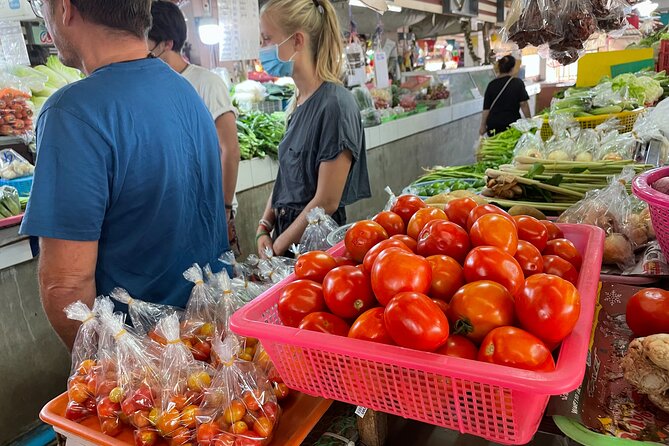
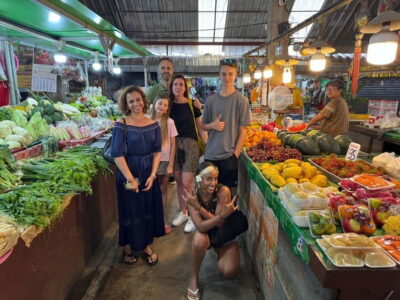
The first stop is a local market. It is brief, so do not expect a long shopping expedition or a full market tour. Its value is more practical: you start seeing the ingredients used in Thai cooking before you begin preparing them. Thai food can look simple on the plate, but its flavor comes from the balance of herbs, vegetables, curry ingredients, and seasoning.
I like this order. You see the raw materials first, then learn how they are used. That helps connect the cooking lesson to everyday food in northern Thailand instead of making the class feel like an isolated tourist activity.
The market visit may be less exciting if you have already spent days exploring Chiang Mai markets. Even then, it works as a short introduction before the main class. If markets are a major interest for you, treat this stop as a preview rather than the centerpiece of the morning.
More Cooking Classes in Chiang Mai
- Half-Day Thai Cooking Class at Organic Farm in Chiang Mai
★ 5.0 · 19,087 reviews - Chiang Mai: Cooking Class, Market & Thai Herbs Garden Tour
★ 4.9 · 4,824 reviews - Chiang Mai: Authentic Cooking Class with Market & Farm Visit
★ 4.9 · 4,546 reviews
Arriving at Smile Organic Farm
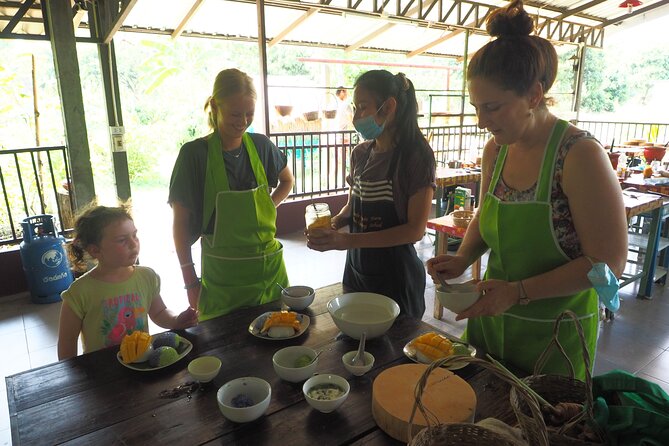
After the market, you continue to the farm cooking school. The setting is designed to slow the pace down. You are not cooking in a crowded city kitchen or sitting in a demonstration room while an instructor does everything. The farm provides an open, relaxed place to work, eat, and learn about ingredients.
Before cooking begins, the team explains the available menu. You then choose one dish in each category. This choice is important because it gives the class some room to match your tastes. You are not locked into one fixed menu selected for the whole group.
The cooking categories cover a wide range of Thai food:
- Curry paste
- Curry
- Stir-fried food
- Soup
- Spring rolls
- Thai salad
- Dessert
- Herbal drink
The format lets you build a broad meal rather than learning only one famous dish. You can work with the parts of Thai cooking that interest you most, from pounding or mixing curry paste to balancing a salad or preparing a sweet dish.
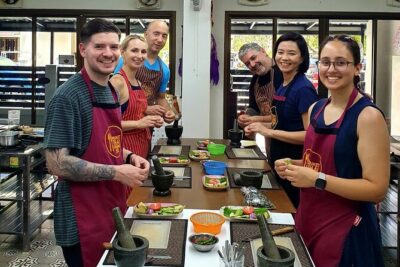
The class is capped at 12 participants. That is large enough to create a friendly group meal, but small enough that the instructor can keep an eye on your cooking. This is especially helpful if you are new to a wok, unfamiliar with Thai herbs, or unsure how much heat to use.
Thai herbs before the first knife work
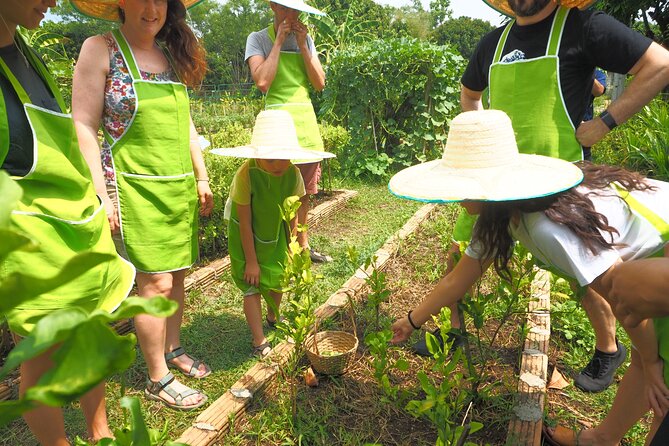
The farm garden gives the cooking lesson a useful foundation. You learn about Thai herbs and vegetables in the organic kitchen garden before starting the hands-on work.
That short garden session helps answer questions that often come up in Thai cooking. What does a particular herb look like before it is chopped? Which leaves add fragrance? Which ingredients provide heat, sweetness, or freshness? You may not remember every plant, but you will have a clearer sense of how Thai dishes are built.
I find this part more valuable than a simple list of ingredients. Thai recipes can be hard to reproduce if you only remember names from a printed menu. Seeing the plants and vegetables gives the food a physical connection. It also makes the recipe book more useful when you cook at home.
The garden visit is not presented as a separate farming activity. Keep your expectations realistic. It is an introduction to the ingredients, followed by cooking, not a full agricultural tour.
Choosing your dishes and cooking eight styles
The main lesson covers the basics of Thai cooking across eight categories. You choose your own menu, then follow the instructor through preparation and cooking.
Curry paste is an important starting point. It teaches you how several ingredients work together rather than relying only on a ready-made mixture. Curry then shows how that paste becomes a complete dish. These two categories work well together because you can understand the connection between the paste and the finished bowl.
The stir-fried category brings in the wok. One of the most useful skills from the day is learning how to work with high heat and quick movement. Natalie has been praised for helping participants feel comfortable with a wok and for teaching the real way to cook pad Thai. If you are nervous about handling a wok, the instructor guidance should make the process less intimidating.
Soup and Thai salad provide a contrast. Soup depends on a balanced broth and careful seasoning, while salad often relies on fresh ingredients and a sharp mix of flavors. You get a better feel for Thai food when you prepare both cooked and fresh dishes.
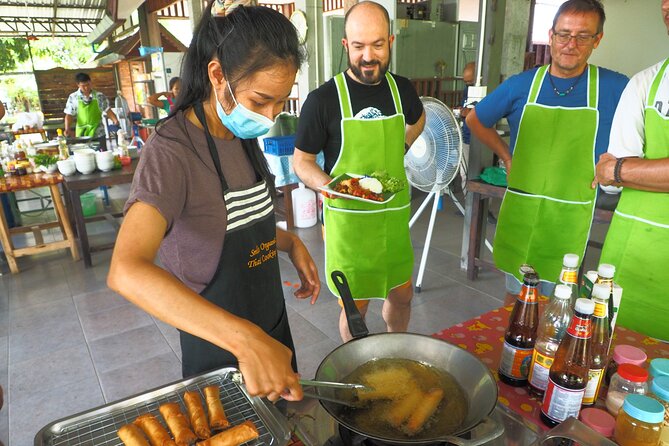
Spring rolls offer a lighter, hands-on change of pace. Dessert and herbal drinks round out the meal and stop the class from becoming a parade of savory dishes. The result is a wide introduction to Thai food rather than a narrow lesson in pad Thai alone.
The exact dishes available can change with the menu offered that day. You choose from the categories, but the information does not promise every named dish at every session. That flexibility is useful, though you should not book expecting one specific recipe unless the school confirms it.
Same base, a completely different sort of day out:
- Chiang Mai: Elephant Sanctuary, Waterfall & Bamboo Rafting
★ 4.9 · 9,160 reviews - Chiang Mai: Elephant Sanctuary & Waterfall Group Tour
★ 4.9 · 5,780 reviews - Chiang Mai: Elephant Sanctuary Feeding Program Half-Day Tour
★ 4.8 · 4,527 reviews - Thai and Akha Cooking Class in Chiang Mai
★ 5.0 · 4,358 reviews
Vegetarian, vegan, spicy, or mild
Every menu can be prepared as vegetarian or vegan. You can also decide whether your food should be spicy or mild.
This is one of the strongest practical features of the class. Thai food often includes ingredients that can make a dish unsuitable for some diets, but the cooking format allows the instructor to adapt the menu. You still learn the structure and flavor of the dish without being forced to eat something that does not suit you.
If you want a vegan or vegetarian version, tell the school when you book or at the start of the class. The supplied information confirms that the menus can be adapted, but it does not list every substitution. A clear request early in the day gives the instructor time to guide you properly.
The same goes for chili. You can choose mild food, which is wise if you are unused to Thai heat. If you love spicy dishes, you can ask for more heat. I like that the class treats spice as a personal choice instead of using one level for everyone.
Cooking, eating, and learning from the instructors
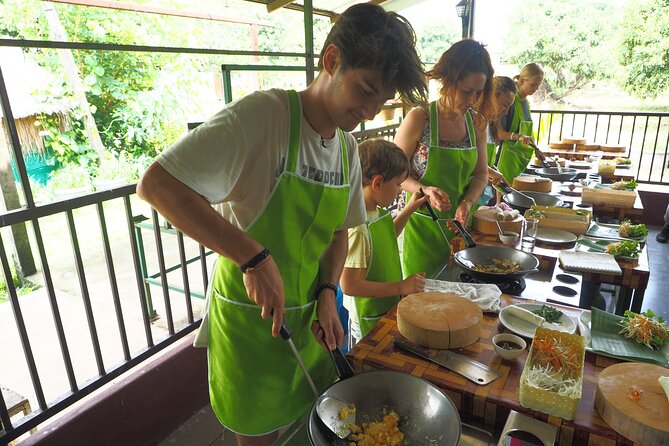
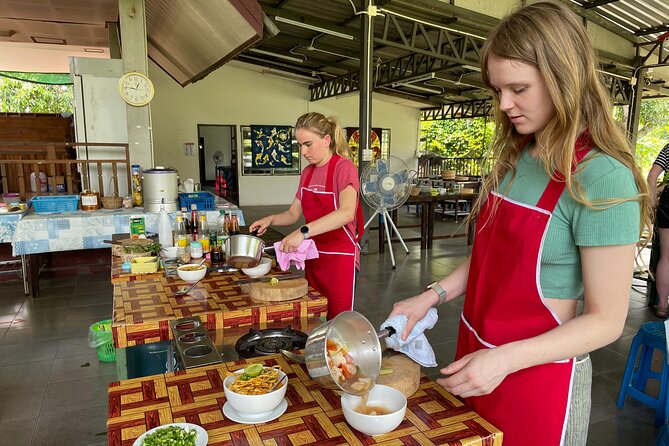
The class is meant to be hands-on. You prepare your selected dishes, then sit down with the group to eat what you cooked. That shared meal is not an afterthought. It lets you taste the effect of your own seasoning and see how the separate dishes work together.
The strongest teaching praise centers on clear instruction, patience, and a friendly sense of humor. Natalie is noted for helping participants gain confidence with curries and a wok. Lili is associated with a cheerful day of cooking, laughter, and simple recipes. Anya is described as friendly and funny, while Nina is connected with a warm and enjoyable class.
Instructor assignments can vary, so you should not assume one particular teacher will lead your date. The useful point is the teaching style the school aims for: practical guidance, patient help, and enough room to cook rather than only watch.
The meal can be substantial. You make food in several categories, so arrive ready to eat, but pace yourself. A participant even joked about needing a doggy bag after the meal. The school information does not promise takeaway containers, so do not count on carrying leftovers away. Enjoy smaller portions as you cook if the class allows it.
What the $39.13 price includes
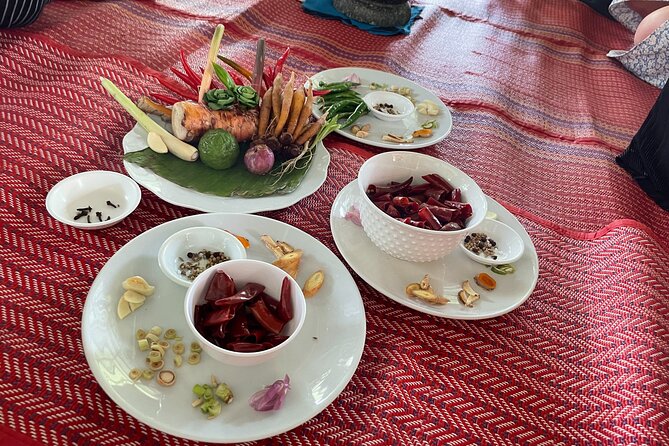
At $39.13 per person, this is a strong-value activity if you want more than a short demonstration. The price includes hotel pickup and return within Chiang Mai city, the market visit, ingredients, instruction, the food you prepare, a recipe book, and a photo album.
The ingredients alone are not the main reason to book. The real value is the combination of transport, a full day of instruction, several dishes, and material you can use later. A short cooking class may cost less, but it may also cover only one or two recipes and leave you with no way to recreate them.
The recipe book is especially useful. Thai cooking often involves several ingredients and steps, and memory fades quickly after a busy holiday. A written guide gives you a better chance of making the dishes for family or friends at home.
The photo album is a pleasant extra rather than a major reason to choose the class. It helps preserve the day, while the recipe book has more practical value.
There are two age rates. Adults are listed for ages 9 to 75, and children aged 4 to 8 have a separate visitor price. Children older than 9 can have their own cooking stations as participants. Children aged 0 to 3 are free. The wording around ages means you should check the booking details carefully for a child who is exactly 9.
Who will enjoy this day most
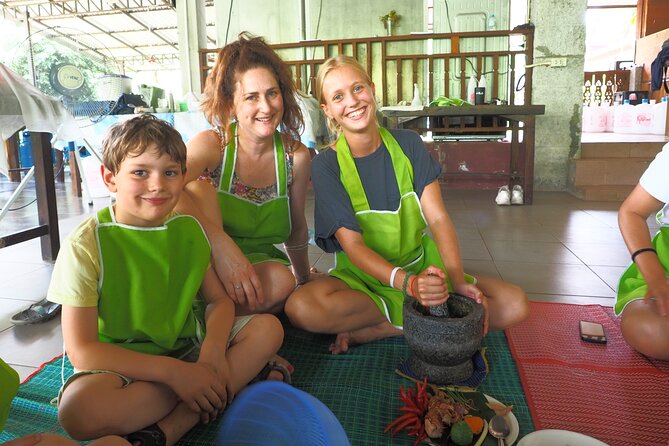
I would choose this class if you want to learn by doing. It suits first-time cooks, couples, families with older children, and anyone who has eaten Thai food in Chiang Mai and wants to understand how it is made.
It is also a good match for people with dietary needs. Vegetarian, vegan, mild, and spicy options make the class easier to fit around your preferences.
Families should consider the length of the day. Children aged 9 and above can have their own stations, which gives them a real role rather than making them watch from the side. Younger children may attend under the separate child arrangement, but an eight-hour activity can still be tiring for them.
This may not be the right pick if you want a quick lesson, a private chef, or a tightly focused class devoted to one famous dish. The small group keeps the price down, but you share the instructor and cooking space with other participants.
Timing, group size, and cancellation details
Plan on roughly eight hours from the 8:00 am start through the return to Chiang Mai city. Pickup and drop-off are provided from accommodation in Chiang Mai city, not described as a general service from every location outside the city.
The maximum group size is 12. That makes the activity social, but it is not a private class. You will cook alongside other people and eat together, which suits anyone who enjoys a shared meal.
Confirmation is provided at booking, and the ticket is mobile. Free cancellation is available if you cancel at least 24 hours before the local start time. Cancellations or changes made less than 24 hours ahead do not qualify for a refund.
Should you book the farm cooking class?
I would book this experience if your goal is a full, practical introduction to Thai food rather than a quick photo stop. The market, herb garden, menu choices, hands-on cooking, shared meal, recipe book, and return transport make the $39.13 price easy to justify.
Choose it especially if you want vegetarian or vegan flexibility, need control over spice, or would like your children to cook at their own stations. Skip it if your Chiang Mai schedule cannot spare most of a day, or if you prefer a private lesson with a single fixed recipe.
For most food-focused visitors, this is a sensible way to spend a day outside the city. Bring an appetite, keep your menu choices varied, and remember that the recipes are the lasting souvenir.
FAQ
What time does the Thai cooking class start?
The experience starts at 8:00 am.
How long does the cooking experience last?
The full activity lasts approximately eight hours.
Is hotel pickup provided?
Yes. Pickup and return are provided from accommodation in Chiang Mai city.
Does the tour visit a local market?
Yes. The day begins with a brief visit to a local market before continuing to Smile Organic Farm Cooking School.
How many people can join the class?
The maximum group size is 12 participants.
Can I choose what to cook?
Yes. After arriving, you can choose your own menu from the available cooking categories.
Can the dishes be made vegetarian or vegan?
Yes. Every menu can be prepared as vegetarian or vegan. You can also request mild or spicy food.
Are ingredients and recipes included?
Yes. Ingredients, a recipe book, and a photo album are included.
What is the cancellation policy?
You can cancel for a full refund at least 24 hours before the experience starts. Cancellations or changes made less than 24 hours before the local start time are not accepted for a refund.
Just added around Chiang Mai
- Chiang Mai Best City Tour with Doi Suthep & Iconic Temples★ 4.5 · 24 reviews
- Private Chiang Mai Temple Tour with Doi Suthep and Wat Umong★ 5.0 · 52 reviews
- Chiang Mai Michelin Food Walking Tour with Professional Tour Guide★ 4.5 · 13 reviews
- Secret Waterfall and Bamboo Rafting from Chiang Mai★ 5.0 · 30 reviews
- Bua Tong Waterfall Adventure& Huge Cave included Thai Buffet Tour★ 4.5 · 28 reviews
- Chiang Mai Sak Yant Tattoo By Ajarn Tu★ 5.0 · 25 reviews
- Chiang Mai Airport Transfer by Private Van – Arrival or Departure★ 4.5 · 11 reviews
- Chiang Mai Scavenger Hunt and Sights Self-Guided Tour★ 5.0 · 8 reviews
Cooking Classes, compared.
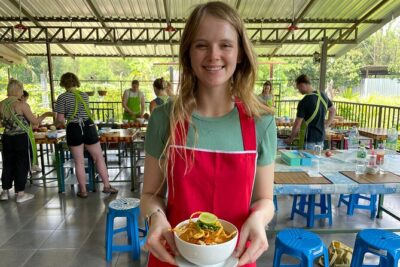
Half-Day Thai Cooking Class at Organic Farm in Chiang Mai
Read our review →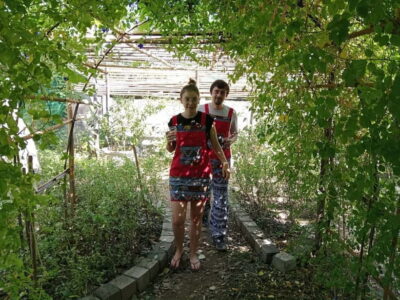
Cooking Class, Market & Thai Herbs Garden Tour
Read our review →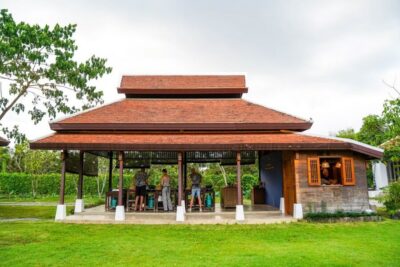
Authentic Cooking Class with Market & Farm Visit
Read our review →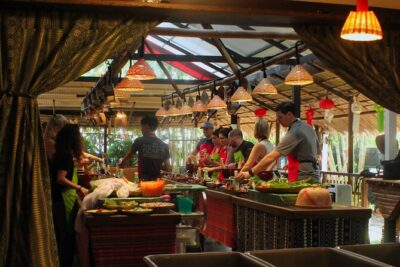
Phuket Thai Cooking Class with Market Tour Option
Read our review →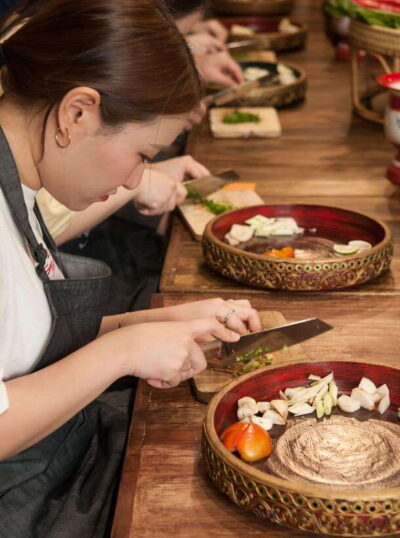
Tingly Thai Cooking School Half-Day Cooking Class
Read our review →Browse the lists this tour appears in