
Reviewed · TUK-TUKS
11 Day Tuk Tuk Adventure in Northern Thailand
The best part of this northern Thailand adventure is simple: you drive the tuk tuk yourself. Over 11 days, you leave Chiang Mai’s city streets behind and follow mountain roads to temples, hill communities, waterfalls, Mae Hong Son, and Pai. The support vehicle and guide team keep the trip organized, while you get the fun of moving through the countryside at a human pace.
I like the mix of active days and free time. You’ll get elephant encounters, bamboo rafting, forest walks, and long scenic drives, but also have open days in Mae Hong Son and Pai. I also like the small-group limit of 15, plus the support team that handles fuel, route help, and practical details.
The main consideration is the driving itself. You need a driving license and International Driving Permit, and you must be at least 18 to drive. Mountain roads, changing weather, and long days behind the wheel require confidence, patience, and a willingness to follow the guide team closely.
Key points to know before booking
- Drive your own tuk tuk: Training comes first, then you take the wheel on mountain roads and rural back routes.
- Five overnight bases: The route includes stays around Chiang Mai and Mae Hong Son provinces, with time in Mae Sariang, Mae Hong Son, and Pai.
- A small group with a support vehicle: The maximum group size is 15, with local guides traveling alongside you.
- More than a road trip: Expect a temple blessing, an elephant visit, bamboo rafting, trekking, waterfalls, hill communities, and village life.
- Ten nights and many meals included: The package covers twin-share accommodation, 10 breakfasts, 5 dinners, 3 lunches, water, and national park fees.
- Plan early: The trip is commonly booked about 178 days ahead, and confirmation depends on availability.
Why driving a tuk tuk changes the trip
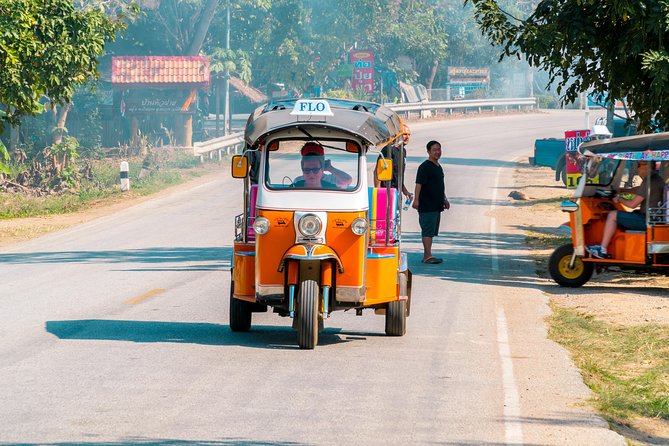
A standard minivan tour can move you through northern Thailand efficiently. This trip takes the slower route. A tuk tuk gives you an open view, more contact with the air, and a better sense of the road as it climbs and bends through the hills.
You are not simply being carried from one attraction to the next. After training, you control the vehicle for much of the route. You can stop when the group pauses for a view, a village visit, or a local activity. That creates a stronger connection to the countryside than watching it through a closed window.
There is a practical tradeoff. A tuk tuk is part of the fun, but it is not a luxury touring vehicle. You should expect exposure to sun, wind, and weather, along with the concentration needed for mountain driving. The support vehicle is an important safety net, but it does not remove your responsibility behind the wheel.
The guides are a major part of the setup. Names associated with the guide team include Yuth, Boyz, Ou, Worn, Yaya, OA, Nahm, Bigg, Win, and Nam. The exact team can vary, but the guiding style is hands-on and attentive. Guides explain local culture, help with the vehicles, manage route changes, and stay close throughout the journey.
A useful touch is the daily vehicle care described by past participants: tuk tuks can be cleaned, fueled, and prepared before the group sets out, with ice available for the onboard cooler. That matters on a trip where you are using the vehicle every day.
More Tuk-Tuks in Chiang Mai
- Chiang Mai Temples and Market Tuk-Tuk Evening Night Tour
★ 4.5 · 201 reviews - Private Chiang Mai Old City Half Day Tuk Tuk Tour
★ 4.5 · 157 reviews - Full-Day Guided Tuk Tuk Chiang Mai Adventure and Rafting
★ 5.0 · 140 reviews
Day 1: Training, Mae Wang, and a temple blessing
The tour begins at 10:00 a.m. at Chiang Mai Gate Hotel near Wua Lai Walking Street. From there, a minivan takes you about an hour to the tuk tuk training base in Mae Wang.
This first day is not just a quick explanation of the controls. You receive detailed training before the route begins, with time to get used to the tuk tuk and its handling. That practice is important because the next several days include hills, bends, changing road conditions, and extended periods of driving.
The day also includes a visit to a remote hillside temple, where you receive a blessing for the trip ahead. It is a fitting start. Instead of rushing straight out of Chiang Mai, you begin by learning the vehicle and meeting the cultural side of the region.
You should treat the training seriously, even if you have driven scooters, cars, or other vehicles before. The tuk tuk has its own feel, and confidence is more useful than bravado on narrow or winding roads.
Day 2: Elephants and bamboo rafting
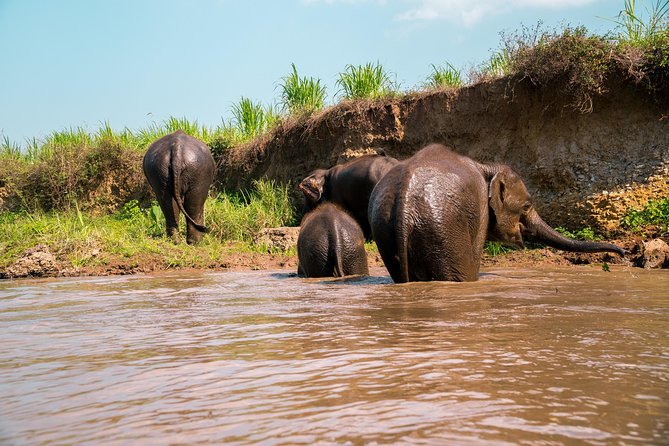
The second day gives you more driving practice before adding two very different activities. You visit an elephant home described as forward-thinking, where you learn about elephants in Thailand and meet the animals.
The experience can include time spent feeding and walking with elephants, depending on the activity arrangements. The point is education and close observation rather than a quick photo stop. If elephants are high on your Thailand wish list, this is one of the trip’s strongest additions.
Later, you relax on a bamboo raft down a local river. After the concentration of driving, the raft offers a slower view of the countryside. It also keeps the day from feeling like a string of road stops. You get movement, wildlife, and water without needing to plan another excursion.
The elephant visit and rafting are included in the broader itinerary, but other activities not listed are not included. Snacks, drinks, and extra food are also your responsibility, so keep some spending money available.
Days 3 and 4: Doi Inthanon, hill villages, and waterfalls
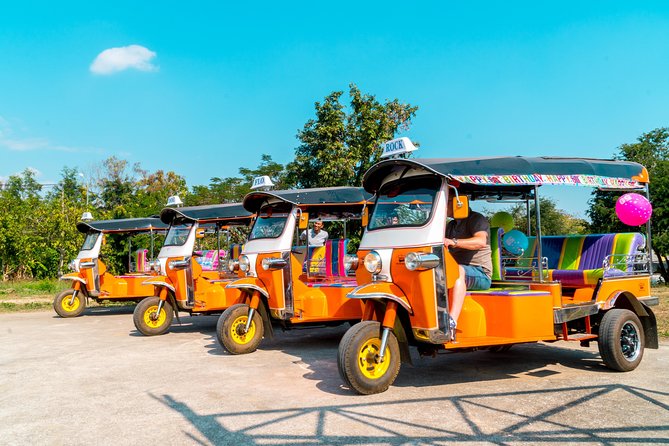
Day 3 is the first serious driving day. The route rises toward the foothills of Doi Inthanon, one of northern Thailand’s best-known mountain areas, and ends in a small hill-tribe village.
This is where the trip begins to feel properly remote. You leave the easy access of Chiang Mai behind and spend more time on rural roads, with mountain views and local communities replacing city traffic. The overnight village stay gives the route a human focus. You are not only looking at the hills. You are spending time in a community within them.
Day 4 is set aside for forests, waterfalls, and trekking around Doi Inthanon. You also have the chance to visit a hill-tribe village. The pace changes again, giving your hands and shoulders a break from driving while putting your feet to work.
The itinerary does not specify the length or difficulty of the trek. That means you should ask the operator for current details if walking ability is a concern. In general, plan for an active day rather than a quick viewpoint visit.
The weather can affect this section of the route. Guides have reversed or changed the order of the journey when conditions required it. That flexibility is useful, but it also means the exact sequence may shift.
Same base, a completely different sort of day out:
- Half-Day Thai Cooking Class at Organic Farm in Chiang Mai
★ 5.0 · 19,087 reviews - Chiang Mai: Elephant Sanctuary, Waterfall & Bamboo Rafting
★ 4.9 · 9,160 reviews - Chiang Mai: Elephant Sanctuary & Waterfall Group Tour
★ 4.9 · 5,780 reviews - Chiang Mai: Cooking Class, Market & Thai Herbs Garden Tour
★ 4.9 · 4,824 reviews
Day 5: A long run west to Mae Sariang
The road continues west to Mae Sariang, a small town beside the river. This is another driving-focused day, so you should expect several hours on the road with stops along the way.
Mae Sariang offers a welcome change of pace. The plan includes time to relax by the pool next to the river, which gives you a chance to rest after the early mountain days. This balance is one reason the 11-day version makes sense. The tour does not ask you to drive hard every day without pause.
Mae Sariang is also a good reminder that the route is not built around famous city sights alone. Smaller towns and rural bases are part of the appeal. You get a more local rhythm, with time to slow down rather than constantly chase the next major attraction.
Day 6: Mountain roads to Mae Hong Son
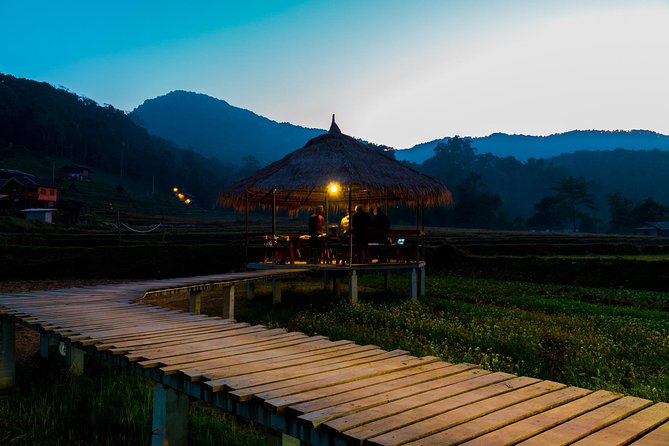
Day 6 takes you over the mountains to Mae Hong Son. The route promises broad mountain views, frequent stops, and contact with local life before reaching a rural resort surrounded by rice paddies and forest.
This is likely to be one of the most memorable days behind the wheel. The roads give you the feeling of crossing a large, quiet part of northern Thailand rather than simply transferring between hotels. The tuk tuk makes each stop feel more immediate because you are exposed to the sights, sounds, and changing air.
The rural accommodation near Mae Hong Son provides a calm setting after the drive. You should not expect the same range of restaurants, shops, or nightlife you would find in Chiang Mai. That is part of the point, but it may not suit you if you want a busy evening scene every night.
Day 7: Your choice in Mae Hong Son
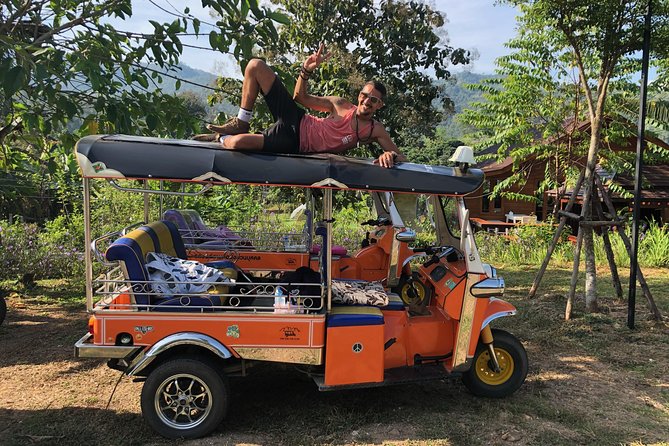
Day 7 is a free day. You can rest at the accommodation or explore Mae Hong Son.
That open day is valuable. Eleven days of driving, walking, and scheduled activities could become tiring if every morning began with a fixed departure. Here, you can recover, enjoy the setting, or see more of the town at your own pace.
The itinerary does not list specific Mae Hong Son activities for this day, so you should view it as flexible time rather than a guided sightseeing program. Ask the guides for suggestions once you arrive. They can help you decide how much activity makes sense after the mountain drive.
Day 8: The road to Pai
After a rest day, you return to the tuk tuks and drive toward Pai. The route again uses mountain roads, with scenic stops and a chance to enjoy the road itself.
Pai is known as a relaxed mountain town, and the tour gives you time to reach it without treating it as a rushed stopover. The day ends at a hotel with a pool, an easy place to unwind after the drive.
The road section may be the highlight for people who enjoy driving more than sightseeing checklists. You can take in the views, follow the bends, and travel as part of a group rather than being sealed inside a bus.
At the same time, Pai is a popular destination with more visitor activity than the smaller villages on the route. If you prefer quiet rural areas, you may find Pai less peaceful than the hill communities. Its appeal here is the combination of mountain setting, free time, and a comfortable base.
Day 9: A free day in Pai
Day 9 is another day away from the tuk tuks. You can relax, enjoy the views, use the hotel pool, or explore Pai.
This built-in pause helps make the itinerary manageable. You get time to wash clothes, catch your breath, and enjoy the town without rushing back to a vehicle. The tour does not include every possible Pai activity, so anything beyond the listed program is at your own expense.
I would use this day according to your energy level. If the road days have been the main attraction, rest is a sensible choice. If you want more time in Pai, ask the guide team what fits the schedule and current conditions.
Day 10: Rural back roads and the farewell dinner
The return journey heads through rural back roads to the base camp in Mae Wang. It is another chance to see a quieter side of the region before the final evening.
Rather than ending abruptly in Chiang Mai, the trip brings the group back to where the tuk tuk training began. A farewell dinner closes the route, giving you time to share the final evening with the guide team and the rest of the group.
The group limit of 15 works well here. It is large enough to create a social atmosphere, but small enough for the guides to keep track of the vehicles and individual needs. Several participants have described the group spirit as a major part of the fun, especially when everyone is learning the same vehicle and tackling the same roads.
Day 11: Return to Chiang Mai
The final morning is simple. A minivan transfers you back to Chiang Mai city, arriving around late morning or midday.
The tour begins and ends at the Chiang Mai Gate Hotel meeting point. That makes the start and finish easy to connect with a Chiang Mai stay, though you should avoid booking a tight onward connection because the return time is approximate.
What the $2,148.21 price includes
At $2,148.21 per person, this is not a budget tour. Still, the price covers far more than transportation. You receive:
- Ten nights of twin-share accommodation
- Tuk tuk training
- Local guides
- A support vehicle for the full tour
- National park fees
- Bottled water
- Ten breakfasts
- Five dinners
- Three lunches
The value comes from the unusual logistics. Planning an 11-day self-drive route through mountain areas would require arranging vehicles, accommodation, route support, meals, park fees, and local activities yourself. Here, those moving parts are handled by one team.
The price is easier to justify if you would otherwise book several separate tours and transfers. It is less appealing if you mainly want a cheap way to move around northern Thailand or prefer to choose your own hotels and restaurants each night.
Twin-share accommodation is included, so solo bookers should confirm the room arrangement and any applicable supplement before paying. Vegetarian meals are available if you request them when booking.
Who should book this tuk tuk adventure?
I would recommend it to you if you want an active, social trip with a clear structure but enough free time to breathe. It suits adults who enjoy driving, local food, mountain roads, village visits, and a little uncertainty when weather changes the route.
It is also a strong choice if you want northern Thailand beyond the standard Chiang Mai highlights. The combination of Doi Inthanon, hill communities, Mae Sariang, Mae Hong Son, and Pai gives you a broad look at the region.
You should think twice if you dislike group travel, long road days, shared accommodation, or outdoor conditions. You also need the correct driving documents. The minimum age to drive is 18, and you must bring a driving license plus an International Driving Permit. Children as young as 7 can travel on the tour, but only adults can drive.
Travel insurance is compulsory, and the tour does not cover activities, snacks, drinks, or food outside the listed inclusions. Service animals are allowed, and the meeting point is near public transportation.
The cancellation terms are worth noting before you commit. You can receive a full refund if you cancel at least six full days before the start time. Cancellations two to six full days ahead receive 50 percent, while cancellations less than two full days ahead are nonrefundable.
Should you book the 11-day route?
Book it if the idea of driving a small open vehicle through mountain Thailand sounds more exciting than sitting in a comfortable bus. The strongest reasons are the hands-on tuk tuk experience, the careful route support, the mix of active and restful days, and the access to places that are easy to skip on a shorter holiday.
I especially like the way the trip gives you time in Mae Hong Son and Pai instead of treating them as quick photo stops. I also like the built-in training and support vehicle, which make a complicated self-drive journey more approachable.
Choose another style of tour if you want luxury hotels, a tightly predictable schedule, or a purely sightseeing-focused trip. This adventure asks you to participate. For the right person, that is exactly its value.
FAQ
Where does the tour start?
The tour starts at Chiang Mai Gate Hotel, 11, 10 Suriyawong Alley, near Wua Lai Walking Street in Chiang Mai.
What time does the tour start?
The start time is 10:00 a.m.
Where does the tour end?
The activity ends back at the Chiang Mai Gate Hotel meeting point after the transfer into Chiang Mai city.
How long is the tuk tuk adventure?
The tour lasts approximately 11 days and includes 10 nights of accommodation.
How many people can join?
The maximum group size is 15 people.
Do I need a driving license?
Yes. You need a driving license and an International Driving Permit to drive a tuk tuk.
What is the minimum age to drive?
You must be at least 18 years old to drive a tuk tuk. Children from age 7 can travel on the tour.
Are meals and accommodation included?
Yes. The price includes 10 nights of twin-share accommodation, 10 breakfasts, 5 dinners, and 3 lunches. Snacks, drinks, and food not listed are not included.
Is travel insurance required?
Yes. Travel insurance is compulsory for this experience.
Just added around Chiang Mai
- Chiang Mai Best City Tour with Doi Suthep & Iconic Temples★ 4.5 · 24 reviews
- Chiang Mai Michelin Food Walking Tour with Professional Tour Guide★ 4.5 · 13 reviews
- Private Chiang Mai Temple Tour with Doi Suthep and Wat Umong★ 5.0 · 52 reviews
- Secret Waterfall and Bamboo Rafting from Chiang Mai★ 5.0 · 30 reviews
- Bua Tong Waterfall Adventure& Huge Cave included Thai Buffet Tour★ 4.5 · 28 reviews
- Chiang Mai Sak Yant Tattoo By Ajarn Tu★ 5.0 · 25 reviews
- Chiang Mai Airport Transfer by Private Van – Arrival or Departure★ 4.5 · 11 reviews
- Chiang Mai Scavenger Hunt and Sights Self-Guided Tour★ 5.0 · 8 reviews
Tuk-Tuks, compared.
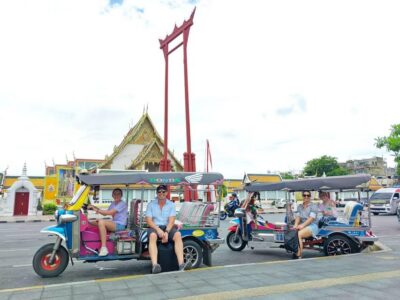
Bangkok by Night: Temples, Markets and Food Tuk-Tuk Tour
Read our review →
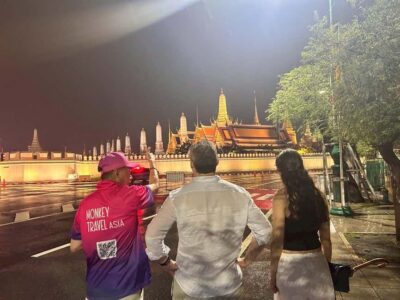
Tuk Tuk Adventure Chinatown Michelin Food & Temples
Read our review →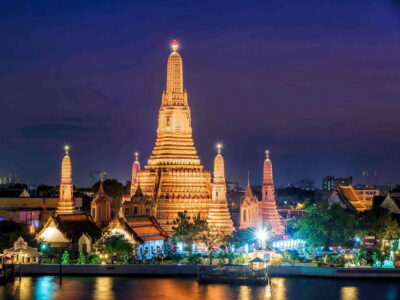
Evening Tour with Wat Arun, Wat Pho & Tuk Tuk Ride
Read our review →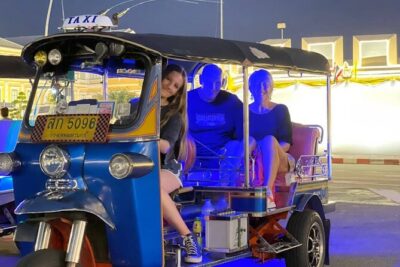
Bangkok Tuk-Tuk Tour by Night with Chinatown Street Food Meal
Read our review →
Browse the lists this tour appears in