
Reviewed · WATERFALL TOURS
Floating and Railway Markets and Erawan Waterfall (Group Tour)
The best part of this long day is the sharp change of scene: canal markets in the morning, a train squeezing through Mae Klong, and emerald pools beneath the forest at Erawan Waterfall by afternoon. You get several very different views of western Thailand without arranging separate transport.
I like the included motorboat ride at Damnoen Saduak and the three hours set aside for Erawan’s seven waterfall tiers. I also like the small maximum group of 15, lunch and drink included, and a final stop at the River Kwai Bridge. The catch is simple: this is an 11-hour day, with about four hours spent on the road, and there is no hotel drop-off.
Key points at a glance
- Six distinct stops: Floating market, railway market, coconut sugar farm, salt fields, Erawan Waterfall, and the River Kwai Bridge.
- A real early start: Meet at Centerpoint Siam Square at 6 a.m. for the shared air-conditioned vehicle.
- The waterfall is the main physical challenge: You have three hours to walk among seven tiers and swim in the pools.
- The train-market visit has a special angle: The itinerary includes a local train ride toward Mae Klong station.
- Good value for a full day: Transport, guide, motorboat, lunch, drink, waterfall admission, and accident insurance are included.
- Practical end point: The tour finishes at MBK Center near BTS National Stadium, not at your hotel.
Why this tour covers so much of western Thailand
This is not a gentle half-day outing. It is a carefully packed loop through several places that are too far apart for an easy independent day trip from Bangkok. You begin with canals and market boats, move through small-scale food production and salt farming, then spend the heart of the day in a national park before finishing beside one of Thailand’s best-known bridges.
That variety is the reason to book it. You are not giving the whole day to one attraction. Instead, you get a quick look at how people sell food, produce coconut nectar, work salt fields, and use historic rail routes, followed by time outdoors at Erawan.
The price is $161.31 per person. That is not a bargain for a basic sightseeing bus, but the value improves when you count what is covered: a shared air-conditioned vehicle, licensed English-speaking guide, boat ride, lunch and drink, Erawan admission, and travel accident insurance. You also avoid piecing together long-distance transport between Bangkok, the markets, Kanchanaburi, and Erawan National Park.
The tradeoff is time. With roughly four hours on the road, you should book this because you want the full range of sights, not because you dislike sitting in a vehicle. A group discount may help if you are booking for several people.
More Waterfall Tours in Kanchanaburi
- Erawan Waterfalls and Bridge Over River Kwai Tour from Bangkok
★ 4.5 · 372 reviews - Erawan Waterfall and Elephant Care: Private Tour to Kanchanabur
★ 5.0 · 339 reviews - Private Tour to Erawan Waterfall and Boat Tour in Kanchanaburi
★ 5.0 · 92 reviews
A 6 a.m. start from central Bangkok
The day begins at Centerpoint Siam Square, 292 Rama I Road, at 6 a.m. This is an early meeting time, so plan your morning around reaching the location promptly. The tour ends at MBK Center, near BTS National Stadium, which is useful if your next stop is shopping or if you want to use the Skytrain to return to your hotel.
The shared vehicle is air-conditioned, an important detail on a hot Thai day. The group is limited to 15 people, which should make it easier to hear the guide and keep the stops moving than on a large coach tour.
There is no hotel drop-off. That matters most if you are carrying luggage or staying far from central Bangkok. For most people, though, MBK is a practical finish because it is beside public transport and easy to recognize.
Damnoen Saduak by motorboat
The first major stop is Damnoen Saduak Floating Market, with about 90 minutes there. The included motorboat ride is a useful part of the visit, since the canals are the point of the place. From the water, you can see the market from the same basic route that makes this attraction so well known.
The market is popular with both Thai and foreign visitors, so do not expect a quiet morning on an empty canal. Its appeal is the movement: boats, vendors, narrow waterways, and the quick exchange of food and goods. You will have time to take in the scene, photograph the canal activity, and browse what is being sold.
The practical limitation is that 90 minutes passes quickly. This stop gives you an introduction rather than a slow study of every market lane. If you want a broad first look at Thailand’s floating-market tradition, it works well. If your main goal is lengthy shopping, this schedule may feel short.
Because the boat ride is included, you do not have to negotiate a separate boat arrangement at the market. That makes the opening stop simpler and protects your time for the later waterfall walk.
Coconut nectar at a local farm
Near Damnoen Saduak, the group visits a coconut sugar farm for about 20 minutes. This is a short stop, but it adds useful context to what you see in the markets. You can watch a demonstration of coconut flower cutting, nectar collection, and the steps used to produce coconut sugar.
I like this kind of stop because it connects the market stalls with the work behind the products. It is not just a quick photo pause. You see a small piece of local food production and the practical knowledge used by Thai farmers.
Twenty minutes is enough for a demonstration, not enough for a full farm visit. Think of it as a compact lesson between larger attractions. The guide helps explain what is happening, while the short timing keeps the overall day on schedule.
Same base, a completely different sort of day out:
- From Bangkok: Erawan Park & Kanchanaburi Small-Group Tour
★ 4.5 · 1,582 reviews - From Bangkok: Historical Day Tour to River Kwai
★ 4.6 · 868 reviews - Bridge on the River Kwai and Thailand-Burma Railway Tour
★ 4.5 · 658 reviews - Bridge on the River Kwai and Thailand-Burma Railway Guided Tour
★ 4.5 · 353 reviews
Mae Klong Railway Market and the passing train
The Mae Klong Railway Market, also called Hoop Rom Market, brings a very different kind of spectacle. The market is built beside the railway line, and the tour includes a ride on a local train toward Mae Klong station. The unusual part is seeing the market and rail line work together in such a tight space.
When the train approaches, stalls and coverings are moved back to clear the track. Once the train has passed, the market returns to its normal position. The effect is quick and wonderfully odd, but it is also a working market rather than a staged show.
The itinerary allows about 90 minutes here. That gives you time to watch the market, take the train ride, and understand how the railway shapes the space. Keep your attention on the timing, since the most interesting part depends on the train movement rather than a fixed display.
This stop is especially good for anyone who likes places where daily commerce and transport overlap. It is less satisfying if you expect a long historical tour of the railway. The focus here is the unusual market arrangement and the local train experience.
Salt fields at Samut Sakhon
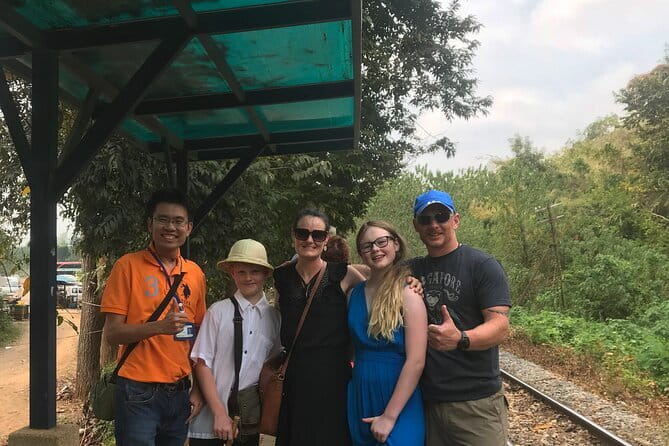
A 20-minute stop at Samut Sakhon shows a broad white salt field. It can be easy to mistake the area for a rice field at first glance, but the salt is produced from seawater using local farming methods.
The visit is brief, yet it widens the day’s theme. You have already seen coconut nectar production, and now you see another food product made through weather, land, and patient manual work. The salt fields offer a simple look at Thai local wisdom without requiring a long walk or another major detour.
Do not expect a full salt-farm workshop in 20 minutes. This is a quick educational stop and a chance to see a type of agriculture that many visitors would otherwise miss. It also breaks up the road journey before the main outdoor section.
Three hours at Erawan National Park

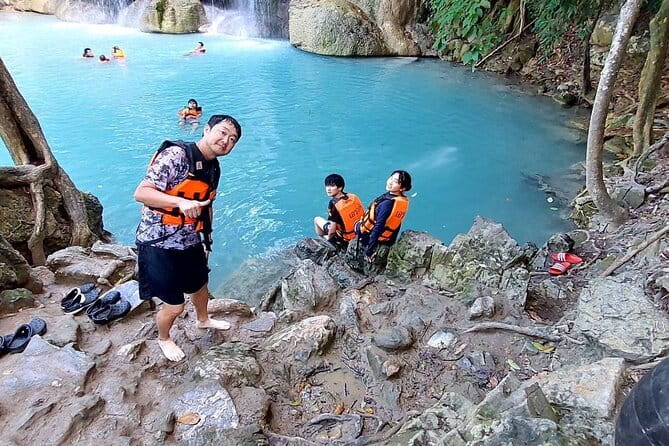
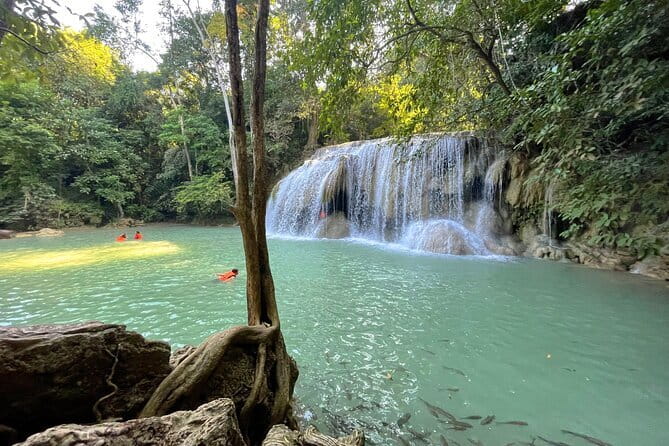
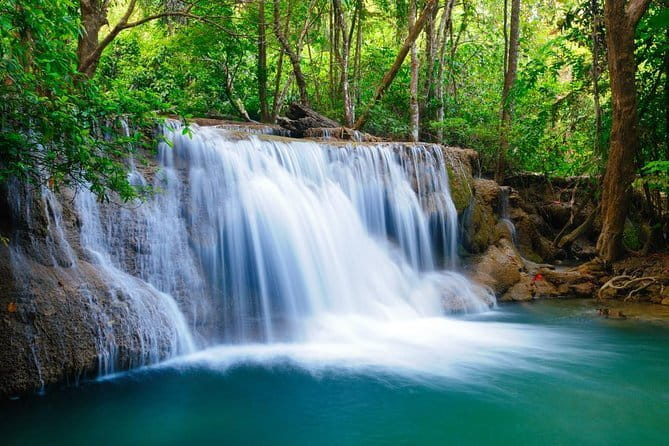
Erawan Waterfall is the day’s main event. The tour allows three hours in Erawan National Park, where seven waterfall tiers create emerald-green pools in a forest setting. You can walk from one level to another, stop for photographs, and swim in the pools where conditions allow.
The seven tiers make this more than a roadside waterfall. You can choose how far to go based on your energy and the time available. The lower sections may be enough for visitors who mainly want to cool off, while stronger walkers can test themselves farther up the route.
The schedule is generous compared with the short farm and salt-field stops, but three hours can still feel tight if you want to reach all seven tiers, swim, change, and return without watching the clock. The park section is best approached with a clear plan. Decide whether your priority is the highest possible tier, a relaxed swim, or a balanced walk through several levels.
This is the most physically demanding part of the day. The tour description specifically presents the route as an endurance test, so wear practical shoes and be ready for walking. You should also consider whether you want to carry swimming items during the earlier stops. The information provided does not promise lockers, changing facilities, or equipment rental, so do not assume those services are available.
The waterfall gives the day its outdoor reward. After several hours of transport and organized sightseeing, you get time to move at your own pace, listen to the water, and cool down in the pools. That freedom makes the long journey feel more worthwhile.
The River Kwai Bridge at day’s end
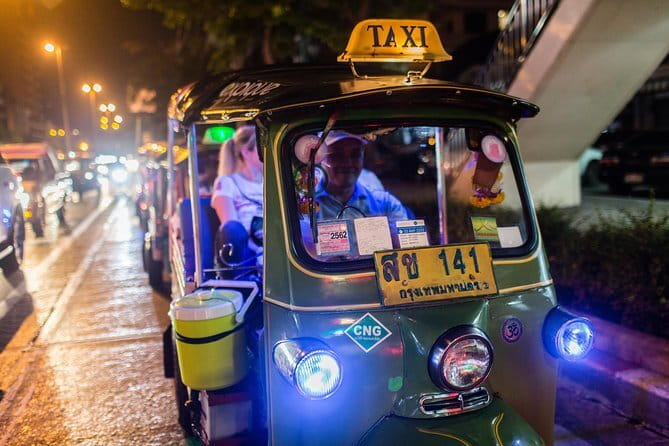
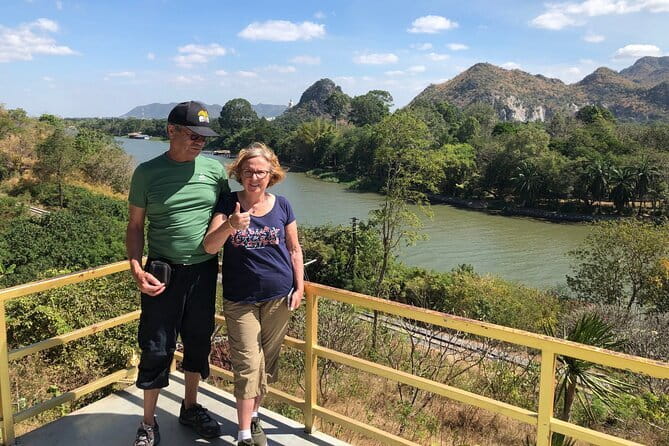
The last major stop is the Bridge over the River Kwai, with about 20 minutes for a walk and photographs. The bridge is famous through books and films, and it remains one of the most recognizable places linked to the Death Railway.
The tour presents this as a short, reflective stop rather than a long museum visit. You can walk along the bridge, look over the river, and take in the setting as the day winds down. The itinerary also mentions sunset views, which may give the final stop a softer atmosphere, depending on the day’s exact timing.
Twenty minutes is enough to see the bridge itself but not enough for an extensive historical visit. If the Death Railway is your main reason for visiting Kanchanaburi, you may want a separate trip with more time for museums and memorial sites. Here, the bridge is the closing image of a much broader day.
That short stop still has value. After the busy markets and demanding waterfall walk, the bridge offers a quieter ending and a chance to connect the day’s route with an important part of Thailand’s wartime history.
Lunch, group size, and what the price covers
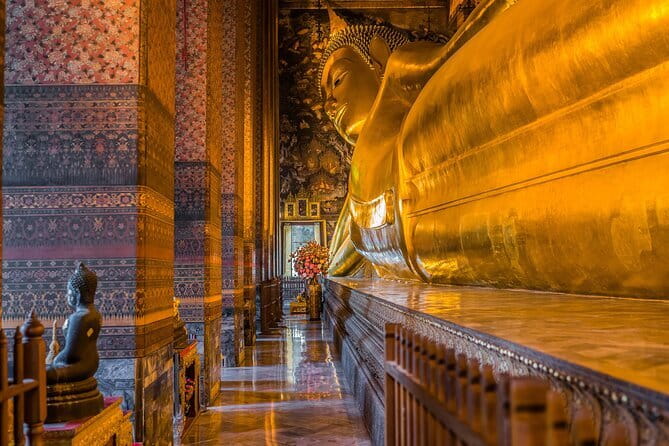
A local lunch and drink are included. The exact meal is not specified, so you should treat this as a convenient provided meal rather than choosing the restaurant or menu yourself. After a morning that begins before sunrise and a three-hour park visit, having lunch arranged saves time and removes another decision from a packed schedule.
The group maximum is 15 people. That is small enough to feel more personal than a large bus group, while still keeping the price below a private tour. A professional licensed English-speaking guide is included, which matters at the railway market, coconut farm, salt field, and bridge, where a few clear explanations add meaning to what you are seeing.
Travel accident insurance is included as well. It is not a reason by itself to choose the tour, but it is a useful part of the package, especially on a long day involving road travel, a boat ride, and a waterfall walk.
At $161.31, I see this as a convenience purchase. You pay for one long, organized day that links destinations difficult to combine on your own. The value is strongest if you want all six stops and would otherwise need to arrange several transfers. It is weaker if you only care about Erawan Waterfall or only want the floating market.
Who will enjoy this day most
I would recommend this tour to you if you want variety and do not mind an early start. It suits active visitors who like a waterfall walk, a short swim, local production stops, and unusual transport scenes more than a slow café day in Bangkok.
It also works well for first-time visitors who want to cover several western Thailand highlights without booking multiple excursions. The included transport and guide make the route much easier than planning every connection independently.
You should think twice if you need a relaxed pace, dislike long drives, or want deep historical visits at the River Kwai Bridge. The schedule is full. You will see a lot, but you will not linger everywhere.
The tour can also be a good fit for families and mixed-age groups if everyone understands that Erawan involves walking and that the day lasts about 11 hours. The group size and shared vehicle keep it social, but it is not a private schedule tailored to one family.
Should you book the Floating and Railway Markets and Erawan Waterfall tour?
Book it if your ideal day combines markets, local food production, a demanding waterfall walk, and the River Kwai Bridge. The motorboat ride, local train experience, lunch, and included transport make the $161.31 price easier to justify, especially when you value convenience.
Skip it if you want one attraction done slowly or if four hours in a vehicle sounds exhausting. The strongest reason to choose this tour is not any single stop. It is the range of experiences packed into one well-organized day, ending at MBK Center with a straightforward BTS connection.
FAQ
What time and where does the tour start?
It starts at 6 a.m. from Centerpoint Siam Square, 292 Rama I Road, in central Bangkok.
Where does the tour end?
The tour ends at MBK Center near BTS National Stadium. There is no hotel drop-off on the group tour.
How long does the full experience last?
The total duration is approximately 11 hours, including about four hours of road travel.
Is transportation included?
Yes. A shared air-conditioned vehicle is included, along with the shared motorboat ride at Damnoen Saduak Floating Market.
Is lunch included?
Yes. A local lunch and drink are included in the tour price.
How much time is provided at Erawan Waterfall?
You have about three hours at Erawan National Park, including time to walk among the seven waterfall tiers and swim in the emerald pools.
How large is the group?
The group can include a maximum of 15 people.
Just added around Kanchanaburi
- Floating & Railway Markets and Erawan Waterfall [Optional Luxury]★ 5.0 · 43 reviews
- Train trip death railway Bridge on river Kwai from Bangkok to Kanchanaburi trip★ 4.0 · 17 reviews
- River Kwai Day Tour from Bangkok: History, Scenic Views & Culture★ 4.5 · 36 reviews
- Private Tour to Kanchanaburi Death Railway and Elephant Haven★ 5.0 · 15 reviews
- Private Historic River Kwai Death Railway, War Cemetery and Hellfire Pass Tour★ 4.5 · 12 reviews
- Private Tour: Kanchanaburi Erawan Waterfall Tour from Bangkok★ 4.5 · 13 reviews
- Private Erawan Waterfall, River Kwai, Death Railway Tour from Bangkok★ 4.5 · 22 reviews
- Private Tour: Death Railway, Hellfire Pass and Erawan Waterfall★ 5.0 · 55 reviews
Waterfall Tours, compared.

Elephant Sanctuary, Waterfall & Bamboo Rafting
Read our review →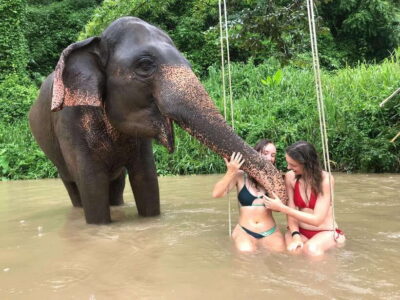
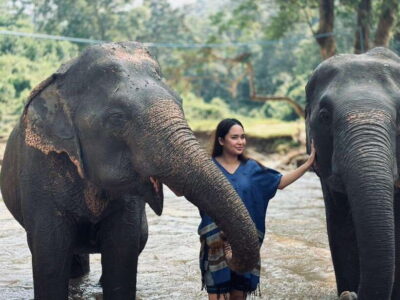
Elephant Sanctuary, Long Neck & Sticky Waterfall
Read our review →
Doi Inthanon Waterfall and Royal Project Chiang Mai
Read our review →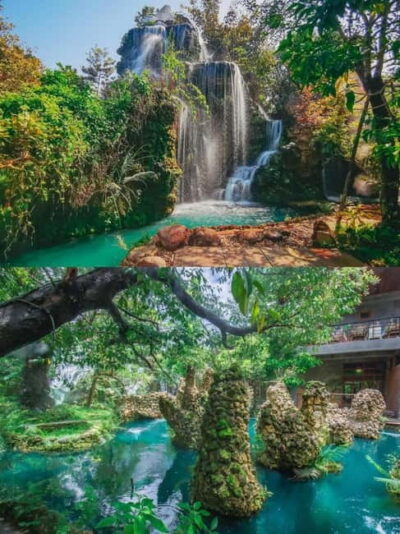
Sticky Waterfall & Angel Waterfall Park Day Tour
Read our review →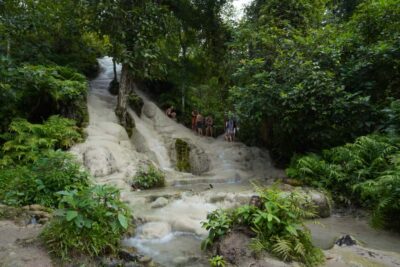
Bua Thong Sticky Waterfall & Huge Cave & Buffet
Read our review →
Chiang Mai Elephant Sanctuary, Bamboo Rafting and Waterfall Tour
Read our review →
Floating and Railway Market (Optional Waterfall): Private Tour
Read our review →Browse the lists this tour appears in