
Reviewed · COOKING CLASSES
Backstreet Bangkok Exploring the Cradle of Thai Cooking
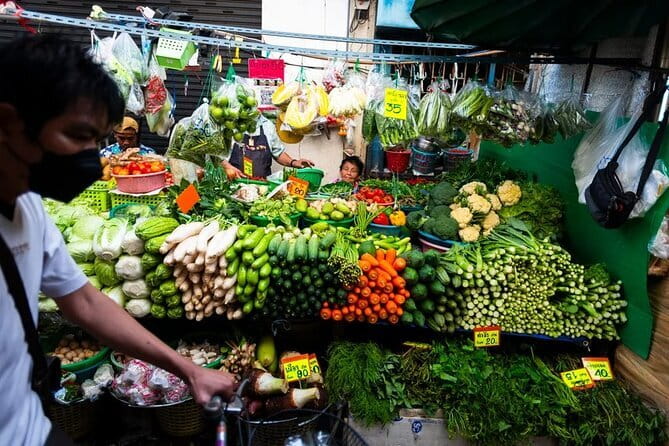
Bangkok’s food story begins long before the famous night markets. This five-hour walk traces it through old neighborhoods, starting near Wat Ratchaburana and moving toward Rattanakosin, Little India, and Chinatown. You get temples, markets, food stalls, restaurants, factories, and a mall, with dinner, snacks, drinks, and water included.
I like the small maximum group of seven, which gives the guide room to adjust the pace and explain unfamiliar foods. I also like that the tour puts food beside culture, with stops that explain how Bangkok’s old districts shaped what people eat today. The main drawback is the price, $125 per person, and the schedule needs checking because the information gives a 9:00 am start but also describes the walk as an afternoon-to-evening experience.
Key points at a glance
- Old Bangkok as the main ingredient: The route connects Wat Ratchaburana, Rattanakosin, Phahurat, Sampeng, and nearby Chinatown.
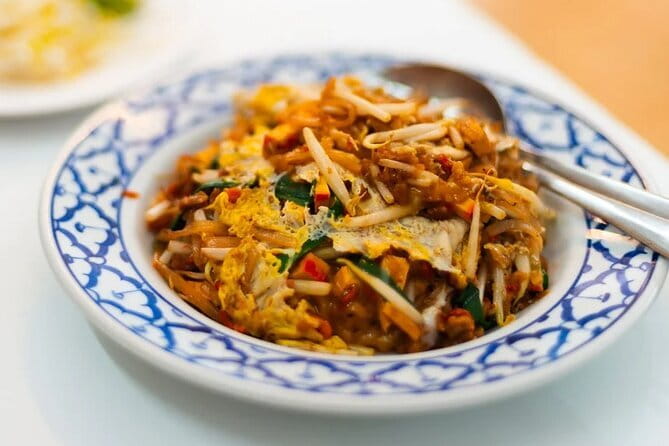
- More than street food: You visit markets, food stalls, restaurants, factories, a mall, and other food-related places.
- A very small group: The maximum is seven people, and some departures may become private tours.
- Guides who shape the experience: Anna, Lek, and Annie have led this walk, with Lek praised for his long connection to Bangkok and Thai heritage.
- Food is included: Dinner, snacks, bottled water, and alcoholic drinks are part of the price.
- A walking tour with practical limits: Private transport is not included, and the outing returns to the Sam Yot MRT meeting point.
Bangkok’s cooking story starts in Wang Burapha
This is not a tour built around one famous dish or a single market. It uses food as a way to read Bangkok. The route begins at Sam Yot MRT station, near Wang Burapha, one of the city’s old central districts. From there, your guide links places of worship, shopping lanes, food businesses, and older neighborhoods.
That approach matters. Bangkok cooking did not develop in isolation. The route brings you close to areas shaped by Thai, Chinese, and Indian communities, then shows how food sits inside that wider story. You are not simply eating one plate after another. You are learning why markets formed where they did and how different communities helped shape the city’s cooking.
The walk includes dinner and snacks, but pacing still matters. One person described eating a great deal and being encouraged to keep going, while another advised pacing yourself so you can enjoy the full range of food. I would treat this as a substantial food outing, not a light nibble between sightseeing stops.
More Cooking Classes in Bangkok
- Bangkok: Hands-on Thai Cooking Class and Market Tour
★ 4.9 · 1,614 reviews - Bangkok: Tingly Thai Cooking School Half-Day Cooking Class
★ 4.9 · 1,191 reviews - Bangkok: Maliwan Thai Cooking Class with Market Tour
★ 4.9 · 1,133 reviews
Wat Ratchaburana sets the historical tone
The first named stop is Wat Ratchaburana Ratchaworawihan, an ancient temple built in the 15th century. It is known for its architecture and its place in Bangkok’s past, and it sits near Wang Burapha.
This opening stop gives the tour a useful frame. Instead of meeting your guide at a restaurant and rushing straight to food, you begin in a historic setting. The temple helps place the surrounding streets in time. The old neighborhoods are not just convenient backdrops for eating; they are part of the reason the food culture developed here.
The listed time is about one hour, with admission included at no extra cost. Expect the focus to be on context and orientation rather than a long temple visit. If you want a full day of temple interiors and formal sightseeing, this is not that kind of tour. The temple is one piece of a larger route.
Rattanakosin connects food with Bangkok’s royal center
The next area is Rattanakosin Island, Bangkok’s historic core. This district includes major sights such as the Grand Palace, Wat Phra Kaew, and Wat Pho, although those attractions are not listed as formal admissions on this tour.
That distinction is important. You may be close to some of Bangkok’s best-known monuments, but the walk is focused on food and local history rather than entering every major sight. The tour gives you a sense of the area around those landmarks without turning into a standard temple circuit.
The listed time here is also about one hour. Your guide uses the setting to explain the old city and its food traditions, then moves you onward to markets and eating stops. I like this balance because it prevents the tour from becoming a string of unrelated tastings. You see the city’s formal face, then move toward the working streets where people shop, cook, and eat.
Phahurat Market brings Little India into the route
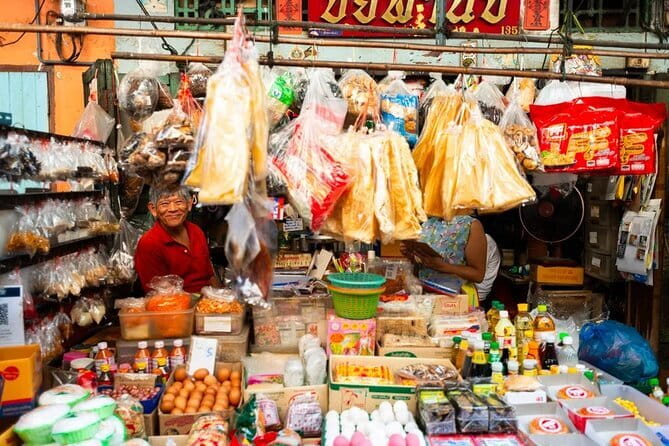
Phahurat Market is often called Little India. It is known for textiles, jewelry, and food, and it adds another cultural layer to the walk.
For you, the value is the change in atmosphere and subject matter. Thai food is often presented as a self-contained national cuisine, but Bangkok has long been shaped by communities from beyond Thailand. Phahurat lets you see that influence in a real market setting, not just in a guidebook explanation.
The stop is listed at about one hour. You might find the market especially useful if you like seeing food beside the other goods that support daily life, including fabric and household shopping. It is also a good place to pay attention to how a market feels as a neighborhood institution rather than treating it as a photo stop.
There is one practical point to keep in mind: markets can be crowded and narrow. The tour is capped at seven, which should make moving together easier, but you still need comfortable footwear and a willingness to walk at street level.
Same base, a completely different sort of day out:
- Bangkok: Damnoen Saduak Market and Maeklong Railway Market
★ 4.5 · 26,723 reviews - The Old Siam: Damnoen Saduak and Maeklong Railway Market
★ 4.5 · 10,992 reviews - Bangkok: Train Market & Floating Market with Boat Ride
★ 4.7 · 9,547 reviews - Bangkok Canal Tour: 2-Hour Longtail Boat Ride
★ 4.5 · 5,909 reviews
Sampeng Market takes you into Chinatown’s narrow lanes
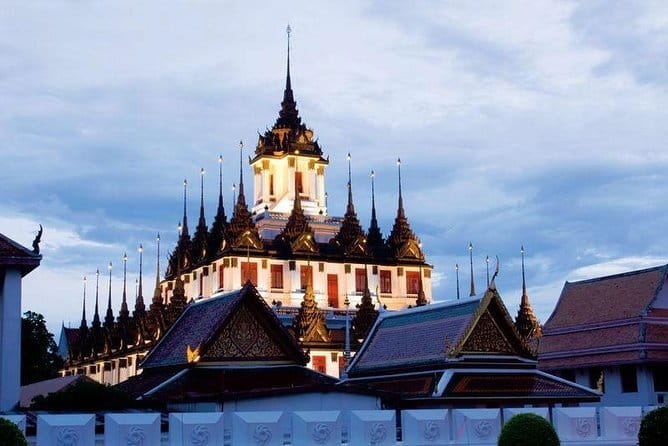
Sampeng Market is part of the Chinatown market area. Its lanes carry a broad mix of goods, from textiles to electronics, and the stop lasts about 30 minutes.
This is a shorter visit, but it adds useful contrast. Phahurat introduces the Indian side of Bangkok’s trading culture, while Sampeng shows another commercial district with its own history and rhythm. The point is not only what you eat. It is how food businesses fit into dense market neighborhoods where goods, families, shops, and restaurants share tight spaces.
The market can be a lively place, but the tour is not promising a leisurely shopping session. Thirty minutes is enough for an introduction and a few explanations, not for browsing every lane. If you want to shop seriously, you may need to return on your own another time.
Sampeng also helps explain why a walking format works here. A vehicle would move you between districts, but it would hide the small changes in streets, shopfronts, and market activity that make these areas distinct.
Food stops range from stalls to factories
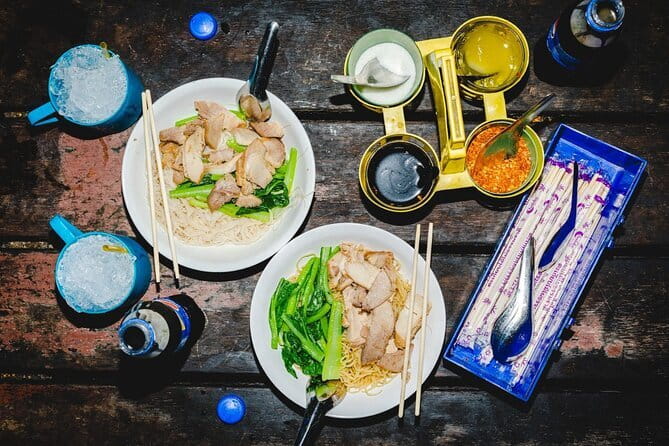
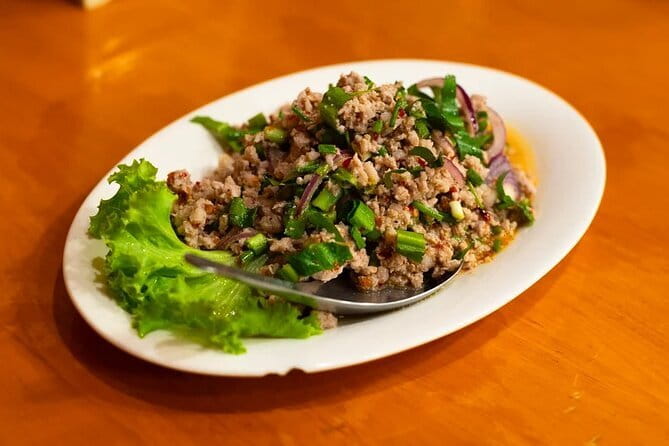
The route includes food stalls, restaurants, factories, markets, a mall, and other stops. The exact dishes are not fixed in the information provided, and that is worth noting. You should book this for the structure and the guide-led discovery, not for a guaranteed list of named dishes.
That flexibility can be a strength. A guide such as Lek, Anna, or Annie can explain what is being served and connect it to the neighborhood around you. Several guides have been singled out for warmth, care, and strong knowledge of Bangkok’s food and culture. Lek has been described as a long-time Bangkok resident of Thai descent, and Anna is praised for her energy and generous approach to feeding the group.
The food is not an optional extra. Dinner and snacks are included, along with bottled water and alcoholic drinks. That makes the $125 price easier to assess, especially in a small group where the guide can spend time with each person. Still, value depends on how much you eat and how much you care about the cultural explanation. If you only want inexpensive street food, you can spend far less on your own. If you want a guided five-hour introduction with food and historical context, the price is more defensible.
The tour also visits places that are not typical sightseeing stops, including factories and a mall. Those locations may sound less romantic than a famous market, but they help show how food production and shopping connect to everyday Bangkok. The experience is at its best when you are curious about the process and setting, not only the final plate.
What the small group changes
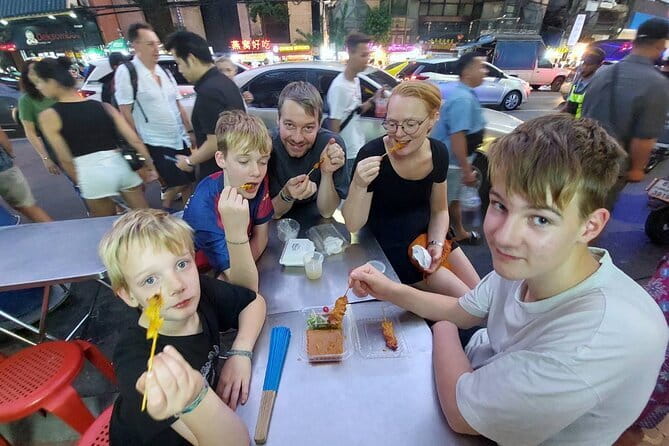
With a maximum of seven people, this is a more personal format than a large coach tour. You can hear explanations more easily, ask about ingredients, and stay connected in narrow market lanes. A small group also gives the guide more freedom to respond to the pace of the people present.
The size can vary in practice. One booking became a private outing, and that can happen when the group is small. A private or nearly private walk is a real benefit if you prefer conversation and individual attention. Some people, though, enjoy meeting a larger mix of fellow food lovers. This experience is designed for intimacy rather than a social crowd.
The guides are a major part of the value. Anna has been praised for making sure people kept eating and for showing them a wide range of the city. Lek has led private and small-group walks, and Annie has also joined the route. Your guide will shape the exact balance between history, food, and conversation, so I would pay attention to the guide assigned when your booking is confirmed.
Timing, transport, and what to wear
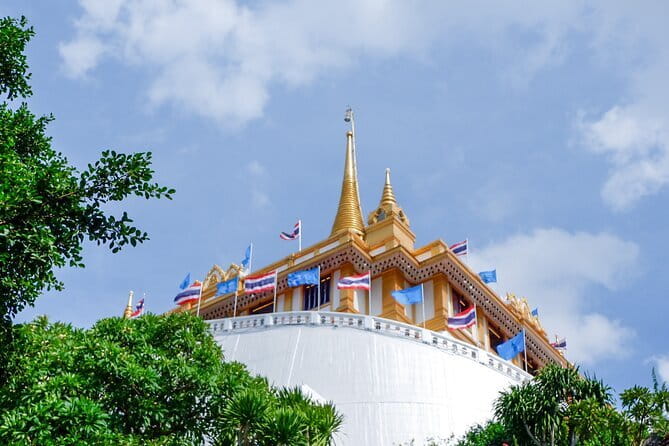
The stated duration is about five hours, and the tour returns to the meeting point at Sam Yot MRT station. Private transportation is not included, so you need to reach the start independently and make your own way back from the same location after the walk.
The listed start time is 9:00 am. At the same time, the description calls this an afternoon-into-evening tour. Because those details do not match, confirm the actual departure time before you plan other sightseeing around it. This matters in Bangkok, where heat, traffic, and opening hours can affect a full day.
Wear comfortable walking shoes and bring a relaxed appetite. The route includes old markets and narrow lanes, and the food comes across several hours rather than in one sitting. Bottled water is included, but practical clothing and a sensible pace will make the day easier.
Most people can take part, and the experience is near public transportation. The information does not promise private vehicles, special access arrangements, or a fully step-free route, so ask the provider directly if you have mobility concerns.
Is $125 a fair price?
At $125, this is not a bargain food crawl. Bangkok offers plenty of cheap meals, and an independent visitor could eat well for much less. The cost here pays for a licensed guide, five hours of access to several districts, dinner, snacks, drinks, bottled water, and the planning needed to connect food with history.
The small group improves the value. A guide can explain unfamiliar dishes, answer questions, and keep the route manageable in places where a large group would be awkward. The price also includes more than one market. You move through Wang Burapha, Rattanakosin, Phahurat, and Chinatown, with food businesses and cultural sites along the way.
I would consider it good value for a first visit, for a solo visitor who wants company, or for someone who has already been to Bangkok and wants a different angle. It is less compelling if your only goal is to eat the cheapest possible food or visit major monuments inside. In that case, an independent day may suit you better.
Who should book this Bangkok walk?
I would recommend it to you if you like food with a story attached. It suits curious eaters, first-time visitors who want an early orientation, and repeat visitors who have already seen the major temples. The route also works well for people who want a small group and a guide rather than a fixed restaurant meal.
It may not suit you if you dislike walking, crowded markets, or eating several times over a long outing. It is also not the right choice if you need a tightly timed sightseeing schedule, since the route combines food, conversation, markets, and history rather than moving through landmarks with military precision.
The strongest reason to book is the combination of places. You are not confined to a single market or restaurant. You get a broad view of old Bangkok, with guides such as Lek, Anna, and Annie adding the human connection that turns a food route into a city lesson.
Final call: book it for context, not just calories
Book this tour if you want to understand how Bangkok’s cooking grew from old neighborhoods and different cultures. The food, dinner, drinks, and snacks make up only one part of the experience. The real value comes from walking between temples, markets, trading lanes, restaurants, factories, and a mall with a guide who can connect the pieces.
Skip it if $125 feels too high for food you could find cheaply on your own, or if you want a conventional sightseeing tour with guaranteed dish names and formal temple admissions. Before paying, confirm the start time and prepare for a substantial walking and tasting session. For the right eater, this is a generous, close-up introduction to Bangkok’s old center.
FAQ
Where does the tour start?
It starts at Sam Yot MRT station, Exit 3, at 111 Thanon Unakan in Wang Burapha Phirom, Phra Nakhon, Bangkok.
Where does the tour end?
The activity ends back at the meeting point near Sam Yot MRT station.
How long does the tour last?
The experience lasts approximately five hours.
What time does the tour start?
The stated start time is 9:00 am. The description also refers to an afternoon-into-evening schedule, so confirm the exact departure time before booking.
How many people can join?
The maximum group size is seven people.
Is transportation included?
Private transportation is not included. The tour starts and ends near public transportation at Sam Yot MRT station.
What is included in the price?
A licensed guide, alcoholic beverages, bottled water, dinner, and snacks are included.
Can I cancel for a full refund?
Yes. You can cancel at least 24 hours before the experience start time for a full refund. Cancellations or changes made less than 24 hours before the start time are not accepted for a refund.
Just added around Bangkok
- Yoga in the Park Thailand★ 5.0 · 12 reviews
- re:leaf spa and massage★ 4.0 · 10 reviews
- Wonderful Pearl Dinner Cruise★ 3.5 · 27 reviews
- 3-Hour Bangkok Walking Tour: Wat Pho and Wat Arun★ 5.0 · 102 reviews
- White Orchid Sunset Dinner Cruise Calypso Ladyboy Cabaret Show★ 4.0 · 10 reviews
- Visit temples in and around Bangkok with a former monk of 10 years★ 5.0 · 30 reviews
- Morning Buddhist Almsgiving, Grand Palace and Flower Market Tour in Bangkok★ 3.5 · 9 reviews
- Visit Wat Pho and Wat Arun with Local Expert★ 4.0 · 14 reviews
Cooking Classes, compared.
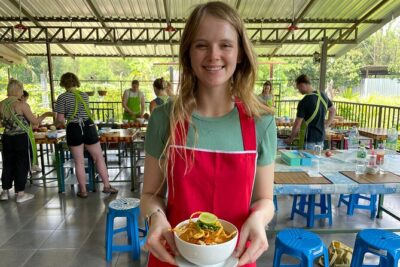
Half-Day Thai Cooking Class at Organic Farm in Chiang Mai
Read our review →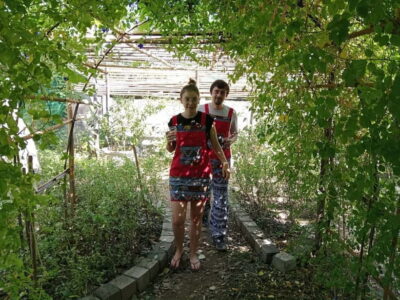
Cooking Class, Market & Thai Herbs Garden Tour
Read our review →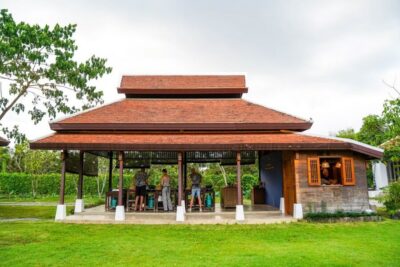
Authentic Cooking Class with Market & Farm Visit
Read our review →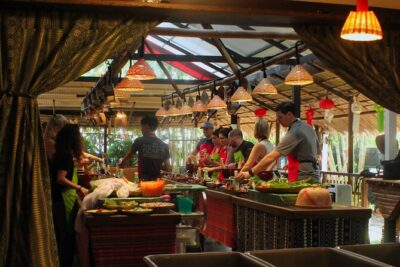
Phuket Thai Cooking Class with Market Tour Option
Read our review →
Tingly Thai Cooking School Half-Day Cooking Class
Read our review →Browse the lists this tour appears in