
Reviewed · TEMPLE TOURS
4 Days Expedition From Bangkok to Angkor Wat
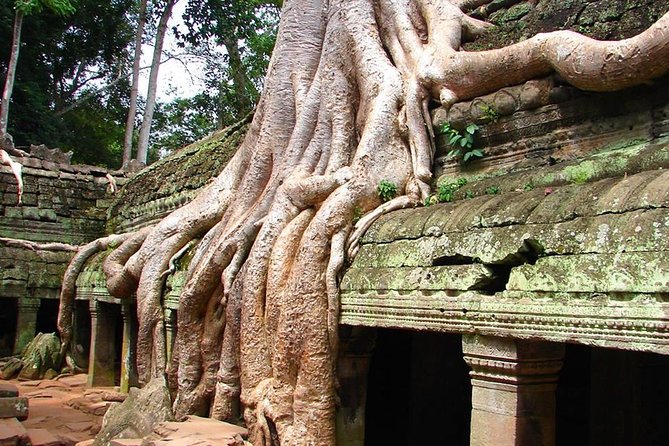
Angkor Wat is the headline, but the real appeal of this four-day trip is that it takes care of the awkward overland crossing from Thailand. You leave Bangkok, Pattaya, or Ko Chang with a private vehicle, cross at Poipet, then settle into Siem Reap with a guide and driver waiting on the Cambodian side. I like the private format and the fact that your three hotel nights, breakfasts, temple tickets, and transfers are bundled together. I also like the range of sites, from Ta Prohm’s tree-covered ruins to the delicate carvings of Banteay Srei.
The main catch is the first and last day. Each includes roughly seven hours of road travel, and the Poipet border can be confusing, slow, and uncomfortable. Visa costs are extra, lunch and dinner are extra, and the schedule can feel hurried if you try to see everything without a proper meal break. Guides such as Vithyea, Yuth, Sava, Chhay, and Phon Raks have earned particularly strong praise, but communication with the border staff and some drivers may be less smooth.
Key points before you book
- Private trip from Thailand: Pickup and return are offered from hotels in Bangkok, Pattaya, and Ko Chang, with your own group of up to 15 people.
- A full Angkor program: The plan covers Angkor Wat, Angkor Thom, Bayon, Ta Prohm, Banteay Srei, and several quieter eastern temples.
- Tonlé Sap by private boat: Chong Kneas floating village gives you a look at lake life beyond the temple circuit.
- Three nights in Siem Reap: A four-star hotel, daily breakfast, transfers, guiding, and temple tickets are included.
- Border costs need planning: Cambodia’s visa is not included. An e-visa or visa on arrival is possible, depending on your passport.
- The best value is convenience: At $690 per person, you pay for private transport, a guide, accommodation, and border assistance, not just temple entry.
The Bangkok to Poipet crossing takes most of Day 1
The trip begins around 6:30 a.m. with pickup from your Bangkok, Pattaya, or Ko Chang hotel. The exact road time depends on where you start, but the first day is mainly a transfer day. You may stop once for a bathroom break and snacks, so have water and something small to eat with you.
At Poipet, you leave Thailand and complete Cambodia’s entry formalities. This is the least polished part of the trip. The border area can feel confusing, especially if you are not sure which office to use or what fee applies. The tour information clearly says that the Cambodian visa is not included, so plan for that extra cost before you set out.
An e-visa can be arranged in advance, and you should bring two printed copies. A visa on arrival is also possible with one original passport photo. Rules differ by nationality. ASEAN passport holders receive a free 30-day Cambodian visa, while Mexican and Burmese passport holders need to check re-entry or multiple-entry requirements for returning to Thailand overland. Indian passport holders are advised to carry hotel booking and onward flight details.
This is where the private arrangement has real value. A border assistant can help you understand the process, and the transfer on the Cambodian side means you do not need to negotiate a taxi or local bus to Siem Reap. Still, do not expect the crossing to be quick or elegant. Keep your passport accessible, avoid handing over documents to random people, and confirm any fee before paying it.
After the border, the road continues to Siem Reap. Some drivers speak little or no English, so important questions are best directed to the tour company or your guide. The vehicles are air-conditioned, and several people have specifically praised the driving, even when the trip felt slow.
More Temple Tours in Bangkok
- Bangkok: City Highlights Temple and Market Walking Tour
★ 4.5 · 3,990 reviews - Bangkok by Night: Temples, Markets and Food Tuk-Tuk Tour
★ 5.0 · 3,752 reviews - Bangkok: Grand Palace, Wat Pho, and Wat Arun Guided Tour
★ 4.8 · 3,632 reviews
Chong Kneas gives your first look at Cambodia
The boat trip to Chong Kneas usually begins around 3:30 p.m., after you reach Siem Reap. This floating community sits on Tonlé Sap, the large lake that supports fishing and lake-based trade across Cambodia. You board a private boat for a roughly three-hour outing, including the floating village and the ride back.
This is a useful first afternoon because it gives you something to see without adding another stone temple after a long border day. The setting is different from Angkor: instead of carved sandstone, you see homes and daily activity tied to the water. Conditions on the lake can change with the season, so the appearance of the village may not be identical at every time of year.
You return to the hotel around 5:30 p.m., leaving the evening free. Siem Reap’s Pub Street, restaurants, and night market are within reach, though the precise distance depends on your hotel. One hotel used for this trip, Tara Angkor Hotel, was praised for its clean rooms, breakfast, pool, and helpful staff. It is near the Angkor National Museum and around 25 minutes on foot from the center, with tuk-tuk transport taking less time.
That free evening is worth protecting. The itinerary is packed on the following days, and Siem Reap is more than a place to sleep between temples. Use the evening for a meal, a market visit, or simply rest after the border crossing.
Angkor Wat and the Bayon fill Day 2 with major sights
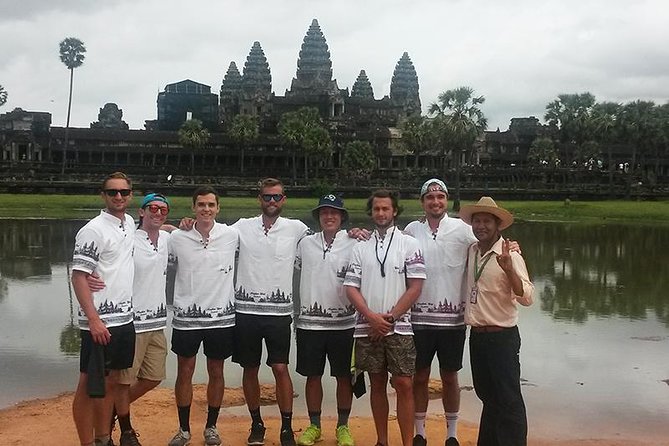
Day 2 opens with Angkor Wat, usually the emotional high point of the trip. The temple was built as a Hindu monument and later became a major Buddhist site. Its towers, galleries, reliefs, and long approach make it far more than a quick photo stop.
The planned visit lasts about two hours. That is enough to see the main areas with a guide, but it is not an unlimited amount of time for close study. If you care about bas-reliefs or architectural details, listen closely while your guide explains what you are seeing. Guides such as Vithyea, Yuth, and Sava have been praised for clear English, historical explanation, humor, and the ability to connect ancient sites with present-day Cambodian culture.
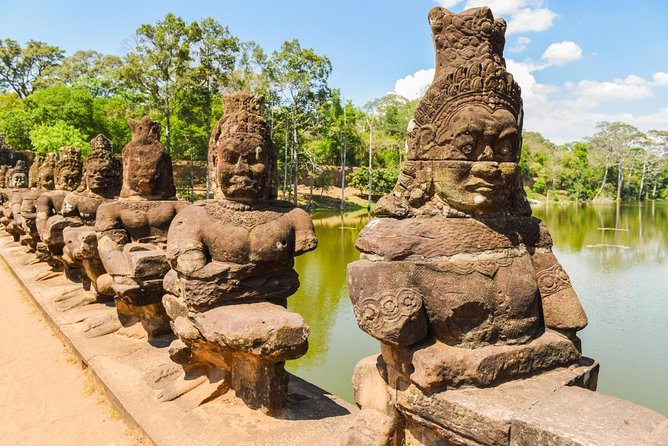
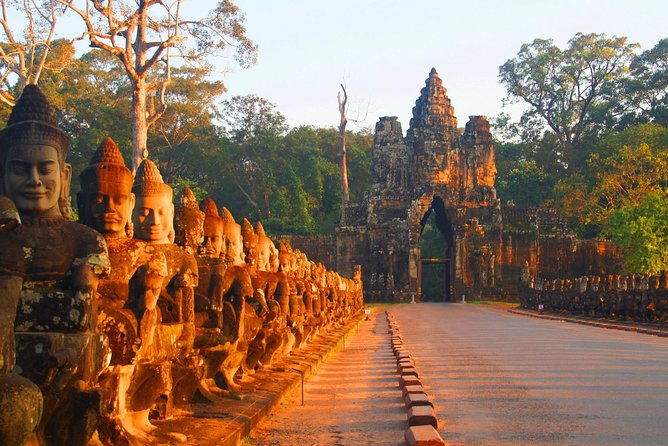
Next comes Angkor Thom, the walled royal city. The complex is enclosed by walls and a moat, and the scale becomes easier to understand when you approach through its gates. The itinerary gives only a short formal stop for Angkor Thom itself, followed by a longer visit to Bayon.
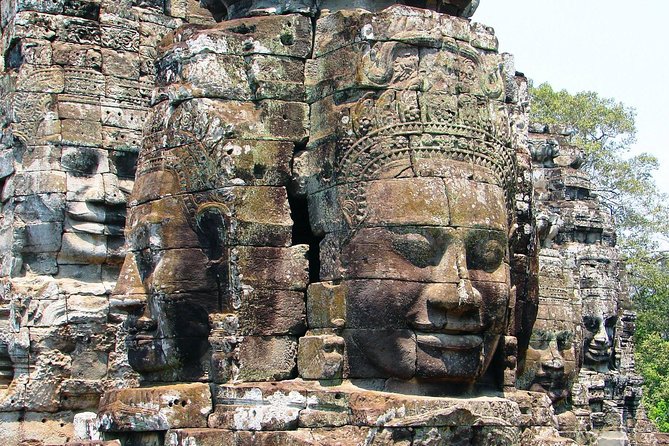
Bayon sits at the center of Angkor Thom and is known for its large carved faces. The temple is compact compared with Angkor Wat, but it can feel more intimate and puzzling, with towers and galleries arranged in a way that rewards a guide’s explanation. Allow about an hour here.
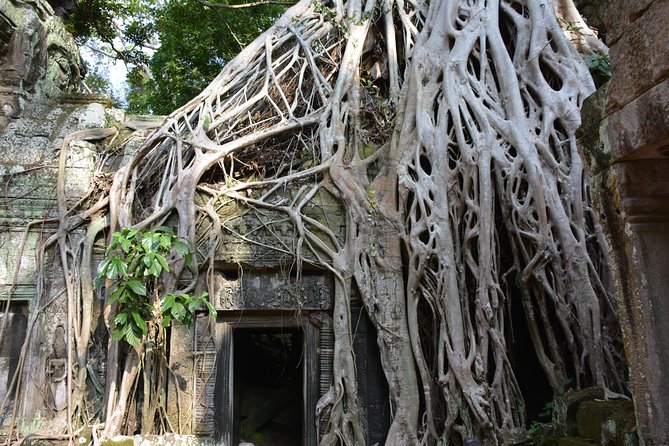
Ta Prohm follows, with another hour scheduled. This is the temple associated with the film Tomb Raider, but the movie connection is only part of its appeal. Trees grow over and around the stonework, showing the visual tension between the forest and the old monument. It is one of the most memorable stops because it feels less orderly than Angkor Wat and more like a ruin being reclaimed.
The schedule on Day 2 is not especially long on paper, but walking over uneven temple ground in heat can make it feel demanding. Wear practical footwear, carry water, and dress with shoulders and knees covered. Short clothing is not permitted at the temples, so do not rely on being able to change rules at the gate.
One useful point is that the guide and vehicle are not always available deep into the evening. The tour can finish earlier than expected, especially if you start before the usual 7:30 or 8 a.m. temple departure, move quickly, or skip a proper lunch. If you want more time at a site, say so early. Good guides have adjusted plans when asked, but the day still has limits.
Banteay Srei rewards the longer drive on Day 3
Day 3 reaches farther from Siem Reap, beginning with Banteay Srei, about 37 kilometers away. The drive takes time, but this temple earns its place. It is built from pink sandstone and is famous for precise, detailed carving connected with Shiva worship.
Banteay Srei is smaller than Angkor Wat, yet its decoration is unusually fine. The color and scale make it feel different from the larger royal temples, and the three-hour allocation gives you time to examine the carvings rather than simply walk around the outside. This is the day’s longest temple stop.
The remaining stops form a circuit of quieter monuments. At Preah Khan, you see a large temple built in 1191. It has long galleries, carved doorways, and fewer crowds than the best-known central sites. That lower-key atmosphere can make it easier to focus on the layout and stonework.
Neak Pean is much smaller and is reached through an ancient water setting. The temple was built in the center of a water reservoir and is linked with a 12th-century healing complex. The visit lasts about 40 minutes, enough to take in the unusual design and the view across the water.
Ta Som is another short stop, scheduled for about half an hour. It is a peaceful temple with a tree covering the tower at the eastern gate. It does not have the scale of Angkor Wat, but the overgrown detail gives it a strong sense of place.
Eastern Mebon sits in the center of the former Baray, or reservoir. It has religious links to Shiva ceremonies and offers a different look at how water shaped Angkor’s planning. Pre Rup comes last, with about an hour. Its taller structure resembles Eastern Mebon, and its upper level gives you a broad view across the surrounding area.
Day 3 is excellent for anyone who wants more than the famous three temples. It also has a cost: six stops mean repeated walks, short visits, and plenty of time in the vehicle. I would not combine this day with a late night in Siem Reap. The temples are better when you arrive rested enough to notice their details.
Same base, a completely different sort of day out:
- Bangkok: Damnoen Saduak Market and Maeklong Railway Market
★ 4.5 · 26,723 reviews - The Old Siam: Damnoen Saduak and Maeklong Railway Market
★ 4.5 · 10,992 reviews - Bangkok: Train Market & Floating Market with Boat Ride
★ 4.7 · 9,547 reviews - Bangkok Canal Tour: 2-Hour Longtail Boat Ride
★ 4.5 · 5,909 reviews
What the $690 price really covers
The price is $690 per person, and the value depends on how much you want handled for you. Included are hotel pickup and drop-off, private air-conditioned transport, three nights at a four-star hotel, daily breakfast, a licensed guide, and temple tickets.
That is a substantial bundle for a cross-border trip. You are paying for the long road transfers in both directions, three hotel nights, a private vehicle, a guide across two temple days, the boat excursion, and the practical help of getting from Thailand to Siem Reap and back. For a solo visitor, the price is harder to compare with a basic bus-and-hotel plan. For two or more people, the private format becomes more attractive because the vehicle and guide cost is shared.
The tour permits one to 15 people, but private does not mean unlimited personal service. Your group alone participates, yet the day still follows a route and a timetable. Couples receive one room with a king bed, while friends or families receive one room with two beds, so clarify the room arrangement at booking.
Lunch and dinner are not included. Visa charges and personal expenses are also extra. That matters because the first day is long, and buying food at every stop can add up. Bring small snacks and budget separately for meals, drinks, and the Cambodian visa.
There is also a fair comparison to make. You could arrange your own transport, book a Siem Reap hotel, and hire only a local guide. That may cost less, particularly if you are comfortable handling the Poipet crossing and planning your own temple transport. The $690 option is for people who place a high value on having the route, rooms, tickets, and transfers arranged in one package.
The guides make the difference between seeing and understanding
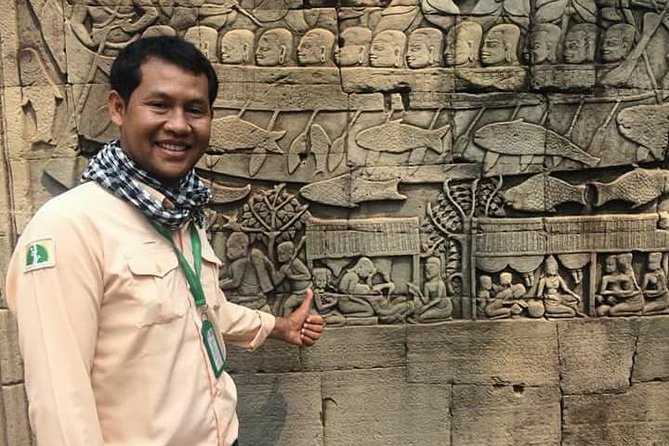
A guide is especially useful at Angkor because the temples can otherwise become a blur of towers and carved stone. The strongest guide feedback centers on Vithyea, Yuth, Sava, Chhay, Phon Raks, and Yoeun Serakyuth. Their reported strengths include clear English, French in Sava’s case, strong knowledge of ancient and modern Cambodia, humor, and willingness to adjust the plan.
That last point matters. One guide added a sunrise option, another showed a group around a night market and Cambodian street food, and another arranged an informal meal at a local home. These extras are not guaranteed parts of the fixed schedule, so treat them as possible additions rather than promises.
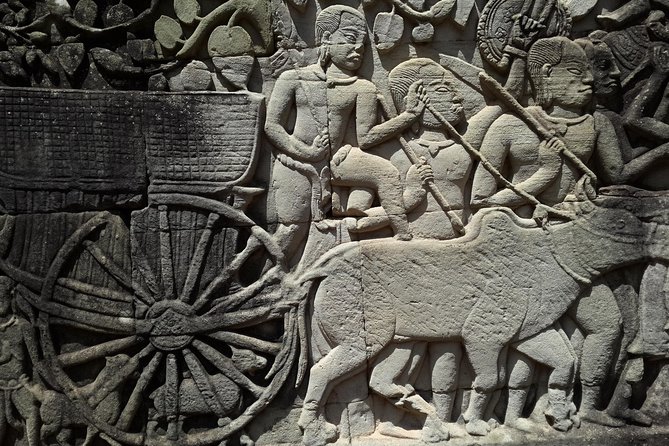
The guide also helps you judge how long to spend at each site. Without that context, Angkor Thom can seem like a wall and gate, Ta Prohm can become only a movie location, and Pre Rup can look like another stepped temple. With explanation, the repeated designs begin to make sense.
Communication before meeting the guide can be less consistent. The guide you meet in Siem Reap may speak excellent English, while a border or transfer driver may not. Keep your booking details and hotel name on hand, and make sure you know when and where you will meet your main guide.
Who should book this four-day crossing
I would recommend this trip to you if you want Angkor with less planning and do not want to arrange a Thailand to Cambodia border crossing on your own. It suits couples, families, and small private groups that value a known hotel, private transport, and a guide who can explain what you are seeing.
It also suits you if three nights feels more sensible than a rushed one-night or two-night visit. Angkor is large, and Day 3’s outer temples add real value. The extra time lets you see more than the familiar photographs of Angkor Wat and Ta Prohm.
I would hesitate if you dislike long road journeys, want total control over meal stops, or prefer independent travel. The first and last days are transfer-heavy, and the border may test your patience. You should also compare the cost with booking a hotel and local guide separately if saving money matters more than convenience.
The cancellation policy allows a full refund up to 24 hours before the experience. Pickup and drop-off are available from hotels in Bangkok or Pattaya, and the trip can also be arranged from Ko Chang according to the tour details.
FAQ
Is the Cambodian visa included?
No. The visa is not included in the tour price. You can apply for an e-visa in advance and should print two copies, or use visa on arrival at the Poipet border with one original passport photo.
Where can I be picked up?
Pickup is offered from hotels in Bangkok, Pattaya, or Ko Chang. The listed meeting point is your hotel in Bangkok or Pattaya, with Ko Chang also included in the tour arrangements.
How many nights are included in Siem Reap?
Three nights of accommodation are included at a four-star hotel, along with daily breakfast.
Are meals included?
Breakfast is included each day. Lunch and dinner are not included, so you need to budget for them separately.
What temples are included?
The route includes Angkor Wat, Angkor Thom, Bayon, Ta Prohm, Banteay Srei, Preah Khan, Neak Pean, Ta Som, Eastern Mebon, and Pre Rup.
Can one person book the private tour?
Yes. The minimum is one person, and the maximum is 15 people. Only your own group participates in the private activity.
Should you book this tour?
Book it if you want a guided Angkor visit with the difficult parts handled for you. The private vehicle, three hotel nights, temple tickets, Tonlé Sap boat ride, and experienced guides give the trip solid value, especially for a couple or small group.
Skip it if you are comfortable crossing the border independently and want to spend less. For everyone else, the four-day length is the sensible choice: it gives you Angkor Wat’s major sights, the quieter outer temples, and enough time in Siem Reap to make the journey from Thailand worthwhile.
Just added around Bangkok
- Wonderful Pearl Dinner Cruise★ 3.5 · 27 reviews
- Yoga in the Park Thailand★ 5.0 · 12 reviews
- re:leaf spa and massage★ 4.0 · 10 reviews
- 3-Hour Bangkok Walking Tour: Wat Pho and Wat Arun★ 5.0 · 102 reviews
- White Orchid Sunset Dinner Cruise Calypso Ladyboy Cabaret Show★ 4.0 · 10 reviews
- Visit temples in and around Bangkok with a former monk of 10 years★ 5.0 · 30 reviews
- Morning Buddhist Almsgiving, Grand Palace and Flower Market Tour in Bangkok★ 3.5 · 9 reviews
- Visit Wat Pho and Wat Arun with Local Expert★ 4.0 · 14 reviews
Temple Tours, compared.
Chiang Rai Temples, Karen Tribe and Hot Springs
Read our review →
City Highlights Temple and Market Walking Tour
Read our review →
Bangkok by Night: Temples, Markets and Food Tuk-Tuk Tour
Read our review →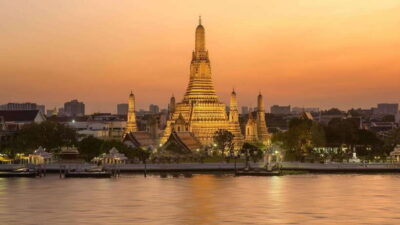
Grand Palace, Wat Pho, and Wat Arun Guided Tour
Read our review →
Tiger Cave Temple, Emerald Pool and Hot Springs Tour
Read our review →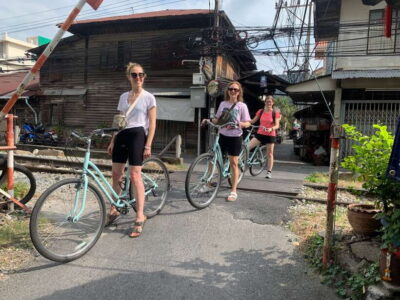
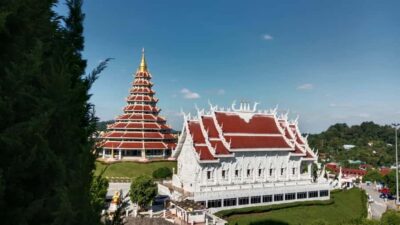
Chiang Rai White Temple and Blue Temple Day Tour
Read our review →Browse the lists this tour appears in