
Reviewed · TICKETS
Samut Prakan: The Erawan Museum Admission Ticket (NON Thai)
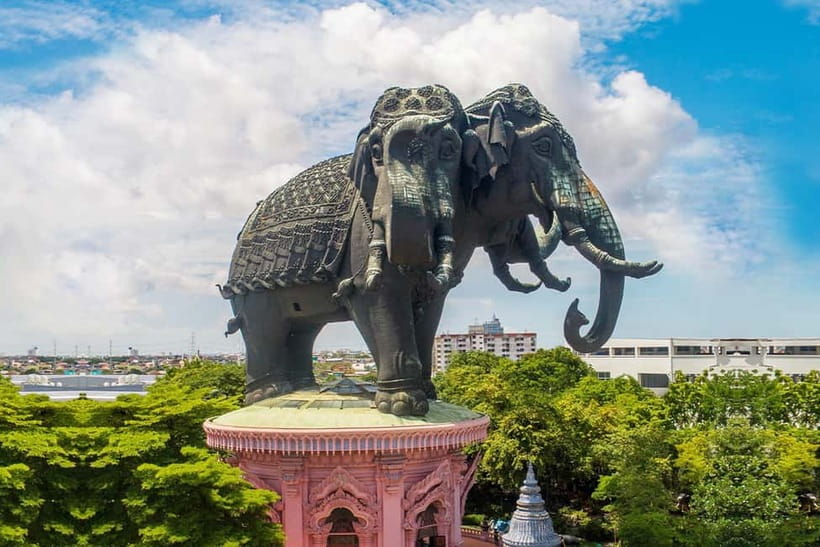
The first thing you notice is the massive three-headed bronze elephant, perched high above the museum like a mythological guardian. It is based on Airavata, the sacred elephant linked with the Hindu god Indra, and it gives the whole visit a clear purpose: this is not just a collection of old objects in glass cases.
I like the way the museum joins art and architecture into one experience. I also like the simple included offering of flowers, incense, and a lotus, which helps you understand that the building is still treated as a meaningful spiritual place. The main consideration is that modest dress is required, and food, drinks, pets, and commercial photography are not allowed.
Key points to know before you go
- The three-headed elephant is the main event: It is the museum’s symbol and the easiest feature to spot from outside.
- The galleries follow three worlds: You move through the Underworld, Earth, and Heaven, each with a different role in the building’s story.
- A BTS station makes arrival simple: Get off at Chang Erawan Station, E17, Exit 2, then use the free shuttle tuk-tuk.
- Admission costs $12 per person: Flowers, incense, a lotus, taxes, and access to the surrounding museum grounds are included.
- Dress for a sacred setting: Shorts, short skirts, and sleeveless shirts are not permitted.
- Plan around a timed visit: Your ticket is valid on the date and at the time selected when you book, with up to eight hours of validity.
Why the giant elephant matters
The Erawan Museum begins with an object that is hard to ignore. The three-headed elephant is not a decorative roof ornament added after the fact. It is the central idea of the entire museum.
The elephant represents Airavata, a figure from Hindu mythology, and it also connects with Thailand’s long association with elephants. The structure sits on a spherical base that represents the globe. The idea is that the elephant protects the earth and the sacred objects held inside.
That symbolism gives you a useful way to read the building. You are not simply looking at an oversized bronze animal and then entering a museum. You are entering a carefully planned world in which the outside form, the interior arrangement, and the collection all support the same message.
The museum was created by Lek Viriyapant, a well-known collector of antiques. His aim was to protect valuable objects and preserve them for future generations. His son, Pagpean Viriyapant, received the design plans and continued the construction.
Neither father nor son lived to see the project fully completed. Their family carried on the work, keeping the museum tied to Lek’s wish to preserve Thai culture and the memory of his collection.
That background matters because the museum feels personal. It was built around a collector’s concern that sacred and historic objects should not simply disappear into private storage. You get a sense of preservation as a duty, not just collecting as a hobby.
More museums and galleries in Bangkok:
- Skip the Line: Patpong Museum Guided Tour
★ 5.0 · 80 reviews - Private Guided Day Tour to Erawan Museum & Ancient City
★ 4.5 · 25 reviews - Samut Prakan: Erawan Museum Discounted Admission Ticket
★ 4.8 · 20 reviews
Arriving from Chang Erawan BTS Station
For most visitors, the easiest route is the BTS Skytrain Green Line. Exit at Chang Erawan Station, E17, Exit 2. A free shuttle tuk-tuk runs from there every day.
This is a useful detail because the ticket does not include transfers. You need to arrange and pay for your own route to the station or museum area, but the shuttle helps with the final connection.
Allow extra time for finding the correct exit and shuttle pickup. The activity information does not provide a travel time, shuttle timetable, or exact departure interval, so you should check the current arrangements when planning your visit.
Once you arrive, the museum’s size makes orientation easy. The elephant is the landmark. You will not need a guide to understand where the main entrance is, though no guide service or guided commentary is included with this admission.
The provider is OTO TRIP SERVICE CO., LTD. This is an admission experience rather than a full sightseeing tour with transport, meals, or a named guide. That keeps the plan simple, but it also means you are responsible for getting there and deciding how long to spend in each area.
Walking through the Underworld, Earth, and Heaven
The museum is arranged in three sections: Underworld, Earth, and Heaven. These are more than labels on a map. They give you a sequence for understanding the collection and the building.
The Underworld forms the lower part of the experience. The name sounds dramatic, but the key point is that it represents one level of the museum’s spiritual view of existence. This section helps set up the journey upward through the building.
You then reach Earth, the middle section. This is the part most closely linked with ordinary human life and the world protected by the elephant above. Here, the collection and architecture work together to connect physical objects with ideas about land, people, and prosperity.
Heaven occupies the upper section and completes the vertical story. The museum’s design invites you to look upward, both literally and symbolically. The three-part layout makes the building feel more like a single artwork than a standard museum divided into unrelated rooms.
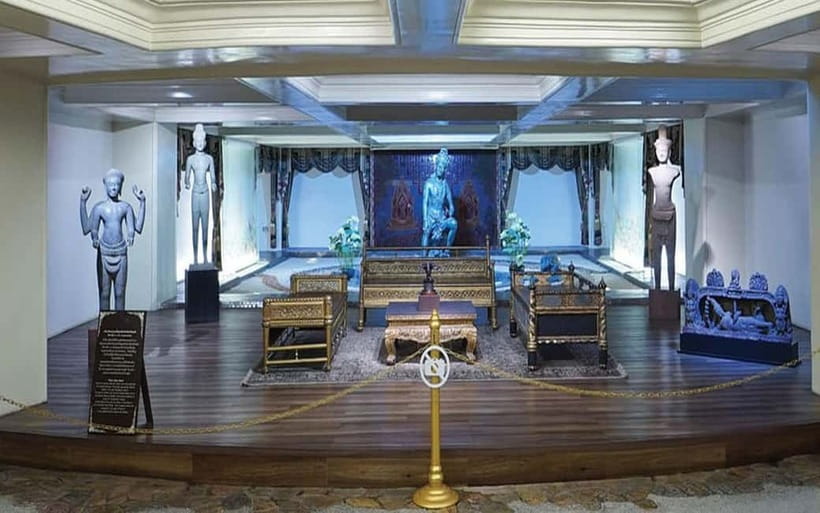
The information provided does not give a room-by-room inventory, so you should not expect a fixed list of individual artifacts. What you can count on is a visit shaped by sacred objects, antique pieces, decorative work, and the three-level concept.
That is also why you should avoid racing through the building. The value is in noticing how the objects fit the setting. Look at the architecture around the collection, then step back and consider how the Underworld, Earth, and Heaven idea controls the way you move through the museum.
Sacred objects and the collector’s purpose
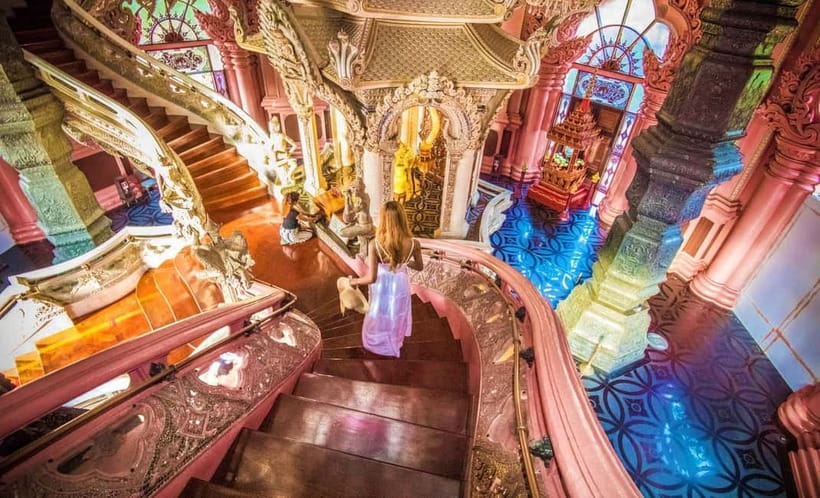
Many of the objects connected with the museum date to earlier periods when people believed sacred items could bring blessings and prosperity to the land. Lek Viriyapant wanted to keep these objects together and make their cultural meaning available to future generations.
You do not need specialist knowledge to appreciate that purpose. The museum gives you a clear framework: these are not merely antiques chosen for age or price. They were valued because of their spiritual and cultural importance.
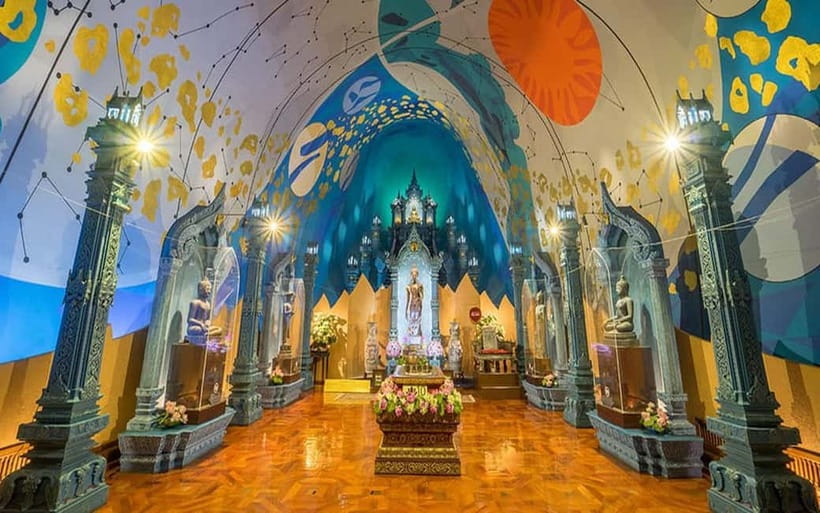
The included flowers, incense, and lotus flower add a small but meaningful part to the visit. They are not a meal, souvenir, or optional extra. They relate to the respectful way the museum presents its sacred setting.
You should follow the site’s quiet and respectful atmosphere. The rules ask you to keep noise down, avoid food and drinks, and dress modestly. Sleeveless shirts, shorts, and short skirts are not allowed. Alcohol and drugs are also prohibited.
These rules are worth taking seriously before leaving your hotel. If your day’s clothing is built around a hot-weather Bangkok outfit, bring a suitable cover-up or choose something that meets the requirements from the start.
A few more Bangkok days worth weighing up
- Bangkok: Muay Thai Boxing Tickets at Rajadamnern Stadium
★ 4.9 · 4,740 reviews - Bangkok: Mahanakhon SkyWalk Entry Ticket with Options
★ 4.6 · 4,094 reviews - Bangkok: Chao Phraya Princess Dinner Cruise Ticket
★ 4.2 · 793 reviews - Bangkok: Grand Palace Skip-the-Line Entry Ticket
★ 4.2 · 720 reviews
The best photo opportunities
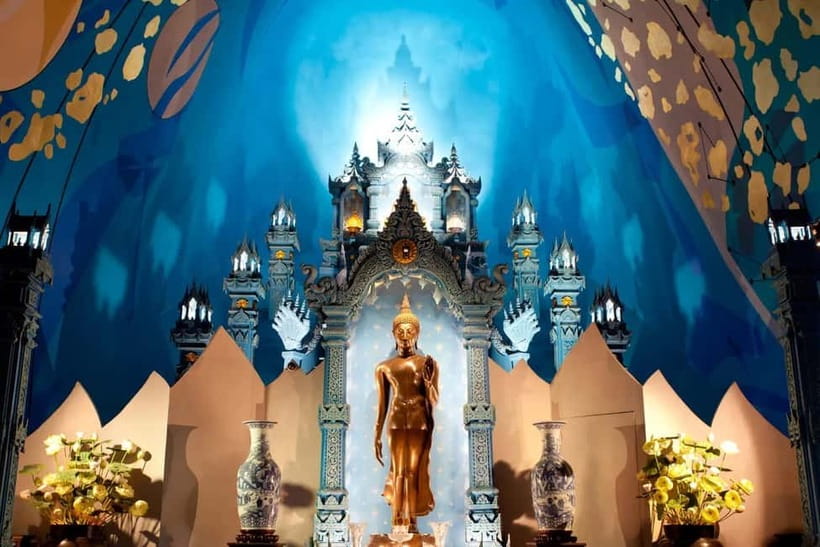
The museum offers plenty of photo possibilities both inside and outside. The elephant is the obvious exterior subject, but the scale of the structure gives you more to work with than one standard picture.
From outside, you can photograph the full three-headed form and the globe-like base. Try to include enough of the structure to show its height and relationship to the museum below. The point is not only to capture the elephant’s heads, but also to show how the building supports the symbol.
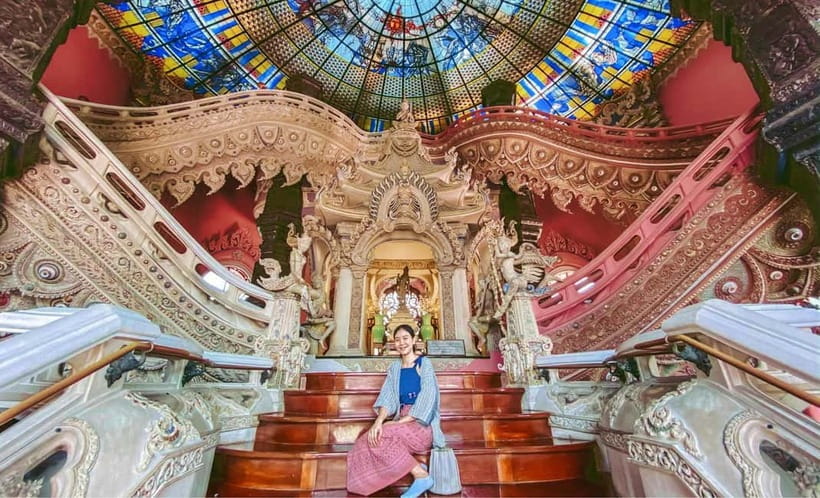
Inside, the architecture creates the stronger visual experience. The three sections, sacred objects, and decorative details provide different views as you move through the museum.
Photography and video are allowed for personal use, but commercial photography is not permitted inside. If you are creating paid content, promoting a business, or planning a commercial shoot, this ticket does not give you permission to do that.
You should also keep your camera work from getting in the way of the quiet setting. Take pictures, but pause when an area is being used for worship or reflection. The museum’s rules are part of the experience, not a nuisance added to it.
Is $12 good value?
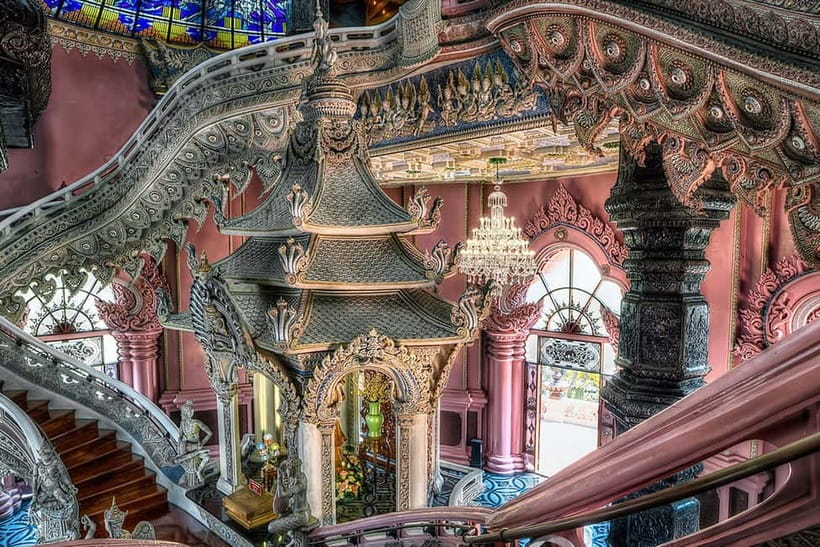
At $12 per person, the ticket is reasonably priced if you want a self-guided cultural visit with a strong architectural centerpiece. Admission includes the museum, the surrounding area, flowers, incense, a lotus flower, taxes, and fees.
The value is strongest for visitors who enjoy unusual buildings and symbolic art. You are paying for access to a complete visual concept, not just a conventional display of antiques.
The price is less attractive if you are expecting a guided tour, hotel pickup, meals, or a packed day of activities. None of those are included. Transfers and personal expenses are extra, and there is no named guide attached to the experience.
The stated duration is eight hours, but that describes the ticket’s validity rather than an eight-hour guided program. You can check available starting times and select the date and time that suits your plan. Since the ticket is tied to that selection, do not treat it like an open ticket that you can use on any day.
The high rating of 4.8 from 89 ratings supports the idea that the museum delivers a memorable visit for its price. One verified booking from Thailand, dated January 30, 2026, described it in French as a very good experience and strongly recommended it. That is a short endorsement, not a detailed report, but it fits the main strength of the place: the building makes an immediate impression.
Who will enjoy this museum most?
I would choose this experience if you like unusual museums, religious art, large-scale architecture, or places that give you a strong visual subject for photography.
It also suits you if you want an outing from Bangkok that you can reach by public transport and handle at your own pace. The BTS connection and free shuttle tuk-tuk keep the arrival fairly straightforward once you know the correct station exit.
Families may appreciate the giant elephant and clear three-world layout, though every member of the group needs to follow the dress and behavior rules. The museum is also a good fit for anyone who wants a quieter cultural stop rather than a food-focused attraction or a guided city tour.
You may want to skip it if you dislike religious settings, have no interest in symbolic architecture, or want a ticket that includes transport and a guide. The museum’s strength is its unusual design and collection, not a long list of included services.
Practical advice for a smooth visit
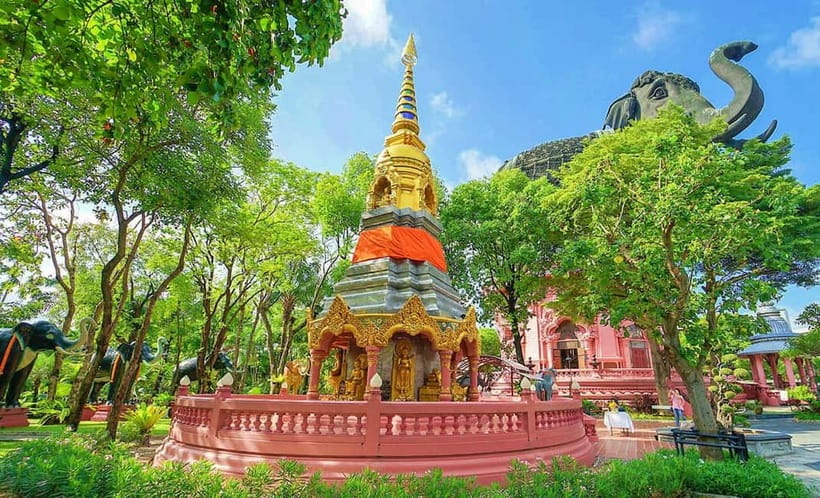
Wear clothing that covers your shoulders and knees. Avoid sleeveless shirts, shorts, and short skirts, since these are specifically not permitted.
Do not bring food or drinks into the museum, and leave pets at home. Alcohol and drugs are prohibited.
Use Chang Erawan Station, E17, Exit 2, and look for the free shuttle tuk-tuk. Because the exact shuttle timing is not provided, give yourself some spare time rather than scheduling the museum between tight connections.
Keep your booking date and time in mind. You can cancel up to 24 hours in advance for a full refund, and the reserve-now, pay-later option can help if your Bangkok plans are still changing.
The ticket is for a non-Thai visitor category. Check that you are selecting the correct ticket type when booking.
Should you book the Erawan Museum?
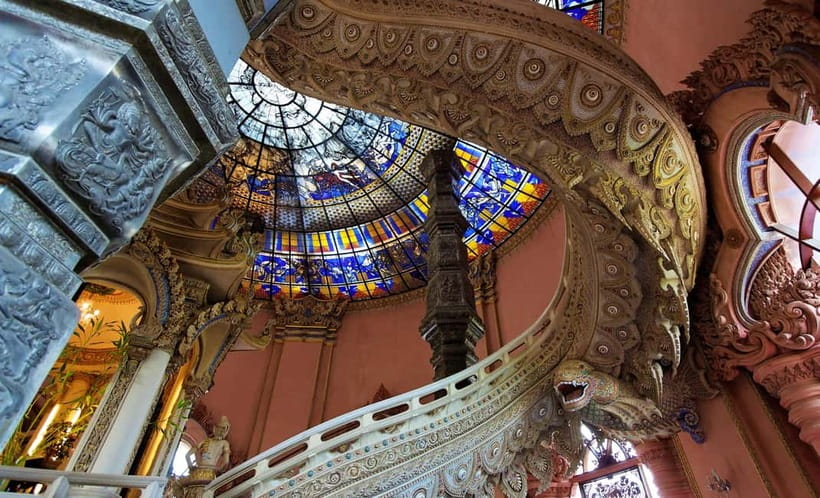
Book it if you want a memorable museum building, a giant mythological elephant, and a cultural visit that connects antiques with spiritual ideas. The $12 cost is fair for admission, the included offering materials, the grounds, and the photo opportunities.
I would not book it as an all-day guided excursion, because it includes no transfer and no guide. Think of it as a flexible museum visit with an unusual setting. Dress properly, arrive through Chang Erawan Station, and give yourself time to look beyond the elephant at the way the Underworld, Earth, and Heaven sections shape the whole experience.
FAQ
Where is the Erawan Museum?
The museum is in Samut Prakan, in Central Thailand.
How much does admission cost?
Admission costs $12 per person for the non-Thai ticket.
How long is the ticket valid?
The ticket is valid for eight hours, subject to availability and the starting time selected when booking.
Can I use the ticket on any date?
No. You can visit only on the specified date and time selected after booking.
How do I get to the museum by public transport?
Take the BTS Skytrain Green Line to Chang Erawan Station, E17, Exit 2. A free shuttle tuk-tuk operates every day from there.
Is transportation included in the ticket?
Transfers to the museum are not included. The free shuttle tuk-tuk from Chang Erawan Station is available every day.
What does the admission include?
It includes entrance to the Erawan Museum, flowers, incense, a lotus flower, access to the surrounding museum area, taxes, and fees.
What are the three sections of the museum?
The three sections are called Underworld, Earth, and Heaven.
What clothing is required?
You should dress modestly. Shorts, short skirts, and sleeveless shirts are not permitted.
Can I take photographs inside?
Personal photography and video are allowed, but commercial photography is not permitted inside the museum.
Just added around Bangkok
- Wonderful Pearl Dinner Cruise★ 3.5 · 27 reviews
- Yoga in the Park Thailand★ 5.0 · 12 reviews
- re:leaf spa and massage★ 4.0 · 10 reviews
- 3-Hour Bangkok Walking Tour: Wat Pho and Wat Arun★ 5.0 · 102 reviews
- White Orchid Sunset Dinner Cruise Calypso Ladyboy Cabaret Show★ 4.0 · 10 reviews
- Visit temples in and around Bangkok with a former monk of 10 years★ 5.0 · 30 reviews
- Morning Buddhist Almsgiving, Grand Palace and Flower Market Tour in Bangkok★ 3.5 · 9 reviews
- Visit Wat Pho and Wat Arun with Local Expert★ 4.0 · 14 reviews
Tickets, compared.

Muay Thai Boxing Tickets at Rajadamnern Stadium
Read our review →




Browse the lists this tour appears in