
Reviewed · TICKETS
Samut Prakan: Erawan Museum Discounted Admission Ticket
The three-headed bronze elephant is the star before you even enter. It rises above Erawan Museum in Samut Prakan, creating one of Thailand’s most unusual museum façades and a memorable photo stop. Inside, the building unfolds as three symbolic realms: the Underworld below, Earth in the central structure, and Heaven within the elephant itself.
I like the way the museum joins art, religious ideas, and architecture instead of placing them in separate rooms. I also like the practical value of the discounted $12 ticket, which includes museum access, flowers, incense, and a lotus flower. The main consideration is that your ticket is tied to a specified date and time, and the museum is outside central Bangkok, so you need to plan your journey.
Key points to know before you go
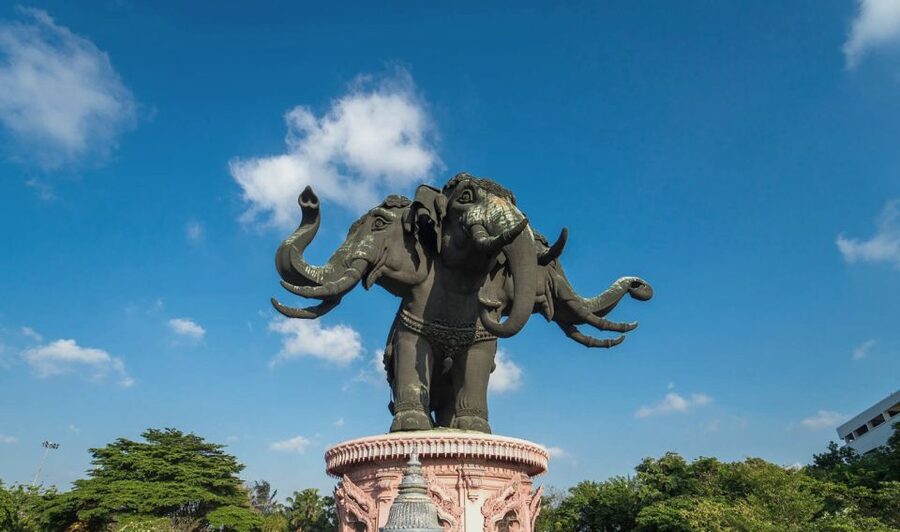
- The elephant is part of the building: The huge three-headed sculpture is not just an outdoor monument. Its body contains the museum’s highest section.
- Three levels carry symbolic meaning: You move from the Suvarnabhumi Level, linked with the past and the Underworld, through Earth and up to Cosmo, the Heaven section.
- The interior is made for slow looking: Expect porcelain, Thai Benjarong ceramics, stained glass, religious figures, painted ceilings, and mixed Eastern and Western design.
- The BTS is the easiest route: Get off at Chang Erawan Station, E17, Exit 2, then use the free shuttle tuk-tuk service to the museum.
- Dress for a sacred setting: Shorts, short skirts, and sleeveless shirts are not allowed. Food, drinks, pets, and commercial photography are also prohibited.
- The ticket suits a flexible day: Admission is valid for one day, but you must visit at the booked date and time.
Why the Erawan Museum feels different from a normal museum
Erawan Museum was created as a symbol of peace and humanity. Its purpose reaches beyond displaying objects in glass cases. The building brings together Asian philosophies, religious diversity, Thai artistic traditions, and the private collection of the museum’s owner.
That idea matters because the visit is as much about the building as its contents. You are not simply walking from one gallery to another. You are moving through a symbolic universe, with each level representing a different part of existence.
The design can feel theatrical, even solemn. The giant elephant gives the place its instant visual impact, but the smaller details reward patience. Look up at the ceiling. Notice how the stained glass suggests the shape of the Earth. Pay attention to the way the passageways, figures, colors, and decorative surfaces work together.
This is a good stop if you want something beyond Bangkok’s usual temples and shopping centers. It is also a useful choice for visitors who enjoy architecture and visual storytelling more than long blocks of written museum text.
More museums and galleries in Bangkok:
- Samut Prakan: The Erawan Museum Admission Ticket (NON THAI)
★ 4.8 · 89 reviews - Skip the Line: Patpong Museum Guided Tour
★ 5.0 · 80 reviews - Private Guided Day Tour to Erawan Museum & Ancient City
★ 4.5 · 25 reviews
Arriving from Bangkok by BTS
The museum sits at 99 Tambon Bang Muang Mai in Samut Prakan province, just outside Bangkok. The BTS Skytrain Green Line offers the simplest way to approach it. Exit at Chang Erawan Station, E17, through Exit 2.
A free shuttle tuk-tuk runs between the station and the museum every day. That service removes much of the uncertainty from the final stretch, especially if you do not want to negotiate a taxi from Bangkok.
Transfers are not included in the ticket, so you pay for your own journey to the BTS station and back. The ticket is also not an open-use pass. You can visit only on the specified date and time selected when you book.
I would allow extra time for the trip and for finding the shuttle. A late arrival may create stress because the admission is time-specific. Once you are inside, the visit itself is designed for a leisurely day rather than a quick photo stop.
The giant elephant outside
The first sight is the massive three-headed bronze elephant mounted above the museum. It is the defining feature of Erawan, and the building’s scale becomes clearer as you move around the exterior.
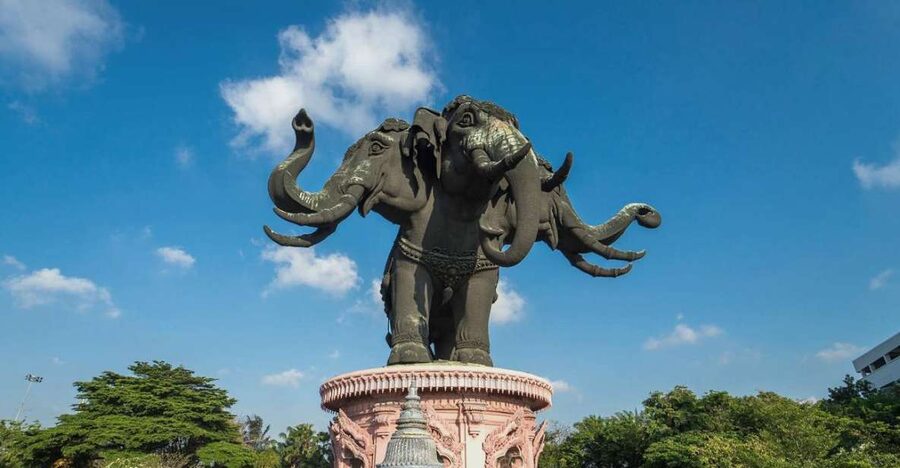
The sculpture is described as the first and biggest hand-carved sculpture of its kind. Regardless of how you measure that claim, its size is hard to miss. The three heads give the structure a mythic presence, while the legs and base connect the sculpture to the museum below.
Take your first photographs outside before heading in. You can also return to the exterior later, when you have a better sense of how the elephant relates to the three-part design.
The elephant is not merely a decorative sign. The museum’s upper level is inside its body, so the exterior acts as a guide to the experience ahead. You begin at ground level, then gradually work your way upward into the sculpture.
Starting below at the Suvarnabhumi Level
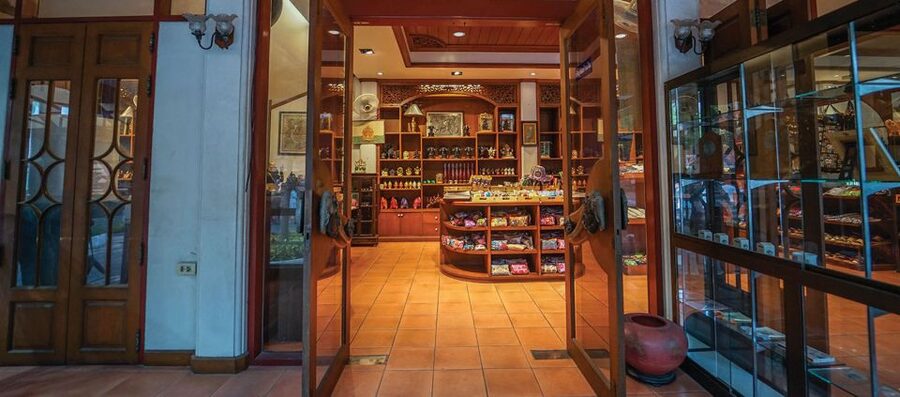
The first interior section is the underground Suvarnabhumi Level. In the museum’s symbolic plan, this is the Underworld, a place connected with the past.
Here you see ancient artifacts and porcelain from the owner’s collection. One notable style is Benjarong, a form of Thai ceramic ware known for detailed decoration and strong color. The objects give the lower level a more traditional museum feeling, although the surrounding architecture remains highly decorative.
The figure of Naga is another important sight. This snake-like being is linked with the Underworld and with the giving of water in Buddhist belief. Naga figures appear often in Southeast Asian religious art, but here the placement is part of a larger story about the world beneath our feet.
I would not rush through this level simply because it is underground. It provides the cultural foundation for the rest of the visit. The objects represent the past, while the next section moves into the world you know.
The lower level may be less immediately dramatic than the elephant above, particularly if you have come mainly for photographs. Still, it is where the museum’s ideas begin to make sense. Give yourself time to look at the ceramics and religious details before moving upward.
A few more Bangkok days worth weighing up
- Bangkok: Muay Thai Boxing Tickets at Rajadamnern Stadium
★ 4.9 · 4,740 reviews - Bangkok: Mahanakhon SkyWalk Entry Ticket with Options
★ 4.6 · 4,094 reviews - Bangkok: Chao Phraya Princess Dinner Cruise Ticket
★ 4.2 · 793 reviews - Bangkok: Grand Palace Skip-the-Line Entry Ticket
★ 4.2 · 720 reviews
The Earth Section and its stained glass ceiling
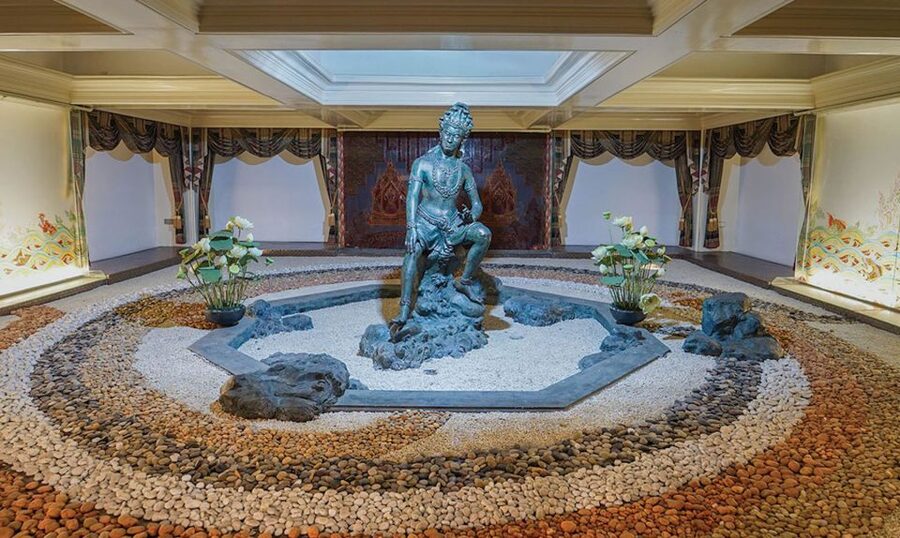
The central Earth Section forms the circular base that supports the elephant. This is the architectural heart of the museum, linking the lower collection with the upper realm.
The design combines Eastern and Western art forms. That mixture is one of the museum’s strongest features because it avoids a simple division between Thai and foreign influences. You see a building shaped by many traditions, brought together in one highly stylized interior.
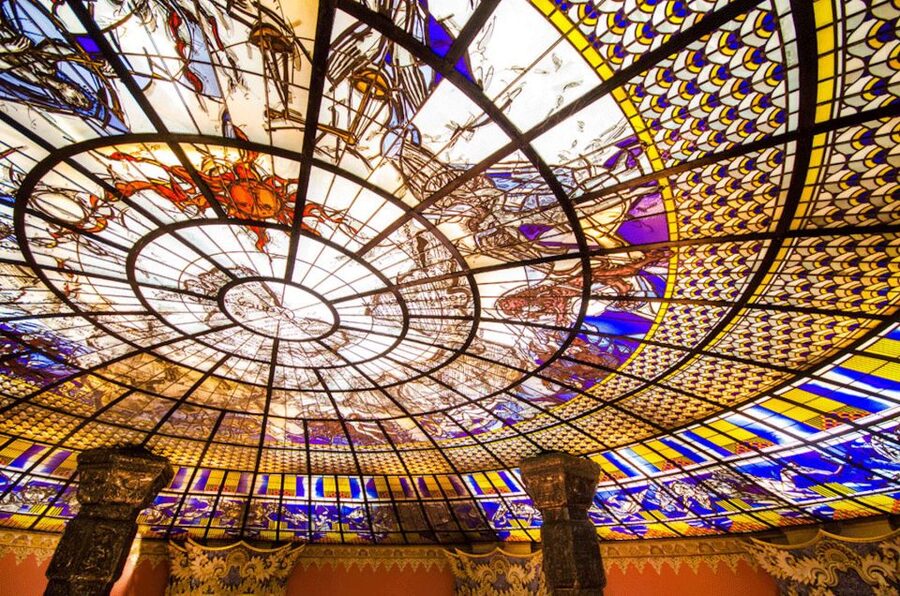
Look closely at the entrance ceiling. Its design relates to the idea of the Earth, while the stained glass forms a pattern that suggests the planet itself. The ceiling is easy to overlook if you keep your eyes at ground level, so this is a good place to slow down and look up.
The Earth Section also helps you understand the building’s physical structure. The round base is not just an exhibition room. It carries the enormous elephant above it, making the museum feel like a symbolic world held up by a very literal architectural foundation.
This area can be visually busy. Patterns, colors, objects, and structural details compete for attention. If you prefer clean, modern galleries, you may find it overwhelming. If you enjoy ornate interiors, it gives you plenty to study.
Entering Heaven inside the elephant
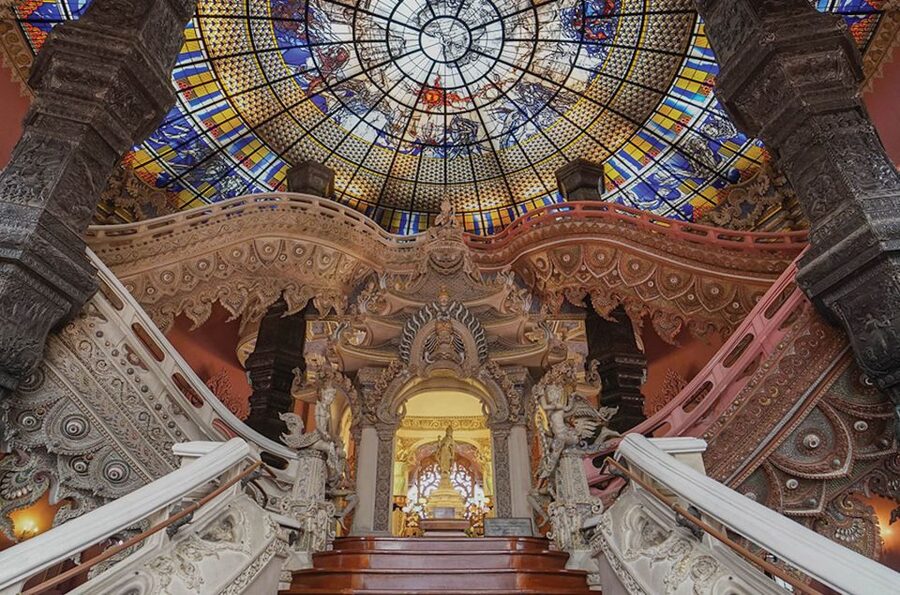
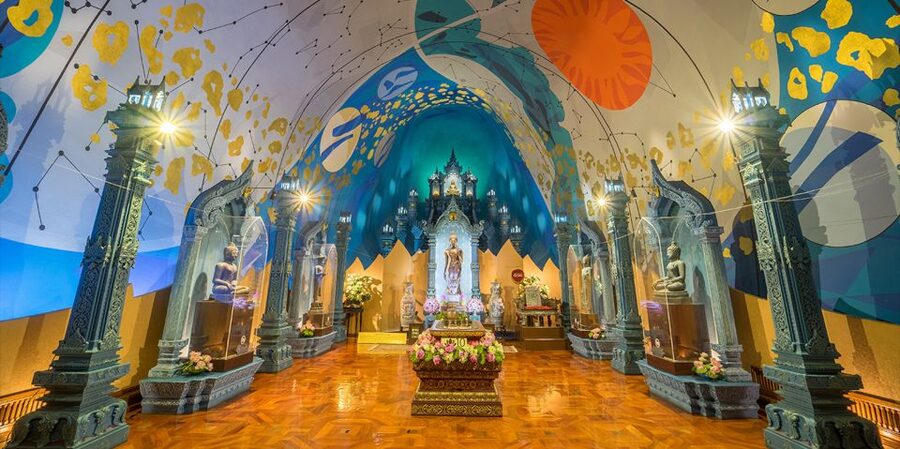
The Cosmo Level is the upper section, located inside the body of the elephant. You reach it by following two passageways from the right and left feet of the elephant.
This is the most unusual part of the visit. You are physically inside the sculpture that first caught your eye outside. The passageways lead toward an area painted with stories of gods and goddesses floating in Heaven.
The upper level has the strongest sense of movement from one realm to another. You start among objects connected with the past, pass through the Earth Section, and then arrive among celestial figures. Even if you do not share the religious ideas behind the design, the progression gives the museum a clear structure.
I would take time with the painted scenes rather than treating this level as a quick finish. The imagery is part of the museum’s larger effort to bring philosophy, faith, and art into one setting.
The route may feel less straightforward than a standard museum floor plan. There are two passageways, and the upper spaces are built within a giant sculpture rather than a conventional gallery. The included audio guide can help you understand what you are seeing, especially if you want more context than the visual design provides.
The gardens around the museum
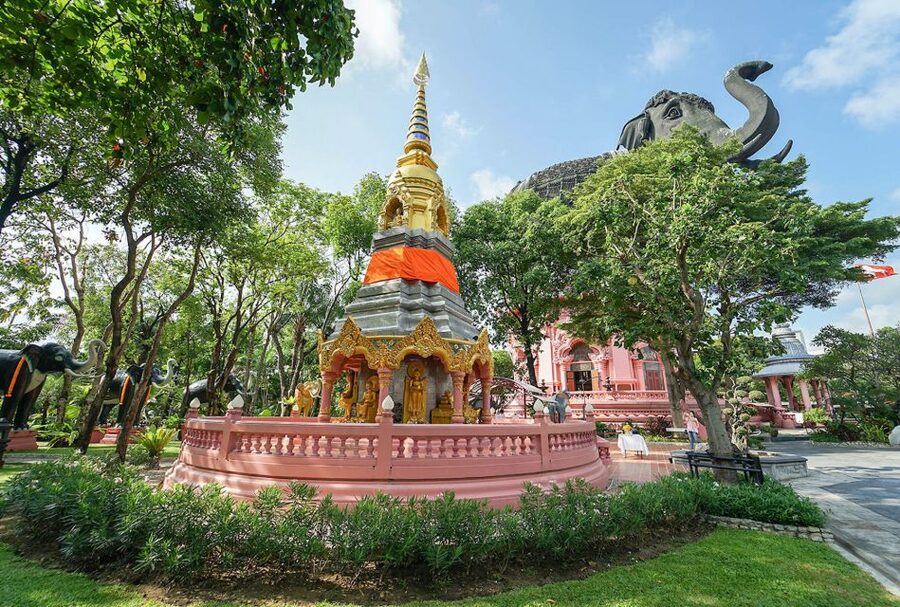
After the interior, walk through the outdoor grounds. The gardens contain rare tree species from different parts of Thailand, including trees connected with Thai literature.
This outdoor area gives you a welcome change of pace after the elaborate interior. It also provides more room for photographs, with the museum and elephant offering different angles than you get from the entrance.
The garden is not presented as a separate attraction with a detailed route or guided program. Think of it as part of the overall museum setting. You can stroll, pause, and take in the grounds after the more concentrated indoor visit.
If you are traveling with someone who prefers outdoor spaces to museums, this section may help balance the day. It does not replace the main visit, but it gives the experience a calmer ending.
What the $12 ticket includes
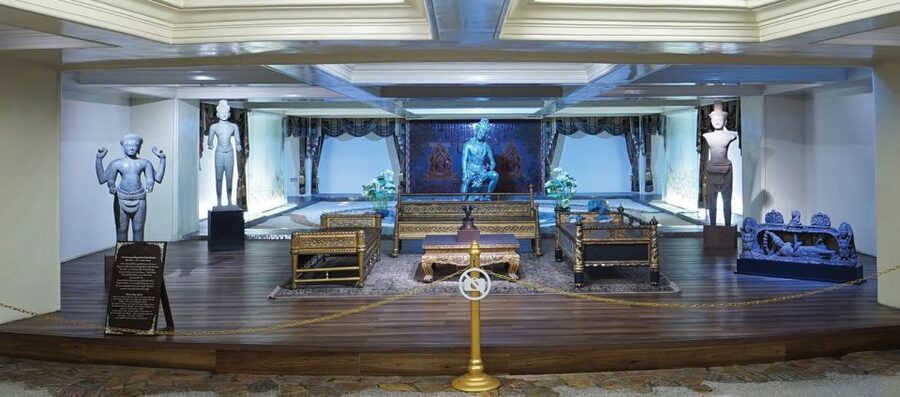
At about $12 per person, the discounted ticket is good value if you plan to see all three levels and spend time in the gardens. Admission includes access to the Erawan Museum and the surrounding areas, along with flowers, incense, and a lotus flower.
Those offerings suit the museum’s religious and reflective setting. They also make the visit feel more connected to Thai customs than a simple entrance fee would.
An audio guide is included in English, Thai, Chinese, Korean, and Russian. That is useful because the museum’s meaning is not always obvious from its decoration alone. You can focus on the visual details while using the guide for background on the three levels, religious figures, and architectural ideas.
The value is weaker if you only want a quick look at the elephant from outside. The ticket is intended for a full museum visit, and your time is tied to a specified booking slot. For a visitor who enjoys architecture, collections, and cultural symbolism, the price is easier to justify.
Dress rules and respectful behavior
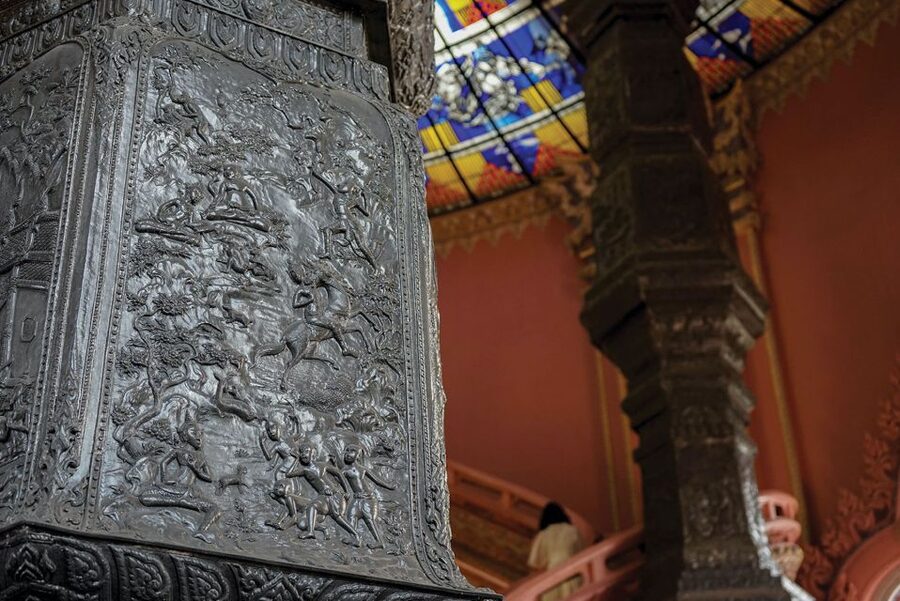
This is a sacred and cultural site, not just a photo attraction. Wear modest clothing. Shorts, short skirts, and sleeveless shirts are not permitted.
You should also keep your voice low and behave respectfully inside. Food and drinks are not allowed, and pets cannot enter. Commercial photography and video are prohibited inside the museum, although personal photographs are part of the appeal of the visit.
I would choose clothing that covers the shoulders and reaches below the knee before leaving Bangkok. That saves you from having to adjust your plans at the entrance.
The rules are simple, but they matter here because the building contains religious images and objects. Treating the space as a museum, place of worship, and work of art at the same time will make the visit more comfortable.
How much time should you allow?
The ticket is valid for one day, and starting times depend on availability. No fixed visit length is provided, so your pace matters.
A quick visitor may focus on the elephant, the main interior spaces, and a few garden photographs. A slower visit should include the Suvarnabhumi artifacts, Benjarong ceramics, Naga figure, stained glass, upper-level paintings, audio guide, and outdoor trees.
I would avoid squeezing the museum between tightly timed Bangkok plans. The journey to Samut Prakan takes planning, and the building rewards attention. It is better suited to a half-day outing than to a rushed stop between unrelated attractions, even though the admission itself is valid for one day.
The museum can be especially appealing when you want a quieter cultural activity. One verified booking described the museum as calm, with few group visitors, allowing a slower visit. Conditions can change, but selecting a less crowded time may help you appreciate the interior details.
Who should book this experience?
I would recommend it to you if you enjoy unusual buildings, religious art, Thai ceramics, and places that tell a story through design. It also suits photographers looking for both a huge exterior subject and intricate interior details.
Families and mixed-interest groups may find enough variety here to keep the visit engaging. The elephant provides an immediate visual hook, the lower level offers objects to examine, the upper level has dramatic painted scenes, and the gardens provide outdoor space.
You may want to skip it if you dislike ornate decoration, have very little time in Bangkok, or prefer a conventional museum with clearly labeled galleries. The location outside central Bangkok and the fixed visit time require more planning than a city-center attraction.
The experience has received a 4.8 rating from 20 reviews. The strongest praise centers on the unusual architecture, the sacred feeling of the site, and the warm Thai hospitality. One booking issue involved delayed ticket confirmation, but the provider worked to resolve it and the visitor entered successfully. I would save your booking confirmation and check it before setting out.
Should you book the Erawan Museum ticket?
Book it if you want an unusual cultural stop with a strong visual identity. The three-headed elephant is only the beginning. The real value comes from seeing how the Underworld, Earth, and Heaven ideas shape the museum from below to above.
The $12 price is fair for admission, an audio guide, the garden areas, and the small floral and incense offerings. Just plan your BTS journey, use the Chang Erawan Station shuttle, dress modestly, and arrive for the exact time on your ticket.
If you want a quick landmark photograph, the museum may ask more time and planning than you expect. If you want a thoughtful, highly decorative place that joins Thai art, world influences, religious ideas, and an extraordinary building, it is a strong choice outside Bangkok.
FAQ
Where is the Erawan Museum?
The museum is at 99 Tambon Bang Muang Mai, Amphoe Mueang Samut Prakan, Chang Wat Samut Prakan 10270, Thailand.
How do I reach the museum by BTS?
Take the BTS Skytrain Green Line to Chang Erawan Station, E17. Leave through Exit 2, where a free shuttle tuk-tuk service operates to the museum every day.
Is transportation included with the ticket?
No. The ticket includes museum admission and access to the surrounding areas, but transfers are not included.
What languages are available for the audio guide?
The audio guide is available in English, Thai, Chinese, Korean, and Russian.
What should I wear to Erawan Museum?
Dress modestly. Shorts, short skirts, and sleeveless shirts are not allowed.
Can I cancel the ticket if my plans change?
You can cancel up to 24 hours in advance for a full refund. The ticket is valid for one day, but you must visit on the specified date and time after booking.
Just added around Bangkok
- Yoga in the Park Thailand★ 5.0 · 12 reviews
- re:leaf spa and massage★ 4.0 · 10 reviews
- Wonderful Pearl Dinner Cruise★ 3.5 · 27 reviews
- 3-Hour Bangkok Walking Tour: Wat Pho and Wat Arun★ 5.0 · 102 reviews
- White Orchid Sunset Dinner Cruise Calypso Ladyboy Cabaret Show★ 4.0 · 10 reviews
- Visit temples in and around Bangkok with a former monk of 10 years★ 5.0 · 30 reviews
- Morning Buddhist Almsgiving, Grand Palace and Flower Market Tour in Bangkok★ 3.5 · 9 reviews
- Visit Wat Pho and Wat Arun with Local Expert★ 4.0 · 14 reviews
Tickets, compared.

Muay Thai Boxing Tickets at Rajadamnern Stadium
Read our review →




Browse the lists this tour appears in