
Reviewed · THAI CRAFT WORKSHOPS
Thai Dance Class
Thai dance is not just about copying hand movements. At Thai Glam Studio, you first learn how the gestures, poses, clothing, and music fit into Thai culture. Then you put on a full traditional outfit and try three different songs with patient guidance from the teacher.
I like the small group of seven or fewer, which gives the instructor room to correct your hands and posture. I also like the welcome drink and Thai dessert, since they turn the class into a cultural visit rather than a plain dance lesson.
The main consideration is physical access. The class is not suitable for wheelchair users, children under 10, or people over 95, and two hours of costume, warm-up, and movement may feel tiring if dancing is not your thing.
Key points before you book
- Three dance sequences: Learn poses and movements for three different songs rather than stopping after a single short demonstration.
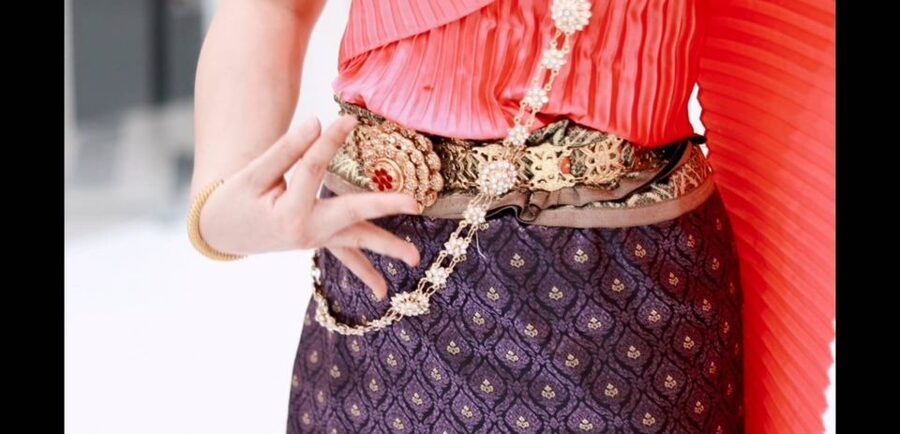
- Traditional clothing included: Dress in Thai costume with full accessories before you begin the dance.
- Culture comes first: The teacher explains the history of Thai dance before the warm-up.
- Small-group teaching: The class is limited to seven participants, and a solo booking may become a private lesson.
- A gentle introduction: Welcome drinks and Thai desserts help ease you into the class.
- Helpful language options: The host or greeter can provide support in English, Chinese, or Korean.
Arriving at Thai Glam Studio near Wat Arun Pier
Your meeting point is Wat Arun Pier, and the studio is called Thai Glam Studio. The activity includes pickup service at the meeting point, so pay close attention to the meeting instructions when you book and arrive with enough time to find the correct spot.
The location matters because Wat Arun Pier is one of Bangkok’s familiar river points, but the class itself takes place at the studio. This is not a dance show at a temple or a lesson performed outdoors. You are heading into a dedicated space where the focus stays on costume, instruction, and movement.
The two-hour schedule is short enough to fit into a busy day in Central Thailand. At the same time, it is long enough for the class to have a proper beginning, middle, and end. You are not simply handed a costume, shown one pose, and sent on your way.
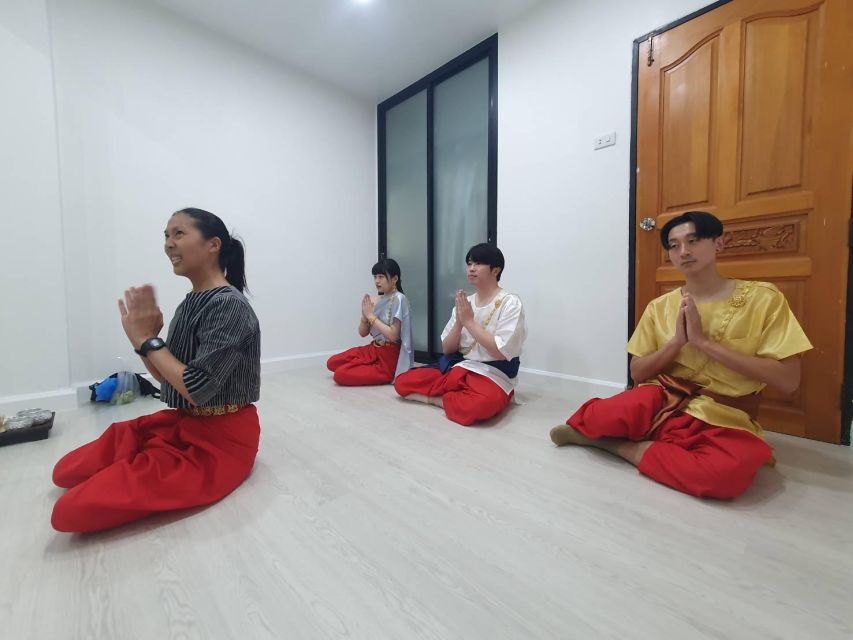
Because the group is capped at seven, the room should feel more like a workshop than a large tour. That makes a difference with Thai dance, where small changes in finger position, wrist angle, and posture matter. If you are the only person booked for a particular session, the class may become a private lesson.
More craft workshops in Bangkok:
- Thai Dance Class at Wat Arun
★ 5.0 · 30 reviews - Jim Thompson’s Story of Silk
★ 3.0 · 14 reviews - Thai Costume Rental
★ 4.8 · 13 reviews
Starting with a welcome drink and Thai dessert
The class begins with a welcome drink and Thai dessert. This is a small touch, but it sets the pace. You have time to settle in before the lesson starts instead of walking straight from the street into a demanding set of instructions.
The dessert also gives the class a local flavor without turning the opening into a long meal. You can enjoy a taste of Thailand, meet the teacher, and get ready for the costume portion of the visit.
I like this start because it helps solo participants feel less awkward. If you arrive alone, the welcome is especially useful. You are given a clear activity to begin with, and the small group makes it easier to talk with the instructor and other participants.
Do not expect the dessert to be the main food stop of your day. It is a welcome treat, not a full meal. Plan your meals separately, especially if you have dietary needs, since no specific dessert ingredients are provided in the activity details.
Learning why Thai dance uses careful gestures
Before you dance, the teacher explains the history of Thai dance. This part gives the movements a purpose. Instead of treating the hand shapes as decoration, you begin to see them as part of a formal tradition with its own style and meaning.
The historical introduction is one of the strongest parts of the class for anyone who wants more than photographs. Several participants have found the teacher’s explanations of Thai culture and Southeast Asian history especially useful. That makes this a good pick if you enjoy understanding what you are seeing, not just trying it for a few minutes.
The explanation also gives you a helpful reference point when the physical lesson begins. Thai dance can look calm and effortless, but the controlled gestures take focus. Knowing that the poses have meaning helps you pay attention to detail rather than rushing through the sequence.
The exact length of the history talk is not specified, so the balance between explanation and dancing may vary. Still, the class clearly places cultural context before the warm-up. If you want nonstop movement from the first minute, this may feel slower than a standard dance workshop.
Putting on the complete Thai costume
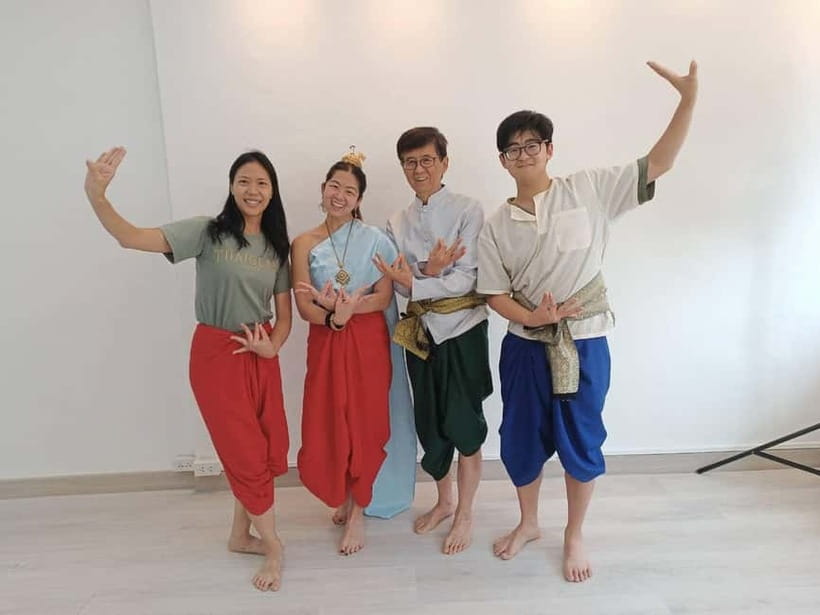
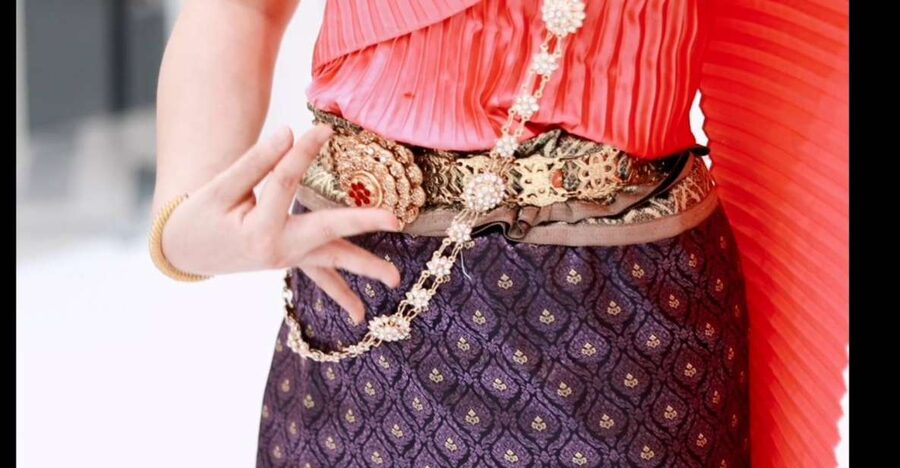
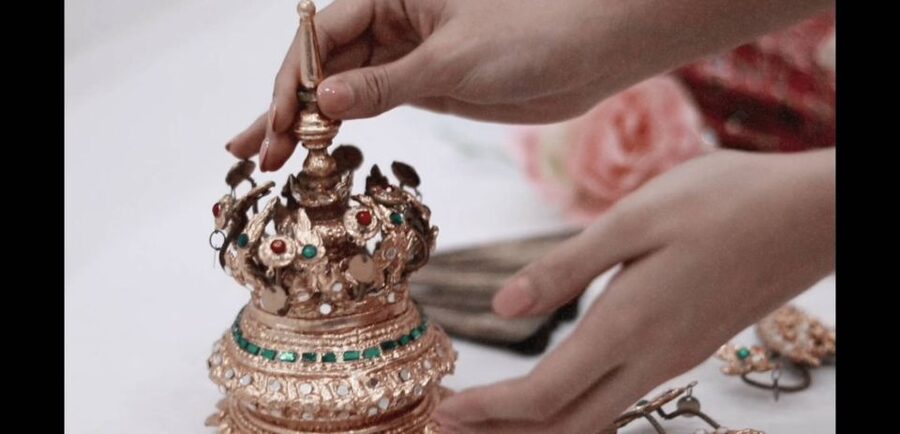
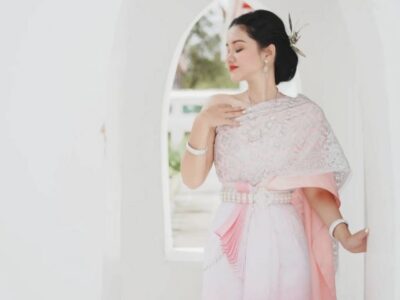
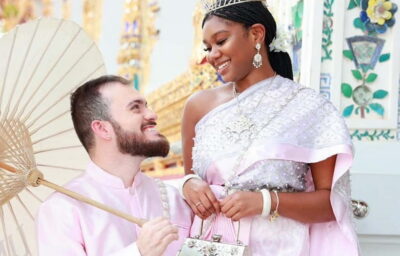
You learn how to wear traditional Thai clothes for the dance. The outfit includes the full accessories, so this is more than putting on a simple scarf or decorative top for a quick picture.
The dressing process is part of the lesson. You are shown how the clothing works before you try to dance in it, which matters because the costume changes how you move. Posture, arm position, and the pace of your gestures all feel different when you are dressed for a formal performance.
The costumes have been described as authentic, adding weight to the cultural side of the activity. You can take photos and short clips during some parts of the class, giving you a record of the costume and the movements you learn.
There is an important limit here: photos and clips are allowed in some parts, not necessarily from beginning to end. Follow the teacher’s instructions. A dance class works best when you watch, listen, and keep your hands in the right place, rather than trying to film every step.
The costume is also a practical reason to wear comfortable clothing underneath. The activity information does not specify a dress code, so choose something that lets you change easily and move without discomfort. That is general preparation rather than a stated studio rule, but it is sensible for any costume-based class.
A few more Bangkok days worth weighing up
- Bangkok: Damnoen Saduak Market and Maeklong Railway Market
★ 4.5 · 26,723 reviews - The Old Siam: Damnoen Saduak and Maeklong Railway Market
★ 4.5 · 10,992 reviews - Bangkok: Train Market & Floating Market with Boat Ride
★ 4.7 · 9,547 reviews - Bangkok Canal Tour: 2-Hour Longtail Boat Ride
★ 4.5 · 5,909 reviews
Warming up before the three songs
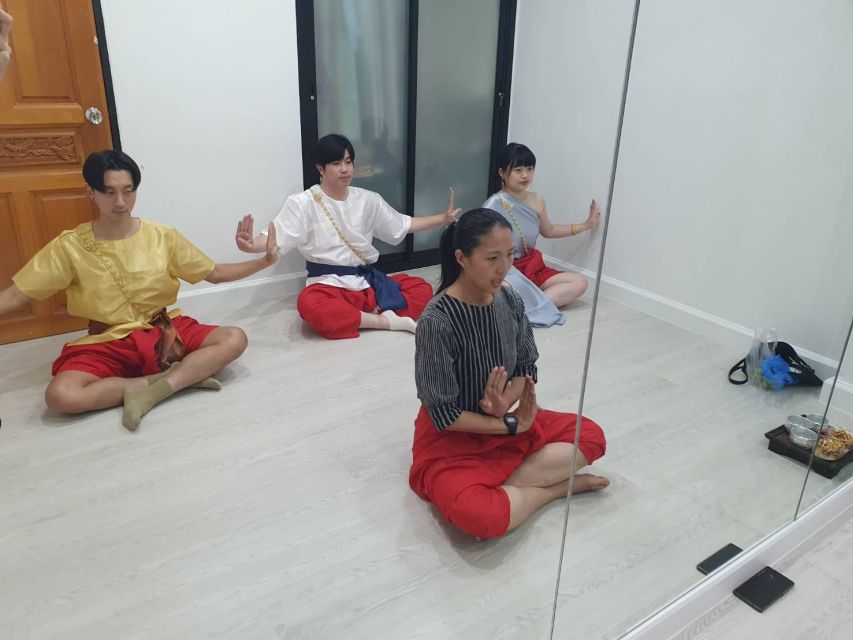
After the history and costume steps, you warm up. This prepares you for the three songs and pose sets that make up the active part of the class.
The warm-up is useful for beginners because Thai dance asks for control rather than speed. You may find that the challenge is keeping your fingers, wrists, arms, and body position coordinated at the same time. A warm-up gives you a chance to learn the basic feel before the full sequences begin.
The teacher provides gentle corrections, an important detail for anyone who worries about getting the movements wrong. The goal is not to perform like a professional dancer in two hours. It is to help you understand the form and make the movements recognizable and comfortable.
If you have watched a Thai dance performance before, the lesson may become even more interesting. One participant who had seen a play shortly before the class found it useful to recognize movements from the performance. Seeing a gesture onstage and then learning its mechanics gives you a better sense of what performers are doing.
Learning three songs and pose sequences
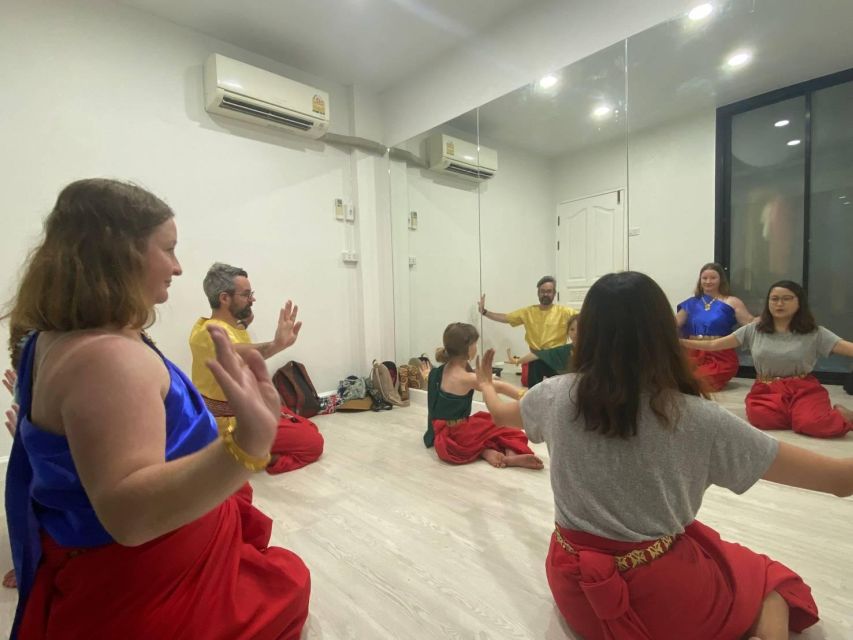
The class teaches three different songs and poses. This gives the session variety and lets you compare changes in rhythm, gesture, and posture instead of repeating one short routine.
For a beginner, three songs also create a natural sense of progress. The first sequence helps you get used to the instructor’s pace. By the second, you have a better idea of how to place your hands and hold your body. The third gives you a chance to bring the pieces together.
Do not expect a high-energy workout. Thai dance is controlled, expressive, and precise. The class focuses on poses and formal movement, so the satisfaction comes from learning small details rather than burning calories or moving quickly across a large floor.
The teacher’s correction style appears to be patient and gentle. That is valuable in a small class, where you may receive direct help instead of trying to copy someone several people ahead of you. It is also a good setting for solo participants, since the instructor can adjust the pace when needed.
The class is suitable for beginners who are willing to concentrate. You do not need to arrive with dance training, but you should be ready to listen carefully and repeat movements. If you want a relaxed cultural activity with a physical element, this balance works well.
What the teacher adds to the lesson
The instructor is more than a person counting steps. The class combines dance teaching with explanations of Thai culture and history, which gives the activity a stronger sense of place.
You can expect corrections on the meaning and shape of each movement, not just its order. That helps answer the question many beginners have: why does the hand need to be held that way, and why must the body stay in that position?
The teaching style is especially important for this type of class. Thai dance can feel unfamiliar at first, and a rushed instructor would make the lesson frustrating. Here, the teacher is described as patient, kind, and willing to explain the details and meaning behind the gestures.
Language support is available in English, Chinese, and Korean. The exact instructor for your session is not named in the activity details, so you should not book expecting a particular teacher. Still, the listed language options make the class easier to follow if you are not comfortable learning in Thai.
How the small group affects your experience
The group limit is seven participants. That is small enough for the teacher to see how each person is handling the movements, while still allowing you to enjoy a shared activity.
A small class is particularly helpful during the costume and pose sections. You can ask questions without stopping a large group, and the teacher has more room to offer corrections. You also avoid the impersonal feel of standing at the back of a crowded demonstration.
Solo participants should take note. The class accepts individual bookings, and a session with only one person can become a private lesson. That is a strong value if you are traveling alone and want an activity that does not require a minimum number of people.
The trade-off is that a private lesson may feel more focused and less social. If you prefer meeting a larger group, this is not the right format. The class is built around close instruction, not a party atmosphere.
Is $70 a fair price?
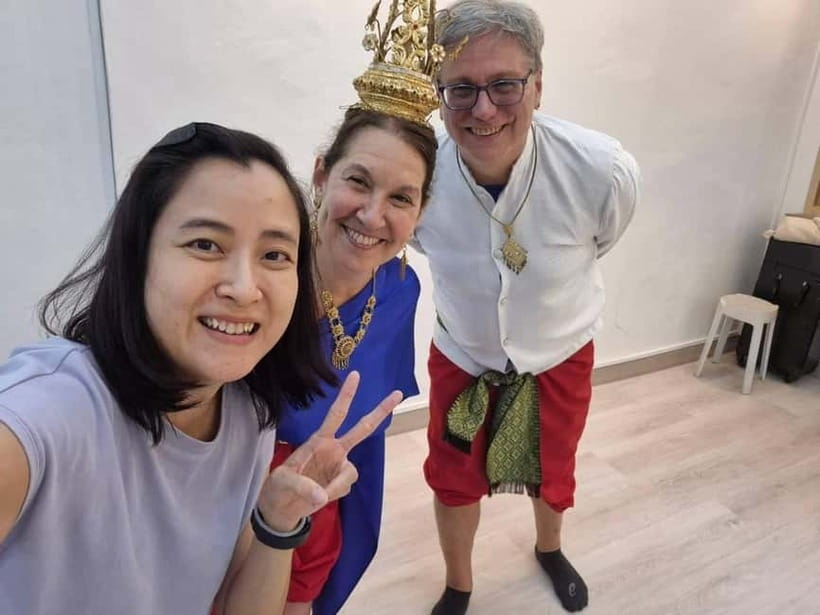
At $70 per person, this is not the cheapest way to spend two hours in Thailand. The value depends on what you want included in those two hours.
You are paying for a small-group lesson, a teacher-led cultural explanation, traditional clothing with full accessories, a welcome drink, Thai dessert, and three dance sequences. You also get the chance to take some photos and short clips, subject to the instructor’s directions.
That package makes more sense if you value personal instruction and a cultural activity that you can actively take part in. A simple performance ticket might cost less, but it would not teach you how the movements work or let you wear the costume and practice them yourself.
The price is also easier to justify for solo visitors if the class remains available with one booking. A private lesson at the same listed price can offer more personal attention than a large group class.
I would not choose this activity if you mainly want a fast photo opportunity. You spend time on history, dressing, warm-up, and practice. The price pays for the full lesson, not only the final costume picture.
Who will enjoy this class most?
I would recommend the class to you if you enjoy learning through movement. It suits people who want a cultural activity with clear instruction, rather than a passive sightseeing stop.
It is also a strong choice for solo visitors. You do not need to gather a group of friends, and the small format gives you a better chance to interact with the teacher.
You will likely enjoy it if you have already seen Thai dance onstage or at a cultural performance. The class helps you notice how performers shape their hands and hold their bodies. It turns a graceful performance into something you can examine from the inside.
Families should note the age limit. Children under 10 are not suitable for this activity. The class is also not suitable for wheelchair users or people over 95, according to the stated restrictions.
You should also avoid bringing alcohol or drugs to the activity. These are not allowed.
Booking, cancellation, and practical planning
The activity lasts two hours, and starting times depend on availability. Check the schedule before arranging other plans around it.
You can reserve now and pay later, which helps if your Central Thailand schedule is still changing. You can also cancel up to 24 hours in advance for a full refund, giving you some room to adjust your day.
Arrive at the stated meeting point at Wat Arun Pier and use the pickup service provided there. Since the class is at Thai Glam Studio, confirm the meeting instructions carefully rather than assuming the pier and studio are the same place.
Wear something comfortable underneath the costume, and bring a phone if you want to take approved photos or short clips. The activity details do not promise photography during every part of the lesson, so let the teacher decide when filming is appropriate.
Should you book the Thai Dance Class?
Book this class if you want to learn the meaning and shape of Thai dance, wear a complete traditional outfit, and receive close help in a small group. The teacher’s patient corrections, cultural explanations, and three separate dance sequences give the two hours real substance.
I would especially choose it for a solo visit, a cultural afternoon, or a trip where you have already seen the major sights and want to try something active. Skip it if you want a fast show, a large social group, or a vigorous workout.
At $70, it is a considered purchase, but the combination of costume, dessert, history, and personal instruction makes the price reasonable for the right person. If those details appeal to you, Thai Glam Studio offers a memorable way to learn Thai culture with your hands, posture, and feet, not just through a guide’s explanation.
FAQ
Where does the Thai dance class take place?
The class takes place at Thai Glam Studio in Central Thailand. The meeting point is Wat Arun Pier, where pickup service is provided.
How long does the activity last?
The Thai dance class lasts two hours. Available starting times can vary, so check the schedule when booking.
What is included in the price?
The activity includes Thai desserts, a welcome drink, traditional Thai clothing with full accessories, the dance instruction, and pickup service at the Wat Arun Pier meeting point.
How many people can join the class?
The class is limited to seven participants. If only one person books a particular session, it may become a private lesson.
What languages are available?
The host or greeter can provide support in English, Chinese, and Korean.
Who cannot join the activity?
The class is not suitable for children under 10, wheelchair users, or people over 95. Alcohol and drugs are not allowed.
Just added around Bangkok
- Wonderful Pearl Dinner Cruise★ 3.5 · 27 reviews
- Yoga in the Park Thailand★ 5.0 · 12 reviews
- re:leaf spa and massage★ 4.0 · 10 reviews
- 3-Hour Bangkok Walking Tour: Wat Pho and Wat Arun★ 5.0 · 102 reviews
- White Orchid Sunset Dinner Cruise Calypso Ladyboy Cabaret Show★ 4.0 · 10 reviews
- Visit temples in and around Bangkok with a former monk of 10 years★ 5.0 · 30 reviews
- Morning Buddhist Almsgiving, Grand Palace and Flower Market Tour in Bangkok★ 3.5 · 9 reviews
- Visit Wat Pho and Wat Arun with Local Expert★ 4.0 · 14 reviews
Thai Craft Workshops, compared.

Koh Lanta Cultural Tuk-Tuk Tour: Old Town, Batik & Mangroves
Read our review →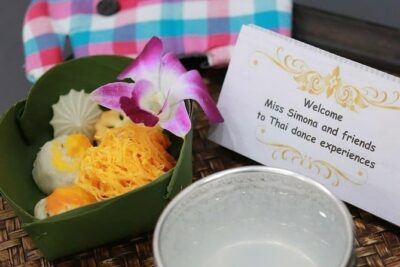
Thai Costume Rental + Hairdo, Makeup & Accessories
Read our review →
Grand Canyon Chiang Mai Private Tour with Pottery Village
Read our review →Browse the lists this tour appears in