
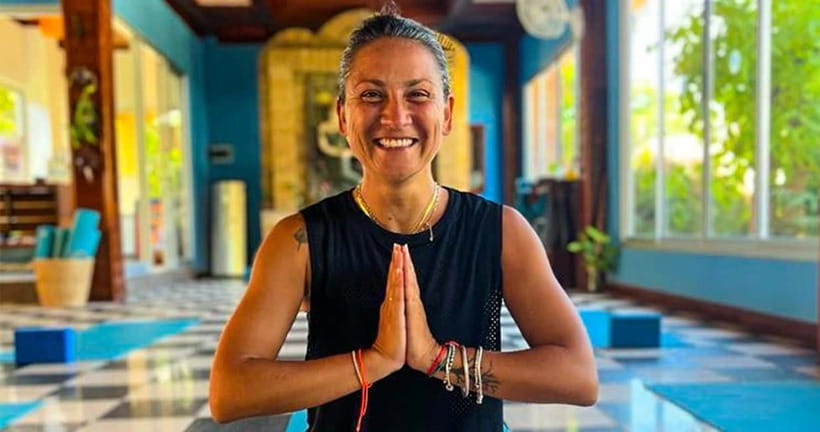
Reviewed · YOGA CLASSES
Koh Tao: Yoga Class In Paradise – All Levels Welcome!
Koh Tao’s one-hour yoga class gives you a simple way to slow down between beach days, boat trips, and busy island plans. You can choose an active Vinyasa Flow, a gentler Hatha Flow, or quiet Yin Yoga, and beginners are welcome.
I like the $11 price, which makes this an easy add-on rather than a major holiday expense. I also like that mats, props, water, and an instructor are included, so you can walk in without packing a yoga kit. One point to consider: the studio can feel hot, with fans instead of air conditioning, and one participant found the class challenging despite its all-levels description.
Key points at a glance
- Three distinct class styles: Pick energetic Vinyasa Flow, measured Hatha Flow, or restful Yin Yoga.
- Useful for beginners: The studio welcomes first-timers as well as regular practitioners.
- Franny receives warm praise: Her clear and caring instruction is a highlight for some participants.
- Equipment is supplied: Mats, props, and water are included in the $11 price.
- The room may be hot: Fans are used, but there is no air conditioning.
- Easy Koh Tao meeting point: Find the studio near the 7/11 and currency exchange, under the blue roof.
A practical hour of yoga on Koh Tao
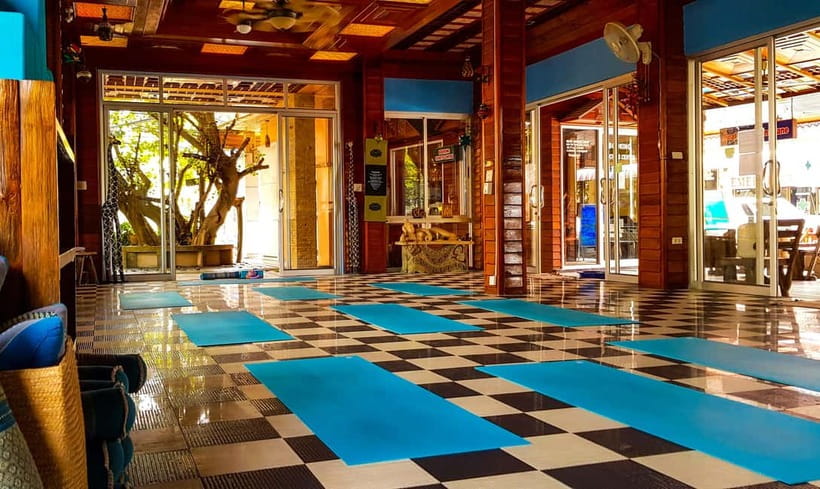
This is not a full-day wellness retreat or a resort package. It is a focused class that fits neatly into a Koh Tao itinerary. You meet at the studio, settle onto a provided mat, and spend an hour moving, stretching, breathing, or holding postures, depending on the class you choose.
That short format is useful. You do not need to give up half a day, arrange transport, or carry extra gear around the island. At $11 per person, the class costs about the same as a casual meal or a small holiday activity, yet it gives you a chance to reset your body after time in the sun.
I would see this as a good match for a free morning, a slower afternoon, or a rest day. It can also balance an active Koh Tao schedule. If your holiday includes long hours outdoors, a calming Yin class may feel more useful than another high-energy activity.
More Yoga Classes in Koh Tao:
- Spiritual Sunrise Wat Doi Suthep, Pha Lat, Alms & Meditation
★ 4.9 · 674 reviews - Chiang Mai: Evening Chanting & Meditation
★ 4.5 · 69 reviews - Krabi: Sunset Yoga Balance Join-in Class
★ 4.7 · 57 reviews
Finding the blue-roof studio
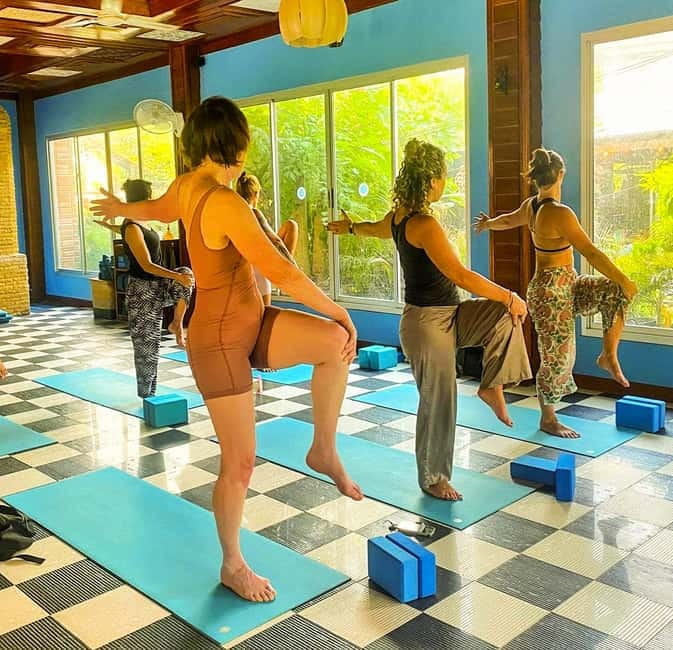
The meeting point is the yoga studio near a 7/11 and the currency exchange, under the blue roof. That description is practical, but you should still allow a little time to locate the entrance, especially if you do not know this part of Koh Tao well.
There is no pickup service, so you need to make your own way there. The good news is that you are not tied to a hotel transfer schedule. You can plan around your own day, but you should not arrive at the last second.
Arrive five to ten minutes early. That gives you time to find the room, put away your belongings, ask a basic question, and settle onto your mat before the class starts. The activity is conducted in English.
Choosing between Vinyasa, Hatha, and Yin
The biggest decision is not the meeting point or the price. It is choosing the style that fits your energy level and what your body needs that day.
Vinyasa Flow for movement and heat
Vinyasa is the most active option. You connect movement to breath and flow through a changing sequence designed to build heat, strength, and flexibility.
This can be a good pick if you want yoga to feel like exercise. You will likely move more continuously than in Hatha or Yin, so it may suit regular practitioners or anyone who enjoys a physical class.
For a first-timer, Vinyasa may require some patience. The class is open to all levels, but the flowing format can feel quick if you are still learning basic positions. If you choose Vinyasa as a beginner, tell the instructor before class so you can work at a sensible pace.
A few more Koh Tao days worth weighing up
- Koh Tao: Islands Snorkeling Highlights Day Tour & Lunch
★ 4.7 · 3,742 reviews - Full day snorkeling adventure around Koh Tao
★ 5.0 · 2,300 reviews - Open Water Course – Become certified diver in 3 days
★ 5.0 · 1,137 reviews - Koh Tao: Koh Nangyuan & Hidden Bays Snorkeling Tour w/ Lunch
★ 4.6 · 912 reviews
Hatha Flow for a measured class
Hatha Flow combines gentle movement, deliberate breathing, and posture holds with some flowing transitions. It focuses on alignment and body awareness rather than simply moving from one pose to the next.
I would point many beginners toward this option, especially if you want time to understand how your body is positioned. It may also suit you after a tiring day, when you want movement without the stronger pace of Vinyasa.
Hatha is not necessarily effortless. Holding positions and paying attention to alignment can still test your balance and strength. The slower rhythm simply gives you more room to notice what you are doing.
Yin Yoga for rest and recovery
Yin is the quietest choice. You hold postures for around two to five minutes, working toward the deeper connective tissues, joints, and fascia.
This style asks for patience. You are not racing through a sequence or trying to create a sweat. Instead, you stay with a position and allow stillness to become part of the practice.
Yin can suit you after physical activity, during a stressful part of your trip, or when you want a calm hour. It is also a useful choice if you are curious about yoga but do not want a fast-moving class. Still, long holds can feel demanding in their own way, so gentle does not always mean easy.
What happens during the class
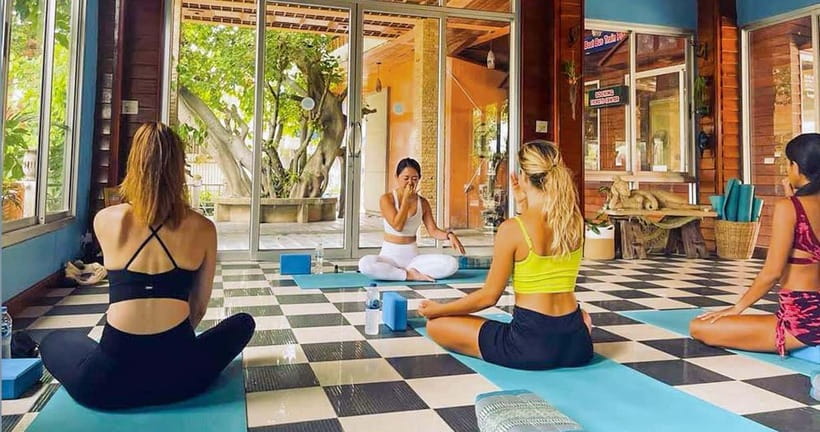
The session lasts one hour. The exact starting time depends on the schedule available when you book, and daily classes offer some flexibility for planning.
You begin by setting up with the supplied equipment. Mats, props, and water are included, so you do not need to carry your own mat or buy supplies before arriving. Bring a towel for personal use, and wear comfortable clothing that allows you to move freely.
From there, the class follows the style you selected. Vinyasa links breath and movement. Hatha gives more attention to measured transitions and posture. Yin asks you to settle into longer-held positions.
The instructor leads in English. That should make it possible to follow spoken guidance if you are comfortable with English, though yoga also relies on visual demonstrations and familiar movement patterns.
You should not expect a custom private lesson. This is a scheduled studio class, and the description does not promise individual coaching or a class size limit. If you need close personal supervision, mention that before starting and choose a pace that feels safe.
The real comfort question: heat and airflow
Koh Tao is warm, and the studio does not have air conditioning. Fans are used instead. One participant found the room quite hot and felt the class was harder than expected.
That point matters more here than it might in a cool-weather yoga studio. Heat can make stretching feel easier at first, but it can also make an active Vinyasa class tiring. If you are sensitive to heat, Yin or Hatha may be more comfortable than Vinyasa, though the room temperature remains a factor.
Drink the supplied water and avoid pushing too hard. Comfortable clothing matters, and a towel can help with personal comfort. If you are new to yoga, do not treat sweating as a sign that you should continue past your limits.
The warm room is not necessarily a flaw for everyone. Some people like a naturally warm practice, and fans do provide airflow. Still, you should book with clear expectations: this is not an air-conditioned studio experience.
The instructor makes a difference
The teaching is delivered in English, and Franny receives especially warm praise for being clear, kind, and supportive. Those qualities matter in a class that welcomes beginners.
Good instruction is not only about showing poses. It is about helping you understand how to adjust, when to rest, and how to avoid forcing a position. Franny’s teaching style is described as both pedagogical and caring, which should appeal if you want guidance without feeling judged.
The available information does not guarantee that every class will be taught by Franny, so do not book solely on the assumption that she will lead your session. The instructor is part of the experience, and the class schedule may determine who teaches.
You can help yourself by being honest about your experience level. If you are completely new, say so. If you practice regularly but have an injury or limitation, ask for a modification rather than trying to match everyone else.
Is $11 good value?
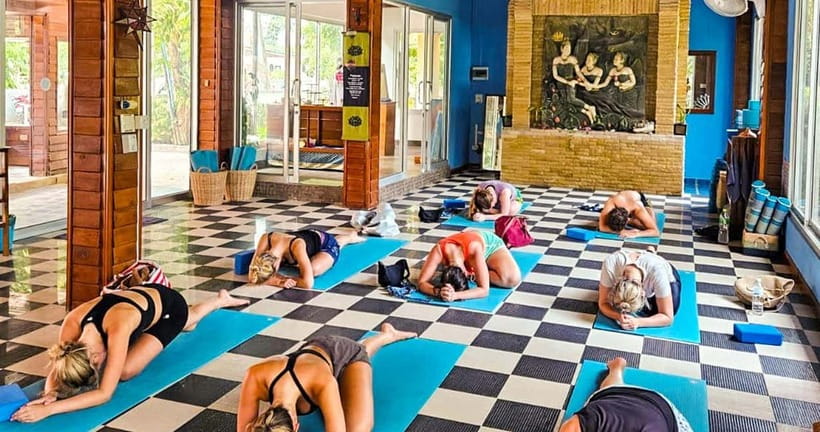
At $11 per person, this is a strong-value activity if you want a proper class rather than an informal stretch on the beach. The price includes the instructor, mat, props, water, and the full one-hour session.
You are paying for structure as much as equipment. A guided class can keep you focused, give you a clear sequence, and help you make better use of an hour. You also avoid the hassle of bringing a mat to Koh Tao.
The value depends on what you want. If you prefer private instruction, luxury facilities, air conditioning, or a spa-style setting, this may feel basic. If you want an affordable studio class with several styles and no need to own equipment, it makes financial sense.
The included water and gear are small details, but they help keep the price honest. You do not need to add rental costs or shop for supplies before class.
Who should book this class?
I would recommend it most strongly to:
- Beginners who want a friendly introduction to yoga.
- Regular practitioners looking for a class while staying on Koh Tao.
- People who want to choose between active, moderate, and restful styles.
- Anyone recovering from a busy schedule who wants a one-hour reset.
- Budget-conscious visitors who do not want to pay resort rates.
- Visitors who are comfortable with an English-language class.
The class may be less suitable if you need air conditioning, private coaching, or a guaranteed gentle session. The all-levels label means beginners are welcome, not that every class will feel easy. Vinyasa can be demanding, and even Yin requires patience during long holds.
If you have never tried yoga, Hatha is likely the safest starting point among the three styles. If you want a workout and already know basic yoga positions, choose Vinyasa. If your main goal is calm and recovery, choose Yin.
Booking flexibility and useful preparation
You can cancel up to 24 hours before the class for a full refund. You can also reserve now and pay later, which helps if your Koh Tao plans may change.
Those policies are useful on an island trip, where weather, transport, and day plans can shift. Even so, do not leave arrival until the final minute. The studio asks you to come five to ten minutes early.
Before leaving, wear comfortable clothes and pack a towel. You do not need to bring a mat, props, or water because those are provided. There is no pickup, so allow enough time to reach the studio near the 7/11 and currency exchange.
My call: book it if you want simple, affordable yoga
I would book this class if I wanted an inexpensive way to add movement or calm to a Koh Tao stay. The choice of three styles, included equipment, English instruction, and Franny’s praised teaching make it more useful than a bare-bones drop-in session.
I would choose Hatha for a first class, Yin for recovery, and Vinyasa only if I felt ready for heat and a more active pace. The hot room is the main consideration, so visitors who need air conditioning should look elsewhere.
For everyone else, $11 is a reasonable price for one focused hour in a welcoming studio. Book it when you want to reconnect with your body, but arrive ready for a warm room and a real class rather than a weightless holiday stretch.
FAQ
How long is the yoga class?
The class lasts one hour.
How much does the class cost?
The price is $11 per person.
Are beginners allowed to join?
Yes. The class welcomes all levels, including people attending yoga for the first time.
Which yoga styles are available?
The studio offers Vinyasa Flow, Hatha Flow, and Yin Yoga.
What is Vinyasa Flow?
Vinyasa Flow connects movement with breath through creative sequences that build heat, strength, and flexibility.
What is Hatha Flow?
Hatha Flow uses slower movement, intentional breathing, posture holds, and mindful transitions, with attention to alignment and body awareness.
What is Yin Yoga?
Yin Yoga uses long-held postures lasting around two to five minutes and focuses on stillness, recovery, and releasing tension.
Is equipment provided?
Yes. Mats, props, water, and the equipment needed for the class are provided.
Where does the class meet?
The meeting point is the yoga studio near the 7/11 and currency exchange, under the blue roof.
Do I need to bring anything?
Wear comfortable clothing and bring a towel for personal use. You should arrive five to ten minutes early. There is no pickup service.
Just added around Koh Tao
- Snorkeling Tour with meals and BBQs – Cocktail – Sunset⭐⭐⭐⭐⭐★ 5.0 · 105 reviews
- Koh Tao: Snorkeling and Sunset Tour★ 4.8 · 118 reviews
- Koh Tao: First Light Snorkel Adventure with Oxygen Tours★ 4.7 · 38 reviews
- Koh Tao: Golden Hour Getaway – Your Late Start to Paradise★ 4.7 · 13 reviews
- From Samui: Koh Tao and Nangyuan Snorkeling Tour Day Trip★ 4.2 · 9 reviews
- Ko Tao: Late Riser Snorkeling Tour with Lunch and Photos★ 4.6 · 135 reviews
- Ko Tao: Morning Trip to Ko Nangyuan’s Serene Oasis by Oxygen★ 4.9 · 18 reviews
- Koh Tao and Koh Nang Yuan Speedboat Tour from Koh Phangan★ 4.0 · 28 reviews
Yoga Classes, compared.
Spiritual Sunrise Wat Doi Suthep, Pha Lat, Alms & Meditation
Read our review →
Half-Day Yoga, Meditation, and Thai Cultural Immersion in Chiang Mai
Read our review →
3 day Yoga and Meditation Retreat in Chiang Mai
Read our review →
Fah Lanna Traveler’s Retreat Spa Package in Chiang Mai
Read our review →Browse the lists this tour appears in