
Reviewed · HISTORICAL TOURS
Full-Day Historical Park and Countryside Tour in Sukhothai
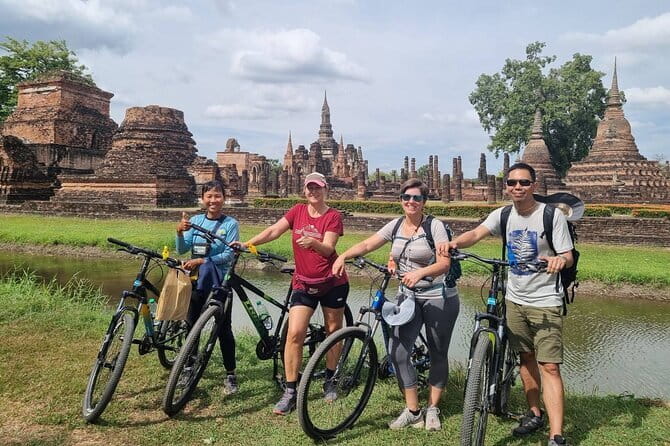
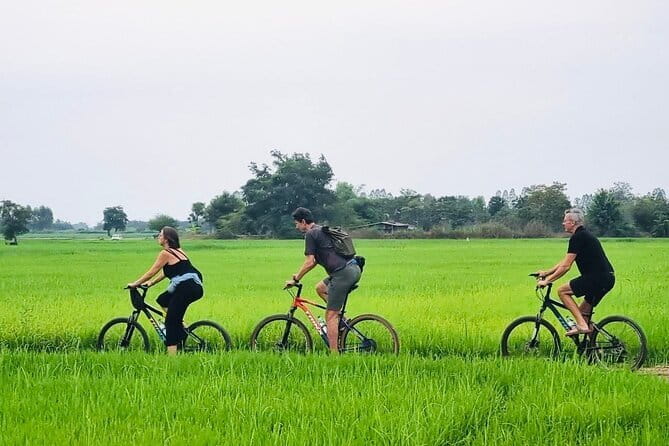
The best part of this Sukhothai tour happens before you reach the famous ruins. You pedal beside little canals, rice fields, and local villages, watching how water supports farming, fishing, laundry, and daily life. Then the road leads you into the ancient capital, where temples such as Wat Si Chum and Wat Mahathat provide the grand finale.
I like the mix of ordinary village life and major historical sites, since you get more than a quick circuit of the park. I also like the practical setup: a 24-gear mountain bike, helmet, insurance, lunch, drinks, entrance fees, and hotel transfers are all included.
The main consideration is timing. Seven hours on a bicycle, with several temple stops, suits an active day better than a slow sightseeing outing. Pickup beyond 15 kilometers costs extra, and transfers from the airports or Phitsanulok railway station are not part of the standard price.
Key points to know before you book
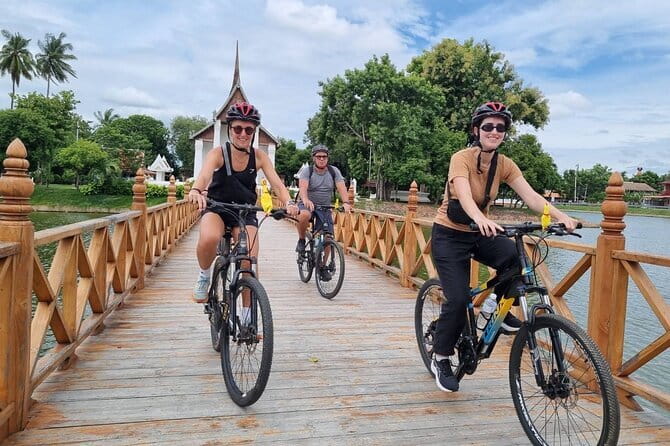
- Canals before temples: The morning route shows how local communities use water for farming, bathing, laundry, and fishing.
- A small group of up to 12: You get a more personal outing than on a large coach tour.
- Guide Mem adds local detail: Expect explanations about village life, architecture, history, Buddhism, and farming.
- Eight substantial stops: The route includes Wat Chetuphon, Saritphong Dam, Wat Mangkon, Wat Pa Mamuang, Wat Si Chum, Wat Mahathat, Wat Si Sawai, and the wider Historical Park.
- Lunch and riding equipment are included: You receive a mountain bike with front suspension, helmet, bottled water, soft drink, snack, insurance, and admission fees.
- Good value at $51.92: The price covers transport, food, equipment, guiding, and temple entries, not just the ride itself.
Why the countryside route matters
Sukhothai is easy to reduce to a postcard of brick ruins and Buddha images. That would miss half the story. This tour begins in the countryside, where narrow canals cut through farming areas and small communities.
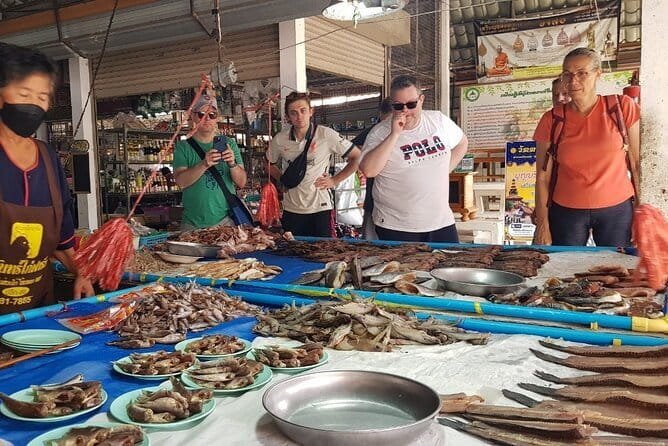
You see why those canals matter. They are not just pretty lines of water beside the road. They support crops, household chores, fishing, and local routines. The route also passes rice paddies, a market, village homes, and small-scale agriculture. I like this opening because it gives you a working sense of the area before the monumental ruins take over.
The roads are described as traffic-free, which is important for a cycling day. You can pay attention to the guide and the surroundings instead of worrying about cars. The pace also lets you notice local industry and handcrafts that would be easy to miss from a van.
The cycling is part of the sightseeing, not simply a way to move between attractions. If you want only a fast temple checklist, a standard car tour may be more efficient. If you want to understand how the countryside connects to the old capital, the bicycle earns its place.
More Historical Tours in Thailand:
- From Bangkok: Ayutthaya Historical Park Guided Day Trip
★ 4.6 · 3,020 reviews - UNESCO’s Ayutthaya Historical Park: Full-Day Tour from Bangkok
★ 4.5 · 1,559 reviews - From Bangkok: Historical Day Tour to River Kwai
★ 4.6 · 868 reviews
What the seven-hour schedule feels like
The tour begins at 8:00 a.m. and runs until about 3:00 p.m. That early start gives you the cooler part of the day for the village and rice-field section, although the supplied details do not promise a particular temperature or shade level.
The route includes roughly four hours connected with the Historical Park and its surrounding sites, followed by shorter stops ranging from 15 to 30 minutes. That creates a full but varied day. You are not expected to spend every minute pedaling. The guide leads you through temple grounds, explains what you are seeing, and allows time for photographs.
A maximum of 12 people keeps the group relatively small. That matters when you are riding on narrow roads or listening to explanations inside temple complexes. Guide Mem is named in the tour feedback, and the strongest praise focuses on the morning’s discussion of daily life and the guide’s ability to make the information interesting.
The bike has 24 gears and front suspension. That is a useful combination for an outing that moves between paved or hard-packed roads, village routes, and historical grounds, though the exact surface of every section is not specified. A helmet and insurance are included, so the basic safety arrangements are covered.
Wat Chetuphon and the southern approach
Wat Chetuphon is described as the largest temple complex in the southern part of the Historical Park. Its countryside setting, surrounded by rice paddies, makes it a fitting bridge between the rural route and the old city.
The remains of Buddha statues in different positions give the guide a chance to explain Buddhist imagery. This is a relatively brief 15-minute stop, so expect an introduction and a look around rather than a long period of quiet exploration.
I like this placement in the route. You see an important religious site without losing the sense that Sukhothai was linked to farmland and water. The temple is not treated as an isolated monument. It sits within the setting that helped support the city.
Saritphong Dam and Sukhothai’s water system
Saritphong Dam adds a practical piece of history. Dating from the Sukhothai era, it supplied water to the city and nearby rice fields. The surrounding mountains make this a scenic pause as well as an engineering lesson.
You have about 20 minutes here for the view and photographs. That is enough time to understand the dam’s role and take in the setting, but not enough for a long walk or detailed study.
This stop helps explain why water appears so often during the morning ride. Canals and dams were part of the same larger system. The countryside is not just a backdrop to the ancient capital. It helped make the capital possible.
A few more Thailand days worth weighing up
- Bangkok by Private Guide: Full Day Tour In and Around
★ 5.0 · 4,323 reviews - Phuket: Full Day City Tour with Night Market
★ 4.5 · 2,888 reviews - Phuket: 3 Khai Islands Relax & Snorkeling Half/Full Day Tour
★ 4.2 · 2,379 reviews - Full day snorkeling adventure around Koh Tao
★ 5.0 · 2,300 reviews
Wat Mangkon and Wat Pa Mamuang
Wat Mangkon is a temple complex with a Sri Lankan-style chedi. Parts of the site have been overtaken by strangler fig trees, giving it a more weathered appearance than the best-known restored monuments. The 15-minute visit is short, but the combination of tower, brickwork, and tree growth makes it a good photograph stop.
Wat Pa Mamuang is smaller and more intimate. Its name refers to mango, and the complex sits in a mango forest. The guide explains the site while you walk around, so this is less about a single famous structure and more about the feeling of a small religious place among trees.
These two stops are useful counterpoints to Wat Mahathat. Sukhothai is not only about huge temple compounds. Smaller sites can show how religious buildings fit into wooded and rural spaces. The drawback is that the time at each place is limited. If you prefer to sit quietly or examine every detail, the schedule may feel brisk.
Wat Si Chum and the giant Buddha
Wat Si Chum is likely to be one of the day’s most memorable stops. Inside the monthop, or Buddha house, sits a gigantic Buddha image in the subduing Mara position.
The enclosed setting makes the statue especially striking. Rather than seeing it spread across an open ruin field, you encounter it inside a structure that frames the image. The guide leads you through the complex and explains what you are seeing.
You have about 20 minutes here. That gives you time to take in the scale and listen to the explanation, though you may want more if photography is important to you. This is one reason the guided format helps. A large Buddha inside a monthop is easy to recognize, but the explanation gives the structure and image more meaning.
Wat Mahathat, the heart of the old capital
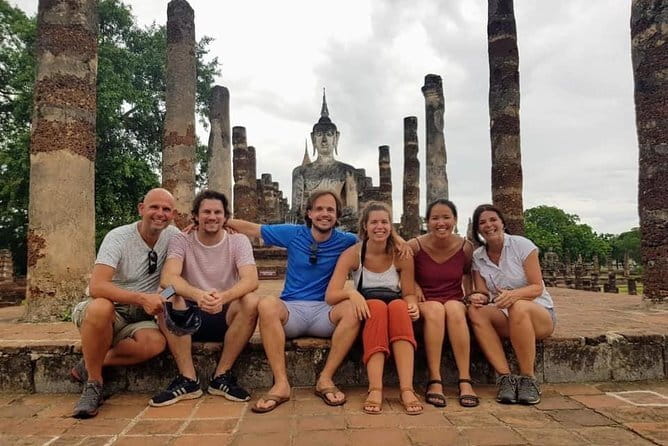
Wat Mahathat is the most famous and impressive temple complex in Sukhothai’s ancient capital. It means Temple of the Great Relics and sits at the center of the Historical Park.
This is the longest individual temple stop, at about 30 minutes. You see a mix of architectural styles, reflecting the long development of the site. The complex gives you the broadest sense of Sukhothai’s scale, with multiple structures and religious forms gathered in one place.
Thirty minutes is enough for an overview led by the guide, but the park contains plenty that could reward a longer visit. That is the trade-off of fitting so many locations into one day. You cover more ground and gain a clear introduction, but you do not receive an unhurried archaeological study.
For many people, this is the point when the earlier countryside ride pays off. You have already seen the canals and agricultural areas that supported the city. Now you are standing at its ceremonial center.
Wat Si Sawai and Khmer influence
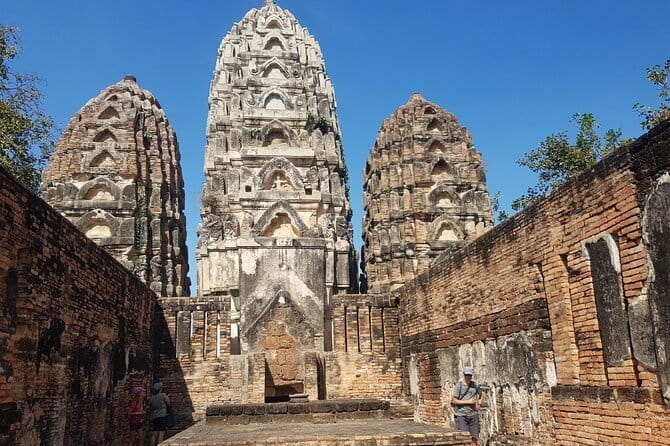
Wat Si Sawai brings a different architectural note. It is a Khmer-style temple with a prayer hall and three prangs, or towers, enclosed by a brick wall and moat.
The site receives about 20 minutes. The guide explains the complex, including its Khmer form, so you can compare it with the Sri Lankan-style chedi at Wat Mangkon and the other structures seen during the day.
This comparison is one of the tour’s strengths. You are not simply moving from one attractive ruin to another. You get repeated chances to notice how Sukhothai’s architecture includes different influences and forms. The sites make more sense when you see them together.
Lunch, local contact, and the human side of the tour
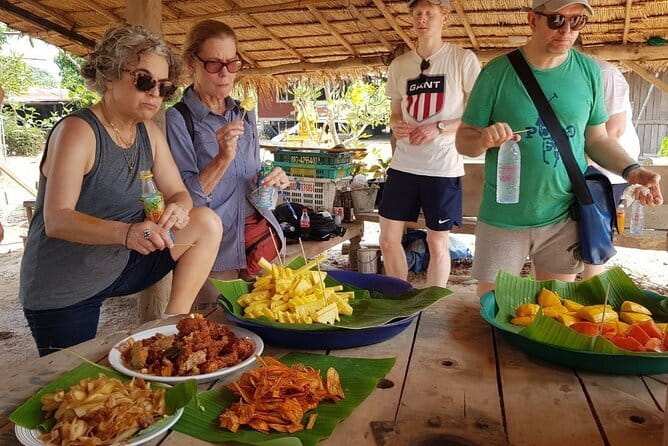
Lunch is included, along with bottled water, a soft drink, and a snack. One especially appealing feature is the shared meal prepared by the guide with local participation. That makes the lunch more than a box handed over during a transport stop.
The exact menu is not specified, so you should not book this expecting a particular dish. The value is in having food provided during a seven-hour active outing, with a chance for a more personal exchange.
The strongest part of the guide service is the attention to daily life. Guide Mem is praised for the morning explanations about townspeople, farming, and local routines. That detail matters because the countryside section could otherwise feel like a pleasant ride without much context.
You also get an English-speaking guide throughout the tour. Explanations cover local life, industry, handcrafts, farming, architecture, history, and Buddhism. The focus is broad rather than academic, which suits a day designed to introduce Sukhothai from several angles.
Is $51.92 good value?
At $51.92 per person, the tour is not priced like a simple bike rental. The fee includes the guide, mountain bike, helmet, insurance, entrance fees, lunch, water, soft drink, snack, and hotel transfers within the stated pickup area.
That is a strong package if you want transport and planning handled for you. Paying separately for bicycle hire, several admission tickets, a meal, and a private transfer could quickly narrow the price difference. You also avoid having to work out a route linking rural roads, the dam, and scattered temple sites.
The value is lower if you already have a bicycle, prefer exploring at your own pace, or plan to spend a full day at only one section of the Historical Park. The schedule is designed to show you many places, not to give you unlimited time at each one.
Hotel pickup and drop-off are included, but only within 15 kilometers of the starting point. A transfer to or from Sukhothai Heritage Hotel costs 1,200 Thai baht for a van and driver. Transfers to Sukhothai Airport and to Phitsanulok railway station or airport cost 1,200 or 1,500 Thai baht, depending on the location. Check this before booking if you are arriving or departing through one of those points.
Who will enjoy this cycling day
I would choose this tour if you want active sightseeing, local context, and a clear first look at Sukhothai’s major monuments. It suits people who like to keep moving and prefer a guide who connects buildings with farming, water, and daily life.
It is also a good fit for anyone who finds a standard ruin circuit too narrow. The canal route and village stops give the day a human scale. You see how the modern countryside relates to the old capital instead of spending the entire outing inside the park.
I would think twice if you dislike cycling, need a very slow schedule, or want extended time for photography at each temple. The tour lasts about seven hours, and the many stops mean the day has a definite rhythm.
Most people can participate, and the group is capped at 12. The tour requires good weather. If poor weather causes cancellation, you are offered another date or a full refund. You can cancel for a full refund up to 24 hours before the 8:00 a.m. start time. Changes or cancellations inside that window are not refunded.
Should you book it?
Book this tour if you want Sukhothai explained through both its working countryside and ancient temples. The morning canal ride, guide Mem’s local focus, and the range of temple styles make it more meaningful than a quick ride between famous ruins.
Skip it if you want a relaxed, temple-only day or cannot comfortably commit to several hours on a bicycle. For active visitors, the $51.92 price includes enough equipment, food, admissions, and transport to make the day good value.
FAQ
What time does the tour begin?
The tour starts at 8:00 a.m.
How long does the experience last?
It lasts approximately seven hours, from about 8:00 a.m. until 3:00 p.m.
Is hotel pickup included?
Hotel transfers are included when the pickup or drop-off point is within 15 kilometers of the starting point.
Are airport and railway station transfers included?
No. Transfers from Sukhothai Airport cost 1,200 Thai baht for a van and driver. Transfers from Phitsanulok Airport or Phitsanulok railway station cost 1,500 Thai baht.
What kind of bicycle is provided?
You receive a mountain bike with 24 gears and front suspension.
Are helmets and insurance included?
Yes. A helmet and insurance are included in the tour price.
Is lunch provided?
Yes. Lunch, bottled water, a soft drink, and a snack are included.
Which major temples does the tour visit?
The route includes Wat Chetuphon, Wat Mangkon, Wat Pa Mamuang, Wat Si Chum, Wat Mahathat, and Wat Si Sawai, along with Saritphong Dam and the wider Historical Park.
How many people can join the group?
The maximum group size is 12 people.
What happens if the weather is poor?
The tour requires good weather. If it is canceled because of poor weather, you are offered a different date or a full refund.
Can I cancel for a full refund?
Yes. You must cancel at least 24 hours before the local start time for a full refund. Cancellations or changes made less than 24 hours before the start are not refunded.
Just added around Thailand
- Chiang Mai Best City Tour with Doi Suthep & Iconic Temples★ 4.5 · 24 reviews
- Chiang Mai Michelin Food Walking Tour with Professional Tour Guide★ 4.5 · 13 reviews
- Private Chiang Mai Temple Tour with Doi Suthep and Wat Umong★ 5.0 · 52 reviews
- Secret Waterfall and Bamboo Rafting from Chiang Mai★ 5.0 · 30 reviews
- Bua Tong Waterfall Adventure& Huge Cave included Thai Buffet Tour★ 4.5 · 28 reviews
- Chiang Mai Scavenger Hunt and Sights Self-Guided Tour★ 5.0 · 8 reviews
- Chiang Mai Sak Yant Tattoo By Ajarn Tu★ 5.0 · 25 reviews
- Chiang Mai Airport Transfer by Private Van – Arrival or Departure★ 4.5 · 11 reviews
Historical Tours, compared.
Unesco’s Ayutthaya Historical Park: Full-Day Tour from Bangkok
Read our review →
Historical City of Ayutthaya – Unesco Full Day Tour From Bangkok
Read our review →
Private Excursion to Floating Market and Ayutthaya World Heritage
Read our review →
Private Excursion to Ayutthaya, UNESCO World Heritage site with Boat Tour
Read our review →Browse the lists this tour appears in