Reviewed · BANGKOK TOURS
Bangkok: Jim Thompson House and Baan Krua Community Tour
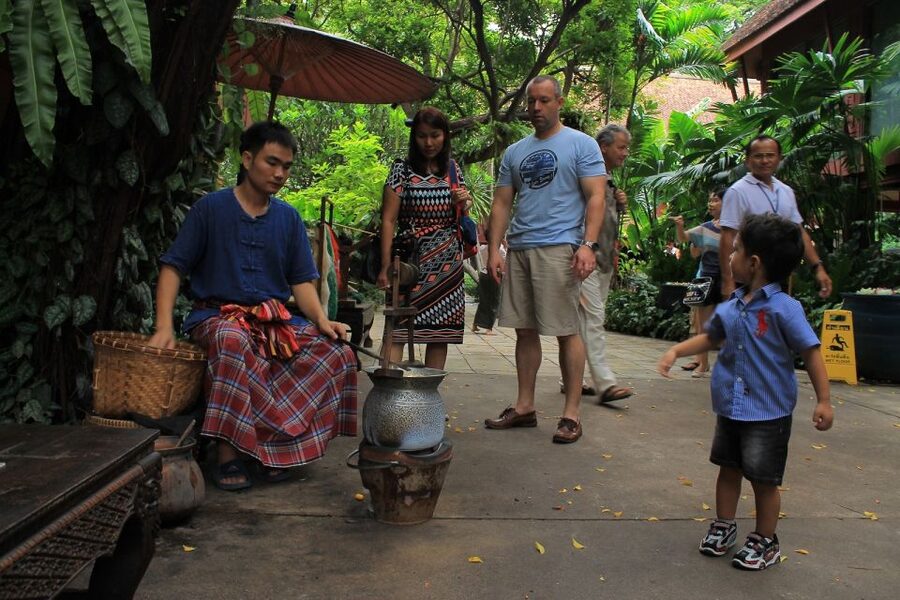
Jim Thompson’s house is only half the story. The more unusual part comes afterward, when you leave the polished museum for Baan Krua, a canal-side Cham community where silk weaving still survives. I like the pairing: one stop explains the famous brand, and the other shows the small community that helped make it possible.
I also like the hotel pickup and private car, which make a four-hour morning easy to manage in Bangkok. The main caution is that Baan Krua’s working silk trade has become very small, with only two looms still operating in the community. You may find the neighborhood more interesting than the production itself, and some silk prices may feel high.
Key points
- Six traditional teak houses: See Jim Thompson’s 1959 home, assembled from structures brought from different parts of Thailand.
- Baan Krua by Klong Saen Saeb: Walk through the Cham community connected to Jim Thompson’s silk business.
- A still-working family loom: Visit Uncle Aood’s home, one of the last places in Baan Krua where silk is made for a living.
- Private morning transport: Ride in an air-conditioned car between your central Bangkok hotel, the museum, and the community.
- A useful four-hour format: Fit Bangkok’s art, architecture, and textile history into one compact outing.
- Direct silk shopping: Buy products from the original community, though you should ask clearly about prices before purchasing.
Why this tour connects a famous house with a real neighborhood
Jim Thompson is one of the best-known names in Thai silk, but the story can feel incomplete if you only visit his former home and shop. This tour links the elegant museum to Baan Krua, the community where Cham silk weavers helped supply the trade that made his company famous.
That connection gives the morning a clear purpose. At the museum, you see the collector, designer, and former social host. At Baan Krua, you see the people and craft behind the business. I like this structure because it moves from a preserved private house to a living neighborhood.
The experience lasts about four hours and begins around 8:30 in the morning, depending on the departure time you select. That timing is practical. You get an early start before spending the rest of the day on other Bangkok plans, and the private transfer keeps you from having to work out separate transport between two less obvious stops.
Your English-speaking guide meets you at your hotel in central Bangkok. Guides named Tum Tum and Kiwi have led this experience, with Kiwi noted for answering questions, adding useful local suggestions, and helping shape the outing around personal interests. The guide and driver work as a team, so you should have both transport and explanation covered.
A few more Bangkok days worth weighing up
- Bangkok: Damnoen Saduak Market and Maeklong Railway Market
★ 4.5 · 26,723 reviews - The Old Siam: Damnoen Saduak and Maeklong Railway Market
★ 4.5 · 10,992 reviews - Bangkok: Train Market & Floating Market with Boat Ride
★ 4.7 · 9,547 reviews
Inside Jim Thompson’s six teak houses
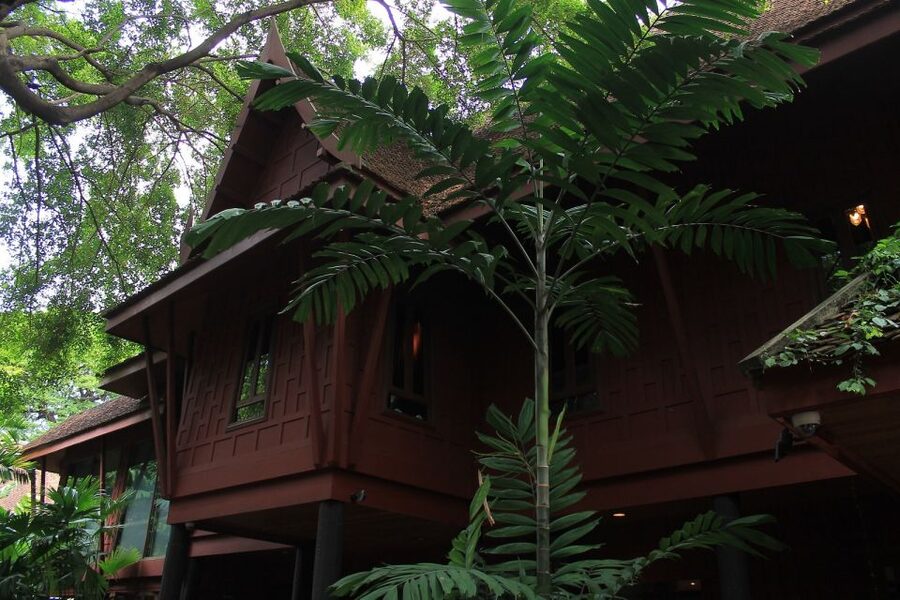
The Jim Thompson House is not a single standard Thai home. It is a collection of traditional teak structures brought together from several parts of Thailand. Construction of the present complex finished in 1959, and the houses became one of Bangkok’s best-known social settings during Thompson’s lifetime.
The museum material describes the complex as six traditional Thai-style houses. The structures were purchased from different owners, moved to the current site, and arranged into a single residence. That matters because you are not simply seeing one preserved building. You are seeing a carefully assembled collection of Thai domestic architecture.
Your own guide gives you background before you enter. Once inside, a Jim Thompson House guide takes over for the house visit and leads you through different sections. This arrangement is worth knowing in advance. The main tour guide handles the wider morning, while the museum has its own person for the interior.
The house itself is the most polished part of the outing. Since Thompson disappeared in 1967, little has changed in the home. You can expect rooms and furnishings presented as part of a preserved residence rather than a modern museum installation.
That gives the visit atmosphere, but it also creates one possible limitation. If you already know Bangkok’s major museums or prefer to move independently, you may feel the house portion could be done without a packaged tour. The museum’s own guide provides the core explanation, and the building is the main attraction.
Still, the house is valuable for travelers who want context. You are not only looking at teak beams and Thai design. You are seeing how a foreign collector built a home around traditional Thai forms, art, and objects, then helped turn Thai silk into an international luxury product.
Pay attention to the contrast between the house’s formal presentation and the less polished community visit later in the morning. That contrast is intentional in practice, even if the tour does not frame it as a formal lesson. Jim Thompson’s name is famous; Baan Krua is where the human side of the story becomes easier to see.
Walking through Baan Krua beside the canal
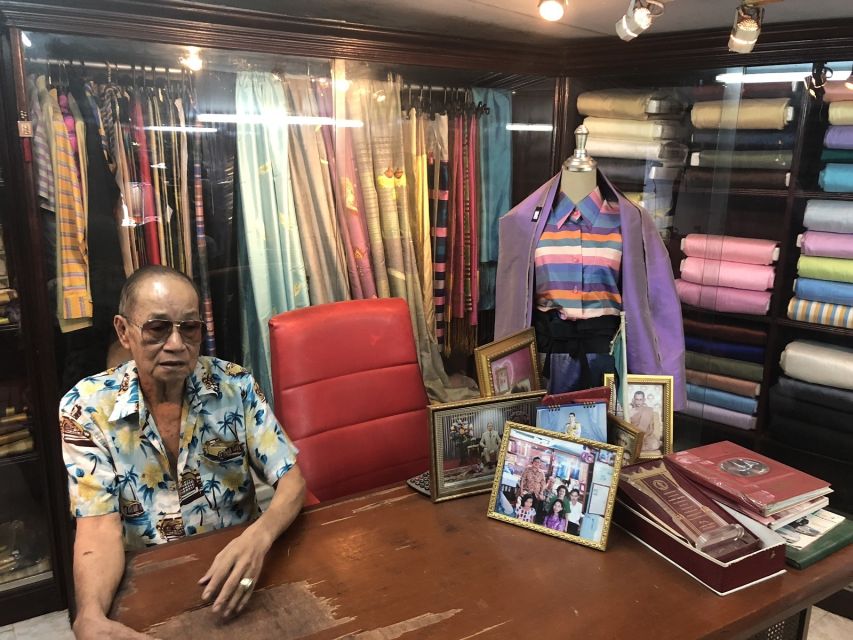
After the museum, your guide takes you to Baan Krua Nhua, located beside Klong Saen Saeb. This is a historic Cham community dating to the reign of King Rama I. The Cham people in the area traditionally worked as fishermen and silk weavers.
This stop is less about a grand building and more about place. You walk through a neighborhood that has kept its connection to silk, even as the trade has shrunk. The canal-side setting and local streets give you a much more ordinary view of Bangkok than the carefully maintained museum.
That is also why this section may feel uneven. The community no longer functions as a large silk-making center. Only two looms are still making silk there, while other production has moved to a factory elsewhere. If you expect to see a busy village full of weavers working at every turn, you will likely be disappointed.
I would treat Baan Krua as a social and historical visit first, and a production visit second. You are seeing the remains of a local craft tradition and learning how it connects to Jim Thompson’s business. The value is in the people, setting, and story, not in watching a large workshop operate.
Your guide explains how Jim Thompson supported silk weaving in the community and bought silk for his company. The brand later became known around the world. That background helps explain why the Baan Krua stop is included at all. Without it, the museum risks presenting the Jim Thompson story as the achievement of one remarkable individual. With it, you get a reminder that skilled local makers were central to the result.
The walking portion also gives your guide room to answer questions. One guide, Tum Tum, has been praised for explaining both the silk production and the history of the Jim Thompson area. Another guide, Kiwi, has been noted for taking time with questions and adding extra suggestions about shopping in Bangkok.
Meeting the last silk-making family
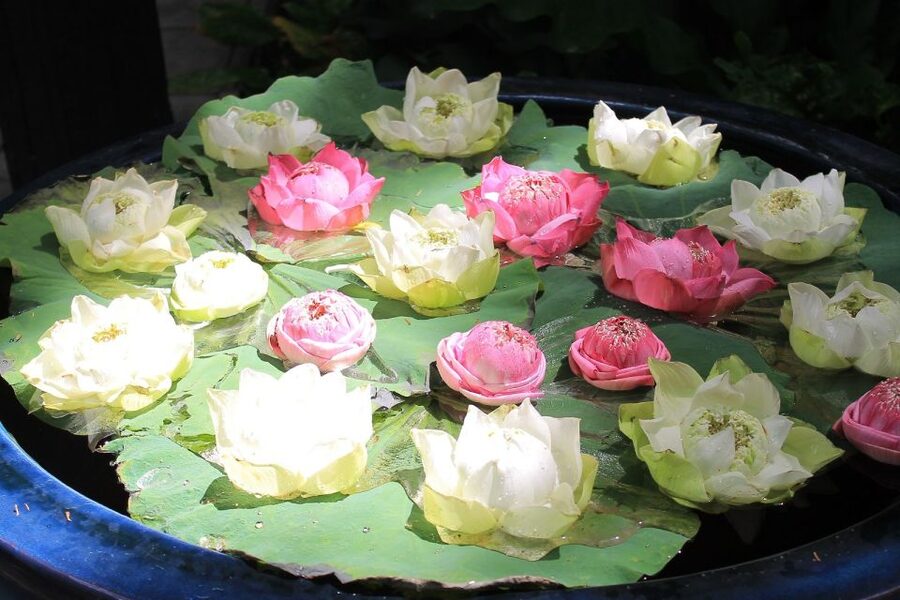
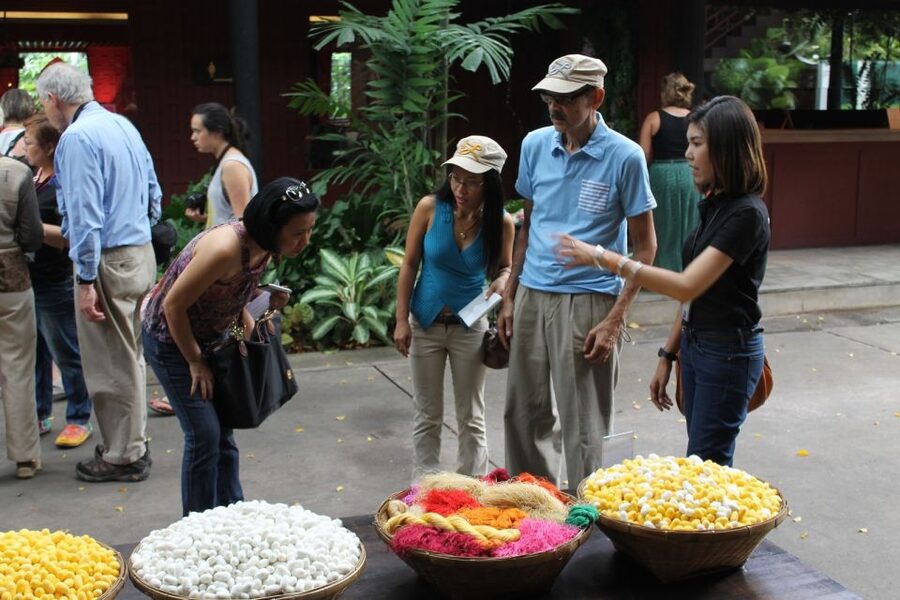
The tour includes a visit to the home of Uncle Aood, described as the last family in the Baan Krua community still continuing the silk business for a living. This is the most direct connection to the craft itself.
You may see the scale of the operation in a more honest way here. This is not a large commercial mill. It is a family activity that continues despite the decline of silk production in the neighborhood. The surviving looms make the visit feel personal, but they also underline how fragile the tradition has become.
The silk is valued for its texture, color, and durability. You have the chance to buy products directly from the original community, which can be more meaningful than purchasing a generic souvenir in a shopping center. At the same time, direct buying does not automatically mean low prices.
One past experience included purchases of ties at prices the buyer considered inflated, along with concern that the guide received a cut from the loom owner. The supplied information does not establish a standard commission arrangement, so I would not assume that every guide or purchase works this way. The practical lesson is simple: ask the price before choosing an item, ask what is handmade locally, and decide without pressure.
Buying something can support a small family business, even if the cost is higher than factory-made silk elsewhere. You are paying for the material, the small-scale production, and the fact that the craft is still being practiced in its original community. If that matters to you, a purchase may feel worthwhile. If you are shopping strictly for the best bargain, save your money or compare prices first.
Same base, a completely different sort of day out:
- Bangkok Canal Tour: 2-Hour Longtail Boat Ride
★ 4.5 · 5,909 reviews - Bangkok: Muay Thai Boxing Tickets at Rajadamnern Stadium
★ 4.9 · 4,740 reviews - Bangkok: White Orchid Chao Phraya Dinner Cruise free Beer
★ 4.4 · 4,573 reviews - Bangkok by Private Guide: Full Day Tour In and Around
★ 5.0 · 4,323 reviews
What the private car adds to the morning
The tour includes private round-trip transfers from hotels in central Bangkok, using an air-conditioned car. That is a real part of the value, especially if you are staying in the central hotel area and want a simple morning without arranging separate rides.
Bangkok traffic can make short distances take time, so a private vehicle also gives you a fixed plan between the two stops. You are not left figuring out how to get from the museum to a canal-side neighborhood that may be unfamiliar to you.
The tradeoff is cost. At $55 per person, this is not the cheapest way to visit the Jim Thompson House. You are paying for the museum entry, an English-speaking guide, private round-trip transport, and the convenience of linking two places that are not usually packaged together.
For one person, the price may feel steep compared with visiting the house independently. For two or more people, the private transfer and guide make the amount easier to justify. The tour has particular value if you want the Baan Krua connection, prefer hotel pickup, or do not want to handle Bangkok transport yourself.
The four-hour length also keeps the commitment reasonable. You can start in the morning, finish around midday, and continue with other plans. Lunch is not included, so plan to eat afterward or arrange your own meal before the next activity.
Who will get the most from this experience
I would choose this tour if you have a real interest in Thai architecture, textiles, or local history. It works especially well for a first visit to Bangkok when you want more than temples and shopping malls.
It also suits you if you prefer a guide to explain the links between places. The Jim Thompson House is easy to appreciate on its own, but Baan Krua benefits from interpretation. Without context, you might see a small neighborhood and wonder why it belongs in the story. With a good guide, the connection to silk production and Jim Thompson becomes much clearer.
The tour is less suitable if you want a large, active silk workshop or a full morning of independent exploration. Baan Krua’s production is limited, and the house museum already has its own interior guide. Independent visitors who are comfortable arranging transport may prefer to visit Jim Thompson House alone.
It is also worth keeping expectations grounded. This is not a hands-on silk-making class, and the supplied details do not promise demonstrations or a chance to operate a loom. You visit the community, learn about its craft, meet a surviving silk-making family, and have the option to shop.
Booking details that matter
Pickup is included from hotels in central Bangkok. The tour operates with English and Thai language support, and the main guide is English-speaking for an English-language booking.
The price includes all taxes and fees, the Jim Thompson House entrance ticket, the guide, and private transfers. It does not include lunch or personal spending, including any silk products you choose to buy.
You can cancel up to 24 hours before the activity for a full refund, and reserve now while paying later. Check the available starting times because the listed morning departure is around 8:30, not necessarily the only option.
The overall rating is 4.6 from 29 reviews, which fits the nature of the outing: the house and private service are dependable strengths, while the Baan Krua portion depends on how much you value a small, fading craft community rather than a busy production site.
Should you book the Jim Thompson and Baan Krua tour?
Book it if you want the Jim Thompson story told from both sides: the elegant teak house and the Cham silk community that helped supply his business. The private hotel pickup, thoughtful guides, and direct community visit make it a useful half-day choice for many first-time Bangkok visitors.
Skip it if your only goal is to see the house. You can likely focus on Jim Thompson House alone, especially if you are comfortable arranging your own transport and museum visit. The extra money buys the Baan Krua connection, not a larger silk factory or an extensive weaving demonstration.
My practical advice is to choose this tour for the story and setting, not for bargain shopping. Go with an open mind, ask clear questions about silk prices, and see Baan Krua as a living remnant of Bangkok’s textile past. That is where the morning earns its place on your itinerary.
FAQ
How long does the tour last?
The tour lasts four hours.
What time does the tour begin?
The itinerary describes pickup at around 8:30 AM. Check the available starting times when booking.
Where does hotel pickup take place?
Pickup is included from hotels in the central Bangkok area.
Is transportation included?
Yes. The tour includes private round-trip transfers in an air-conditioned car from central Bangkok hotels.
Is admission to Jim Thompson House included?
Yes. The entrance ticket to Jim Thompson House is included.
What languages are available?
The activity lists English and Thai as available languages. The tour includes an English-speaking guide.
Is lunch included?
No. Lunch is not included, and you should plan to pay for your own meal.
Can I buy silk during the tour?
Yes. You have an opportunity to buy silk products directly from the Baan Krua family that still continues the silk business. Personal purchases are not included in the tour price.
Just added around Bangkok
- Wonderful Pearl Dinner Cruise★ 3.5 · 27 reviews
- Yoga in the Park Thailand★ 5.0 · 12 reviews
- re:leaf spa and massage★ 4.0 · 10 reviews
- 3-Hour Bangkok Walking Tour: Wat Pho and Wat Arun★ 5.0 · 102 reviews
- White Orchid Sunset Dinner Cruise Calypso Ladyboy Cabaret Show★ 4.0 · 10 reviews
- Visit temples in and around Bangkok with a former monk of 10 years★ 5.0 · 30 reviews
- Morning Buddhist Almsgiving, Grand Palace and Flower Market Tour in Bangkok★ 3.5 · 9 reviews
- Visit Wat Pho and Wat Arun with Local Expert★ 4.0 · 14 reviews
Bangkok Tours, compared.
Damnoen Saduak Market and Maeklong Railway Market
Read our review →
The Old Siam: Damnoen Saduak and Maeklong Railway Market
Read our review →
Train Market & Floating Market with Boat Ride
Read our review →
Bangkok Canal Tour: 2-Hour Longtail Boat Ride
Read our review →
Muay Thai Boxing Tickets at Rajadamnern Stadium
Read our review →
White Orchid Chao Phraya Dinner Cruise free Beer
Read our review →
Bangkok by Private Guide: Full Day Tour In and Around
Read our review →