
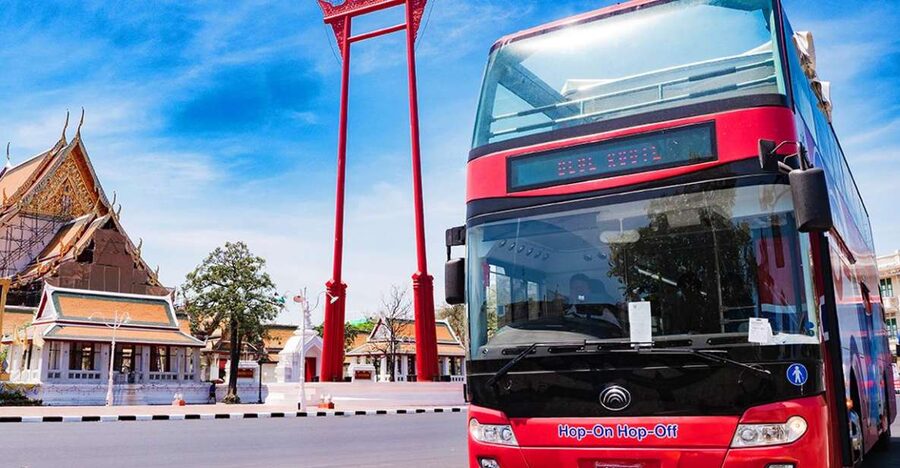
Reviewed · HOP-ON HOP-OFF TOURS
Bangkok: Hop-On Hop-Off Bus with 24, 48 or 72-Hour Validity
Bangkok’s hop-on hop-off bus gives you a useful first look at a huge city without forcing you into a fixed sightseeing schedule. The route links Grand Palace, Wat Pho, Wat Arun, Chinatown, and ICONSIAM, along with major malls and night-market areas. You can stay aboard for the full circuit, or get off and pick up the next bus later.
I like two things here: the live bus tracker, which helps you judge whether to wait or walk, and the choice of cool indoor seating or an open upper deck. The main catch is Bangkok traffic. A full circuit can take two and a half to three and a half hours, and the last departures are in the afternoon, not at night.
Key points to know before you book
- The full route takes about 3 to 3.5 hours: Use the first ride to understand the city, but allow extra time for congestion and road closures.
- The pass runs from your first use: A 24-hour ticket used at 2 PM on Tuesday lasts until 2 PM Wednesday, though buses operate only during daytime service hours.
- The route covers old Bangkok and modern Bangkok: Temples, Chinatown, Khao San Road, shopping malls, Patpong, and the Chao Phraya riverside all feature.
- Bus stops can be hard to spot: Regular public bus stops may be used, so rely on the printed map and GPS app rather than looking for a large branded sign.
- A 48-hour pass is the practical choice for sightseeing: The 24-hour option works best for a complete circuit or a short list of stops.
- Commentary is recorded, not live: Audio is available in English, Thai, Mandarin, Korean, Spanish, German, and French, with earphones supplied.
What this Bangkok bus route actually gives you
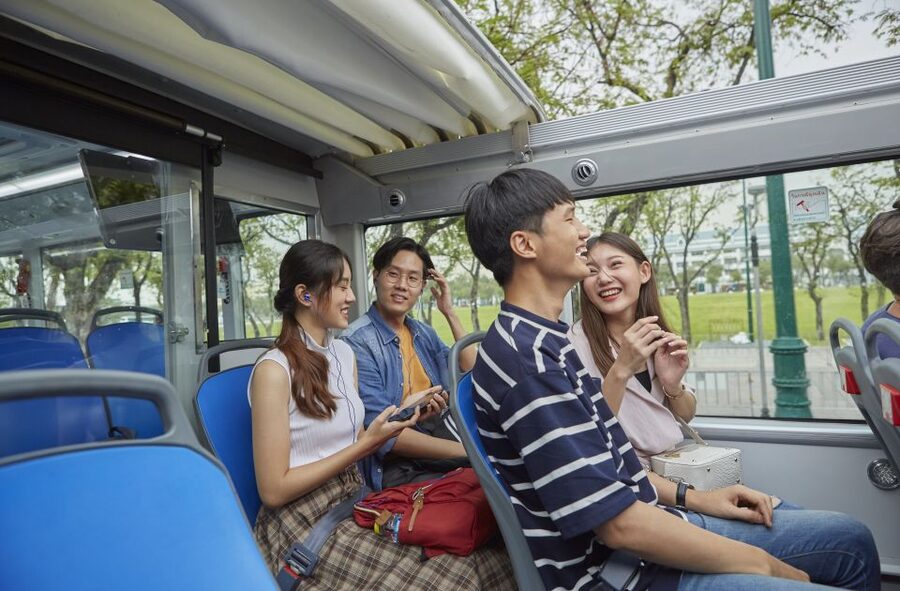
This is less a traditional guided tour and more a moving sightseeing platform. You get an organized route through central Bangkok, then decide how much time to spend on the ground.
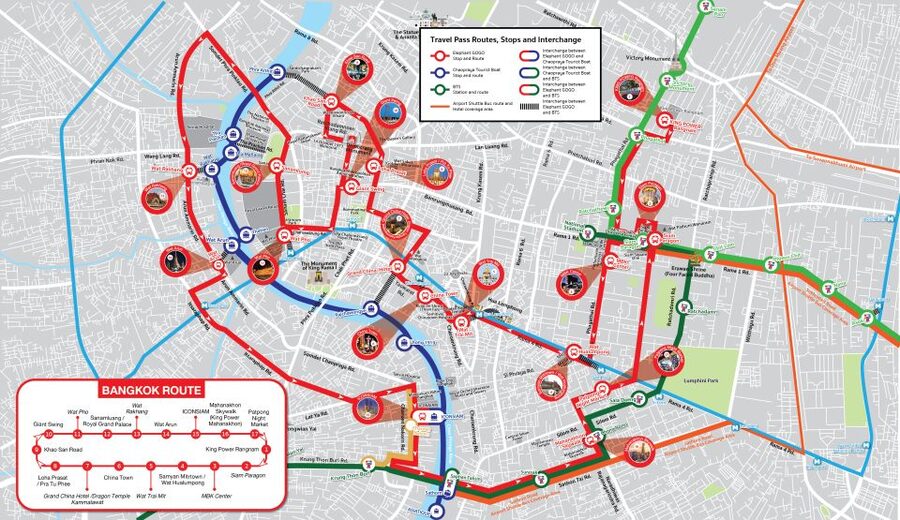
The bus begins at Siam Paragon, with another service point at CentralWorld. From Siam, it passes MBK Center and Samyan Mitrtown before heading into the older districts around the Golden Buddha and Chinatown. It then continues toward the major temple zone, crosses toward the riverside, and returns through shopping and nightlife districts.
That mix is the route’s real strength. You are not looking only at temples, and you are not stuck in the commercial center. In one ride, you can see Bangkok’s shopping malls, old Chinese quarter, royal district, canalside temple areas, riverside development, and night-market streets.
The commentary is triggered by GPS. It gives you basic context as the bus moves, but it is not a detailed live tour. I would treat it as a useful introduction rather than a substitute for reading up on the Grand Palace, Wat Pho, or Wat Arun before you arrive.
More hop-on hop-off passes in Bangkok:
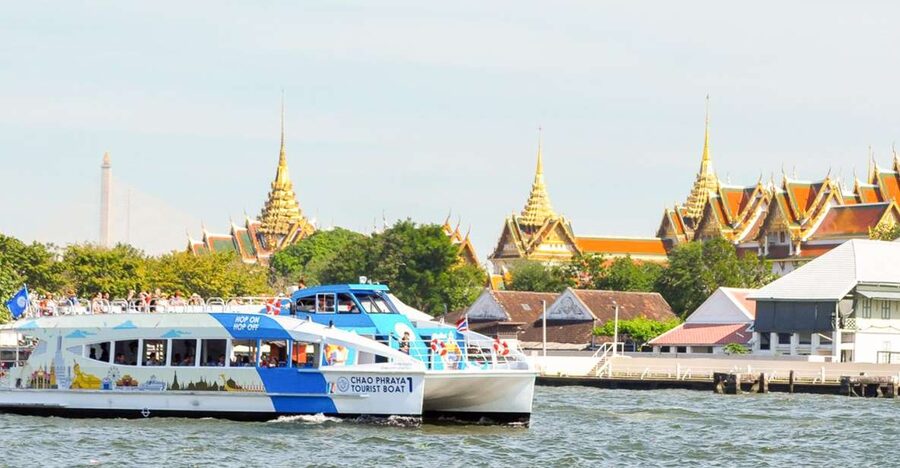
- Bangkok: Chao Phraya River Hop-on Hop-off Boat
★ 4.5 · 2,990 reviews - The Best Bangkok Hop-On Hop-Off Bus Tour
★ 3.5 · 228 reviews - Bangkok: City Sightseeing Hop-On Hop-Off Bus Tour
★ 4.1 · 136 reviews
Starting at Siam Paragon and MBK Center
Siam Paragon is a sensible starting point because it is a major, easy-to-reach shopping center and connects with Bangkok’s Skytrain system. The service counter and bus stop are on the ground floor near the south gate, beside Bangkok Bank and in front of LOCK BOX Plus+.
From here, the bus passes Siam’s shopping district and MBK Center. These stops are useful if you want air-conditioning, food, electronics, clothing, or a break from sightseeing. They are not the strongest stops for traditional Bangkok, but they show how much of the central city revolves around large retail complexes.
The exact boarding point matters. The bus stops are not always marked with the bold hop-on hop-off signs you may know from other cities. Check the map, confirm the pin location, and arrive 10 to 15 minutes early. The bus may be delayed by traffic, but you do not want to miss a departure because you were standing at the wrong side of a shopping complex.
Samyan Mitrtown and the Golden Buddha
Samyan Mitrtown is another modern shopping and dining stop. It is mainly useful as a place to eat, cool off, or connect with nearby Wat Hua Lamphong. If your goal is only Bangkok’s major sights, you may simply stay on board here.
The Golden Buddha Temple, or Wat Traimit, is a more rewarding stop. The temple houses the famous solid-gold Buddha image, and its location at the edge of Chinatown makes it a natural starting point for exploring that district on foot.
The stop also shows one advantage of the bus over a taxi. You can ride directly from the shopping district into the old city, then leave the bus close to several sights without arranging a new fare each time.
Chinatown and Grand China
Bangkok’s Chinatown is one of the route’s best areas for getting off. You can explore its narrow streets, food stalls, markets, gold shops, and Chinese temples at your own pace. The bus only gives you the framework. The interesting part is walking away from the main road and seeing what you find.
Grand China Hotel is paired with the Dragon Temple Kammalawat, also known as Wat Mangkon Kamalawat. This is a useful stop for Chinatown’s temple quarter and for continuing on foot through the surrounding streets.
Allow more time here than you think. Chinatown is not a quick photograph-and-go district. Traffic can also be slow, so hopping off may save you from spending the next 30 minutes looking at the same row of buildings from the upper deck.
A few more Bangkok days worth weighing up
- Bangkok: Damnoen Saduak Market and Maeklong Railway Market
★ 4.5 · 26,723 reviews - The Old Siam: Damnoen Saduak and Maeklong Railway Market
★ 4.5 · 10,992 reviews - Bangkok: Train Market & Floating Market with Boat Ride
★ 4.7 · 9,547 reviews - Bangkok Canal Tour: 2-Hour Longtail Boat Ride
★ 4.5 · 5,909 reviews
Loha Prasat, Khao San Road, and the Giant Swing
The route then reaches Loha Prasat at Wat Ratchanatdaram. The temple’s distinctive multi-tiered structure is unlike the usual Bangkok temple silhouette, and it sits near the old city’s defensive walls and the Golden Mount area.
Khao San Road is nearby and offers a very different scene. It is geared toward budget tourism, casual food, bars, shops, and people-watching. Some visitors will enjoy the energy, while others may prefer to spend their limited time at the temples. The bus makes it easy to choose without committing your whole day.
The Giant Swing and Wat Suthat are among the most worthwhile stops on the route. Wat Suthat has a broad, calm temple complex and impressive murals, while the red Giant Swing outside gives the area an unmistakable landmark. This is a good place to get off if you want a major historic sight without the crowds and formal entry process associated with the Grand Palace.
Wat Pho and the Grand Palace
Wat Pho and the Grand Palace are the core sightseeing stops. They sit close enough together that you can plan them as one walking section, though you should allow plenty of time.
Wat Pho is known for its enormous reclining Buddha and its temple courtyards filled with stupas, tiled details, and smaller shrines. It is also associated with traditional Thai massage. The bus gets you near the entrance area, but you will need to walk into the complex and pay any separate admission required for the attraction itself.
The Grand Palace is Bangkok’s biggest must-see for many first-time visitors. The royal compound includes ornate halls, ceremonial buildings, and Wat Phra Kaew, home of the Emerald Buddha. This is not a quick stop. If you enter, dress respectfully and expect to spend much of your sightseeing window there.
This is where a 24-hour pass can feel too short. If you start around 10:30 AM, visit the Grand Palace, then continue to Wat Pho, you may have covered only one or two stops before the last useful buses begin to leave. I would choose 48 hours if these temple areas are your priority.
Wat Rakhang and Wat Arun across the river
Wat Rakhangkhositaram gives the route a quieter riverside temple stop. It is on the Thonburi side of the Chao Phraya, across from the older central districts. This part of Bangkok feels less commercial than Siam or the main shopping areas.
Wat Arun, the Temple of Dawn, is one of the city’s most recognizable sights. Its tall central prang is covered with delicate ceramic decoration, and the riverside setting makes it especially striking from the water or the opposite bank.
The bus route is useful for reaching the area, but check the stop position carefully. Bangkok’s roads and waterways do not always line up in an obvious way, and traffic or road closures can affect the order and timing. If you are planning to visit both Wat Arun and Wat Pho, study the map before leaving the bus.
ICONSIAM and MahaNakhon
ICONSIAM is a major riverfront shopping center and one of the route’s most practical air-conditioned stops. You can eat, shop, use the restrooms, and look out over the Chao Phraya. It also gives you a sharp contrast with the old temples nearby.
For many passengers, ICONSIAM is more than a shopping stop. It is a comfortable place to wait for the next bus, especially during Bangkok’s heat or sudden rain. Just keep an eye on the schedule. It is easy to lose track of time inside a large mall and miss the last departure.
The King Power MahaNakhon stop serves the modern skyscraper district. MahaNakhon is known for its distinctive pixel-like building form and city views. The bus does not include admission to the observation deck, so consider this stop mainly if you want the building, nearby offices, or a separate paid visit.
Patpong Night Market and CentralWorld
Patpong Night Market brings the route back toward Bangkok’s nightlife and commercial center. It is a useful stop for an evening-oriented district, though the bus service itself finishes in the afternoon, so you cannot rely on the bus for a late-night ride home.
CentralWorld is another major service point, located near the Hug Thai Gate on the first floor. It can be more convenient than Siam Paragon if you are staying in the central shopping area. The location is also useful for a meal or a cool-down before continuing your day.
The route includes many malls because they are practical landmarks, not simply filler. They provide toilets, food, shelter, and air-conditioning. In Bangkok, those basics can make the difference between a pleasant sightseeing day and an overheated one.
Timing, traffic, and the best pass length
Published departure details describe buses roughly every 35 to 40 minutes, beginning around 10:10 AM and continuing from the first stop until about 3:25 PM. Traffic can stretch the wait, especially later in the day. The full loop takes approximately 3 to 3.5 hours, although some rides may be shorter in lighter traffic.
That schedule changes how you should use the pass. A 24-hour ticket is not 24 hours of bus service. It is a period of ticket validity that begins when you board, and the bus only runs during its daytime timetable.
For a quick overview, stay on board for the full circuit. You will see the city, hear the basic commentary, and learn which areas deserve a return visit. This works well if you have only one free day or want a simple orientation after arriving.
For actual sightseeing, I would choose 48 hours. You can spend one day on the temple and old-city stops, then use another period for Chinatown, ICONSIAM, shopping districts, or any stops you missed. A 72-hour pass suits a slower plan, especially if you want long visits at the Grand Palace and several shopping or dining breaks.
The app showing live bus locations is one of the most useful parts of the setup. Use it before leaving a sight, not after you reach the roadside. The printed guide also explains the stop locations, which matters because some boarding points use ordinary public bus stops.
Seating, commentary, and comfort
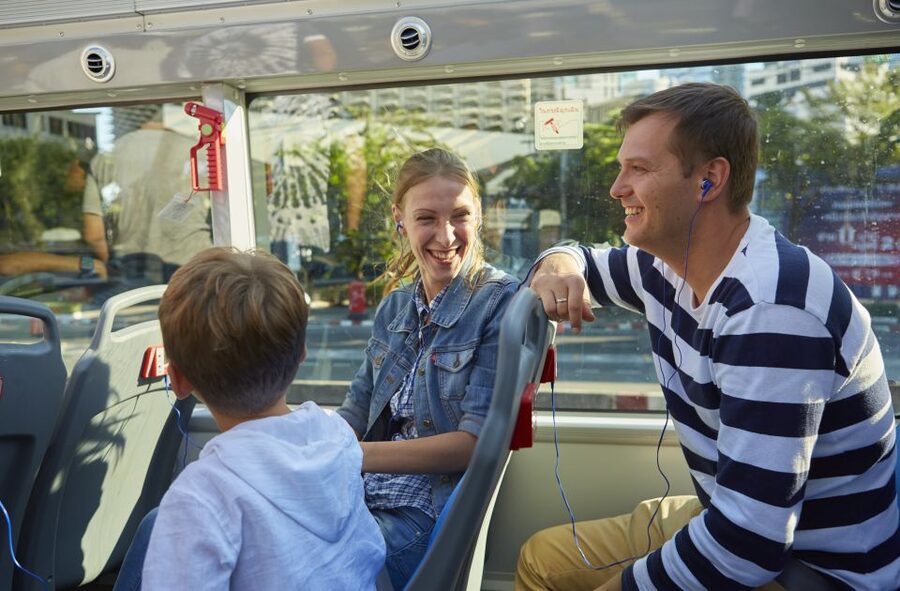
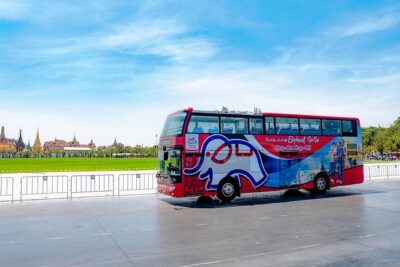
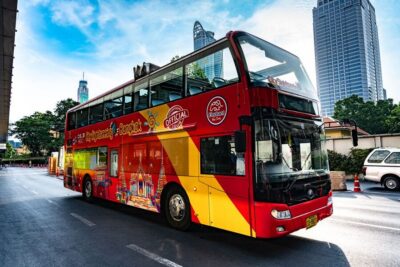
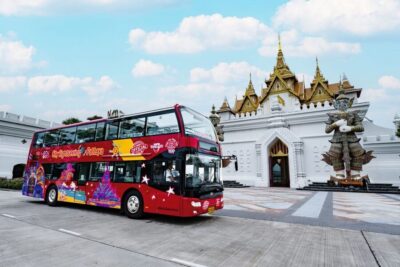
The double-decker bus offers open-air upper-deck seats along with sheltered or air-conditioned seating. The top deck gives you better views and a clearer sense of the streets, but Bangkok’s heat and sun can be intense. The covered option is not a minor luxury. It may be the sensible choice in the middle of the day or during monsoon rain.
Free earphones connect you to the GPS audio guide. The narration is available in English, Mandarin, Thai, Korean, Spanish, German, and French. Japanese is listed among the host or greeter language options, but the audio guide language list does not include Japanese.
The commentary is short and can occasionally jump or cut off as the GPS system changes location. I would listen for orientation and key facts, then use the stop itself for the fuller experience. If you want a detailed explanation of every temple, this is not the right format.
The bus is wheelchair accessible, and children aged five and under ride free. There is no live guide, hotel pickup, food, or drink included, so plan your own route to Siam Paragon or CentralWorld and carry water.
Is the $25 price good value?
At about $25 per person, the pass is not the cheapest way to move around Bangkok. Local trains, river transport, taxis, and tuk-tuks can cost less for individual journeys. The value comes from combining transport with a planned sightseeing route and audio information.
I think the price works best if you use the bus for several stops rather than one short ride. A full circuit gives you a useful city overview, and a two-day pass lets you replace several separate taxi trips with one ticket.
The pass is less attractive if you already know Bangkok well, plan to visit only one temple, or are comfortable using public transit and ride-hailing services. It also loses value if traffic leaves you waiting for long periods or if you expect to visit many places in a single afternoon.
Who should book this Bangkok bus tour?
I would suggest it to first-time visitors, families, older visitors, and anyone who wants a gentle introduction to Bangkok without negotiating every taxi ride. The air-conditioning, clear route, and ability to get off repeatedly are especially useful if walking in the heat is difficult.
It also suits people who like to see a city before choosing where to spend time. Take one complete loop, mark two or three priorities, then return to them with the pass.
I would not make it your only transport plan. Use the Skytrain, metro, river boats, or a taxi when they are faster for a particular journey. The bus is most useful as a sightseeing route, not as a guaranteed quick way across town.
Final verdict: choose 48 hours if you want to explore
Book this experience if you want Bangkok’s main sights arranged into one understandable route, with the freedom to get off whenever you like. The full circuit is a good introduction, and the GPS tracker, free earphones, and cool indoor seating make the day easier.
Choose 24 hours for a city overview or a short list of stops. Choose 48 hours for the Grand Palace, Wat Pho, Wat Arun, Chinatown, and ICONSIAM without rushing. Choose 72 hours only if you prefer a slow pace or expect to make several long stops.
The biggest warning is simple: Bangkok traffic controls your schedule. Start early, watch the last-bus time, and do not assume the next bus will arrive exactly on schedule. Used with those limits in mind, this is a practical way to get your bearings and see far more of central Bangkok than you might manage on foot.
FAQ
Where does the Bangkok hop-on hop-off bus start?
The main meeting point is at Siam Paragon, on the ground floor near the South Gate, beside Bangkok Bank and in front of LOCK BOX Plus+. There is also a service point at CentralWorld in front of Hug Thai Gate on the first floor.
How long are the available passes valid?
You can choose a 24-hour, 48-hour, or 72-hour pass. Validity begins when you first use the ticket. A 24-hour ticket activated at 2 PM on Tuesday remains valid until 2 PM on Wednesday, although buses do not run all night.
How often do the buses run?
Buses are scheduled roughly every 35 to 40 minutes. Departures from the first stop generally run from about 10:10 AM until 3:25 PM, but traffic can cause delays.
How long does the complete bus route take?
A full circuit from the first stop to the last takes about 3 to 3.5 hours, depending on traffic and road closures. Some departures may complete the loop in less time when roads are clearer.
Which languages are available for the audio guide?
The recorded GPS audio guide is available in English, Mandarin Chinese, Thai, Korean, Spanish, German, and French. Free earphones are provided.
Can I stay on the bus for the entire route?
Yes. You can remain aboard for a complete circuit to see Bangkok from the bus and decide which areas you want to visit later.
Are food and drinks included?
No. Food and drinks are not included. Shopping centers such as Siam Paragon, MBK Center, ICONSIAM, and CentralWorld offer places to buy meals and refreshments.
Is the bus wheelchair accessible?
Yes, the activity is listed as wheelchair accessible.
Do I need to exchange my ticket at the meeting point?
No. Bring your booking confirmation and show it to the driver or staff at any bus stop. The driver will issue your ticket. Arrive 10 to 15 minutes before the expected bus arrival.
Just added around Bangkok
- Wonderful Pearl Dinner Cruise★ 3.5 · 27 reviews
- Yoga in the Park Thailand★ 5.0 · 12 reviews
- re:leaf spa and massage★ 4.0 · 10 reviews
- 3-Hour Bangkok Walking Tour: Wat Pho and Wat Arun★ 5.0 · 102 reviews
- White Orchid Sunset Dinner Cruise Calypso Ladyboy Cabaret Show★ 4.0 · 10 reviews
- Visit temples in and around Bangkok with a former monk of 10 years★ 5.0 · 30 reviews
- Morning Buddhist Almsgiving, Grand Palace and Flower Market Tour in Bangkok★ 3.5 · 9 reviews
- Visit Wat Pho and Wat Arun with Local Expert★ 4.0 · 14 reviews
Hop-On Hop-Off Tours, compared.
Browse the lists this tour appears in