
Reviewed · CHIANG RAI TOURS
Chiang Rai: Northern Thailand Tour with Golden Triangle
Northern Thailand’s border country is the real attraction here. In one long day, you move from tea fields and hill villages to the Thai-Myanmar border, Mae Sai, and the meeting point of Thailand, Laos, and Myanmar. The scenery keeps changing, and the route feels more local than the usual Chiang Rai temple circuit.
I especially like the small group of no more than nine and the time given for conversation, photos, and questions. Guides such as Ping, Yok, Inkham, and Lotte have been praised for explaining the region clearly and helping with photos. The drawback is simple: this is a full day on the road, and the packed route leaves little room for lingering in Mae Sai’s market.
At a glance: what makes this day trip worthwhile
- Tea and coffee in the hills: Taste Oolong tea at Choui Fong and locally grown coffee around Ban Pha Hee and Ban Pha Mi.
- Border scenery without border-hopping: See Thailand from the Doi Chang Moob viewpoint and Mae Sai, while remaining on the Thai side.
- A useful small-group format: With up to nine people, the minibus can feel more personal than a large coach tour.
- A strong mix of stops: You get nature, village life, temples, border culture, and modern viewpoints in one day.
- A historical final stop: The House of Opium adds context to the Golden Triangle and its former trade routes.
- Good value at $79: Transport, a licensed guide, hotel pickup, and a long route are included, but meals and two optional entrance fees are extra.
Why the northern border route is more interesting than a standard Chiang Rai circuit
Many Chiang Rai day trips focus on the White Temple, Blue Temple, and other famous city sights. This one goes in another direction. You spend much of the day north of town, where the roads climb into the hills and the border gives the journey a clear sense of place.
I like that the stops are not all the same. Tea fields give you open views and a gentle start. The mountain villages bring you closer to local crops and daily life. Mae Sai adds a busy border-town feel, while the Golden Triangle provides the grand geographic finale.
This is not a slow countryside retreat. You will make several stops, climb and walk at some of them, and spend a good deal of time in the vehicle. Still, the route is well balanced for a single day. You get enough time at most places to look around, take photos, and listen to the guide without turning every stop into a rushed photo dash.
The guide can make a major difference. Ping, Yok, Inkham, Wi, Aday, and Lotte are among the guides associated with especially warm and informative days. Names vary by departure, but the practical pattern is clear: expect an English-speaking local guide who explains the region during the drives and may help take photos at scenic stops.
A few more Chiang Rai days worth weighing up
- Chiang Mai: Chiang Rai Temples, Karen Tribe and Hot Springs
★ 4.7 · 5,401 reviews - Chiang Rai White Temple and Blue Temple Day Tour
★ 4.6 · 3,366 reviews - Chiang Rai: Guided Highlights Guided Tour with Buffet Lunch
★ 4.9 · 1,532 reviews
Choui Fong Tea Farm: an easy, beautiful first stop
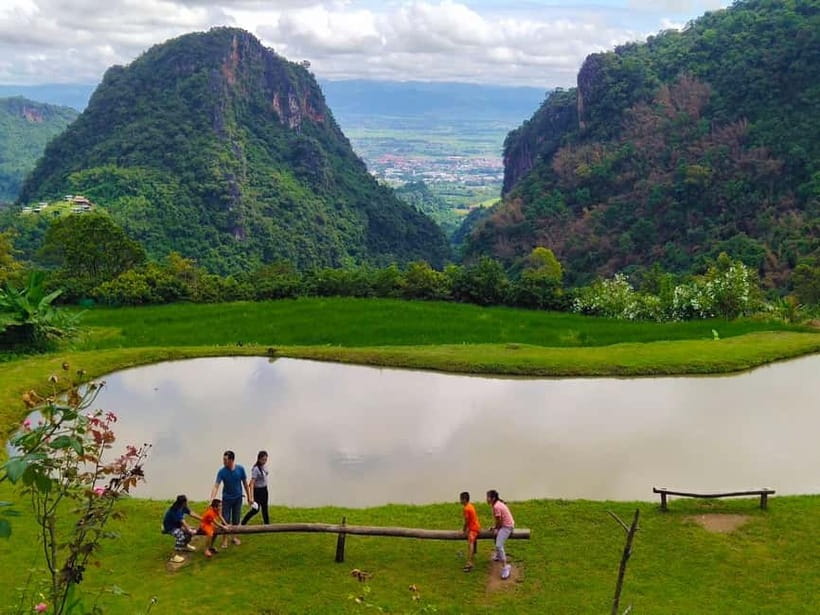
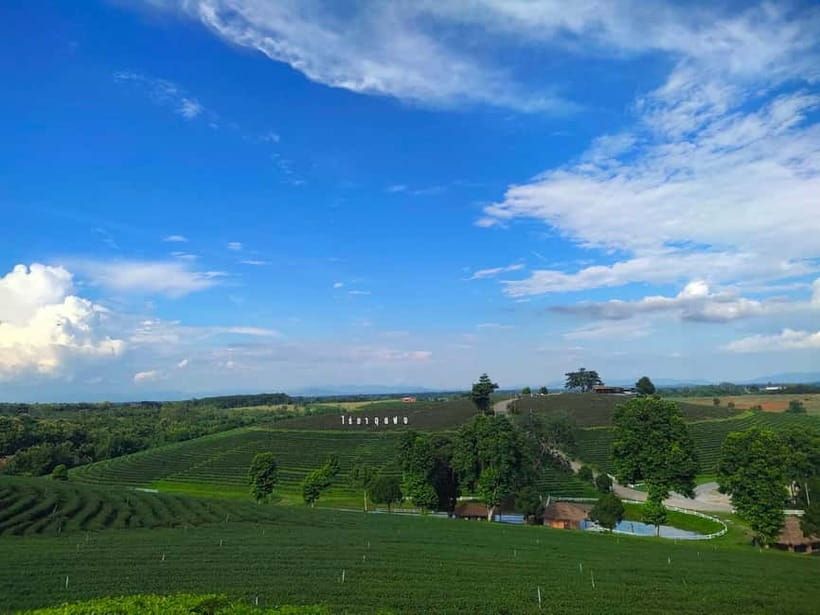
The day begins at Choui Fong Tea Farm, one of the most photogenic places on the route. Tea rows cover the rounded hills in neat green lines, creating a calm contrast to the sharper mountain scenery later in the day.
You have about 40 minutes here for a walk, photographs, sightseeing, and shopping. That is enough time to see the planting areas and stop for a cup of Oolong tea, described for its gentle aroma and smooth flavor. If you like tea, this is more than a quick roadside break. It gives you a taste of one of the products closely tied to northern Thailand’s highland economy.
The farm is also a good place to ease into the day. You can stretch your legs, enjoy the view, and buy tea if you want a useful souvenir rather than another trinket. The visit is not a long agricultural tour, so do not expect an extended lesson on cultivation or processing. Think of it as a scenic introduction with time to taste and browse.
Bring a camera, but do not let the perfect photo take all your time. The later viewpoints offer a different kind of mountain scenery.
Doi Chang Moob: misty views at the Thai-Myanmar border
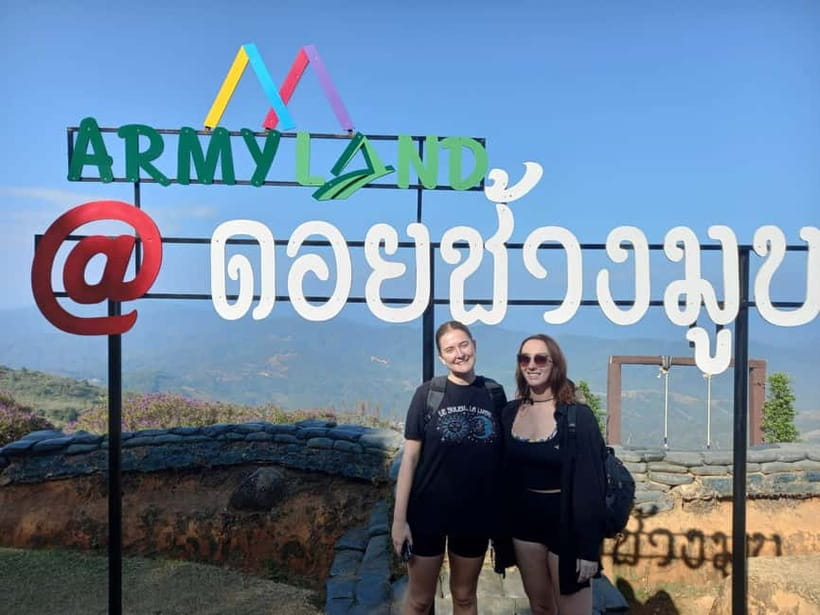
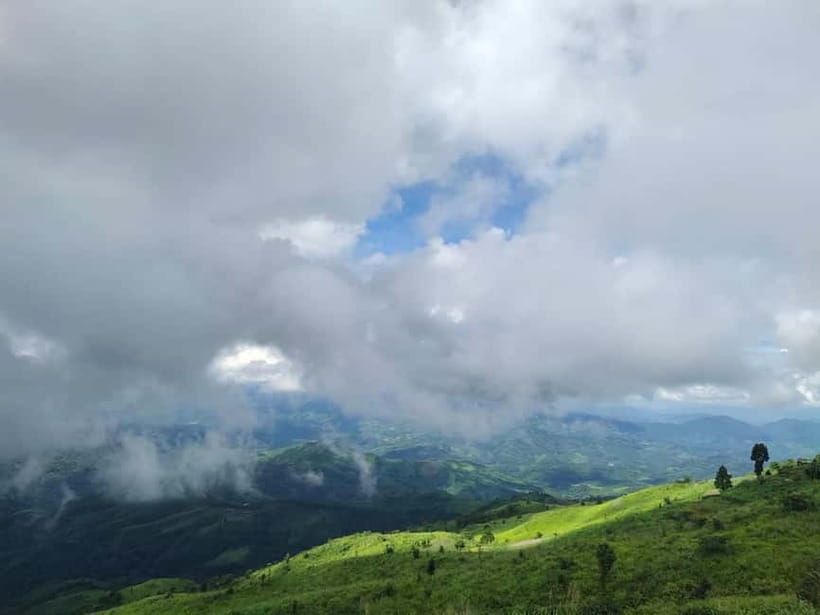
The next stop is Doi Chang Moob, a high viewpoint near the Thai-Myanmar border. You have roughly 20 minutes here, so this is a short stop built around the view.
On a clear day, you can see layers of hills and highland country stretching toward the border. Mist can soften the scene, especially in cooler or wetter conditions. That changing weather is part of the appeal, but it also means the view is not guaranteed to be wide open every time.
The stop involves a walk and a short guided visit. Wear shoes with a decent grip, and carry a light rain layer even if Chiang Rai looks sunny when you leave. The mountains can feel cooler than the city, and weather can shift quickly.
This is one place where the tour’s timing makes sense. A longer visit could become repetitive if clouds cover the distant view, while 20 minutes gives you a chance to take photos and understand the location before moving on.
Ban Pha Hee and Ban Pha Mi: coffee, mountain air, and village life
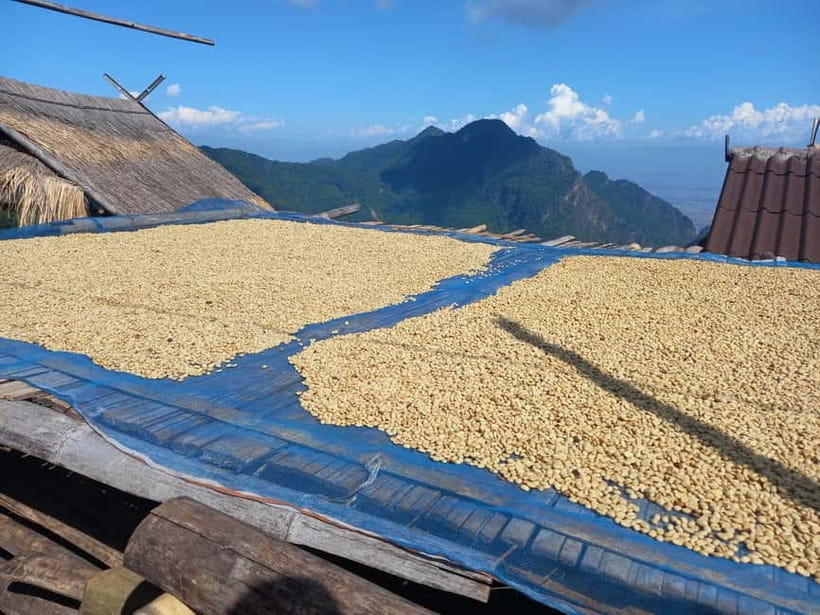
The hill villages of Ban Pha Hee and Ban Pha Mi are among the most appealing parts of the trip. The focus is not on a staged performance. Instead, you get time to sit, look across the hills, taste local coffee, and notice how different the pace feels above the city.
The planned village visit lasts about 40 minutes. That is enough for a viewpoint, a coffee stop, and a short walk, though you should not expect a full village trek. Local food and drinks are not included, which is worth remembering before you arrive hungry. You are encouraged to choose something from the village menu and spend directly with local businesses.
That extra cost can be a good trade. Food and coffee here give you a more direct connection to the place than a packed lunch brought from Chiang Rai. One particularly useful tip is to ask the guide about the timing of the coffee breaks if you care more about Mae Sai’s market than another café stop. The day has many attractions, and small timing choices matter.
I also like the way these villages break up the sightseeing. After several viewpoints and road sections, sitting with a hot drink gives you a chance to slow down. The mountain breeze and forest setting are the point. You do not need a long activity list here.
Same base, a completely different sort of day out:
- Chiang Rai Temples: Private Tour from Chiang Mai
★ 5.0 · 1,267 reviews - From Chiang Mai: Chiang Rai’s Temples Exploration Day Trip
★ 4.5 · 871 reviews - Chiang Rai: Iconic Temples & 7 Major Sites—River View Buffet
★ 4.9 · 692 reviews - Chiangmai to Chiangrai: 3 Temples, Hot Springs& Lalitta Cafe
★ 4.5 · 659 reviews
Wat Phra That Doi Wao: Mae Sai from above
The tour continues to Wat Phra That Doi Wao in Mae Sai, Thailand’s northernmost town. The stop lasts about an hour, making it one of the longer visits of the day.
The temple is known here for its hilltop setting and the glass skywalk. From above, you can look toward Myanmar and get a strong sense of how close the border is. The skywalk is optional and costs 50 THB per person, paid on site. If you dislike glass platforms or are watching your budget, you can still enjoy the temple area and views without entering.
Mae Sai itself gives the day a different mood. This is a border town rather than a quiet mountain village, and the area has shops and a market atmosphere. You may not have much time to explore the market in detail because the route includes many other stops. If shopping is a priority, tell your guide early and consider using some of your temple time carefully.
The temple and skywalk work well together because they offer both a cultural stop and a visual one. You are not simply looking at another mountain. You are looking across a national boundary from a Thai religious site.
The Golden Triangle: geography with a complicated past
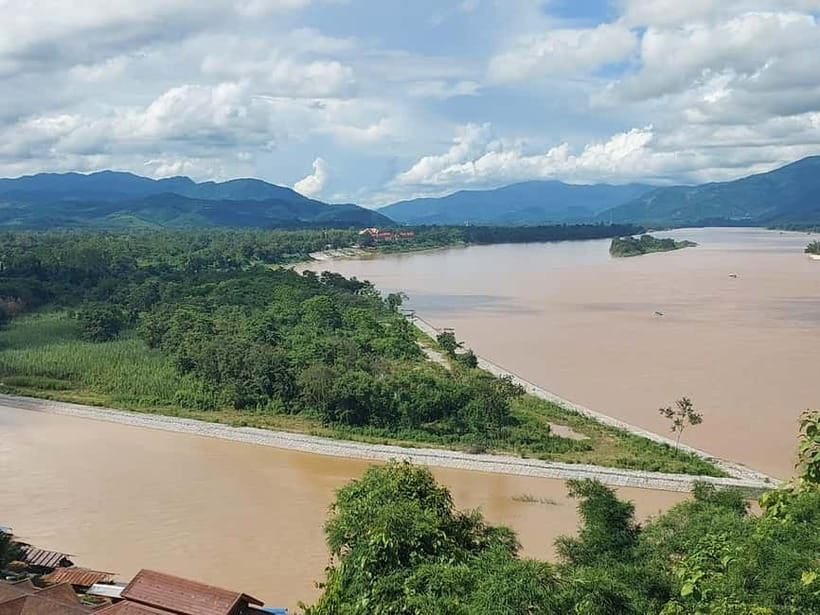
The Golden Triangle is the big geographic moment of the day. Here, Thailand, Laos, and Myanmar meet around the confluence of two major rivers. The viewpoint helps you understand the region as a border zone, not just a name on a map.
You have about 90 minutes here for walking, photographs, sightseeing, and shopping. That is generous compared with several earlier stops. Take time to look at the river junction and listen to the guide explain how the borders fit together.
The setting is impressive, but the location is also tied to the opium trade. That is why the nearby House of Opium is a useful addition. It provides background on the region’s trade routes and the forces that shaped life along these borders.
The museum is optional and costs another 50 THB per person. I would consider paying it if you want more than a quick viewpoint and souvenir stop. It turns the Golden Triangle from a scenic photo location into a place with context. If you are mainly interested in rivers and border views, you can skip it and keep the extra time for the surrounding area.
The Golden Triangle is not a place to rush. The 90-minute allocation gives the guide room to explain the site while leaving you time to look around on your own.
The countryside drive back is part of the experience
The return journey avoids simply racing back along the highway. Instead, the route takes you through northern Thai countryside, with rice paddies, traditional villages, and rolling hills outside the main tourist corridor.
This portion matters because it connects the major stops. You see how the region changes from highland roads to agricultural country, and the drive gives the day a more complete shape. The late-afternoon light can be especially pleasant across the fields. One account of the trip described a memorable sunset over the rice paddies, though exact conditions depend on the season and weather.
After a full day, you may be ready for a quiet ride. The air-conditioned vehicle and small group help. The minibus is not a luxury coach, but it is comfortable enough for a long day, and the transport rating has been particularly strong.
The road time is also when guides often explain local culture, border politics, crops, and places you have just seen. If you have questions, save some for the drive. Guides such as Ping and Aday have been praised for handling detailed questions and keeping conversation going without turning the entire day into a lecture.
What $79 includes, and what it does not
At $79 per person, this is a solid value if you want to cover a wide area without arranging a private vehicle. The price includes round-trip transport, hotel pickup and drop-off within 3 kilometers of central Chiang Rai, a licensed English-speaking guide, and the main visits listed on the route.
You are also paying for convenience. Reaching Choui Fong, the border viewpoints, the hill villages, Mae Sai, and the Golden Triangle independently would require considerable planning and several separate rides. The tour links them into one route and provides a driver who knows the roads.
Budget a little extra for the day. Food and drinks are not included, and the village lunch or coffee is paid separately. The Mae Sai skywalk costs 50 THB, and the House of Opium costs another 50 THB if you choose both. Personal purchases at the tea farm, villages, temple, or Golden Triangle are also your responsibility.
The tour offers free cancellation up to 24 hours before departure and a reserve-now, pay-later option. Pickup is complimentary for hotels within 3 kilometers of downtown Chiang Rai, so check your accommodation location before booking.
Who will enjoy this tour most
I would choose this trip if you have one full day in Chiang Rai and want scenery, border culture, and village stops rather than a temple-only itinerary. It suits photographers, first-time visitors who want a broad introduction to the far north, and people who prefer a guide to handle the driving.
It is also a good fit if you want a small group without paying private-tour prices. A maximum of nine participants leaves more room for questions and makes photo stops easier to manage.
You may want another option if you dislike long road days, have limited mobility on uphill walks, or want to spend hours shopping in Mae Sai. The schedule is full, and the route is designed for variety rather than deep exploration of one town.
Pack comfortable shoes, sunscreen, sunglasses, a hat, water, cash, a power bank, and rain protection. A passport or identification card, with a copy accepted, is also listed among the items to bring. Alcohol and drugs are not permitted.
Should you book the Chiang Rai Golden Triangle day trip?
Yes, if you want the northern border region in one well-organized day and you value a good guide. The strongest parts are the changing scenery, the hill village stops, the small group, and the chance to connect the Golden Triangle with the region’s past at the House of Opium.
I would book it with two expectations: it will be a long day, and the optional fees and meals are separate. If that sounds fair, $79 buys a lot of transport, explanation, and access to places that are awkward to reach on your own. If you are deciding between this and Chiang Rai’s famous temples, choose this route when you want mountain roads, local coffee, tea country, and border views.
FAQ
How long is the Chiang Rai Northern Thailand tour?
It is a full-day experience. Availability should be checked for the exact starting time, and the route returns to Scorpions Tours in Chiang Rai.
What is included in the $79 price?
The price includes visits to Choui Fong Tea Plantation, Doi Chang Moob Border Viewpoint, Ban Pha Hee and Ban Pha Mi, Mae Sai, and the Golden Triangle. It also includes a licensed English-speaking guide, driver, scenic countryside transport, and hotel pickup and drop-off within 3 kilometers of downtown Chiang Rai.
Are meals and drinks included?
No. Food and drinks are not included. You can buy coffee, lunch, and other items during the village and sightseeing stops.
How much do the optional attractions cost?
The Mae Sai Glass Skywalk costs 50 THB per person. The House of Opium Museum also costs 50 THB per person. Both fees are paid directly on site, and both visits are optional.
How many people are in the group?
The tour is limited to nine participants, making it a small-group experience.
What should I bring?
Bring comfortable shoes, sunglasses, a sun hat, sunscreen, water, a camera, cash, rain gear or an umbrella, a power bank, and a passport or identification card. A copy of the passport or ID is accepted.
Just added around Chiang Rai
- Chiang Rai Temples Day Trip from Chiang Mai★ 4.5 · 23 reviews
- Chiang Mai-Chiang Rai:White-Black-Blue Temple-Golden Triangle-Keren-Boat Trip★ 4.0 · 96 reviews
- Visit Dantewada(Angel Land), Blue Temple, and Sticky Waterfall★ 5.0 · 120 reviews
- Chiang Mai-Chiang Rai: White Temple-Black Museum-Blue Temple★ 4.0 · 24 reviews
- Chiang Mai-Chiang Rai:White+Black+Blue Temple+Golden Triangle+Boat Trip★ 4.0 · 63 reviews
- Best 2-Day: Explore Chiang Rai Landmarks from Chiang Mai, Private Trip★ 5.0 · 8 reviews
- Chiang Rai Temples ( White,Blue )And Doi Suthep Private Day Tour★ 5.0 · 26 reviews
- From Chiang Mai: White Temple, Blue Temple & Black House★ 4.5 · 15 reviews
Chiang Rai Tours, compared.
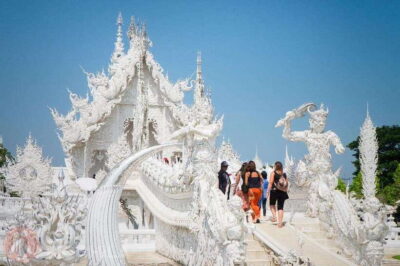
Chiang Rai Temples, Karen Tribe and Hot Springs
Read our review →
Chiang Rai White Temple and Blue Temple Day Tour
Read our review →
Guided Highlights Guided Tour with Buffet Lunch
Read our review →
Chiang Rai Temples: Private Tour from Chiang Mai
Read our review →
Iconic Temples & 7 Major Sites—River View Buffet
Read our review →
Chiangmai to Chiangrai: 3 Temples, Hot Springs& Lalitta Cafe
Read our review →
Browse the lists this tour appears in