
Reviewed · TUK-TUKS
Bangkok: Guided Tour in a Typical Thai Tuk-Tuk
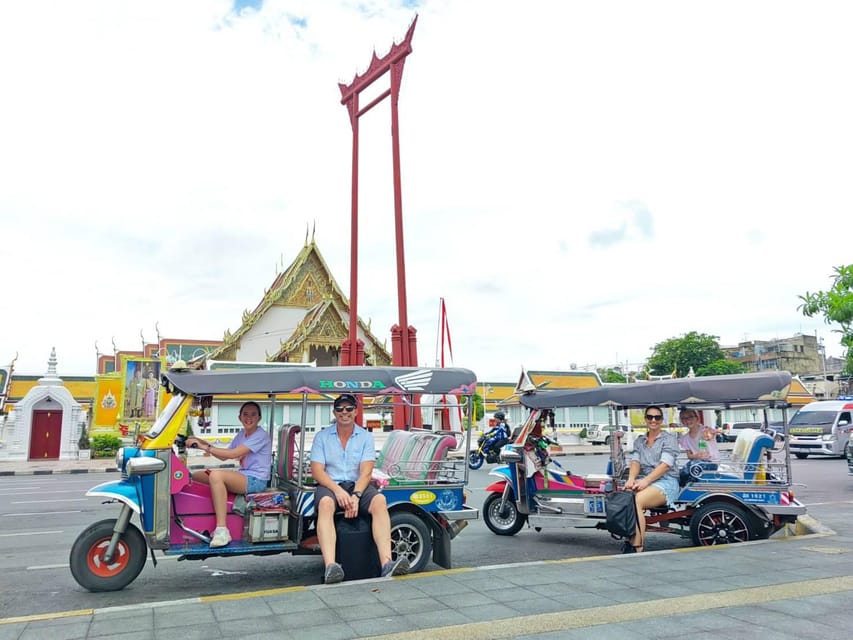
Bangkok reveals itself quickly from the back seat of a Thai tuk-tuk. In two hours, you roll past royal walls, old temples, market streets, and Chinatown, while your guide explains what you are seeing. It is a useful first look at the city, especially if you have only a short stay.
I like the simple route and the local touch. You avoid haggling with a driver, get a bottle of water, and learn to fold a lotus flower. Guides such as Anna, Ana, Johan, Yohan, Ken, and Enjoy have been praised for being warm, clear, and entertaining.
The main limitation is important: this is an outside-only tour. You will not enter the Grand Palace, Wat Pho, Loha Prasat, or Wat Arun, and two hours gives you a sampler, not a full temple visit. Traffic, heat, and tuk-tuk noise are part of the deal.
Key points to know before booking
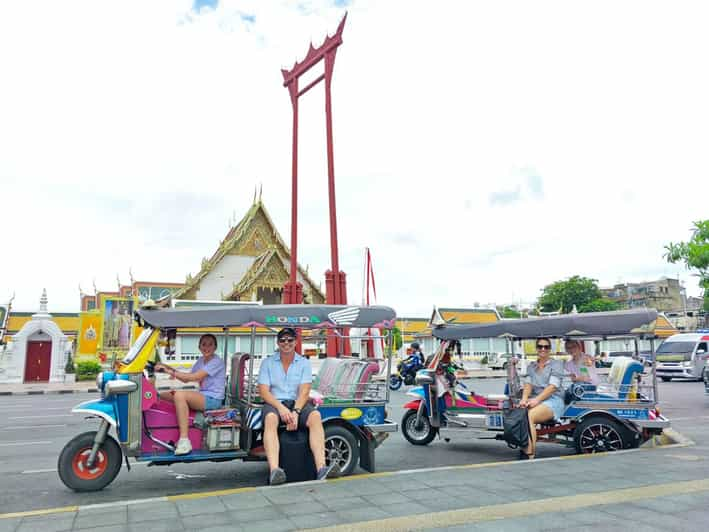
- The tour starts at Museum Siam: Meet outside the Museum Siam exit at Sanam Chai MRT Station, not at another museum entrance.
- You see major landmarks from outside: The Grand Palace, Giant Swing, Wat Ratchanatdaram, Wat Pho, and Chinatown are part of the route.
- The tuk-tuk is the main event: Expect open-sided city travel, engine noise, street air, and a close view of Bangkok life.
- The guide shapes the experience: English-speaking guides explain local customs, temples, landmarks, and city life between stops.
- The lotus activity adds a personal touch: You receive a simple folding activity rather than only taking photographs.
- The tour finishes in Chinatown: A 4 p.m. departure can place you there around 6 p.m., a handy time for dinner.
A fast introduction to Bangkok from Museum Siam
The tour begins outside Museum Siam, beside Sanam Chai MRT Station. This is a smart meeting point because the metro avoids much of central Bangkok’s road congestion. Take the correct Museum Siam exit and look for the guide outside.
One small warning matters here: Museum Siam has two exits. The meeting point is at the front exit, the one by the museum, rather than the rear exit on the back road. Arrive a little early so you are not searching for the group in the heat.
Once everyone is assembled, the guide explains the plan. The group may be divided among several tuk-tuks, often with two people in each vehicle. You generally meet again at the next stop, while the guide moves between the vehicles or gathers everyone together to explain the sights.
That setup gives the ride a more personal feel than putting a large group into one van. It also means you should listen for instructions before each departure. The guide tells you where you are going, what you will see, and where to meet next.
More Tuk-Tuks in Bangkok
- Bangkok by Night: Temples, Markets and Food Tuk-Tuk Tour
★ 5.0 · 3,752 reviews - Bangkok Midnight Food Tuk Tuk Tour
★ 5.0 · 2,542 reviews - Bangkok: Michelin Guide Street Food Tour by Tuk Tuk
★ 4.4 · 1,274 reviews
What a Bangkok tuk-tuk ride is really like
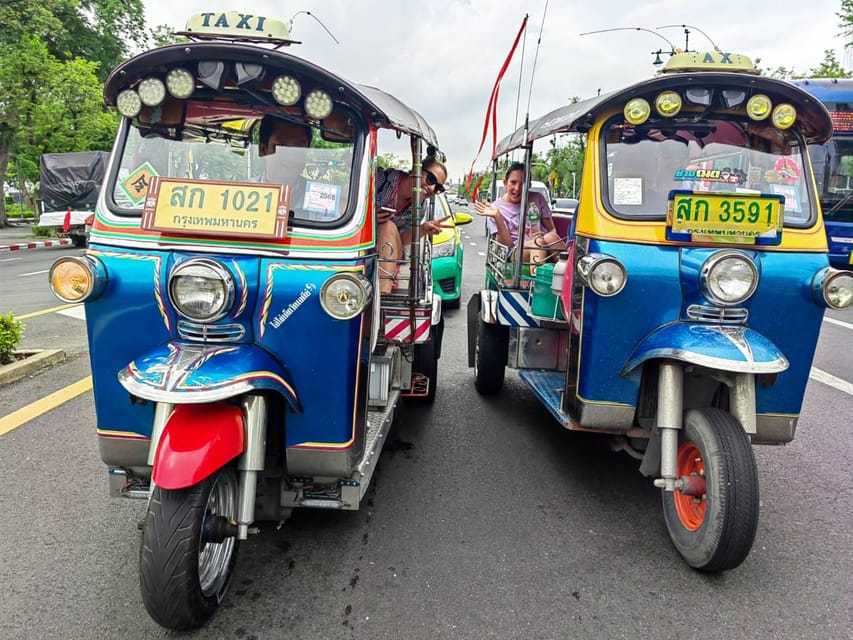
A tuk-tuk is not a quiet sightseeing vehicle. It has an open cabin, a small rear seat, a distinctive motor sound, and a close-to-the-street feel. You will notice traffic, fumes, weather, and the quick changes of Bangkok’s roads more than you would from an air-conditioned car.
That is also the appeal. From a tuk-tuk, you are not sealed away from the city. You can see shopfronts, passing motorbikes, temple walls, and ordinary streets at eye level. The ride itself becomes part of the sightseeing.
The route includes short rides between stops, with one listed tuk-tuk section taking about five minutes. The tour is not a nonstop two-hour drive. You get out for photographs and explanations, then climb back in for the next section.
I would choose a light, comfortable outfit and keep loose items secure. The supplied water is useful, but the tour description does not promise air conditioning or shelter, so plan for Bangkok’s heat and sudden weather. The open sides are fun, but they also mean the ride is less comfortable for anyone sensitive to traffic fumes or engine noise.
The Grand Palace, seen from the outside
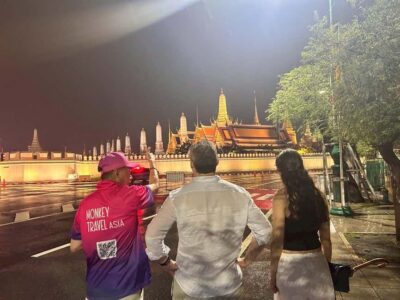
The Grand Palace is one of Bangkok’s most important sights, and it gives the tour an early sense of scale and ceremony. The stop is listed as a photo stop of about 10 minutes, not an admission visit.
That distinction affects the value. You can photograph the exterior and hear about its role in Bangkok, but you will not see the palace courtyards, throne halls, or temple interiors on this tour. If the Grand Palace is at the top of your Bangkok list, plan a separate visit with enough time for entry and proper clothing.
For a first orientation, the brief stop works well. You get the landmark’s position in the old city and a guide’s explanation before deciding which sites deserve a longer return visit.
The Giant Swing and Wat Suthat
The next photo stop is Wat Suthat and the Giant Swing. The tall red swing structure is one of Bangkok’s most recognizable city markers, while Wat Suthat gives the stop a religious and architectural setting.
You have about 10 minutes here. That is enough for photographs and a short explanation, but not a full examination of the temple grounds. The stop works best as part of the larger pattern: royal Bangkok, religious Bangkok, and everyday streets appear one after another.
The guide’s role matters here. A good explanation can turn a quick roadside sight into something you remember. Guides Anna and Johan, among others, have been singled out for clear stories, good English, and a friendly way of answering questions. The exact guide is not guaranteed, but the tour is led in English by a licensed guide.
Same base, a completely different sort of day out:
- Bangkok: Damnoen Saduak Market and Maeklong Railway Market
★ 4.5 · 26,723 reviews - The Old Siam: Damnoen Saduak and Maeklong Railway Market
★ 4.5 · 10,992 reviews - Bangkok: Train Market & Floating Market with Boat Ride
★ 4.7 · 9,547 reviews - Bangkok Canal Tour: 2-Hour Longtail Boat Ride
★ 4.5 · 5,909 reviews
Wat Ratchanatdaram and Loha Prasat
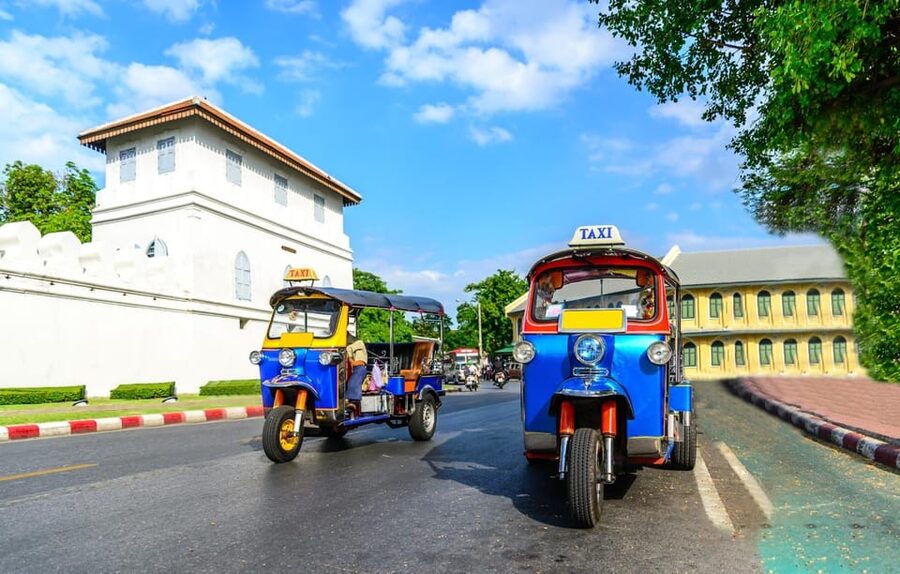
The itinerary lists Wat Ratchanatdaram as another 10-minute photo stop. Its most notable feature is Loha Prasat, the distinctive metal-spired structure associated with the temple complex.
Again, you see the site from outside. The activity information specifically says there is no entry to Loha Prasat. That keeps the pace moving, but it also limits the architectural detail you can take in.
I see this as an orientation stop rather than a temple visit. You learn where the site is, hear a few useful facts, take photographs, and save a longer inspection for another day. The route is designed to give you several visual impressions without spending the entire afternoon at one monument.
Wat Pho and the view toward Wat Arun
Wat Pho is included as an outside photo stop of about 10 minutes. It is close to the Grand Palace and makes sense as part of a compact old-city route. Your guide can explain the temple and its place in Bangkok’s religious life, but you will not enter the grounds on this activity.
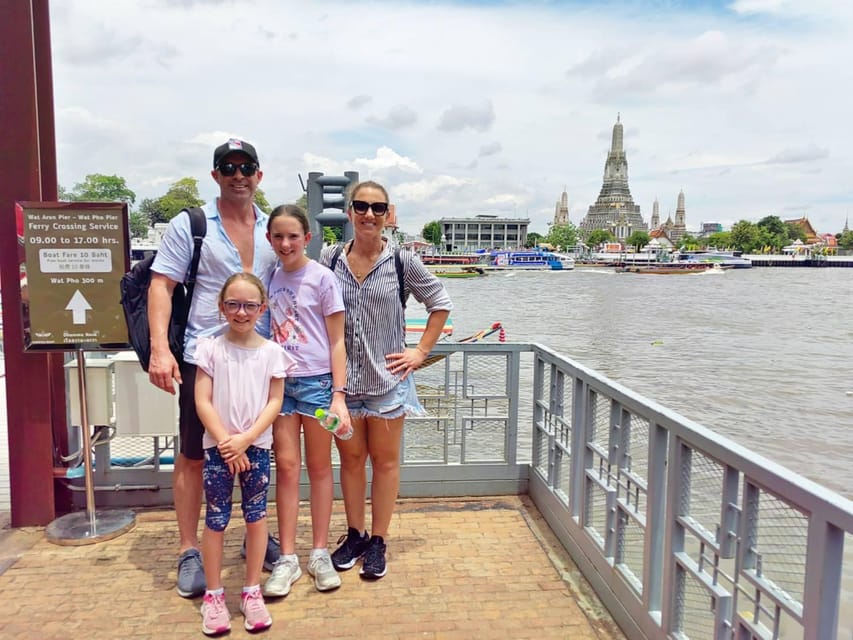
Wat Arun is seen from the opposite side of the river rather than visited directly. This is a scenic glimpse, not a temple admission stop. If you want close photographs of its decorated central prang or time inside the complex, you will need a separate visit.
This limitation is easy to overlook when reading a list of famous names. The tour gives you a city sampler. It does not replace dedicated visits to Bangkok’s major temples.
The flower market and the lotus-folding activity
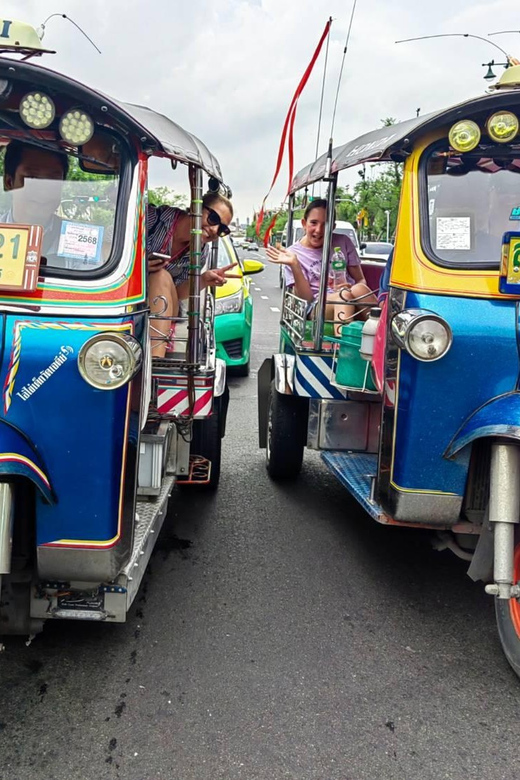
The route description highlights Pak Khlong Talat, Bangkok’s flower market, and several people have particularly enjoyed this part of the outing. The market brings a different mood from the palace and temples. Instead of formal buildings, you get flowers, arrangements, sellers, and a working market setting.
The precise itinerary lists the main stop sequence without assigning a separate time to the flower market, so the exact timing can depend on the route and traffic. Still, the flower market is part of the described experience, and the included lotus-folding activity gives you something to do rather than simply walk around with a camera.
You receive guidance on folding a lotus flower, a small activity tied to Thai custom and temple offerings. It is not a full craft workshop, but it adds a human detail to a sightseeing route. The lotus is also easier to remember than a string of temple names.
Chinatown is the natural finish
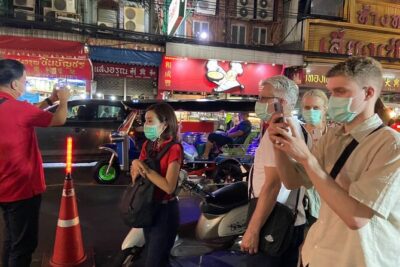
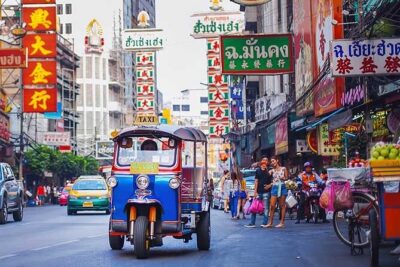
The tour ends in Yaowarat Road, Bangkok’s Chinatown, after a listed stop of around 20 minutes. This is the longest stop in the itinerary, which makes sense. Chinatown provides plenty to look at in a compact area, from signs and shopfronts to food stalls and side streets.
Finishing here is practical. A 4 p.m. departure can bring you to Chinatown around 6 p.m., when it is a good place to continue your evening meal. Bryan specifically found that timing useful, and I agree with the logic: the tour becomes both sightseeing and a simple way to reach one of Bangkok’s best-known food districts.
Do not expect a long guided food tour. Personal expenses are not included, and the activity ends in Chinatown. You are free to continue on your own, choose a restaurant, or explore the streets after the tuk-tuk portion is over.
The ending also gives the tour a nice change of pace. You begin with museums, palaces, and temples, then finish among commercial streets and local city life. That contrast helps you understand Bangkok as more than a collection of monuments.
The guides make the short format work
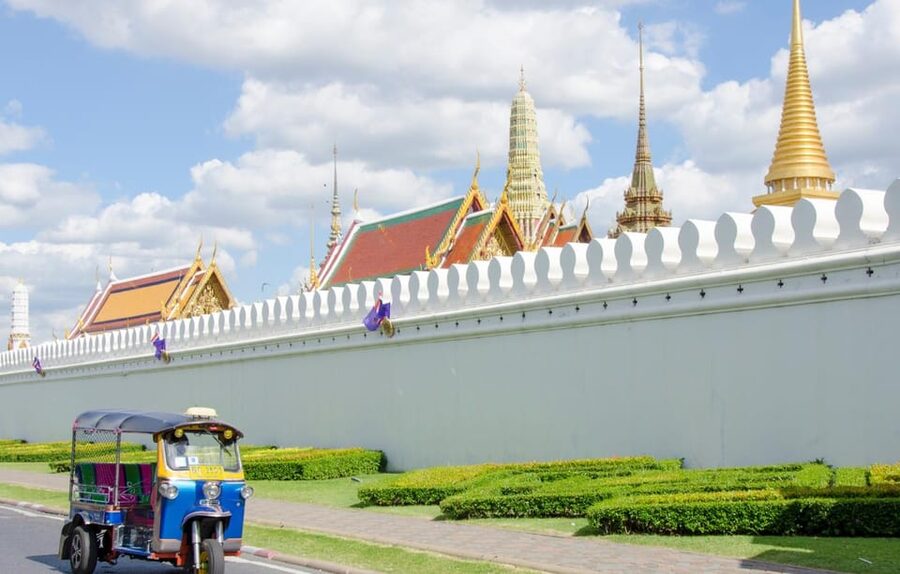
The strongest part of this experience is the guiding. Names appearing in recent bookings include Anna or Ana, Johan or Yohan, Ken, Enjoy, Bella, and others. You cannot select a particular guide from the information provided, but the repeated praise for clear English, patience, humor, and personal attention points to an important strength.
The guide does more than name buildings. You can expect stories about places passed on the road, Thai life, temple customs, Bangkok traditions, and the route itself. Several descriptions highlight guides taking questions, helping with photographs, and explaining what would happen before the next ride.
That preparation matters when the group uses several tuk-tuks. You are not simply dropped at a sight and told to find your way back. The guide keeps the group together through meeting instructions and short explanations.
The pace also seems well judged for a first day. You see many places without sitting through a long lecture. If you want detailed architectural history, two hours will feel short. If you want enough context to decide where to return, the format is effective.
Is $28 good value?
At $28 per person, this is not the cheapest way to travel between Bangkok landmarks. A public bus or ordinary taxi would cost less, and you can visit individual temples independently. The price pays for the tuk-tuk experience, a licensed English-speaking guide, organized stops, bottled water, and the lotus activity.
I think the value is strongest in three situations. First, you are new to Bangkok and want a guided introduction without spending a full day touring. Second, you are short on time and want several landmarks covered efficiently. Third, you want a tuk-tuk ride without negotiating fares or wondering if a driver is taking you to a shop.
It is less good value if you expect temple admission, long visits, or detailed exploration. Entry to the major sites is not included because the tour does not go inside them. Personal spending in Chinatown is also extra.
The rating is 4.7 from 830 reviews, which supports the idea that the experience delivers what it promises: a short, fun introduction rather than a deep cultural program. I would compare it with the cost of arranging several separate rides and finding a guide yourself. For many first-time visitors, the fixed price is worth paying for the ease.
Choosing the best time and preparing well
Evening departures have a special appeal. One booking at 4 p.m. finished in Chinatown at about 6 p.m., which made it easy to continue into the evening. Another recent booking described seeing Bangkok at night as a particularly good experience.
Daytime departures give you clearer views for photographs and may suit anyone who prefers seeing temple details in natural light. Evening departures can add illuminated streets and a cooler feel, though the supplied information does not promise a specific sunset or night route.
Before booking, keep these points in mind:
- Meet at the front Museum Siam exit outside Sanam Chai MRT.
- Wear clothing suited to heat and an open-air ride.
- Bring a phone or camera, since most stops are short photo opportunities.
- Allow extra time if you plan to continue from Chinatown afterward.
- Treat the activity as an introduction, not a replacement for entering Bangkok’s temples.
- Use the free cancellation option if your plans are uncertain. Cancellation is available up to 24 hours before departure for a full refund, and you can reserve now and pay later.
Who should book this tuk-tuk tour?
I would choose this tour for a first day in Bangkok, a short stopover, or a final afternoon when you want to get out into the city without committing to a full-day program. Couples and solo visitors should find the small tuk-tuk arrangement comfortable, especially when two people share a vehicle.
It also suits anyone who enjoys a guide’s stories more than a formal lecture. The route moves quickly, but it gives you a useful mental map of the old city, the river area, Chinatown, and several major landmarks.
I would look elsewhere if your main goal is entering the Grand Palace, exploring Wat Pho at length, visiting Wat Arun up close, or spending hours at the flower market. In that case, book individual site visits and use this tour only if the tuk-tuk ride itself appeals to you.
Should you book it?
Book it if you want a lively two-hour orientation to Bangkok, a fixed-price tuk-tuk ride, and a friendly English-speaking guide who can explain the city between photo stops. The lotus-folding activity and Chinatown finish give it more personality than a simple drive past monuments.
Skip it if you want interiors, long temple visits, or a quiet vehicle. For most first-time visitors with limited time, $28 is a fair price for the convenience and the chance to see Bangkok from street level without haggling over every ride.
FAQ
Where does the Bangkok tuk-tuk tour start?
It starts outside Museum Siam at Sanam Chai MRT Station. Meet at the Museum Siam exit outside the station.
Which Museum Siam exit should I use?
Use the front exit by Museum Siam. The museum has another exit on the back road, which is not the stated meeting point.
How long does the tuk-tuk tour last?
The tour lasts two hours.
What language is the tour conducted in?
The live tour guide speaks English.
Does the tour enter the Grand Palace?
No. The Grand Palace is visited as an exterior photo stop only.
Does the tour enter Wat Pho?
No. Wat Pho is seen from outside, and entry is not included.
Is Wat Arun visited?
Wat Arun is viewed from the opposite side of the river. The tour does not enter Wat Arun.
Which Bangkok landmarks are included?
The route includes the Grand Palace, Wat Suthat and the Giant Swing, Wat Ratchanatdaram, Wat Pho, Chinatown, and a view toward Wat Arun. The experience also highlights Bangkok’s flower market.
Is a tuk-tuk ride included in the price?
Yes. A typical Thai tuk-tuk ride is included.
Is food or personal spending included?
No. Personal expenses are not included. The tour finishes in Chinatown, where you can continue independently.
Is a lotus flower activity included?
Yes. A folding lotus flower activity is included.
Can I cancel the booking?
You can cancel up to 24 hours in advance for a full refund.
Can I reserve now and pay later?
Yes. The booking option allows you to reserve your place and pay later.
Just added around Bangkok
- Wonderful Pearl Dinner Cruise★ 3.5 · 27 reviews
- Yoga in the Park Thailand★ 5.0 · 12 reviews
- re:leaf spa and massage★ 4.0 · 10 reviews
- 3-Hour Bangkok Walking Tour: Wat Pho and Wat Arun★ 5.0 · 102 reviews
- White Orchid Sunset Dinner Cruise Calypso Ladyboy Cabaret Show★ 4.0 · 10 reviews
- Visit temples in and around Bangkok with a former monk of 10 years★ 5.0 · 30 reviews
- Morning Buddhist Almsgiving, Grand Palace and Flower Market Tour in Bangkok★ 3.5 · 9 reviews
- Visit Wat Pho and Wat Arun with Local Expert★ 4.0 · 14 reviews
Tuk-Tuks, compared.
Bangkok by Night: Temples, Markets and Food Tuk-Tuk Tour
Read our review →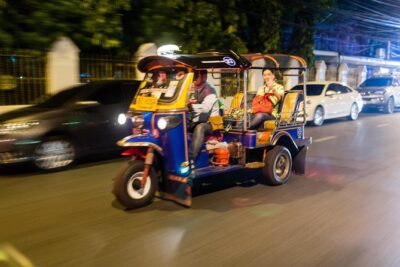
Tuk Tuk Adventure Chinatown Michelin Food & Temples
Read our review →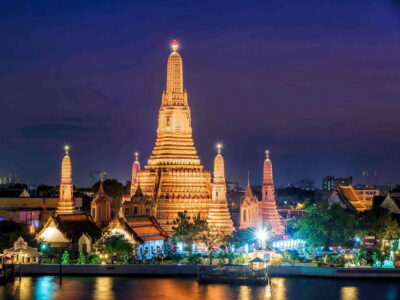
Evening Tour with Wat Arun, Wat Pho & Tuk Tuk Ride
Read our review →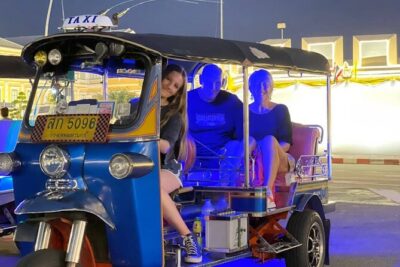
Bangkok Tuk-Tuk Tour by Night with Chinatown Street Food Meal
Read our review →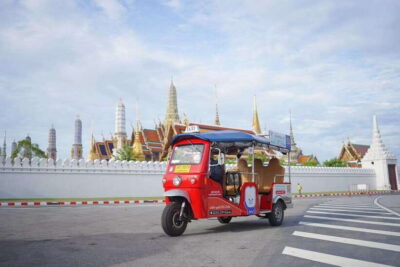
Browse the lists this tour appears in